
Review · KUALA LUMPUR
Market Visit & Private Hands-on Cooking Class at Daun Senja
The best part of Daun Senja is that it starts before the chopping board. You visit a local market, learn what the ingredients look like in daily life, and eat breakfast at a simple food stall before cooking in Patricia and Kingston’s home. The market visit gives the class a wider view of Malaysian food than a kitchen lesson alone.
I like the private format, limited to your party of up to five, because you can ask questions and work at your own pace. I also like the friendly, family-style teaching, especially for parents with children or cooks who want more than a quick demonstration. The main drawback is location: Taman Suntex in Cheras is outside central Kuala Lumpur, usually about 20 to 30 minutes by Grab, and the market is closed on Mondays.
Key points at a glance
- A market-first morning: Shop for ingredients and have breakfast at a local stall before the cooking begins.
- Private for up to five: Patricia and Kingston can give your group direct, step-by-step help.
- Three Malaysian menus: Choose from dishes including nasi lemak, chicken pong teh, eggplant sambal, chicken curry, roti jala, and local desserts.
- A home kitchen setting: The lesson feels personal and social rather than like a large school with several unrelated groups.
- Monday changes the plan: The wet market is closed, so Monday visitors start with roti and dosa at a small local restaurant.
- A useful half-day outing: The class runs about four and a half hours, starts at 8:00 am, and returns you to the meeting point.
Why the morning begins at the market
Daun Senja begins at 8:00 am in Taman Suntex, Cheras, at the listed meeting point in Selangor. The first stop is a local wet market, except on Mondays. This is not just a shopping errand. It gives you a chance to see the raw materials behind Malaysian home cooking before they are cleaned, cut, and seasoned.
You might encounter ingredients that are familiar, such as chicken, cucumber, eggplant, and rice, alongside less familiar items used in sambal, desserts, and curry. The useful part is learning how those ingredients fit into ordinary Malaysian meals. You are not simply handed a recipe card and told to follow it.
After the market, you have breakfast at one of the food stalls. This detail matters. Malaysian food culture is not confined to formal restaurants, and a local breakfast gives you a taste of how the day starts in a neighborhood setting. On Mondays, when the wet market is closed, the morning instead begins at a small local restaurant with roti and dosa.
That Monday alternative still offers a food-focused start, but it is a different experience. If seeing the market is important to you, book another day. If your schedule only allows Monday, you still receive the breakfast and cooking portions of the outing.
More Market and Cooking Class Tours in the world:
- Hanoi Cooking Class: Culture, Local Market & Meaning CSR Impact
★ 5.0 · 5,147 reviews - 5 Traditional Dishes Hanoi Cooking Class with Market Trip
★ 5.0 · 4,890 reviews - Cooking Class and Lunch at a Tuscan Farmhouse with Local Market Tour from Florence
★ 5.0 · 4,831 reviews
The ride to Taman Suntex
Taman Suntex is not in central Kuala Lumpur. The meeting point is in Cheras, Selangor, and the journey takes about 20 to 30 minutes from the city center by Grab, according to the practical information provided for the experience. Public transportation is nearby, but Grab is likely the simpler choice for most visitors carrying no special equipment and heading out early.
The distance is worth considering when you plan the rest of your day. The class lasts around four and a half hours and ends back at the meeting point. You should not book a tight late-morning appointment in central Kuala Lumpur unless you allow extra time for the return trip.
I see the location as part of the appeal. The class takes you away from the main hotel and sightseeing zone into a calmer residential area. You trade convenience for a more personal look at local food life. That trade will suit you if you value contact with a Malaysian family and neighborhood setting more than staying close to the Petronas Towers or Bukit Bintang.
Three menus, three different tastes of Malaysia
The class offers three menu options. The exact arrangement should be confirmed when you book, but the choices cover several important parts of Malaysian cooking: rice dishes, curries, sambal, flatbreads, and sweet treats.
Option 1: Chicken pong teh and pulut inti
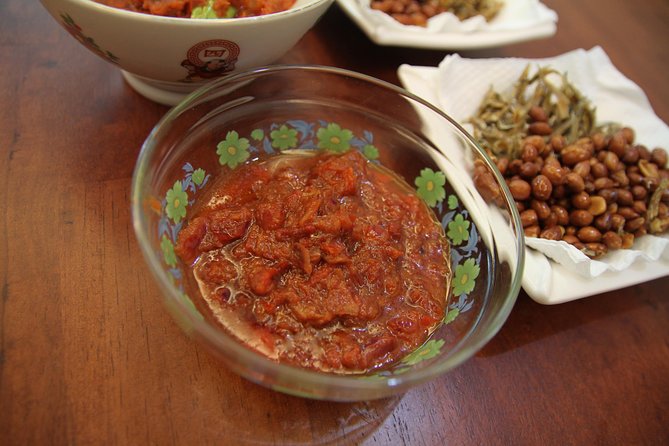
Chicken pong teh is served with rice, alongside eggplant sambal and pulut inti. Pong teh is a gently seasoned chicken dish associated with Peranakan cooking, and it gives you a chance to learn how a dish can build flavor without relying only on heat.
Eggplant sambal brings a sharper, spicier contrast. The combination works well for a lesson because you can compare a savory main dish with the brighter punch of sambal. Pulut inti finishes the menu with sticky rice and a sweet topping, giving the meal a clear progression from main course to dessert.
More Private Market Tours around the world:
- Cairo 8 Hour Private Tour of Pyramids, Egyptian Museum and Bazaar
★ 5.0 · 2,931 reviews - Private Excursion to Maeklong Railway and Floating Markets
★ 5.0 · 850 reviews - Floating and Railway Market (Optional Waterfall): Private Tour
★ 5.0 · 827 reviews - Cairo: Private Pyramids, Museum & Bazaar Tour with Lunch
★ 4.6 · 744 reviews
Option 2: Nasi lemak and sago gula Melaka pudding
Nasi lemak is one of Malaysia’s best-known dishes, built around fragrant coconut rice and the accompaniments that make it a full meal. Here it is paired with pineapple and cucumber salad, a useful contrast to the richness of the rice.
Dessert is sago gula Melaka pudding. Gula Melaka is palm sugar, and the pudding introduces a different kind of sweetness from the rice-based pulut inti. If you want a menu that feels immediately recognizable as Malaysian while still teaching several textures, this is a strong choice.
Option 3: Chicken curry, roti jala, and ondeh ondeh
This menu focuses on curry and handmade bread. Roti jala is a lacy, net-shaped pancake traditionally made by drizzling batter into a pan. It is more distinctive than a standard flatbread and gives you a hands-on task that depends on technique.
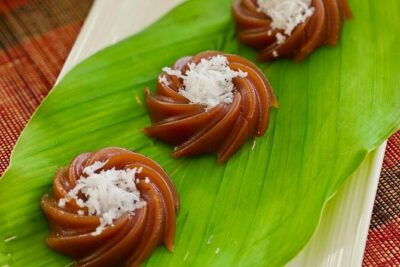
The dish is paired with chicken curry, then followed by ondeh ondeh, a sweet rice-flour treat with a palm-sugar center. This option may suit you best if you enjoy learning a cooking technique as much as learning a recipe. The roti jala also makes a memorable dish to recreate at home.
What the hands-on lesson feels like
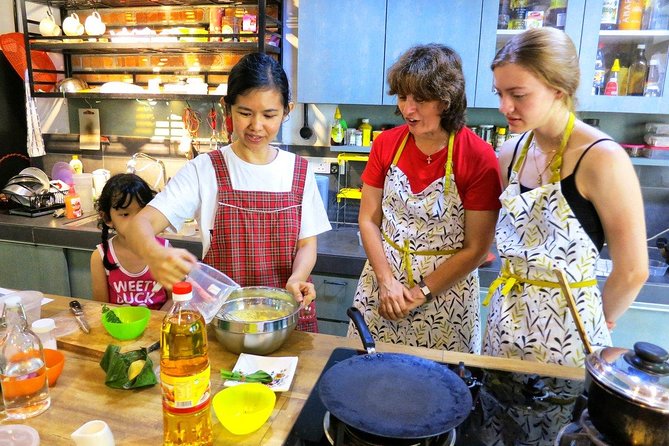
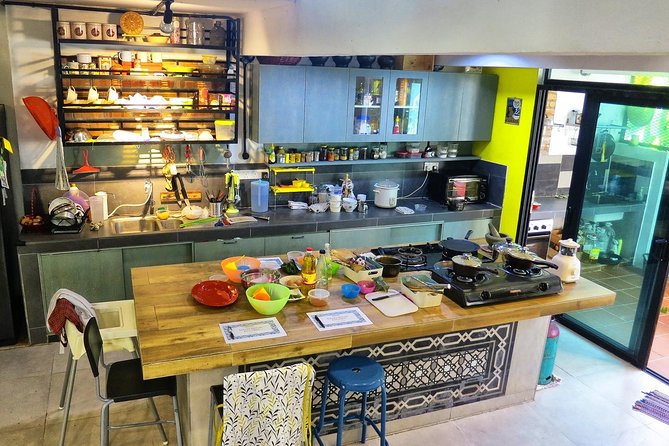
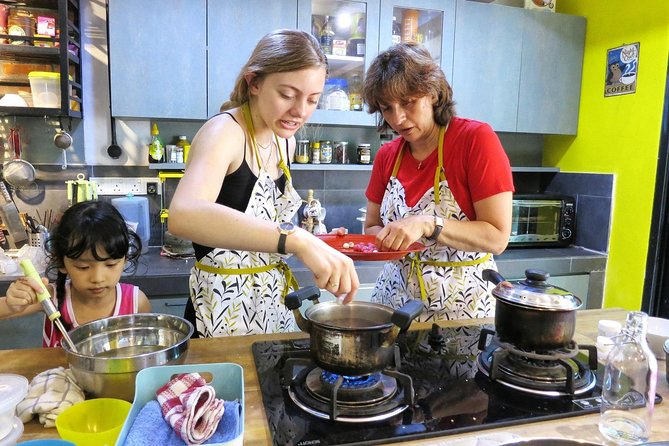
The cooking takes place after the market and breakfast, in a home setting with Patricia and Kingston. The small party size is important here. With no more than five people, you can ask why an ingredient is used, see how it changes during cooking, and get direct help instead of standing at the back of a large group.
The teaching style is step by step and practical. You should expect to cook alongside the hosts rather than simply watch them prepare the meal. That makes the class suitable for beginners, but it also gives experienced cooks room to ask more detailed questions about ingredients and method.
The atmosphere is one of the strongest reasons to choose this experience. Patricia and Kingston host the class as a family activity, and their daughters may also be present. Families with young children have found the setting accommodating, including one visit where a two-year-old stayed nearby while the parents cooked. That does not mean the class is a dedicated children’s program, but it does suggest a relaxed home environment rather than a formal culinary school.
You also have time to talk about food and culture. The class is not designed as a fast demonstration with a quick meal at the end. The pace allows conversation, questions, and small explanations about how ingredients contribute to the finished dish.
The meal at the end
Once the dishes are ready, you sit down and eat the three-course meal you helped prepare. This shared meal is more than a reward for finishing the work. It lets you taste the effect of each ingredient and see how the separate recipes fit together.
A glass of wine or beer is included. That is a small but welcome touch, particularly for adults who want to linger over the meal and talk with the hosts. The food may also feel different from Malaysian restaurant dishes because the menu is based on home cooking. The dishes are practical enough to attempt again, and some of the ingredients are available outside Malaysia.
That point matters if you want a class you can use after your holiday. A recipe is of limited value if every ingredient is impossible to find at home. The menus here include recognizable produce, rice, chicken, cucumber, eggplant, and sweets, along with Malaysian ingredients that may require a trip to an Asian grocery. The recipes are not guaranteed to be effortless to reproduce, but they are intended as home food rather than restaurant theater.
How the experience compares with a city cooking class
Many Kuala Lumpur food classes focus on the cooking itself. Daun Senja adds three useful layers: the trip to the market, breakfast, and time with a local family. That makes the four-and-a-half-hour schedule feel full without packing in too many formal stops.
The private format is another major difference. You are not placed in a large shared group, and only your party takes part. For couples, that means a more intimate morning. For a family, it means you can work around different ages and skill levels. For a small group of friends, it provides enough room for everyone to take part.
There is a tradeoff. A private class costs $130, so it is not the cheapest way to learn one Malaysian recipe. The value improves when two to five people share the price, since you are paying for a private host-led morning, market visit, breakfast, cooking lesson, full meal, and drink.
For one person, the price is harder to justify unless you place a high value on personal instruction. For a couple or family, the cost compares more favorably with several separate food activities. Group discounts are available, so check the final price for your party before booking.
Who will enjoy Daun Senja most
I would choose this class if you want to understand Malaysian food through people and place, not just through a finished plate. It suits cooks who like to ask questions, beginners who want patient instruction, and families who prefer a relaxed home setting.
It is also a good fit if you have already eaten at Kuala Lumpur restaurants and want to see how local dishes are handled in a household. The market and breakfast make the morning feel connected to daily life rather than isolated from it.
You may want another type of class if you need a central Kuala Lumpur location, a short two-hour activity, or a very polished professional kitchen. You should also think twice if you dislike early starts, market visits, or eating breakfast at a simple local stall.
The class is private, and service animals are allowed. It is near public transportation, though the published practical advice points to Grab as an easy way to reach Taman Suntex from the city center.
Booking details that matter
Confirmation arrives within 48 hours of booking, subject to availability. Since this is a private experience, it is wise to book ahead if your Kuala Lumpur schedule is fixed.
The class starts at 8:00 am and ends back at the meeting point. The wet market operates on the stated non-Monday schedule, while Monday visitors receive the restaurant breakfast alternative. Free cancellation is available up to 24 hours before the start time for a full refund. Changes or cancellations made less than 24 hours before the start are not accepted for a refund.
The experience is recommended by all listed participants and has a five-star rating from 51 reviews. I would treat that as evidence of a consistently well-received format, but the practical details still matter more for your decision: the early start, the trip to Cheras, the private price, and the market schedule.
Should you book this Malaysian cooking class?
Book Daun Senja if you want a personal morning with a local family, a real market visit, and enough time to cook and eat a full Malaysian meal. Patricia and Kingston’s warm hosting, the small group size, and the chance to learn recipes you can try at home are the main reasons to choose it.
Skip it if your priority is a central location or the lowest possible price. For most couples, families, and small groups who want food culture rather than a basic recipe lesson, the $130 cost is reasonable, especially with group discounts and the included breakfast, three-course meal, and drink. If you can avoid Monday and want the complete market experience, choose another day.
FAQ
Where does the cooking class begin?
It begins at Taman Suntex, 43200 Cheras, Selangor, Malaysia.
What time does the experience start?
The start time is 8:00 am.
How long does the experience last?
It lasts approximately four hours and 30 minutes.
Does the experience include a market visit?
Yes. You visit a local wet market, except on Mondays, before going to the cooking lesson.
What happens on Mondays when the market is closed?
The morning begins at a small local restaurant, where you can enjoy roti and dosa for breakfast.
How many people can join the private class?
The private lesson is for your party, with a maximum of five participants.
What dishes can you learn to cook?
The menu options include chicken pong teh with rice, eggplant sambal, pulut inti, nasi lemak, pineapple and cucumber salad, sago gula Melaka pudding, chicken curry, roti jala, and ondeh ondeh.
Is food included after the cooking lesson?
Yes. You enjoy the three-course meal you prepare, along with a glass of wine or beer.
Can I cancel for a full refund?
Yes. You can cancel at least 24 hours before the start time for a full refund. Cancellations or changes made less than 24 hours before the start time are not accepted for a refund.
New market tours around the world
- Tel Aviv: 2-Hour Carmel Market Tour in English with Lunch★ 4.8 · 23 reviews
- Tel Aviv: Carmel Market & Neighborhood Guided Walking Tour★ 4.7 · 3 reviews
- Tel Aviv: 2-Hour Jaffa Flea Market Tour with Tastings★ 4.9 · 8 reviews
- Tel Aviv: Carmel Market Food Tasting Tour “Shuk Hacarmel”★ 4.0 · 8 reviews
- Tel Aviv: 2-Hour Levinsky Market Tour with Full Lunch★ 4.7 · 10 reviews
- Tbilisi 2 Parks: Turtle Lake & Dedaena Park with Flea Market★ 5.0 · 3 reviews
- Tbilisi: Street Food & Sightseeing Tour with Local Markets★ 5.0 · 8 reviews
- Teguise: Market and César Manrique Foundation Tour★ 4.3 · 39 reviews
Kuala Lumpur Market Tours, side by side.

Kuala Lumpur: 4-Hour Authentic Local Markets & Event Tour
Read our review →
Kuala Lumpur: Street Market Exploration & Shopping Tour
Read our review →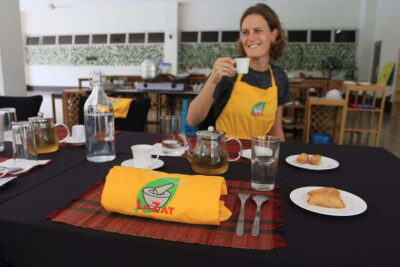
Kuala Lumpur: Malaysian Cooking Class with Market Tour
Read our review →This tour also appears in