
Review · INDIA
Pondicherry: Indian Cooking Class with Market Visit
Pondicherry’s food culture makes the most sense when you see the ingredients before they reach the pot. This three-hour class takes you through a local market, then puts you to work chopping, grating coconut, seasoning, and cooking a meal you eat in the garden. I especially like the market tour with an instructor and the freedom to choose vegetarian, non-vegetarian, South Indian, North Indian, or vegan dishes.
I also like the small group size and practical format. With no more than 10 people, you can ask questions and take part in the cooking instead of watching from the edge. The main caution is that the kitchen setup may feel cramped, and the promise of about four recipes should be confirmed before you begin.
Key points at a glance
- Goubert Market comes first: Ride by autorickshaw with your instructor and learn about unfamiliar produce, spices, and ingredients before cooking.
- You choose the menu: Possible dishes include Pondicherry-style meen kozhumbhu, sambar, chicken chettinad, palak paneer, and carrot halwa.
- You do the work: Chopping vegetables, grating coconut, and cooking are part of the session, not just demonstrations.
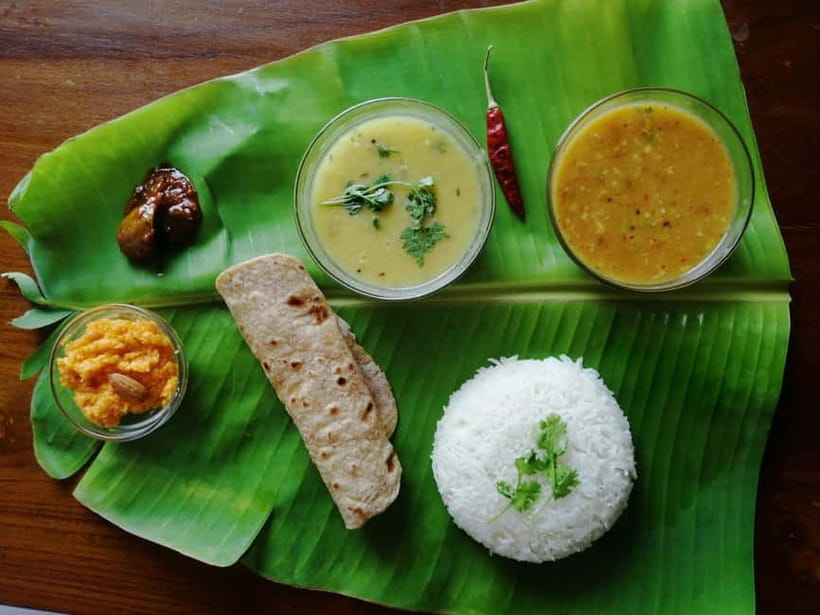
- The meal is part of the class: Eat what you prepare in the garden, sometimes served on a banana leaf.
- Guides add a personal touch: Saranya, Krishti, and Keerthy are named instructors praised for friendly guidance and food knowledge.
- Check the cooking setup: One unhappy participant found the room and kitchen too small and felt the class did not deliver four separate dishes.
A market tour that sets the table
The experience begins with a trip to a local vegetable market, with autorickshaw transport included from the cooking school. Goubert Market is the kind of place where the food lesson starts before anyone turns on a stove. Produce, spices, and other ingredients are bought for the meal, so you see what is being selected and why.
This is useful if Indian markets feel hard to read on your own. Your instructor can point out ingredients that may be new to you, explain how they are used, and help you understand the difference between something bought for aroma, heat, texture, or color. You are not simply passing through with a camera. The market visit connects the raw product to the dish you will later prepare.
The market can also be the most memorable part for people who enjoy ordinary local life. Vendors call out to shoppers, colors fill the stalls, and fresh produce appears in forms that may be unfamiliar. I would bring a camera and wear clothes that are easy to move in, but keep your attention on the guide. The purpose is not only to collect market photographs. It is to learn what you are buying.
A strong point of the format is its flexibility. One group did not know how banana stem was prepared, so the ingredient became part of its menu. That is exactly the sort of question worth asking. If you see something you want to understand, tell the instructor before the menu is finalized.
More Market and Cooking Class Tours in India
- Jaipur Market Tour & Vegetarian Rajasthani Home Cooking Class
★ 5.0 · 113 reviews - Spice Knight (Cooking Class -> Meal -> Local Market walk)
★ 5.0 · 59 reviews - New Delhi: Traditional Indian Cooking Class & Market Visit
★ 5.0 · 32 reviews
Choosing four dishes, with room for local taste
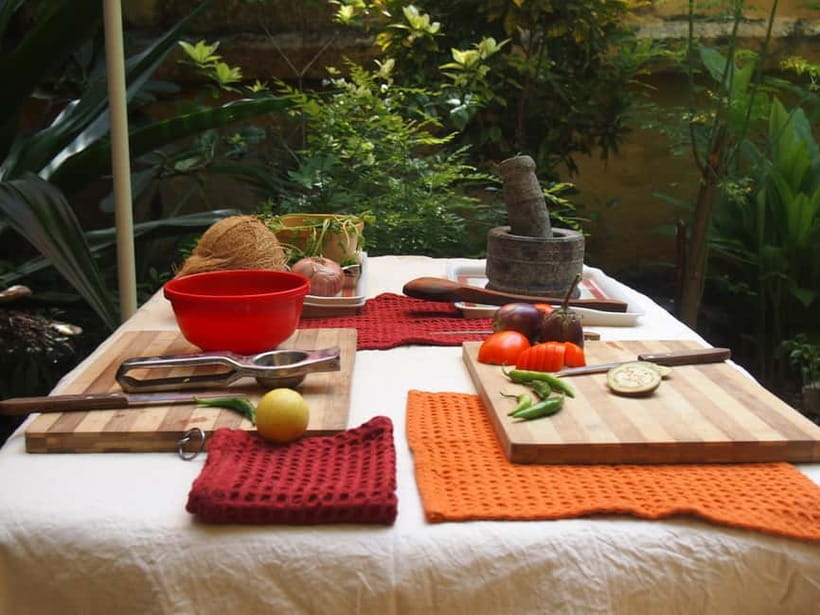
Back at Sita Cultural Centre, you work with the instructor to prepare around four recipes. The menu can include dishes from southern or northern India, and you can request vegetarian, non-vegetarian, or vegan food. You should mention allergies and dietary restrictions when booking, then repeat them at the start of the class.
The choices give this experience more range than a fixed recipe lesson. In Pondicherry, you might choose meen kozhumbhu, a local fish preparation, or sambar, the familiar lentil and vegetable gravy. Chicken chettinad brings a more strongly spiced non-vegetarian option, while palak paneer offers a northern flavor profile. Carrot halwa gives the meal a sweet finish, with carrots, raisins, cashews, milk, and sugar.
The word around matters here. The supplied information presents four recipes as the normal target, but one participant said the class did not actually produce four different dishes. That complaint should not be ignored. At the beginning, ask the instructor to confirm exactly which dishes you will prepare and how many will be cooked from scratch.
The class may also adapt to the group. If everyone wants to learn one complicated dish in more detail, the pace could differ from a menu with several simpler preparations. That flexibility is useful, but it means the experience is not a tightly fixed cooking syllabus.
Hands-on cooking, from coconut to seasoning
The class is designed to keep you involved at every stage. You may chop vegetables, grate coconut, mix ingredients, and follow the cooking process step by step. This matters because Indian cooking often depends on timing and preparation choices that are easy to miss in a restaurant kitchen.
Your instructor explains the use of spices and answers questions about ingredients, methods, and possible variations. Ask why a spice is added at a certain point, how a vegetable is usually prepared, or what can be changed for a vegan version. The class is intended to be conversational, so questions are part of the experience rather than an interruption.
I would not expect a polished demonstration kitchen with every participant working at a separate station. The setting is a cultural centre, and one negative account described a tiny kitchen, limited space, and concerns about cleanliness. Other experiences praised the cooking session and the friendly guidance, but the mixed picture suggests that your expectations should be practical.
A small group of up to 10 is a real advantage. You have a better chance of reaching the work surface and getting direct help than you would in a large class. Still, a full group may feel close together in a small room, especially during chopping or when several dishes are cooking at once.
The people who shape the experience
The instructor matters here as much as the recipes. Saranya was singled out for guiding the market visit and evening with warmth and strong food knowledge. Krishti was praised for hosting the group and handling both the market and meal preparation. Keerthy, also spelled Keerthy in one account, led a market walk through Goubert Market and explained the food being bought.
These names are useful because the class is not a self-guided kitchen session. The instructor is your link to the market, the ingredients, the regional cooking style, and the practical decisions made during preparation. A good instructor can turn an unfamiliar banana stem or spice into a useful lesson.
The class is available in English, Hindi, and French. If language is important to you, make sure the requested language is confirmed. One French-language booking was conducted in English instead, which worked for that pair but was still a mismatch with the selection they made.
The language issue is particularly important during a cooking class. Instructions about timing, heat, texture, and spice balance need to be clear. If you do not speak English comfortably, confirm French or Hindi availability before arriving.
Same city, another market:
- Mumbai: Street Food and Night Markets Tour
★ 4.9 · 719 reviews - Private Heritage Walking Tour in Jaisalmer Fort and Old Bazaar
★ 5.0 · 306 reviews - Old Delhi Food-Spice Market-Temples Tour Soon Featured on NETFLIX
★ 5.0 · 304 reviews - Old Delhi Odyssey: A Tour of Religion, Spice Market, & Best Food
★ 5.0 · 284 reviews
Eating your own meal in the garden
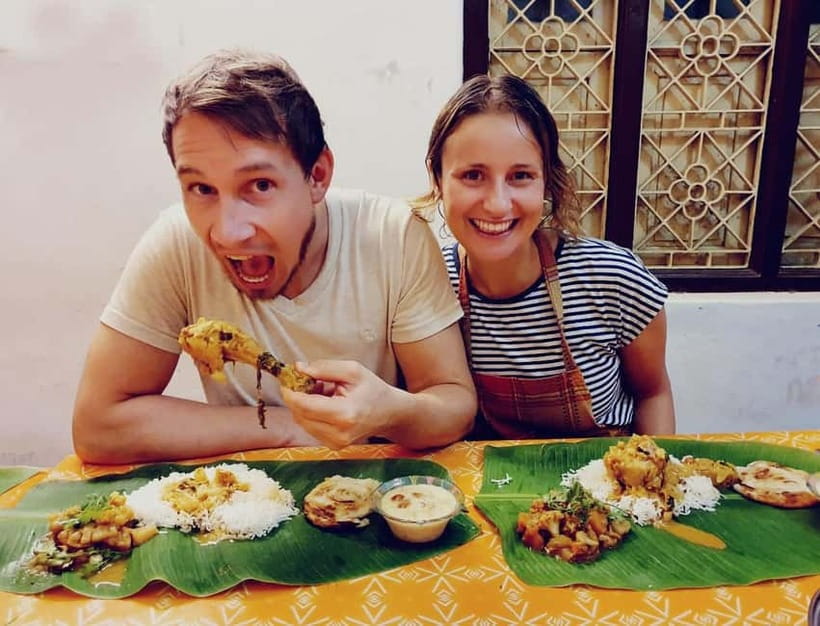
The final stage is lunch or dinner made from the ingredients you helped prepare. You eat in the garden with the rest of the group, and the meal can become a relaxed social finish after the concentrated work in the kitchen.
This part gives the class a clear payoff. You are not handed a sample plate and sent away. You taste the result of your chopping, seasoning, and cooking, then compare the dishes with the people around you. At least one account describes the food being served on a banana leaf, which adds a local touch to the meal.
The food itself is likely to be more valuable as a lesson than as a restaurant-style tasting menu. Recipes may reflect local ingredients and the preferences of the group. That can mean a memorable meal, but it can also mean different levels of spice or a menu shaped by practical availability at the market.
If you want to focus on a particular dish, say so before cooking begins. You may be able to include a local specialty, a vegan preparation, or a dessert such as carrot halwa. The more clearly you explain what you want to learn, the more useful the cooking time will be.
What the $24 price really covers
At $24 per person, the class is priced below many cooking experiences that include a market tour, ingredients, transport during the activity, and a meal. The fee covers the cooking materials, the autorickshaw ride to the market, the lunch or dinner you prepare, and an electronic recipe booklet sent afterward.
That makes the price good if you value participation. You are paying not only for food, but also for guidance through a market you might hesitate to enter alone, hands-on preparation, and recipes you can use later.
The value is less certain if your main goal is simply to eat a large or refined meal. One unhappy participant felt that eating at a restaurant would have cost much less and offered better food. That criticism is fair if you judge the experience only by the final plate.
I would book it for the instruction and cultural contact, not as a cheap replacement for dinner. The electronic booklet improves the value because it gives you a way to repeat the dishes at home. Before cooking, confirm the number of recipes so the experience matches what you expect for the price.
Transportation to and from the cooking class itself is not included. The market transport by autorickshaw is included, but you need to arrange your own way to the class location.
Who should book this Pondicherry cooking class?
This is a good match for you if you enjoy learning by doing. It suits curious eaters who want to understand ingredients, families with children over six, and visitors who prefer a local market and shared meal to a formal sightseeing stop.
Children over six are welcome, and older children can take part in chopping and preparation with adult supervision. One family with children aged 11 and 13 found the cooking suitable for everyone, with the children participating alongside the adults.
The class also works well for couples or solo visitors who like meeting people around food. The group limit of 10 keeps it smaller than a mass-market demonstration, though the room may still feel tight if the class fills.
I would think twice if you need a spotless, spacious teaching kitchen or a precisely timed series of four separate dishes. The setting may be basic, and the quality of the session depends heavily on the instructor assigned and how clearly the menu is agreed.
Practical details before you go
The activity lasts three hours, but the exact starting time depends on availability. It can be arranged in English, Hindi, or French, and you should state dietary needs or allergies in advance.
Bring a camera and comfortable clothes. Smoking is not allowed. Since you will be handling food and moving around the kitchen, avoid clothing that restricts movement.
The experience has free cancellation up to 24 hours before the start for a full refund. You can also reserve now and pay later, which helps if your Pondicherry schedule is still shifting.
The overall rating is 4.7 from 18 ratings, but the individual experiences show why you should read the details carefully. Most of the praise centers on the market visit, the warm instructors, the adaptable menu, and the pleasure of eating the finished food. The main criticism concerns cramped, poorly maintained facilities, uncertain recipe numbers, and inconsistent cooking instruction.
Should you book it?
Book this class if you want a hands-on introduction to Indian food and would value help navigating a local market. The combination of Goubert Market, ingredient explanations, cooking practice, and a garden meal gives you more than a standard recipe demonstration.
I would book with two questions ready: Which instructor will lead the session, and which four dishes will we prepare? If the answer is clear, the $24 price is appealing. If you need a roomy professional kitchen or guaranteed French instruction, confirm those details first or choose another class.
FAQ
How long does the Pondicherry cooking class last?
The experience lasts three hours, including the market visit, cooking session, and meal.
What is included in the price?
The price includes ingredients and cooking materials, autorickshaw transport for the market visit, the lunch or dinner you prepare, and an electronic recipe booklet sent afterward.
Is transportation to the cooking class included?
No. Transportation to and from the cooking class location is not included. Autorickshaw transport for the market visit is included.
Which languages are available?
The class can be taught in English, Hindi, or French. You should mention your preferred language when booking and confirm it before the session.
Can I choose vegetarian or vegan recipes?
Yes. You can choose from vegetarian, non-vegetarian, South Indian, North Indian, and vegan recipes. Mention allergies and dietary restrictions in advance.
Are children allowed to join?
Children over six years old are welcome. Children under six are not suitable for this activity.
What should I bring?
Bring a camera and wear comfortable clothes. Smoking is not allowed.
Can I cancel for a refund?
Yes. You can cancel up to 24 hours in advance for a full refund. The experience also offers a reserve-now, pay-later option.
New market tours around India
- Mumbai: Local Markets & Temples Tour★ 4.6 · 45 reviews
- Old Delhi: Spices, Heritage and Bazaars Walking Tour★ 5.0 · 173 reviews
- Old Delhi Street Food and Spice Market Tour★ 5.0 · 12 reviews
- Old Delhi Temples and Spice Market Tour★ 5.0 · 5 reviews
- Old Delhi: Khari Bawli – Asia’s Largest Spice Market★ 5.0 · 3 reviews
- Night Tour: Mumbai’s Nights & Buzzing Bazaars★ 5.0 · 7 reviews
- Mysore: Palace, Art Gallery & Devaraja Market Walking Tour★ 5.0 · 7 reviews
- Mumbai:Dhobi Ghat Laundry,Dharavi Slum & Flower market Tour★ 5.0 · 12 reviews
India Market Tours, side by side.

Old Delhi Food-Spice Market-Temples Tour Soon Featured on NETFLIX
Read our review →Old Delhi Odyssey: A Tour of Religion, Spice Market, & Best Food
Read our review →

Ultimate Mumbai Full Day: Sights, Bollywood Dance, Lunch & Spices
Read our review →
Old Delhi: Spices, Heritage and Bazaars Walking Tour
Read our review →
Bengaluru Pete City Market Half-Day Walking Tour
Read our review →This tour also appears in