
Review · UBUD
Ubud: Balinese Cooking Class and Market Tour
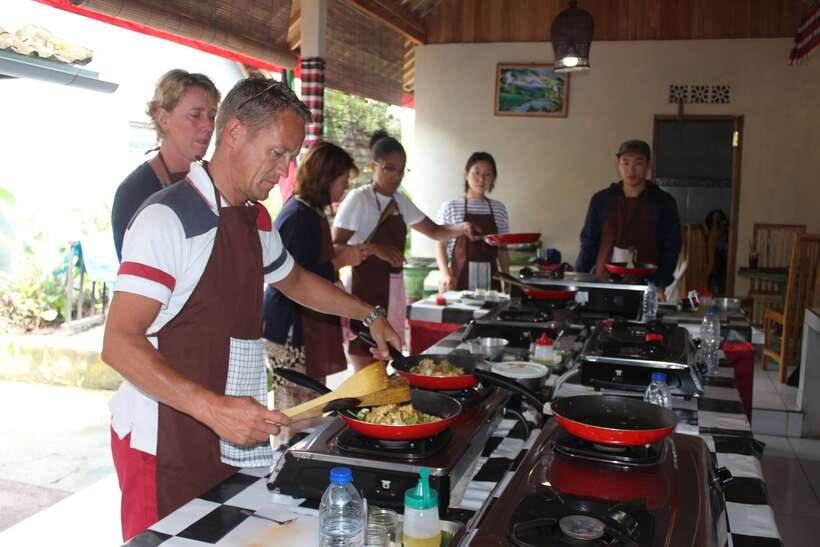
Ubud’s best food lesson starts before the cooking. You visit a real local market, taste unfamiliar fruit, and see where Balinese kitchens get their ingredients. I like the mix of market, rice paddies, and family compound, and I like that you prepare nine dishes yourself before sitting down to eat them.
The main choice is timing. Morning classes include the market and rice fields, while afternoon classes focus on cooking, a Canang offering, and dinner. The market is wonderfully genuine but can mean dirt floors, flies, tight aisles, and the occasional sight of blood, so this is not a polished food hall tour.
Key points at a glance
- Nine dishes in four hours: You chop, mix, pound, and cook a full spread rather than making one simple recipe.
- Morning market access: Only the morning option includes the local market, fruit tasting, and rice paddies.
- Family-run setting: The class takes place in a local family compound, giving the lesson a personal feel.
- Hands-on but forgiving: Instructors guide each step, so you can take part without worrying about ruining dinner.
- Ubud transport included: Pickup and return are available within the Ubud area, with a meeting point at Ubud Palace for some visitors outside the shuttle zone.
- Strong value at $23: The price covers transport in Ubud, the guide, ingredients, nine dishes, the meal, and recipe files.
Start with Bali’s morning market
Choose the morning class if you want the fullest version of this experience. Your guide takes you to a local market outside central Ubud, where the focus is daily shopping rather than staged sightseeing.
This matters because food makes more sense when you see it at the source. You can watch people buy cooking ingredients, examine unfamiliar produce, and learn how market shopping fits into everyday Balinese life. Guides such as Putu and Tata have been praised for explaining the food clearly and helping visitors try local fruit and snacks.
You might see produce that looks entirely unfamiliar if you come from Europe or North America. A good guide will compare new fruits with ones you already know, which makes the tasting less mysterious and more useful. The point is not simply to take photographs. It is to understand what goes into the sauces, vegetables, and side dishes you will later prepare.
The market is genuinely local, not a tidy attraction designed for visitors. Expect narrow spaces, dirt underfoot, flies, and strong food smells. Some shoppers may also find the meat areas confronting. I see this as a benefit if you want an honest look at Bali’s food system, but it is worth knowing before you book.
Wear shoes that can handle uneven or dirty ground. Bring cash, as requested, and keep your camera ready without letting it distract you from the guide’s explanations. Headphones are also listed among the suggested items, though the class itself is conducted in English with a live guide.
More Market and Cooking Class Tours in Indonesia:
- Ubud: Cooking Class with Transfers and Optional Market Visit
★ 4.9 · 824 reviews - Balinese Ubud cooking school (9 Dish Cooking and Market Tour)
★ 5.0 · 540 reviews - Seminyak: Balinese Cooking Class & Market Tour
★ 4.9 · 458 reviews
Rice paddies and the meaning of rice
The morning program also stops at local rice paddies. This is not a long farming tour, but it adds an important piece of context before you begin cooking.
Rice is central to Balinese meals and daily life. Guides explain its role in local culture, and one guide, Putu, has personal experience with rice farming. That makes the stop more than a quick photo break. You get a clearer sense of why rice appears so often at the table and why growing it remains important to families.
The exact amount of time at the paddies is not specified, so you should think of this as a short stop within the morning rather than a separate hiking activity. The appeal is the connection between field, market, kitchen, and meal. In a few hours, the ingredients move from their source to your cutting board.
Afternoon participants do not receive the market or rice-field visit. If those parts matter to you, book the morning departure rather than assuming both time slots follow the same route.
Enter a family compound for the cooking lesson
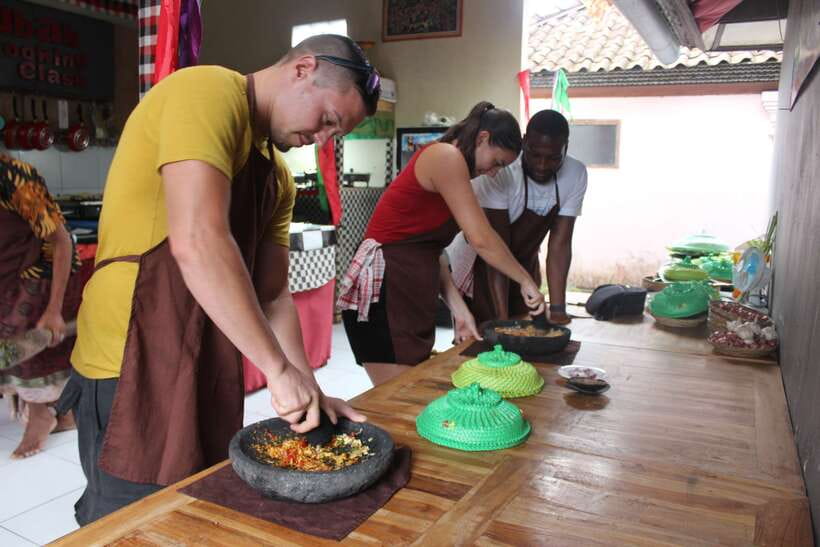
After the morning visits, you continue to the cooking school in a family compound. The setting is one reason this class feels different from a formal culinary studio. You are cooking in a local home-style environment, with instructors and staff working close by.
The group is limited to 14 people. That is small enough for the instructors to help, though the level of personal attention can vary with the final group size. One especially small afternoon group had only four participants, making the work very hands-on. Larger groups will still have instruction, but you may share tasks more often.
The cooking team demonstrates each stage and then lets you take part. You are not simply watching a chef perform while food appears in front of you. You help prepare the dishes, with assistance available when you need it. This is a sensible format for beginners because you get real practice without the pressure of working alone.
The instructors are often identified by first names such as Wayan, Puta, Butu, and Tata, although names and roles may vary by departure. Wayan is particularly praised for keeping the class organized and lively. Butu is described as friendly and funny, while the wider team is noted for being patient, polite, and helpful.
The English instruction is practical rather than academic. You learn by watching, handling ingredients, and following each stage. That makes the lesson accessible even if you have little cooking experience.
Prepare nine Balinese dishes by hand
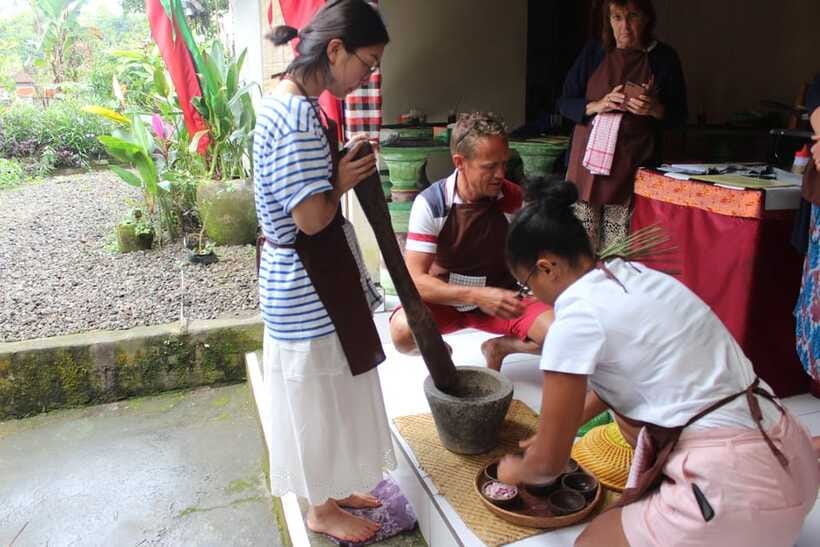
The core of the class is the nine-dish menu. The supplied details do not list every recipe, so I would not book this expecting a specific dish unless the provider confirms the menu before your visit.
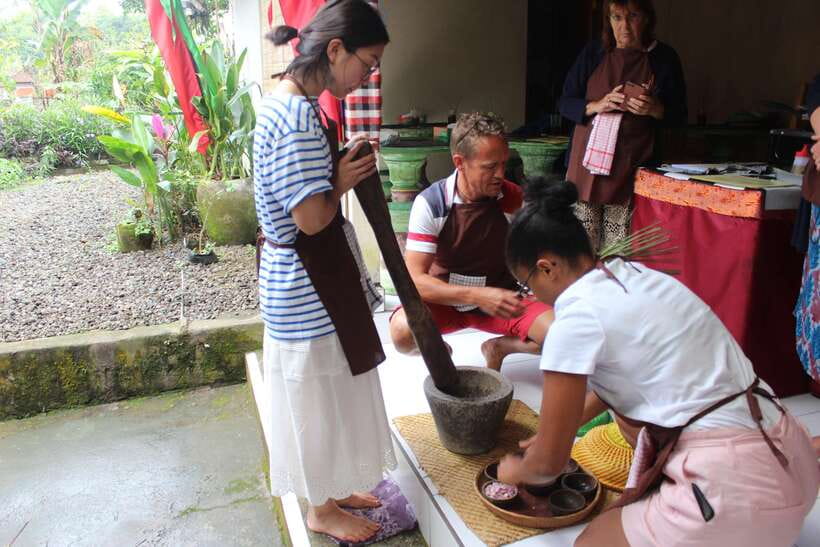
What is clear is the range. You prepare sauces, main dishes, side dishes, and dessert, creating a substantial spread rather than a single bowl of food. Several parts are made by hand, and the cooking is arranged so everyone can take part.
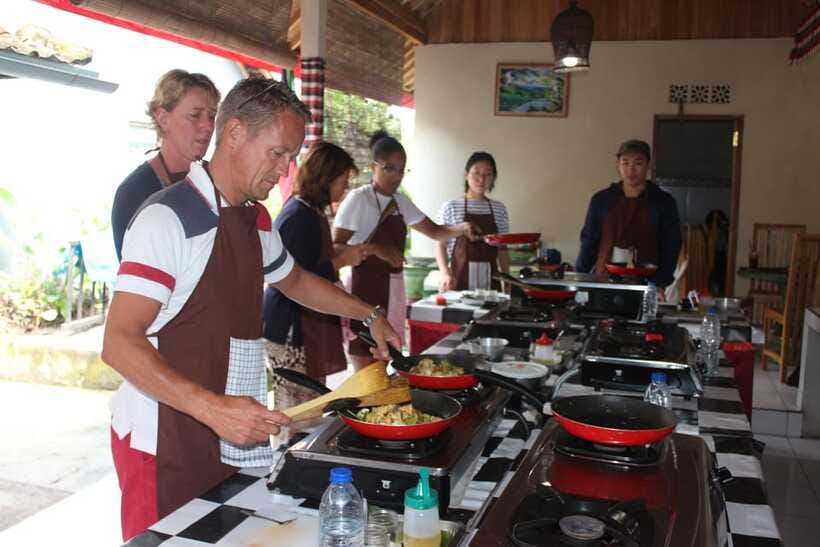
Nine dishes in four hours requires good organization. The class works best when you accept that not every task will take the same amount of time. You may chop one ingredient, help with a sauce, then move to another station as the group works through the menu.
That shared rhythm is part of the fun. You meet other people, divide the work, and watch separate ingredients become a full meal. The teachers keep the mood relaxed, so mistakes do not become a problem. You get guidance at each step, but you still feel that your hands helped make lunch or dinner.
The result is also useful after Bali. You receive a PDF copy of the recipes, giving you a chance to repeat the dishes at home. Some ingredients may be harder to find outside Indonesia, but the recipes still give you a clear starting point and a memory tied to the market visit.
More market tours around Indonesia:
- Active Volcano, Rice Field, Hot Spring, Fruit market, Tea Plantation with Lunch
★ 5.0 · 513 reviews - Balinese Cooking class with traditional morning market visit
★ 5.0 · 161 reviews - Jambangan bali cooking class with morning market tour
★ 5.0 · 35 reviews - Denpasar: Museum, Traditional Market and Food Tasting Tour
★ 4.9 · 33 reviews
Eat the meal you prepared together
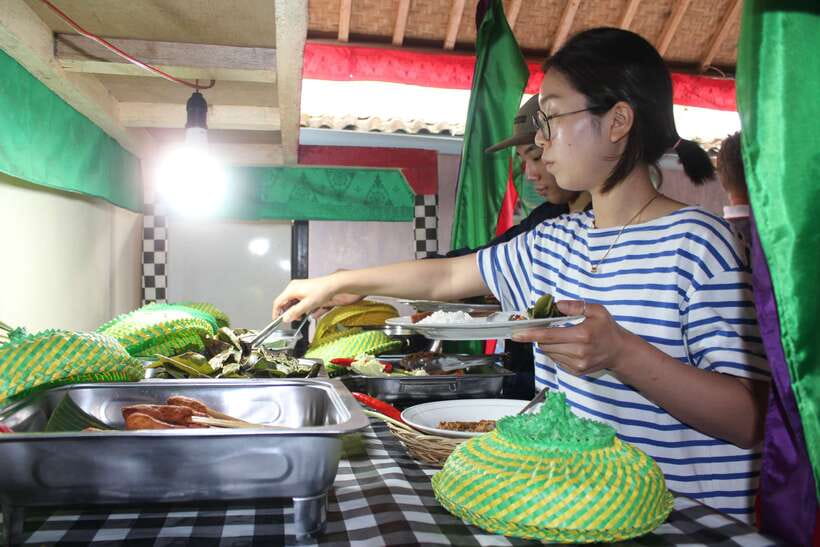
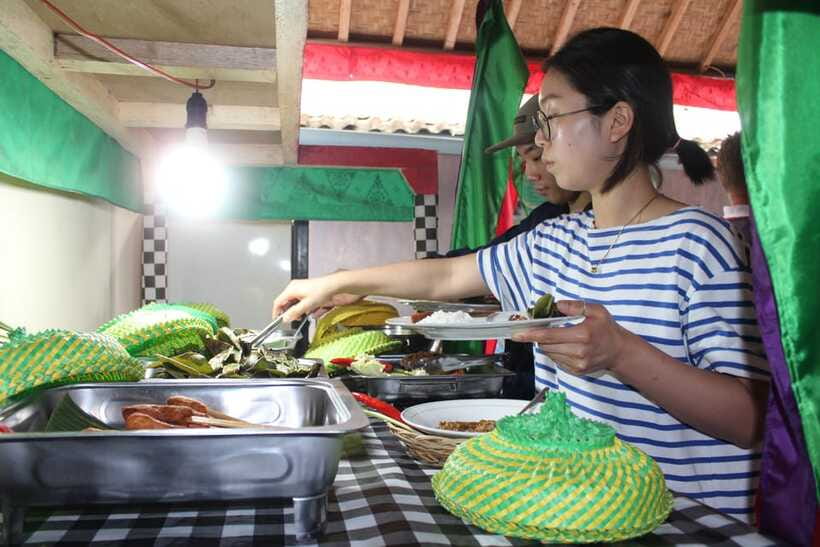
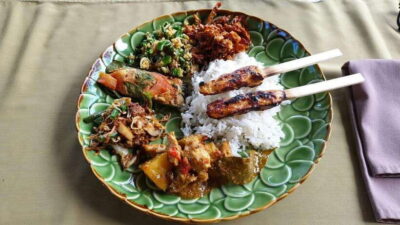
At the end, everyone sits down and eats the food made during the lesson. This is one of the strongest parts of the format because the meal has a clear story behind it. You have seen the ingredients, handled them, and helped turn them into dinner.
The quantity is generous because nine dishes create a full table. One of the practical pleasures is getting to taste the food at the same time as the rest of the group, rather than taking a small sample and moving on.
This shared meal also gives the class a social finish. You can compare the dishes, talk with the other participants, and enjoy the food without rushing between cooking stations. Cold beers are available at a reasonable extra cost, according to one detailed account, but drinks beyond the included welcome drink are not part of the listed price.
Vegetarian and vegan options have been available, and an instructor accommodated a non-spicy menu for a participant with allergies. Do not assume every dietary need is automatically covered. Tell the provider in advance so the kitchen can plan properly.
The afternoon option changes the experience
The afternoon class is not simply the morning tour shifted later. It removes the market and rice paddies and adds a lesson in making a Canang offering before dinner.
A Canang is a small Balinese offering used in Hindu religious practice. Learning to set one up gives you a cultural activity that is separate from cooking, and it helps explain an everyday part of Balinese life.
You then complete the cooking class and eat dinner together. This version suits you if you prefer a later start, want to avoid a raw local market, or are already planning a morning visit elsewhere in Ubud.
The trade-off is clear: you cannot fit the market and rice-field stops into the afternoon itinerary. For first-time visitors who want the broadest introduction to Balinese food and daily life, I would choose the morning class. For people who prefer a slower start or a dinner activity, afternoon is a sensible alternative.
What the $23 price really covers
At $23 per person, this is unusually good value for a four-hour activity. You receive an English-speaking guide, Ubud-area pickup and return, a welcome drink, the market and rice-field visits with the morning option, nine dishes, the meal, and recipe files.
The value is not just the amount of food. Transport saves you the trouble of arranging a separate ride, and the market and rice stops give the cooking lesson more context. A restaurant meal might be cheaper, but it would not teach you how the food is prepared or show you where the ingredients are bought.
There are limits. Pickup and drop-off are included only within the Ubud area. If you stay elsewhere, you may need to meet the shuttle at the front of Ubud Palace or travel directly to the class. The activity is not suitable for wheelchair users, and children under six cannot join.
The class is also not ideal if you want a quiet, private lesson. It is a small group experience, but you share the cooking area and the meal with other participants. That group setting is part of the social appeal, yet it means the pace is not fully your own.
Transport, timing, and practical preparation
The activity lasts four hours, but the exact starting time depends on availability. Morning and afternoon schedules should be checked carefully because the inclusions differ.
Pickup communication is generally handled ahead of time, and drivers have been praised for arriving on schedule and explaining parts of the route. Still, allow some flexibility for Bali traffic and for the meeting arrangement if your accommodation is outside the free shuttle zone.
Bring:
- A camera for the market, rice paddies, and compound
- Cash for personal purchases or extra drinks
- Comfortable shoes for the market
- Any allergy or dietary information to share before cooking
The activity has free cancellation up to 24 hours before the start time. You can also reserve and pay later, which helps if your Bali plans are still shifting.
Who will enjoy this Ubud cooking class?
I would recommend it most strongly to you if food is one of the main reasons you visit Bali. You get much more than a recipe demonstration. You see shopping, farming, preparation, and eating in one compact program.
It also suits families with older children and teenagers. Children under six are excluded, but a 16-year-old participant enjoyed the class, and the hands-on format gives older children a useful role. Couples, solo visitors, and friends can all fit into the group comfortably.
Solo visitors should not worry about arriving without a companion. The shared cooking tasks and final meal give the activity a natural social structure.
You may want another option if you dislike raw markets, have mobility limitations, or want a highly polished culinary school with exact recipe choices and private instruction. The local setting is part of the appeal, and it comes with uneven floors, close quarters, and a less controlled environment.
Should you book it?
I would book the morning class if you want the most complete experience: local market, fruit tasting, rice paddies, family compound, nine dishes, and a shared meal. At $23, it offers a lot of contact with everyday Balinese food culture for a modest price.
Choose the afternoon class if the Canang offering and dinner appeal more than market shopping. Just remember that you will not receive the morning visits.
This is a good choice for curious eaters who want to learn by doing. It is less suitable for anyone seeking luxury, privacy, or a spotless market tour. Tell the provider about allergies in advance, arrange your pickup carefully, and wear shoes you can get dirty. For most visitors staying in Ubud, the combination of practical cooking, local food, and strong value makes this an easy activity to add.
FAQ
How long does the Balinese cooking class and market tour last?
The activity lasts four hours. Starting times vary, so check availability when booking.
What is included in the morning class?
The morning option includes an English-speaking guide, Ubud-area pickup and drop-off, a welcome drink, a local market tour, a rice-paddy visit, nine Balinese dishes, the meal, and a PDF recipe file.
Does the afternoon class include the market tour?
No. The traditional market and rice-paddy visits are available only with the morning class. The afternoon option includes cooking, a Canang offering activity, and dinner.
How many dishes will I prepare?
You will prepare nine Balinese signature dishes and then eat the food with the group.
Is hotel pickup included?
Pickup and drop-off are included for accommodations in the Ubud area. If you stay outside Ubud, you can meet the shuttle at Ubud Palace or go directly to the class.
Is the tour conducted in English?
Yes. The activity includes a live English-speaking guide.
Can children join the cooking class?
Children under six are not permitted to join the activity.
Can I cancel for a full refund?
Yes. You can cancel up to 24 hours before the activity for a full refund. Reserve-now, pay-later booking is also available.
New market tours around Indonesia
- Nusa Dua: Balinese Cooking Class with Market Tour★ 5.0 · 4 reviews
- Bali: Balinese Cooking Class and Market Tour★ 4.8 · 19 reviews
- Jambangan bali cooking class with morning market tour★ 5.0 · 35 reviews
- Denpasar: Museum, Traditional Market and Food Tasting Tour★ 4.9 · 33 reviews
- Balinese cooking class/Go shopping at the market, cook, eat★ 5.0 · 12 reviews
- Bali – Ubud Night Market Food Tour★ 3.8 · 14 reviews
- Bali: Ubud Monkey Forest, Coffee Plantation, and Market Tour★ 5.0 · 5 reviews
- Bali: Safari Zoo and Ubud Palace and Market Day Tour★ 4.7 · 6 reviews
Ubud Market Tours, side by side.
Balinese Ubud cooking school (9 Dish Cooking and Market Tour)
Read our review →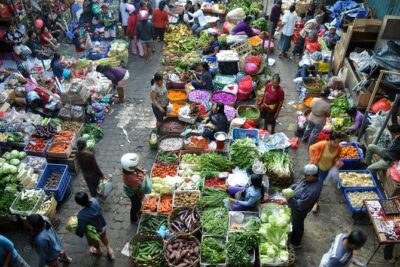
Balinese Cooking class with traditional morning market visit
Read our review →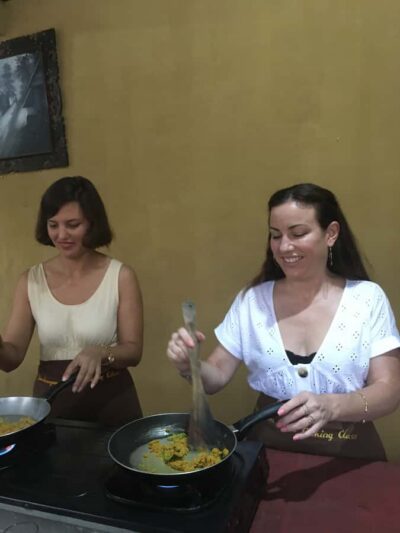
Jambangan bali cooking class with morning market tour
Read our review →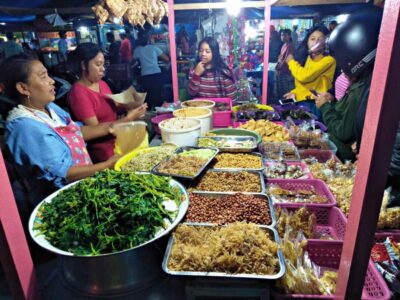
Balinese cooking class/Go shopping at the market, cook, eat
Read our review →
Bali: Safari Zoo and Ubud Palace and Market Day Tour
Read our review →
Bali: Ubud Monkey Forest, Coffee Plantation, and Market Tour
Read our review →This tour also appears in