
Review · UBUD
Ubud: Cooking Class with Transfers and Optional Market Visit
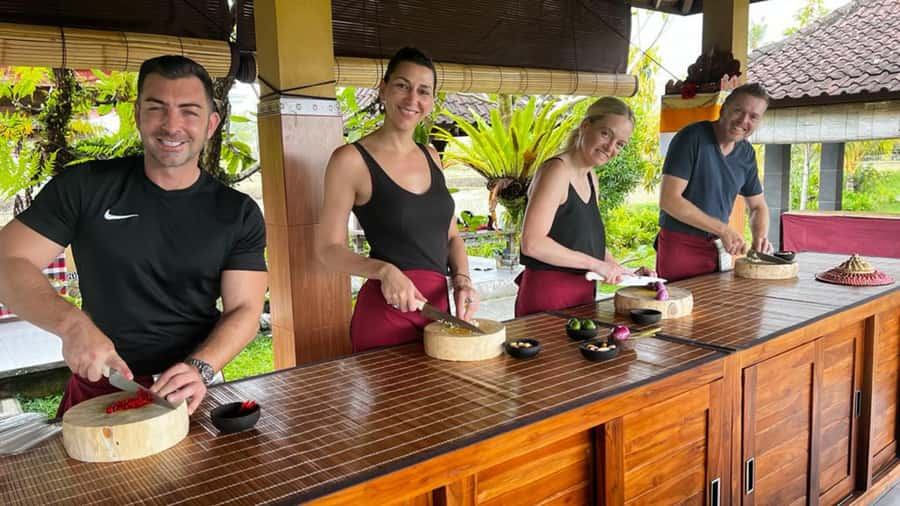
Ubud cooking classes often promise a taste of Bali, but this one goes beyond a quick recipe lesson. You may visit a local market in the morning, learn about offerings and family compounds, then prepare a full Balinese meal with help from instructors such as Eri, Made, or Madi. The class usually feels more like a friendly kitchen gathering than a formal school.
I like the market visit, because it gives you a reason to notice the herbs, spices, fruits, and vegetables that later appear on your plate. I also like the generous meal: the group may prepare around 10 dishes, including curry, satay, soup, sambal, tempeh, and dessert. The main consideration is that the market visit is available only with the morning option, and pickup is limited to central Ubud unless you pay an extra fee for Sebali or Keliki.
Key points at a glance
- Morning market option: Walk through a local Ubud market with your instructor and learn how ingredients connect to Balinese food and religion.
- Hands-on cooking: Everyone gets a task, from chopping and grinding spices to mixing, frying, and assembling dishes.
- Cultural setting: Classes take place in a family-run cooking school or local compound, often surrounded by greenery and rice-field views.
- Small groups: The class is limited to 10 people, with many sessions running more comfortably at five to seven participants.
- A full meal for $21: You eat the food you prepare, often buffet-style, with vegetarian and some allergy-friendly alternatives available.
- Useful take-home extras: You receive a certificate, and some sessions also provide a small recipe book.
Why this Ubud class feels more personal than a standard cooking lesson
The best part of this experience is the connection between food and everyday Balinese life. You are not simply shown how to make a curry, then sent home with a recipe. Instructors explain the role of food in family life, Hindu traditions, architecture, offerings, and local customs.
That broader setting matters. Balinese cooking uses many ingredients at once, and it can be hard to understand why a dish tastes the way it does if you only see the final bowl. At this class, you learn how spices are blended, how vegetables are prepared, and why certain ingredients matter.
The tone is friendly and patient. Eri is praised for giving clear explanations and making people feel welcome. Made is described as an easy-to-follow teacher, while Madi has led market walks and explained the finer points of Balinese ingredients. Names and instructors can vary, but the teaching style is consistent: calm, practical, and aimed at getting everyone involved.
This is useful for beginners. You do not need prior kitchen skills, and the class is not designed as a test of your knife work. The cooking is done as a team, with the instructor and assistants making sure each person has something to do.
More Market and Cooking Class Tours in Indonesia:
- Balinese Ubud cooking school (9 Dish Cooking and Market Tour)
★ 5.0 · 540 reviews - Ubud: Balinese Cooking Class and Market Tour
★ 4.8 · 531 reviews - Seminyak: Balinese Cooking Class & Market Tour
★ 4.9 · 458 reviews
The morning market visit adds useful context
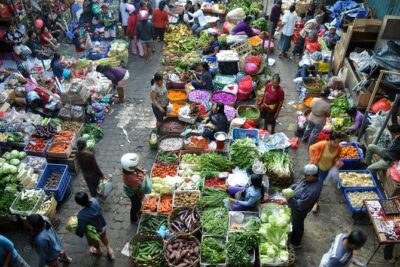
Choose the morning option if you want the fullest version of the experience. After pickup, you meet your guide at a local market in or near Ubud. The exact route can vary, but the purpose is clear: you look at the produce and spices used in the cooking class before heading to the kitchen.
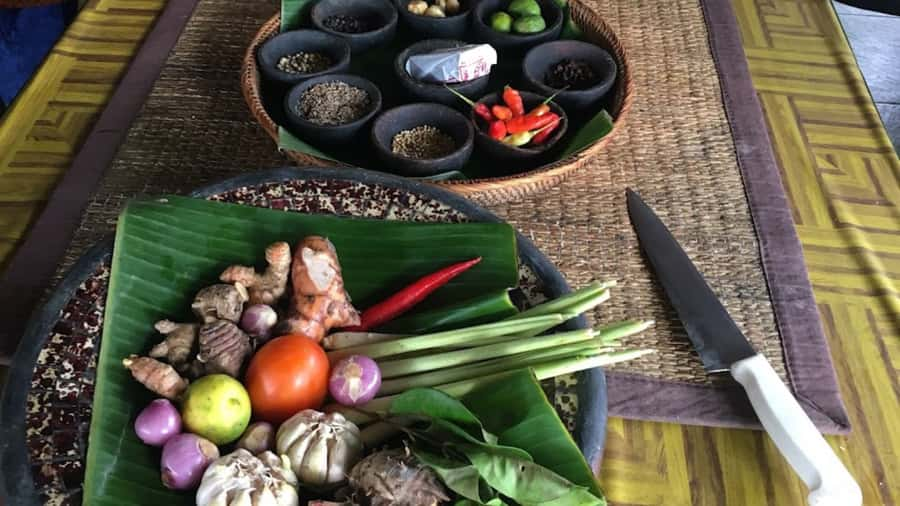
A market walk makes the later cooking easier to understand. You might see fresh herbs, vegetables, fruit, chilies, and spices in their everyday setting, then handle those same types of ingredients during class. Your guide can explain what is commonly used, how ingredients are sold, and how food relates to Balinese customs.
The market is also a good place to learn about offerings. One class activity includes making a canang, the small Hindu offering basket made from palm leaves and flowers. This is not a decorative craft added at random. It helps explain how religion appears in ordinary homes, streets, meals, and family ceremonies.
I would choose the market option if this is your first visit to Bali or if you want more cultural explanation. The tradeoff is timing. The morning program has an extra stop, so it may feel fuller than the shorter afternoon or evening class.
If markets are not your priority, you can skip this part and go directly to the cooking school. The afternoon and evening options do not include the market visit.
A local compound, outdoor kitchen, and green surroundings
After the market, you travel to the cooking location. Several people describe the setting as a family compound or a rural outdoor kitchen, with greenery and, in some cases, views toward rice fields. It is not a polished city restaurant classroom. That is part of its appeal.
A family-run setting gives the cultural lesson more weight. You may hear about Balinese family life, traditional architecture, religious practice, and how homes are arranged. One class also included an explanation of rice growing near the cooking area.
The setting can also shape your expectations. You are visiting a working local place, not booking a private chef’s studio. Conditions may feel informal, and outdoor cooking can be more affected by weather or surroundings than an indoor commercial kitchen. Still, the equipment is described as clean, and the cooking area is set up for group work.
Some classes have friendly dogs nearby. That may be a bonus for animal lovers, though it is worth remembering if you prefer a more controlled or formal environment.
What you actually cook during the two to three hours
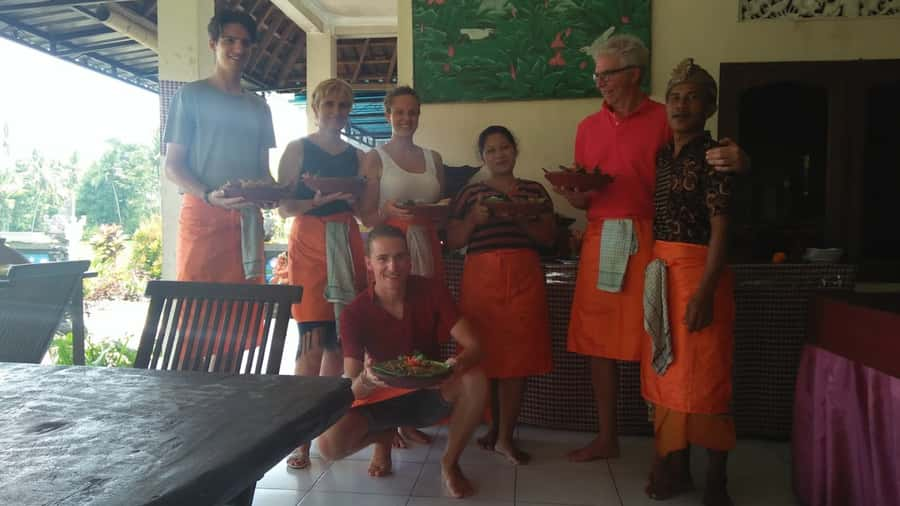
The class runs for about two to three hours, depending on the option and pace of the group. You begin with an introduction to the ingredients and the basic ideas behind Balinese cooking. The instructor then shows you how to prepare the dishes step by step.
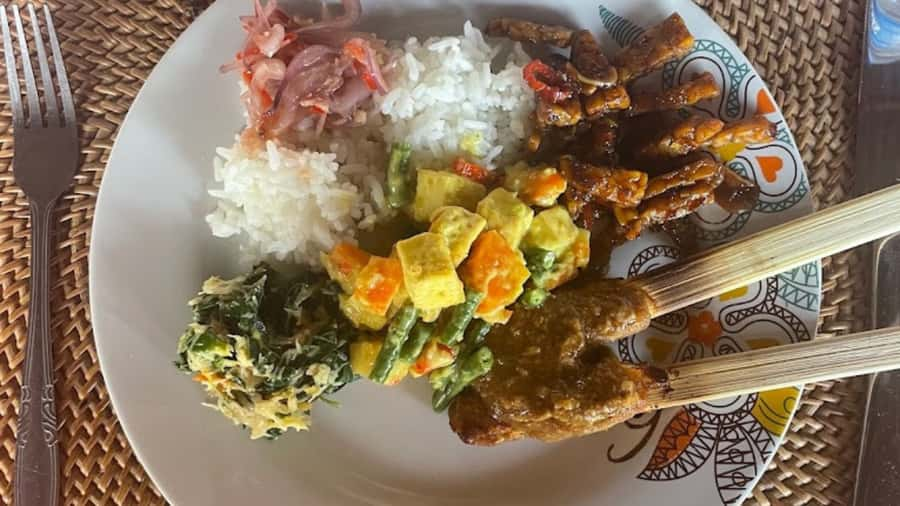
The menu can include fragrant curry, satay, soup, sambal, tempeh, vegetables, rice-based dishes, pancakes, and other desserts. The precise menu is not fixed in the information provided, so you should think of the class as a broad Balinese meal rather than a single signature recipe.
The spice preparation is one of the most interesting parts. Instead of treating seasoning as something that comes from a jar, you work with several ingredients and learn how they are chopped, mixed, or ground. This gives you a better feel for the balance of heat, sweetness, salt, and fragrance.
The class is hands-on without forcing every person to cook every dish alone. You may chop vegetables, mix spices, prepare satay, work on a sauce, or help with a dessert. The group then combines its efforts into one large meal.
That team approach suits people who enjoy a social activity. You are likely to talk with other participants while working, and small groups make it easier to ask questions. The maximum group size is 10, while some sessions have only five or seven people.
If you want a private cooking lesson with individual portions and one-on-one instruction, this may feel less tailored. The group format means you share tasks. For most people, though, the teamwork is part of the fun and keeps the class moving.
More market tours around Indonesia:
- Active Volcano, Rice Field, Hot Spring, Fruit market, Tea Plantation with Lunch
★ 5.0 · 513 reviews - Balinese Cooking class with traditional morning market visit
★ 5.0 · 161 reviews - Jambangan bali cooking class with morning market tour
★ 5.0 · 35 reviews - Denpasar: Museum, Traditional Market and Food Tasting Tour
★ 4.9 · 33 reviews
The food is the payoff, not an afterthought
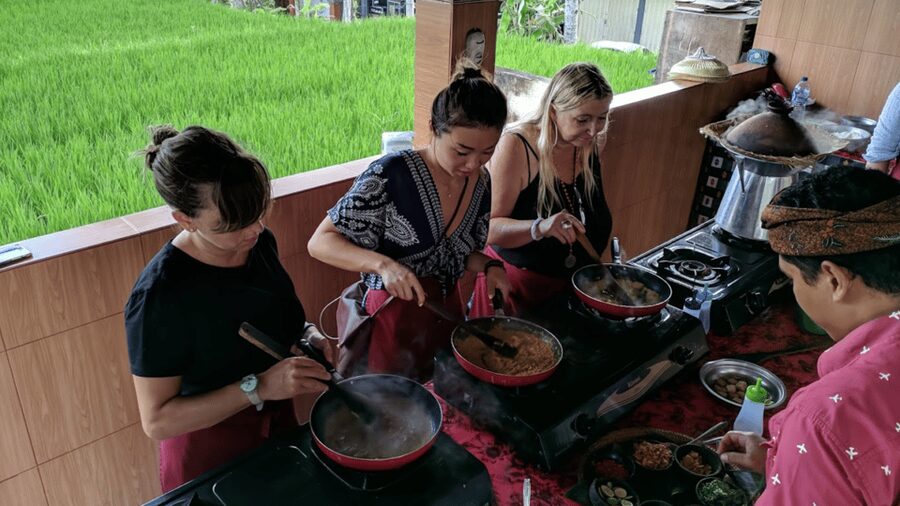
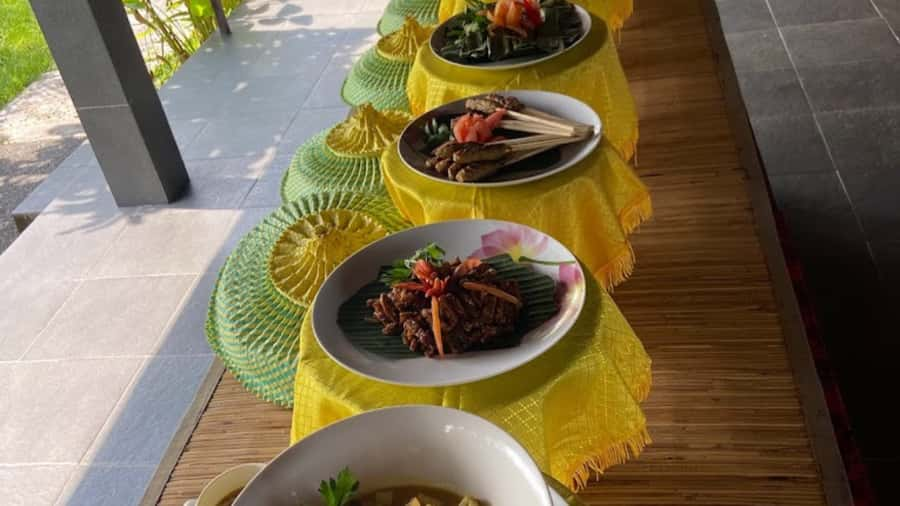
Once the cooking is finished, everyone sits down to eat. The meal is generally served as a shared or buffet-style spread, allowing you to sample the different dishes made by the group.
This is where the $21 price looks especially strong. You get transport from central Ubud when that option is selected, a guide, the class, and the meal. The morning version also includes the market visit. Even if you booked the class only for the food, you are getting a substantial dinner or lunch rather than a small tasting plate.
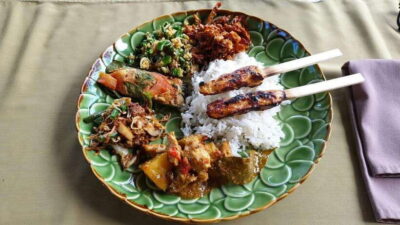
The amount of food can be surprisingly large. One session produced about 10 dishes, while another included enough variety to create a full buffet. Expect the meal to reflect the group’s work, so some dishes may be more successful than others. That is normal for a participatory class, and it makes the final meal feel earned.
The food is also practical. Instructors can provide alternatives for vegetarians, people who do not eat fish, and some dietary restrictions. Examples include using rice flour for pancakes and adjusting dishes for allergies or intolerances. You should tell the provider about dietary needs before the class, because the information does not promise every possible substitution.
Dessert gets plenty of attention. Pancakes were a favorite with families and children, while sweet tempeh was singled out as a memorable dish. If you are traveling with teenagers, this offers a useful balance: cultural discussion for the adults, active kitchen work for everyone, and a meal at the end.
The cultural lessons are the real added value
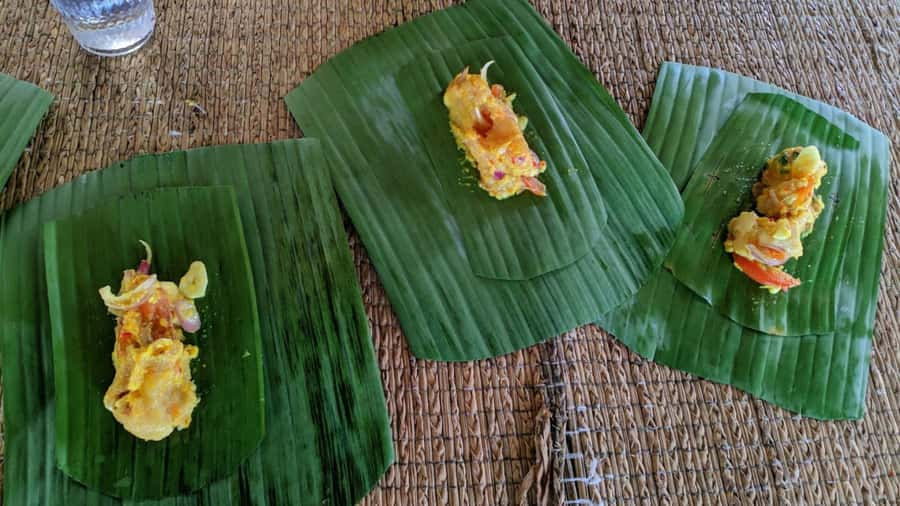
Many Ubud activities offer a brief mention of Balinese culture. Here, cultural information is built into the class.
You may learn how offerings are made, how Balinese homes and compounds are arranged, how rice is grown, and how food relates to religion and family life. The discussion is not separate from the cooking. It explains why certain ingredients, preparation methods, and dishes matter.
I especially like this approach because it avoids treating Balinese food as a list of exotic ingredients. You learn about the people and customs behind the recipes. The food becomes easier to remember because it has a setting and a purpose.
The instructors also explain rather than lecture. The class is described as informative but relaxed, with clear English instruction. An English audio guide is listed as included, and the live guide also speaks English.
The amount of cultural discussion can vary by instructor and group. If you want a detailed academic talk about religion or agriculture, this is not that. It is an accessible introduction linked to the practical work in the kitchen.
Transport, meeting points, and timing
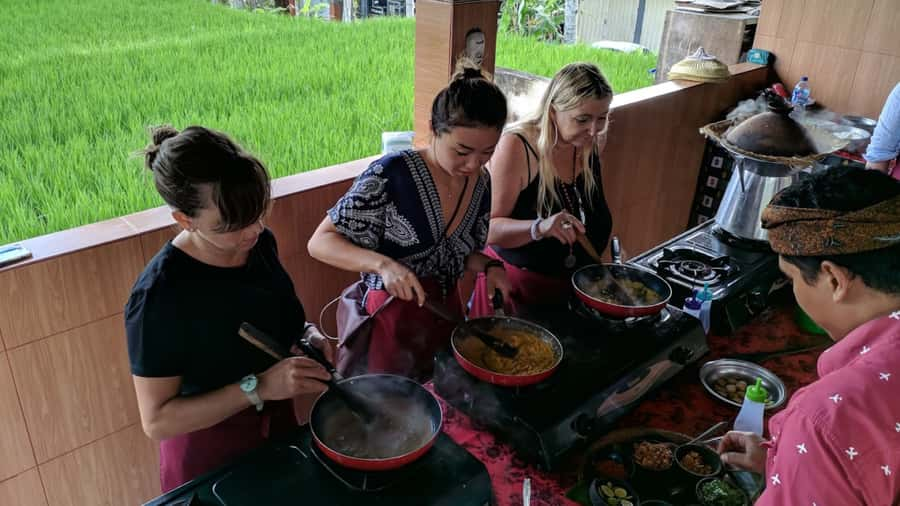
Hotel pickup and drop-off are included for the listed morning and afternoon options when you stay in Ubud Center. You should wait in your hotel lobby at the agreed time. If you are staying in Sebali or Keliki, an extra charge of 50,000 Indonesian rupiah per person applies.
Some people choose to make their own way to the cooking location by scooter. The location has parking, and one class was described as about 10 minutes from central Ubud by scooter. If you arrange your own transport, confirm the meeting details carefully.
For evening sessions, the meeting point is a parking field because of traffic. That detail matters. Ubud roads can be slow, especially around busy central areas, so do not assume a car can pull up directly outside the cooking school.
The afternoon and evening options are useful if you already have morning plans. They skip the market and go directly to the kitchen. An evening class can also work well as a dinner activity, since you eat the meal after cooking.
What to bring and how to prepare
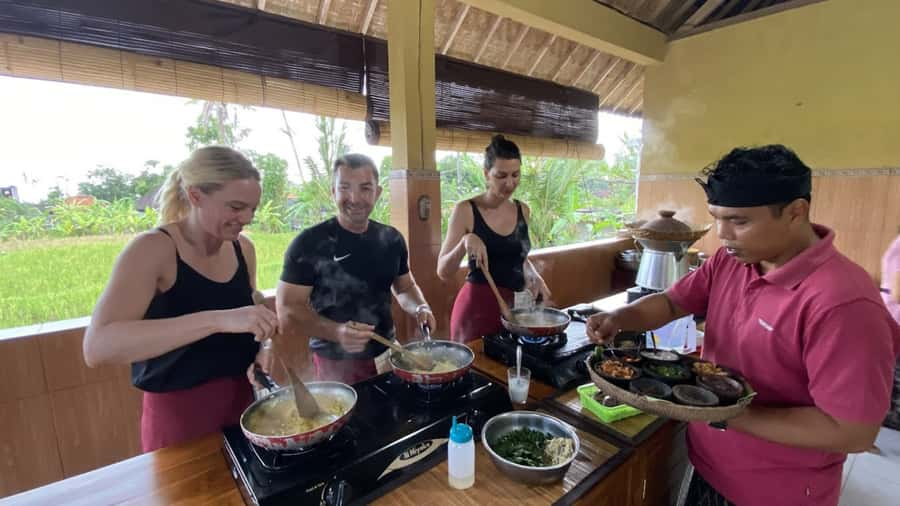
Wear clothes and shoes you do not mind using around food and outdoor cooking areas. The class is active, so you will be standing, chopping, mixing, and moving between tasks.
Arrive hungry, but not so hungry that you cannot focus. The meal comes at the end, and the class lasts two to three hours. You may also want to bring a small amount of space in your day for conversation and cultural explanation. Rushing away immediately after the meal would miss part of the experience.
If you have allergies, avoidances, or dietary preferences, share them when booking and repeat them to the instructor. Alternatives have been provided for vegetarian diets, no-fish diets, and some intolerances, but the class needs advance notice to plan properly.
A small recipe book is provided in some sessions, and a certificate of completion is included as a memento. The recipe book is the more useful of the two, since it gives you a chance to recreate the dishes at home.
Who will enjoy this most
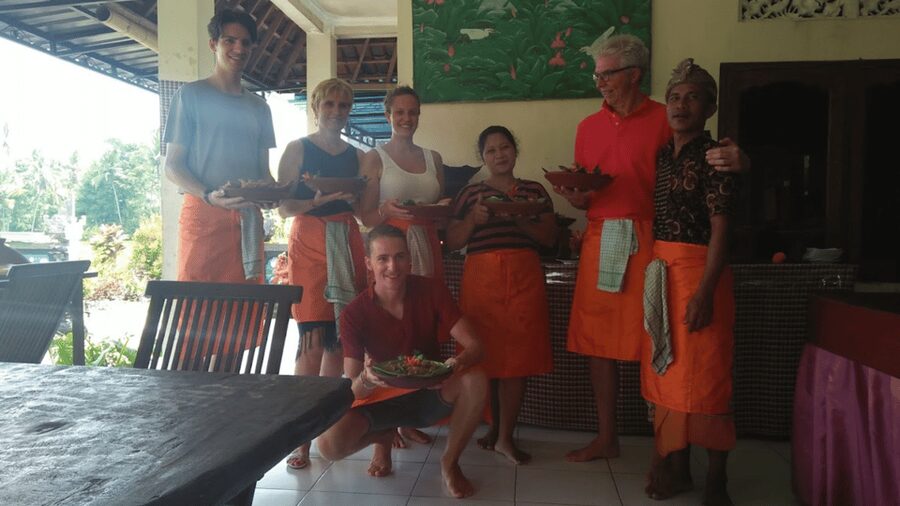
I would recommend this class to first-time visitors who want an easy introduction to Balinese food and customs. It also works well for families with teenagers, couples, solo visitors, and anyone who enjoys meeting people over a shared meal.
It is especially good for people who prefer participation over passive sightseeing. You are not just watching a chef prepare food. You are part of the chopping, mixing, cooking, and final meal.
The small group size helps solo visitors meet other people without the class feeling crowded. It also gives families a shared activity that is more memorable than another restaurant meal.
You may want to choose a different experience if you need a very quiet, private class or if you are looking for advanced culinary training. This is an approachable cultural cooking session, not professional chef instruction. The team cooking style also means you will not personally prepare every dish from beginning to end.
Is this Ubud cooking class worth $21?
Yes, for most visitors, the value is excellent. At $21 per person, you receive a two to three-hour activity, instruction, a meal, and, with selected options, transport and a market visit. The food alone would make the cost reasonable, but the cultural setting and hands-on work add much more.
The strongest version is the morning class with the market visit. Pick it if you want ingredient explanations, local shopping, and a fuller cultural introduction. Choose afternoon or evening if you want a simpler schedule or a cooking-based dinner activity.
The only price caution is location. Pickup is centered on Ubud, and Sebali or Keliki costs an additional 50,000 rupiah per person. Also confirm which inclusions apply to your chosen time, since the market is morning-only.
Should you book it?
Book this class if you want to eat Balinese food and understand how it is made. The best reasons are the family setting, the patient instruction, the market option, the large shared meal, and the chance to learn about offerings and everyday culture.
Choose the morning program if you have room for the market and want the most complete experience. Choose the afternoon or evening program if you mainly want hands-on cooking and dinner. At $21, with a maximum of 10 participants and strong attention to dietary needs, this is one of the better-value cultural activities in Ubud.
FAQ
How long does the Ubud cooking class last?
The class lasts approximately two to three hours. The morning option takes you to the market first, so the full outing may involve more time than a class that goes straight to the kitchen.
Is the market visit included with every class?
No. The market visit is included with the morning option only. Afternoon and evening sessions go directly to the cooking location.
Is hotel pickup included?
Hotel pickup and drop-off are included for selected morning or afternoon options when your accommodation is in Ubud Center. You should wait in your hotel lobby.
Is there an extra charge for Sebali or Keliki pickup?
Yes. Pickup from the Sebali or Keliki area costs an additional 50,000 Indonesian rupiah per person.
How many people can join the class?
The class is limited to 10 participants. Some sessions may be smaller, with groups of around five to seven people.
What language is the class conducted in?
The live guide and class instruction are in English. An English audio guide is also listed as included.
Can the class accommodate vegetarian guests or food allergies?
The class has provided alternatives for vegetarians, people who do not eat fish, and some allergies or intolerances. Tell the provider about your requirements in advance so suitable options can be arranged.
Do you receive anything after the class?
You receive a certificate of completion. Some sessions also provide a small recipe book with the dishes prepared during the class.
New market tours around Indonesia
- Nusa Dua: Balinese Cooking Class with Market Tour★ 5.0 · 4 reviews
- Bali: Balinese Cooking Class and Market Tour★ 4.8 · 19 reviews
- Jambangan bali cooking class with morning market tour★ 5.0 · 35 reviews
- Denpasar: Museum, Traditional Market and Food Tasting Tour★ 4.9 · 33 reviews
- Balinese cooking class/Go shopping at the market, cook, eat★ 5.0 · 12 reviews
- Bali – Ubud Night Market Food Tour★ 3.8 · 14 reviews
- Bali: Ubud Monkey Forest, Coffee Plantation, and Market Tour★ 5.0 · 5 reviews
- Bali: Safari Zoo and Ubud Palace and Market Day Tour★ 4.7 · 6 reviews
Ubud Market Tours, side by side.
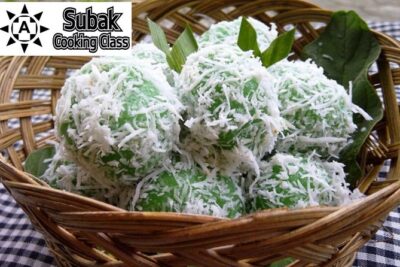
Balinese Ubud cooking school (9 Dish Cooking and Market Tour)
Read our review →
Balinese Cooking class with traditional morning market visit
Read our review →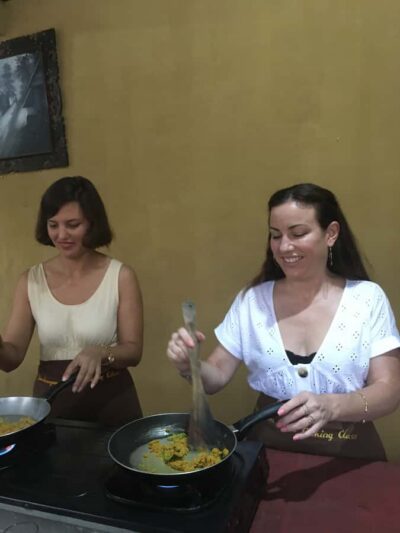
Jambangan bali cooking class with morning market tour
Read our review →
Balinese cooking class/Go shopping at the market, cook, eat
Read our review →
Bali: Safari Zoo and Ubud Palace and Market Day Tour
Read our review →
Bali: Ubud Monkey Forest, Coffee Plantation, and Market Tour
Read our review →This tour also appears in