Review · CHIANG MAI
Half-Day Cooking Class with Market Tour
The best part of this Chiang Mai cooking class happens before the first pan hits the stove: you visit a local market, learn what Thai vegetables and seasonings look like, then use those ingredients in a home kitchen. It is a practical way to understand the food you will be eating around northern Thailand.
I like the freedom to choose dishes from several menus, and I like the warm, informal setting run by hosts such as Oun and Mind. The main consideration is the amount of food. You cook around five dishes plus sticky rice with mango, so skip breakfast or lunch unless you want to carry a very full stomach back to your hotel.
Quick points to know
- Market first, cooking second: See Thai ingredients in their everyday setting before using them in class.
- Choose your own menu: Pick from stir-fries, soups, appetizers, curry pastes, and curries.
- Cook in a real home: The class takes place in the hosts’ house, not a large commercial kitchen.
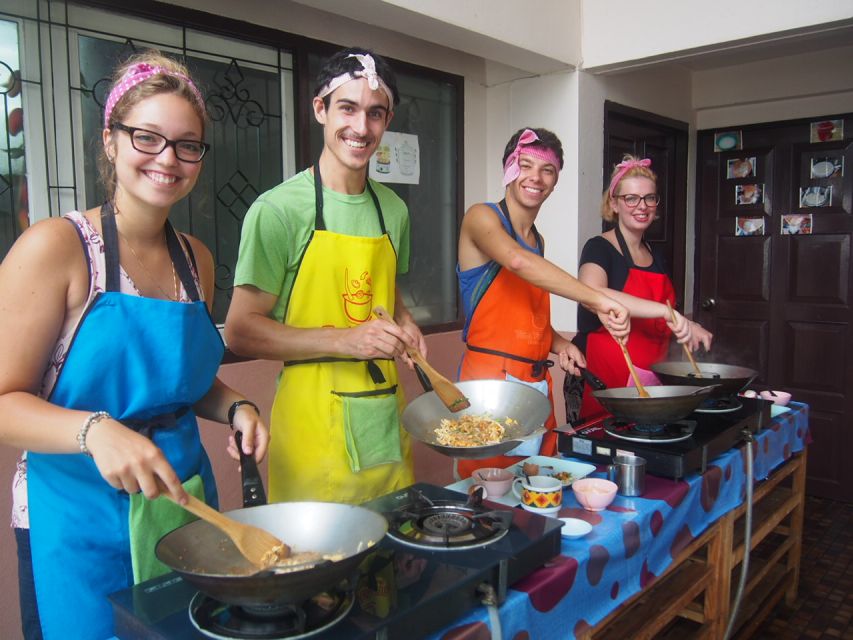
- Small group format: Numbers are limited to 10, with individual cooking stations and skillets.
- Five hours for $36: Pickup, market visit, food, drinks, instruction, and a recipe book are included.
- Good for dietary needs: Vegetarian, gluten-free, pescetarian, allergy, and other food requests can be discussed in advance.
A Chiang Mai cooking class that starts at the market
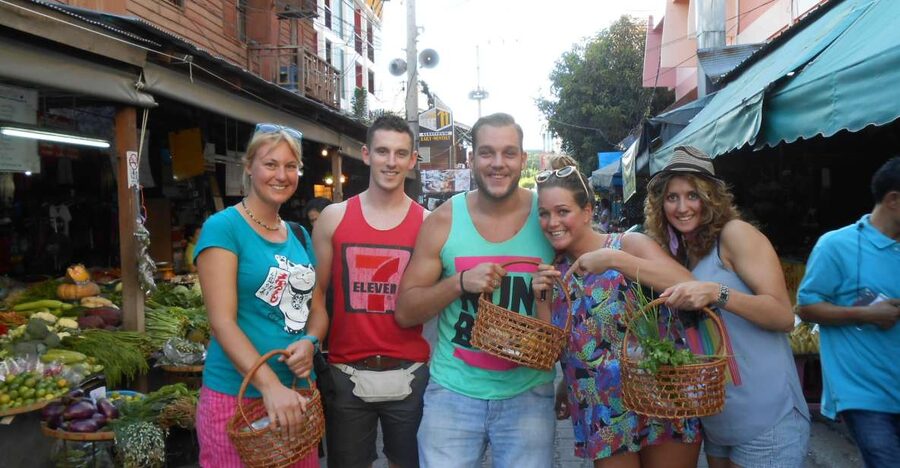
This half-day class gives you a useful two-part experience. First, you go shopping with the guide. Then you cook and eat what you have learned about in a Thai home.
That order matters. A recipe book can tell you that Thai cooking uses chilies, herbs, coconut milk, curry paste, and fish sauce. A market visit helps you connect those words with the actual ingredients. You can look at the vegetables, smell the herbs, and see how local people shop for food.
The market is not presented as a formal sightseeing attraction. It is a working local market where people buy ingredients for daily meals. That makes the stop more useful than a quick photo opportunity, especially if you plan to eat independently in Thailand after the class.
The English-speaking instructors explain the ingredients and how they fit into Thai cooking. Oun is described as friendly, funny, and clear in his instruction, while Mind is praised for her English, organization, and calm handling of mixed groups. A husband-and-wife team helps create the relaxed feel of being invited into someone’s home.
More Market and Cooking Class Tours in Thailand
- Chiang Mai: Cooking Class, Market & Thai Herbs Garden Tour
★ 4.9 · 4,824 reviews - Chiang Mai: Authentic Cooking Class with Market & Farm Visit
★ 4.9 · 4,546 reviews - Chiang Mai: Cooking Class with Market and Pickup
★ 4.9 · 1,365 reviews
Pickup from Chiang Mai Old City
Hotel pickup and drop-off are included for places within 3 kilometers of Chiang Mai’s old city. For the morning class, pickup is usually around 8:45 to 9:15 a.m. The class runs from 9 a.m. to 1:30 p.m.
The afternoon option runs from 3:30 to 8:30 p.m., with pickup around 3 to 3:30 p.m. You wait in your hotel lobby or agreed pickup spot 10 minutes before the scheduled time.
This is a useful inclusion in Chiang Mai, where heat and traffic can make short journeys feel longer than expected. The transport also removes the need to find the cooking school on your own. The precise pickup time can vary, so keep your phone available and do not plan a tight appointment immediately afterward.
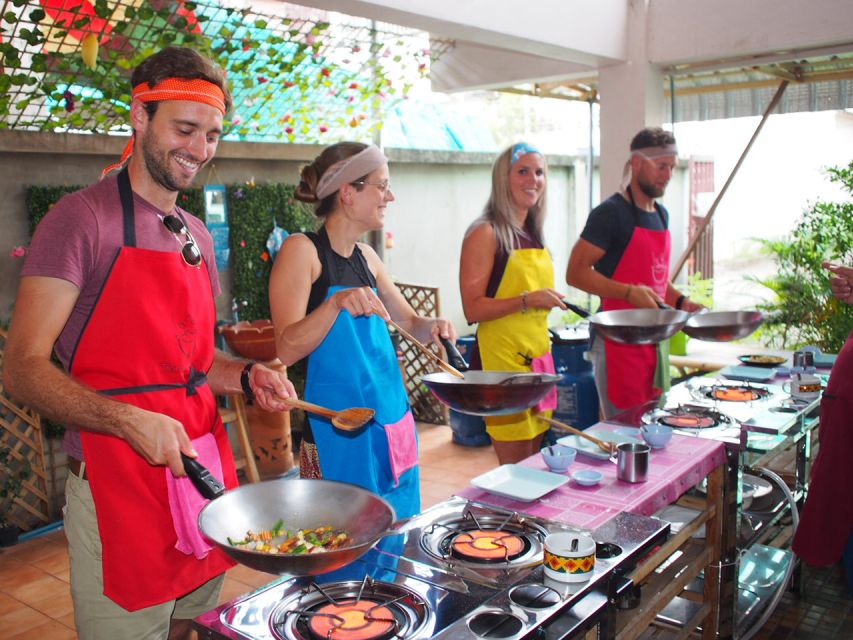
The group is limited to 10 people. That is small enough for the instructor to help with chopping, seasoning, and cooking, while still giving the class a social feel. Several people also describe having their own cooking station and skillet, which means you are not simply watching a chef prepare one shared meal.
Choosing ingredients at the local market
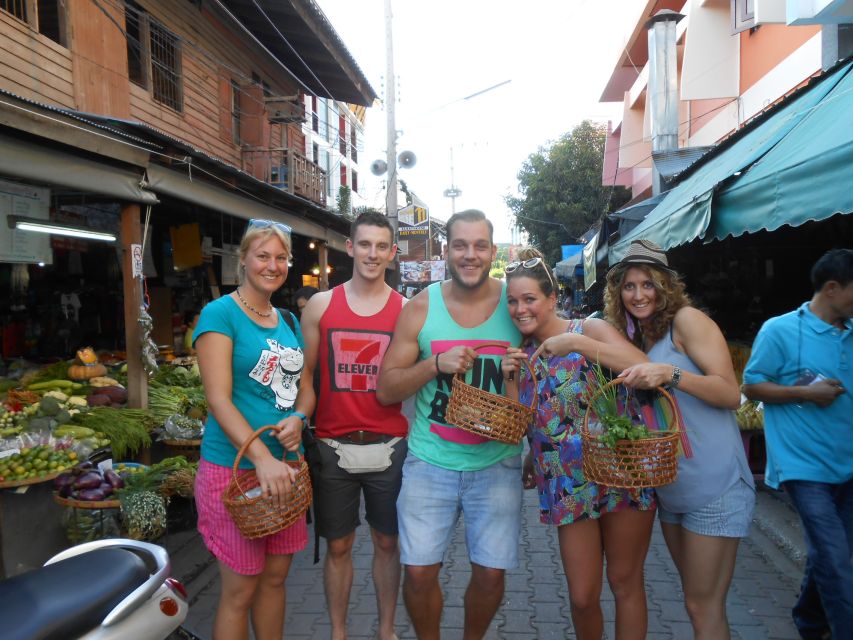
At the market, the guide introduces ingredients used in the selected dishes. This may include vegetables, herbs, curry ingredients, noodles, coconut milk, seafood, and other seasonings listed on the menu.
The most useful part is learning how unfamiliar ingredients work. Thai food can look simple on the plate, but flavor often comes from the balance of hot, sour, salty, sweet, and creamy elements. Seeing the raw ingredients before cooking gives you a better sense of what each one contributes.
You also get to try seasonal fruit and local snacks. Drinking water, tea, and coffee are included, so you are not left searching for refreshments during the morning or afternoon.
The market stop is not especially long, and it is tied to the cooking lesson rather than treated as a separate tour. That is a plus if you want a focused food experience. If you want a long, unhurried market visit with lots of free time, this class may feel more structured than a dedicated market tour.
Cooking in a Thai home kitchen
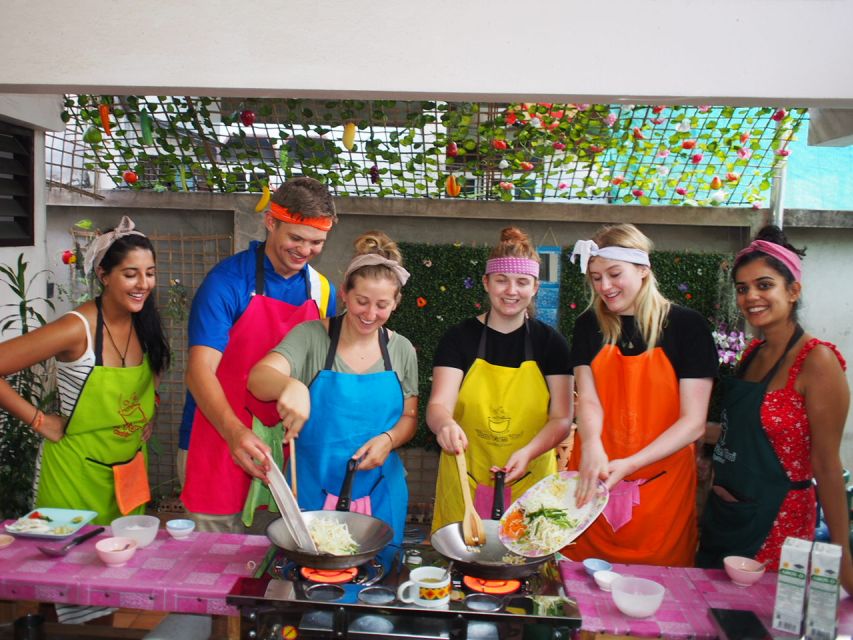
After the market, you go to the cooking school, which is located in the hosts’ home. This is the feature that gives the class its character.
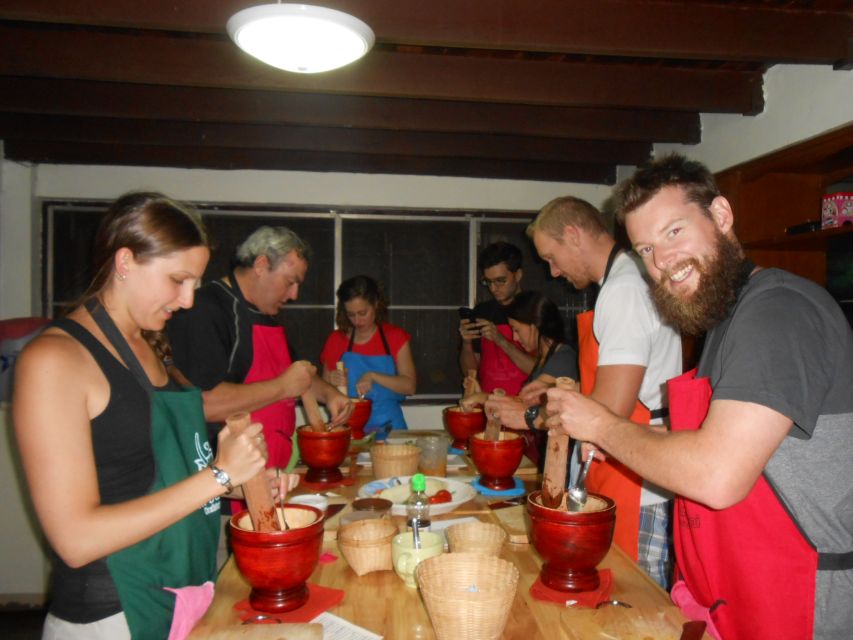
You are not cooking in a polished restaurant classroom designed for large crowds. The setting is a Thai home, with separate areas for preparation, cooking, and eating. The kitchen is described as clean and well equipped, and participants have their own cooking space.
The home setting also changes the tone. The instructors welcome you as visitors rather than processing you through a standard demonstration. They explain the steps, help when needed, and keep the mood light. The class is often described as funny and relaxed, with plenty of encouragement for beginners.
The practical setup is good for learning. Ingredients are prepared for the class, but you still cut and work with them yourself. You cook your own portions, then eat each dish as it is finished. That lets you see the result while the flavors and textures are fresh.
The class can be lively when several people cook at once. It is not a quiet private lesson, and a mixed-language group may require the instructor to repeat or demonstrate some steps. Still, the small group and individual stations make this a hands-on lesson rather than a simple cooking show.
More Market and Cooking Class Tours in Chiang Mai:
- Chiang Mai: Evening Cooking Class and Local Market Visit
★ 4.9 · 648 reviews - Evening Cooking Class in Organic Farm with Local Market Tour
★ 5.0 · 394 reviews - Chiang Mai: Traditional Thai Cooking Class with Market Tour
★ 4.8 · 137 reviews - Chiang Mai: Half Day Cooking Class at Organic Farm
★ 4.8 · 96 reviews
Picking five dishes from a broad Thai menu
The menu covers several familiar Thai styles. You choose dishes from the available options, with one selection from each category. Everyone also prepares sticky rice with mango.
Stir-fried dishes
Options include Pad Thai, cashew nut with chicken, and Pad See Ew. These are approachable choices for first-time Thai cooks, but they also teach useful techniques such as managing heat, preparing noodles, and balancing sauce.
Pad Thai is the obvious pick if you want a dish you can recreate at home. Pad See Ew offers a different noodle style, while cashew nut with chicken gives you a straightforward stir-fry with a savory sauce.
Soups
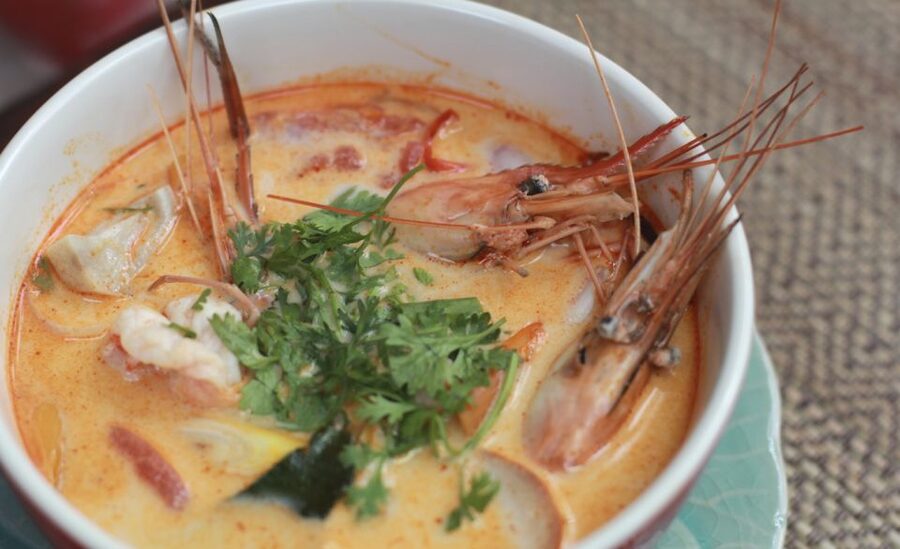
The soup choices are hot and sour prawn soup, also known as tom yum, chicken in coconut milk soup, and Thai noodle soup.
Tom yum is useful for learning how Thai cooks build sharp, fragrant flavor. The coconut milk soup shows a softer, creamier side of Thai cooking. If you prefer something milder or more filling, the noodle soup may suit you better.
You can adjust the level of spice, and the instructors can discuss food preferences and allergies before cooking. Do not assume every dish will be mild, though. Thai food can bring real heat, and the class is designed to show you how the flavors work rather than remove all spice.
Appetizers and salads
The appetizer choices include spring rolls, papaya salad, and cucumber salad.
Spring rolls give you a hands-on dish with a familiar format. Papaya salad is a better choice if you want to learn about the fresh, sharp flavors often associated with northeastern and northern Thai food. Cucumber salad provides a cooler option.
The ability to select different dishes is one of the class’s strongest features. A couple can choose different items and taste more of the menu together. Families can also make choices that suit children or less adventurous eaters.
Curry pastes and curries
You can work with green curry paste, Panang curry paste, or Khao Soi curry paste, then choose a matching curry such as green curry, Panang curry, or Khao Soi.
Khao Soi is the especially useful northern Thai option. Chiang Mai is one of the best places to encounter this curry noodle dish, so learning its curry base gives the class a clear local connection. Panang curry is generally thicker and fuller, while green curry brings a brighter herbal profile.
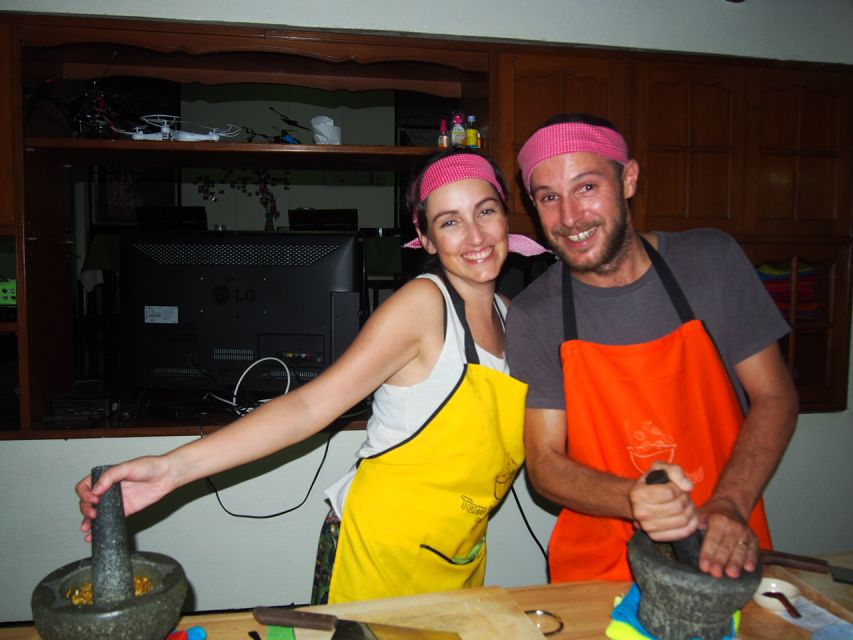
Making curry paste is more useful than simply opening a packet. You learn which ingredients create the base flavor and how the paste changes the final dish. The recipe book gives you a way to try the process again at home, although you may still need to find a well-stocked Asian grocery store for some ingredients.
Sticky rice with mango
Everyone makes sticky rice with mango. This sweet finish also helps you understand why the rice has a different texture from ordinary steamed rice and how it works with coconut flavors.
It is a pleasant ending to a substantial meal, though it adds to the total amount of food. I would plan to eat lightly before the class. Several people found the portions generous enough that they needed no further meal for many hours.
How much food will you actually eat?
You do not just cook five dishes and take them home. You eat them during the class, course by course, along with the dessert.
The exact number can sound confusing because the menu describes five dishes and one special dish, while the choices are spread across stir-fries, soup, appetizers, curry paste, curry, and dessert. In practice, you select from the categories offered and prepare a large meal, with sticky rice and mango included for everyone.
This is excellent value for anyone who wants to sample several Thai dishes in one sitting. It is less suitable if you prefer a short demonstration followed by a small tasting.
The food also becomes more memorable because you made it yourself. You learn how much seasoning you like, how quickly ingredients cook, and how to change the spice level. The recipe book means the class does not end when you leave Chiang Mai.
Dietary requests and spice levels
You should tell the operator about allergies and special requests before the class. The hosts have accommodated vegetarian, gluten-free, pescetarian, and other eating styles, and they have adjusted dishes for allergies.
That flexibility is important because many Thai sauces and curry pastes can contain seafood ingredients or other items that are easy to overlook. Do not wait until you arrive to mention a serious allergy. Give the school clear information in advance.
Vegetarian cooking is not treated as an afterthought. The menu can be adjusted, and the hosts are used to changing ingredients while keeping the dish recognizable. Still, ask exactly which sauces and pastes will be used if you need strict avoidance of fish sauce, shrimp paste, or other ingredients.
Is $36 good value?
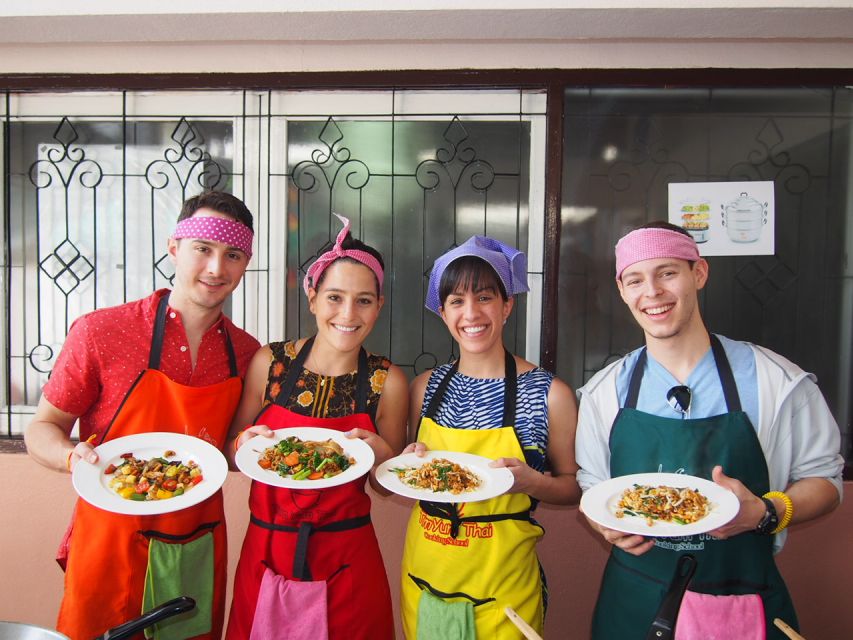
At $36 per person, this is strong value for a five-hour experience. The price includes hotel pickup and drop-off within the stated area, the market visit, drinks, ingredients, instruction, the full meal, and a recipe book.
A cooking class can be expensive if it consists mainly of watching a chef. Here, you get several hands-on dishes, a market introduction, and a substantial meal. The home setting also gives you something that a standard restaurant meal cannot.
The value is best if you care about learning and eating. If you only want to taste Thai food, you can eat more cheaply at local restaurants. If you want to understand how the dishes are put together and take the recipes home, the class earns its price.
Who should book this class?
I would recommend it to first-time visitors who want an early introduction to Thai food. Taking the class near the start of your trip can help you recognize ingredients and order with more confidence later.
It also suits couples and families because everyone can choose different dishes. Beginners are welcome, and the instructions are designed to be easy to follow. Food lovers will appreciate the chance to compare soups, curries, noodles, salads, and stir-fries in one session.
It is a good rainy-day activity, too. The cooking takes place indoors, and the class still gives you a connection to daily life through the market visit.
You may want a different experience if you dislike group activities, have very limited time, or want a quiet private lesson. Five hours is a sizeable block, and the meal is large. This is not a quick stop between temple visits.
Practical details before you reserve
Morning and evening schedules give you some flexibility. The morning class ends at 1:30 p.m., while the afternoon class finishes at 8:30 p.m. Choose the morning if you want the rest of the day free, or the afternoon if you prefer a slower start.
Wear clothes that are comfortable for cooking and market walking. The class includes food preparation, so avoid anything you would worry about around sauces, oil, or curry paste.
The English guide is included, and the small group is limited to 10 participants. Free cancellation is available up to 24 hours before the activity for a full refund, and you can reserve now and pay later.
Should you book it?
Book this class if you want to cook, not just watch. The market visit, home kitchen, choice of dishes, individual stations, and generous meal make it one of the more useful food activities in Chiang Mai.
The strongest reason to choose it is the combination of practical instruction and personal hospitality. Oun, Mind, and the other hosts bring humor and clear guidance, while the home setting keeps the experience friendly rather than formal.
Skip it if you are looking for a short tasting or if five hours of cooking and eating sounds excessive. For everyone else, $36 buys a full half-day, a meal you helped create, and recipes you can try again after Thailand.
FAQ
Where does the cooking class take place?
The class takes place in a Thai home that operates as the cooking school in Chiang Mai Province.
How long does the experience last?
The experience lasts five hours. The morning class runs from 9 a.m. to 1:30 p.m., and the evening class runs from 3:30 p.m. to 8:30 p.m.
Is hotel pickup included?
Yes. Pickup and drop-off are included for hotels or locations within 3 kilometers of Chiang Mai’s old city.
What time is pickup?
Morning pickup is around 8:45 to 9:15 a.m. Evening pickup is around 3 to 3:30 p.m. You should wait in the lobby or pickup area 10 minutes early.
How many people can join the class?
The group is limited to 10 participants.
Is the class taught in English?
Yes. The live guide language is English.
Do I visit a market during the experience?
Yes. You visit a local market before going to the cooking school, learn about Thai ingredients, and explore how local people shop.
Which dishes can I cook?
Choices include Pad Thai, Pad See Ew, cashew nut with chicken, tom yum, chicken in coconut milk soup, Thai noodle soup, spring rolls, papaya salad, cucumber salad, green curry, Panang curry, and Khao Soi. Everyone also makes sticky rice with mango.
Can the class accommodate allergies or special diets?
Yes. You should tell the operator about allergies, vegetarian needs, gluten-free requirements, pescetarian preferences, or other special requests in advance.
What is included in the price?
The $36 price includes the market visit, drinking water, tea and coffee, ingredients, cooking instruction, the meal, a recipe book, and hotel pickup and drop-off within 3 kilometers of Chiang Mai’s old city.
More half-day market trips around Chiang Mai
- Half-Day Railway Market and Floating Market Tour in Thailand
★ 4.5 · 3,924 reviews - Dubai: Half-Day City Tour with Blue Mosque, Creek, and Souks
★ 4.8 · 3,059 reviews - Dubai Half-Day City Tour with Visit to Dubai Gold Souk
★ 4.0 · 1,741 reviews - Half-Day Chengdu Cooking Class with a Local Market Visit
★ 5.0 · 465 reviews
New market tours around Chiang Mai
- Chiang Mai: Half Day Morning Cooking Class with Market Tour★ 4.9 · 10 reviews
- Chiang Mai: Half Day Cooking Class at Organic Farm★ 4.8 · 96 reviews
- Full Day Thai Cooking Class in Organic Farm and Market★ 5.0 · 3 reviews
- Chiang Mai: Traditional Thai-Akha Cooking Class& Market Tour★ 5.0 · 25 reviews
- Chiang Mai: Traditional Thai Cooking Class with Market Tour★ 4.8 · 137 reviews
- Chiang Mai: Morning Cooking Class with Market Visit★ 4.9 · 81 reviews
- Chiang Mai Light: Tuk Tuk Night Tour with Temples & Markets★ 5.0 · 7 reviews
- Chiang Mai: Sticky Waterfall by Local Truck with Market Stop★ 4.8 · 26 reviews
Chiang Mai Market Tours, side by side.
Chiang Mai: Cooking Class, Market & Thai Herbs Garden Tour
Read our review →
Chiang Mai: Authentic Cooking Class with Market & Farm Visit
Read our review →
Chiang Mai: Cooking Class with Market and Pickup
Read our review →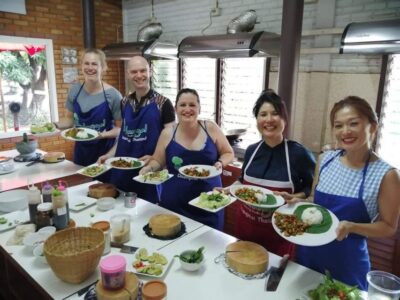
Chiang Mai: Evening Cooking Class and Local Market Visit
Read our review →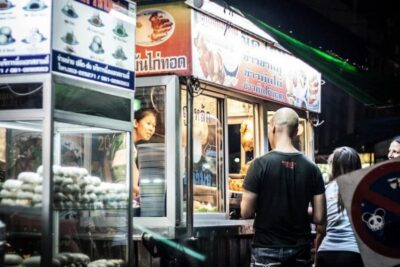
Chiang Mai: Evening Local Street Food Market Tour
Read our review →
Chiang Mai: Kalare Night Bazaar Boxing Stadium Muay Thai
Read our review →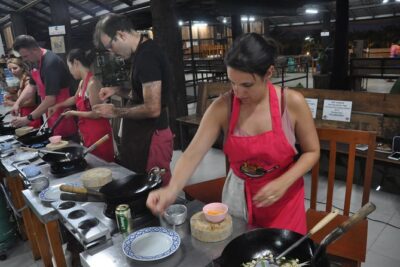
Evening Cooking Class in Organic Farm with Local Market Tour
Read our review →