
Review · CHIANG MAI
Chiang Mai: Elephants, Sticky Waterfalls, Market and Temple
The best part of this Chiang Mai day tour is its variety. You can climb a waterfall, inspect a rural food market, visit the colorful Wat Ban Den, and spend real time with elephants, all in one long day outside the city. I especially like the small groups, limited to nine, and the guides who often add snacks, photos, and lively stories about Thai culture.
I also like the countryside travel between stops. Paddy fields, orchards, villages, and quiet roads give you a look at northern Thailand beyond the old city walls. The main drawback is the pace: this is a 450 to 510 minute outing, and Sticky Waterfalls can be crowded in high season. The elephant activities also involve close contact, so you should consider your own view of animal tourism before booking.
Key points at a glance
- Climb Bua Thong Sticky Waterfalls: The limestone surface gives you unusual grip, allowing you to walk up wet rock instead of simply viewing the falls.
- See a rural food market: ตลาดเจดีย์แม่ครัว offers a look at local produce, insects, snacks, and everyday northern Thai life.
- Visit colorful Wat Ban Den: Blue, green, pink, and white buildings create a striking Lanna-style temple complex away from the usual Chiang Mai circuit.
- Spend substantial time with elephants: You may prepare vitamin balls, feed bananas and sugarcane, walk with the animals, watch them, and bathe them.
- Travel in a small group: The van holds a maximum of nine people, though some departures have been much smaller.
- Pack for water and sun: Bring a towel, dry clothes, sunscreen, insect repellent, and shoes with a good grip or water shoes.
Why this day outside Chiang Mai works so well
Many Chiang Mai day trips focus on one major attraction. This one works differently. It strings together several distinctly northern Thai experiences, then gives each enough time to feel worthwhile.
You begin with food and daily life at a local market. Then the day turns active at Bua Thong Sticky Waterfalls. After that comes a quiet temple and a local lunch, followed by the main event for many people: hands-on time with elephants.
I like this order because the day builds gradually. You start with an easy cultural stop, get wet and active before lunch, slow down at the temple, and finish with the animals. It is a good choice if you have limited time in Chiang Mai but want more than temples and cafés.
The tradeoff is that you are fitting a lot into one day. The road journey takes about an hour at the start and about 75 minutes on the return, with additional driving between sites. You will see a lot, but this is not a slow, meditative countryside tour.
More market tours around Chiang Mai:
- Chiang Mai: Cooking Class, Market & Thai Herbs Garden Tour
★ 4.9 · 4,824 reviews - Chiang Mai: Authentic Cooking Class with Market & Farm Visit
★ 4.9 · 4,546 reviews - Chiang Mai: Cooking Class with Market and Pickup
★ 4.9 · 1,365 reviews
The market gives the day a local beginning
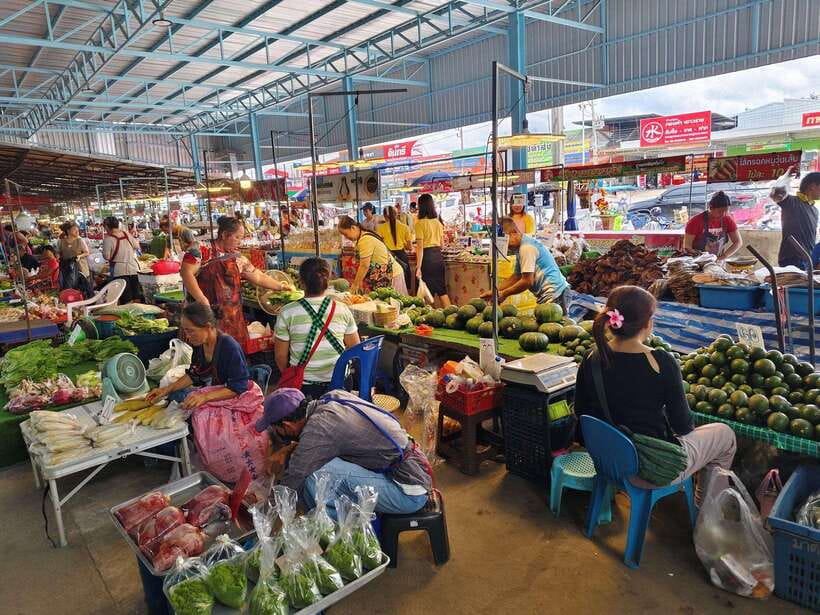
Pickup is listed for around 10:45 am from your hotel lobby or one of several central meeting points, including Wat Loi Kroh, Wat Lok Moli, Wat Santitham, and the Chiang Mai Boxing Stadium. After roughly an hour in the van, you reach ตลาดเจดีย์แม่ครัว, a local market where the guide explains food, shopping, and rural routines.
The market is not simply a place to buy lunch. You might see insects, worms, fresh produce, prepared food, and other items that are less familiar to visitors from outside Thailand. The point is not to force you to taste everything. It is to show how local food habits connect with daily life.
This is where a good guide makes a real difference. Guides such as Blue, Non, Tu, James, and Tom have been praised for explaining Thai customs, offering snacks, and answering questions in clear English. Some visitors have also received market treats to sample during the morning.
You get about 25 minutes here, so expect an introduction rather than a full market study. If you want to take photographs, ask first and follow the guide’s lead around vendors and food stalls. Keep some cash with you for personal purchases, since personal expenses are not included.
Bua Thong Sticky Waterfalls are the day’s most unusual workout
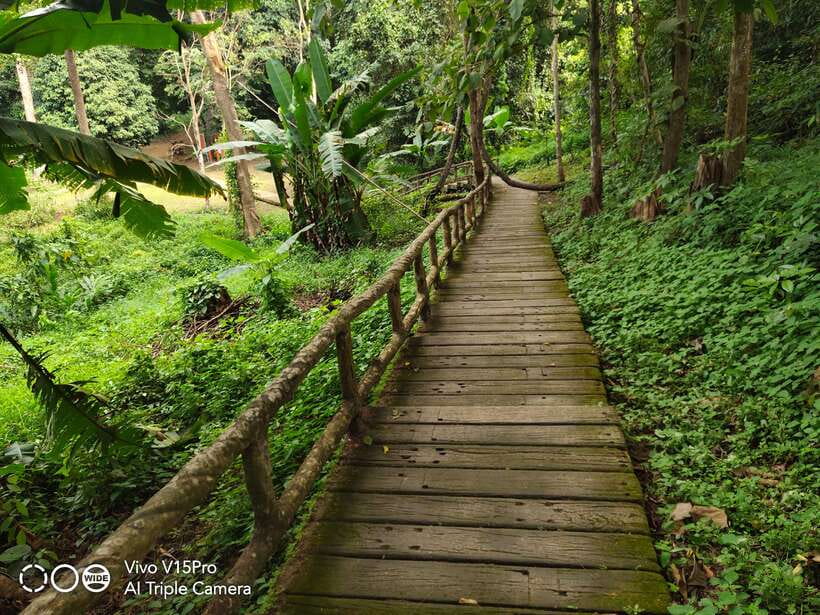
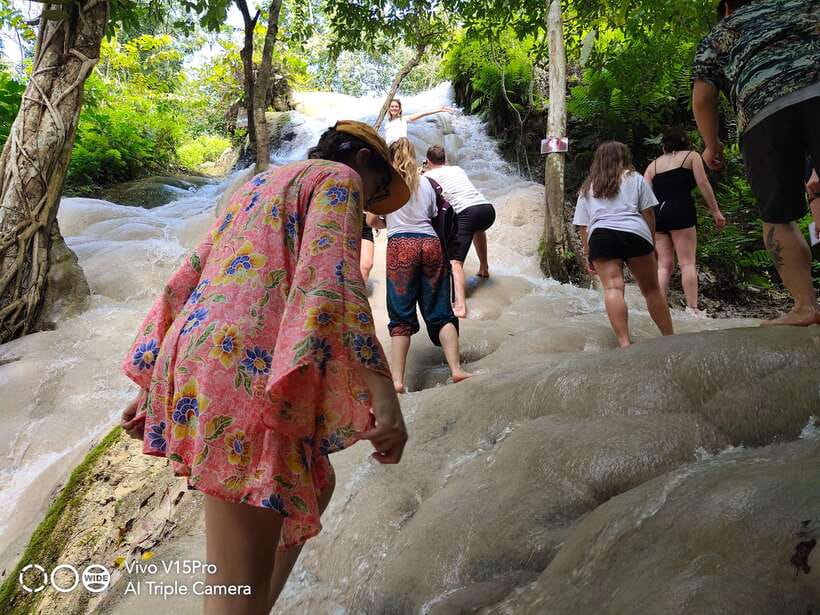
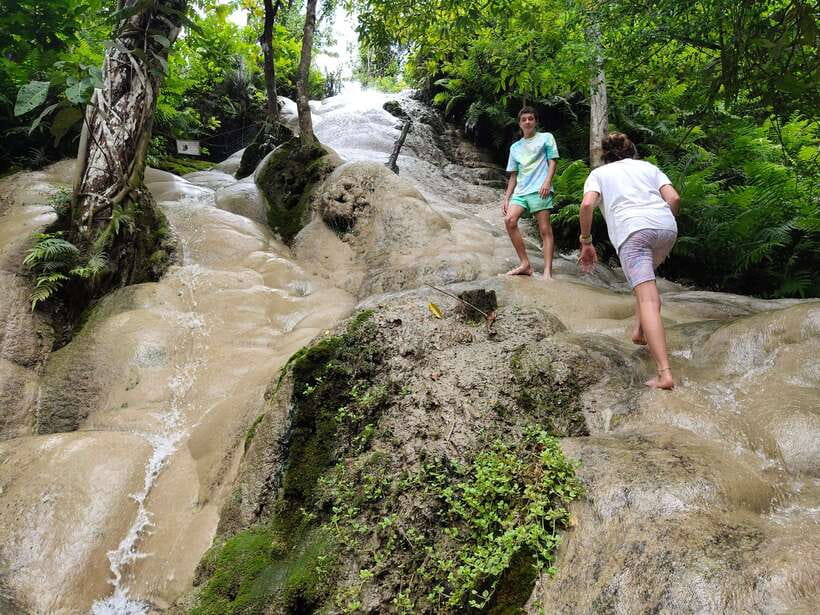
Bua Thong Sticky Waterfalls are not famous because of their height. Their appeal comes from the limestone surface, which gives your feet and hands much more grip than you expect on wet rock.
After arriving, you change into clothing suitable for getting wet. A natural path leads down to the falls, and you can then climb sections of the rock up and down. The sensation is odd at first. Your brain tells you that wet stone should be slippery, yet the textured surface lets you move with surprising confidence.
You should still treat the falls as an active excursion, not a casual photo stop. The rocks are wet, the route requires balance, and some people find the climb more demanding than expected. A guide can help you choose your route and keep an eye on the group, but you remain responsible for moving carefully.
Bring water shoes or secure footwear if you have them. Several people found the falls easier with proper grip. A swimsuit or quick-drying clothes are useful, but the important items are a towel and a full change of clothes.
The listed visit lasts about 100 minutes, which gives you time to change, walk to the falls, climb, and enjoy the forest setting. If you prefer not to climb, you can sit and watch. This matters for mixed-age groups, since older parents or less active companions can enjoy the stop without taking part in every wet section.
High-season weekends and holiday periods may feel crowded. A busy waterfall changes the experience, especially when you are trying to climb narrow sections or pose for photographs. If you dislike crowds, be prepared for this possibility.
Wat Ban Den offers color, scale, and quiet
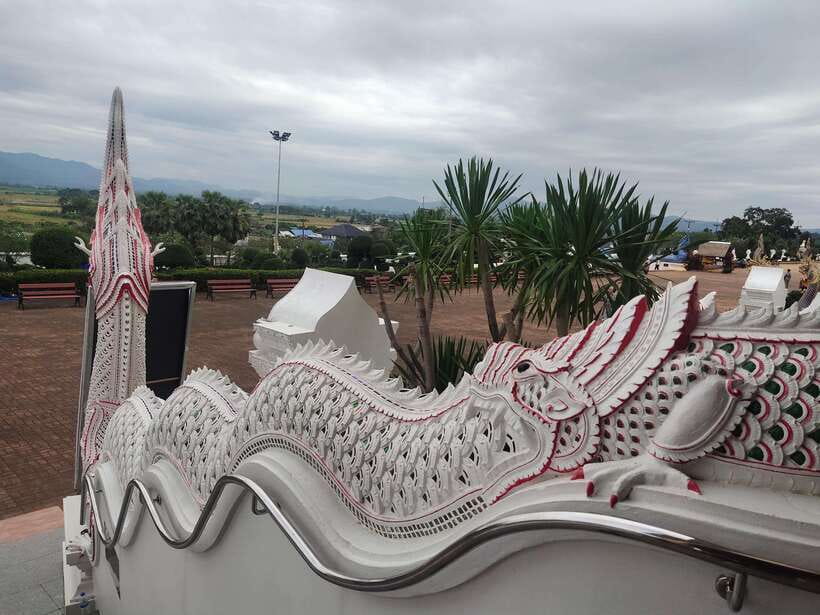
After the waterfall, the van follows countryside roads through paddy fields, villages, and orchards toward Wat Ban Den, also called Wat Banden. This temple is one of the strongest reasons to choose this particular route.
The complex uses a striking mix of white, green, blue, and pink. Its buildings show Lanna design, the traditional northern Thai style, and the setting gives you broad views across the surrounding countryside.
Wat Ban Den feels different from Chiang Rai’s famous White Temple. The White Temple is highly theatrical and built around a single bold visual idea. Wat Ban Den is more varied, colorful, and connected to everyday religious life. It is a working sacred place where local people come to pray, not only a monument designed for photographs.
You get about 40 minutes at the temple. That is enough for photographs, a walk through the grounds, and a quiet pause, but not enough for a detailed study of every building. Dress respectfully and follow temple rules. You may need to remove your shoes in some areas, and one useful tip is to wear socks because temple floors can become very hot under the sun.
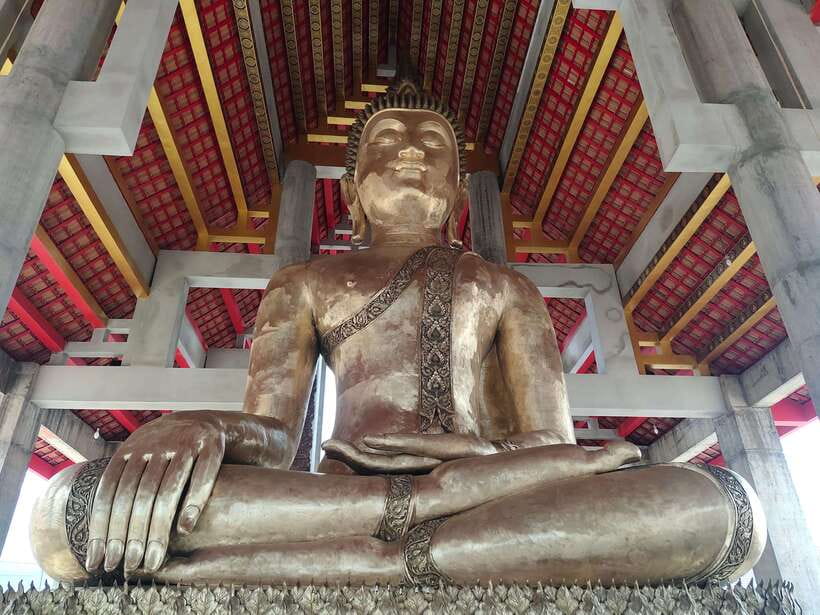
I particularly like the change of mood here. The waterfall is wet, noisy, and physical. Wat Ban Den is calm and visual. Your guide may explain Buddhist customs, temple design, or northern Thai history. Some guides, including Tu, have shared personal experience from time spent as Buddhist monks, which can add useful context without turning the visit into a lecture.
Same city, another market:
- Chiang Mai: Evening Cooking Class and Local Market Visit
★ 4.9 · 648 reviews - Chiang Mai: Evening Local Street Food Market Tour
★ 4.8 · 604 reviews - Chiang Mai: Kalare Night Bazaar Boxing Stadium Muay Thai
★ 4.7 · 507 reviews - Evening Cooking Class in Organic Farm with Local Market Tour
★ 5.0 · 394 reviews
Local lunch keeps the day grounded
Lunch is served at a local restaurant in the area, rather than presented as a formal hotel-style meal. The exact dishes can vary, but the tour includes lunch and drinking water, along with morning snacks.
This is a practical part of the day, but it also fits the theme. You are eating where local people eat, after seeing a rural market and before visiting an elephant property in the countryside. Some meals have included dishes such as Pad Thai, while other groups have received a broader selection of local food.
Tell the guide about food concerns as early as possible. The supplied information does not promise a specific menu or special diet, so you should not assume that every dietary request can be met. Soft drinks and alcohol are not included, though you can pay for personal items yourself.
The elephant visit is personal, active, and worth examining carefully
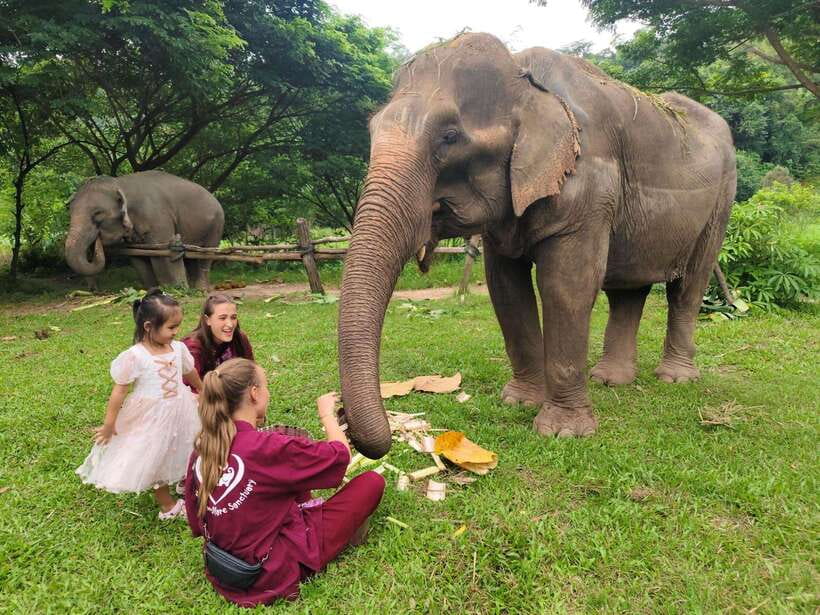
The elephant portion takes place after lunch and lasts about two hours. You change into a provided mahout-style outfit, then learn how to make herbal vitamin and medicine balls. These are intended to help elephants with digestion after eating.
The activities can include:
- Preparing vitamin balls
- Feeding bananas and sugarcane
- Walking alongside the elephants
- Watching their behavior
- Taking photographs
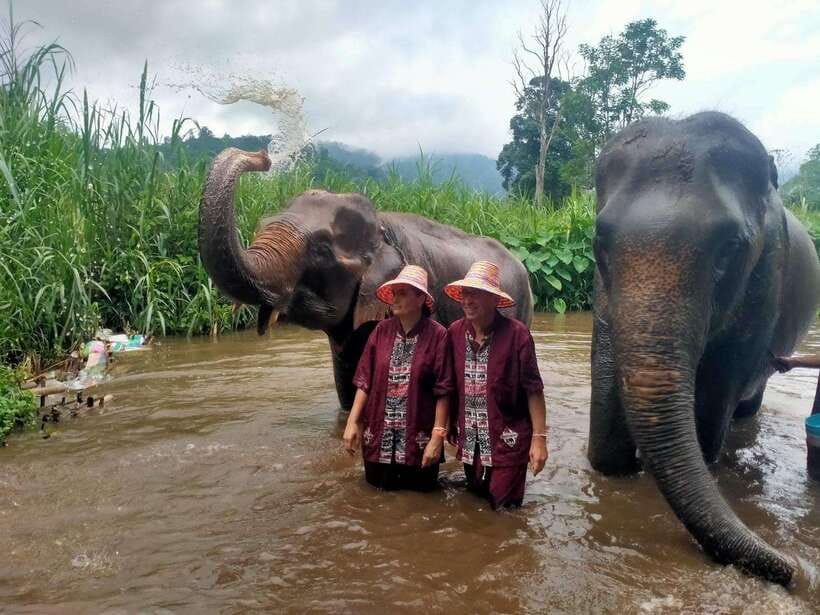
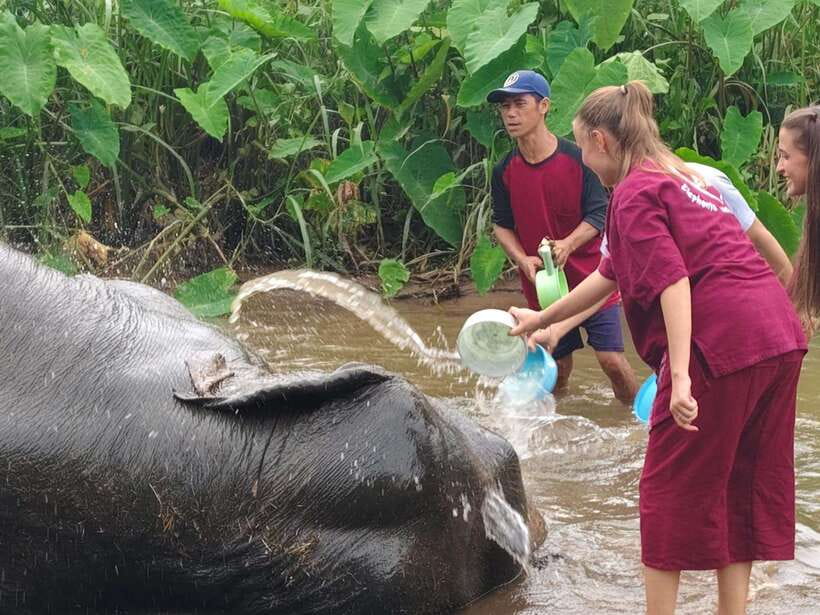
- Bathing them in water
- Learning about their care
This is much more involved than a short stop where you simply stand behind a barrier. You may get wet, muddy, and very close to the animals. One account also describes crossing a river on a small bamboo raft, so expect the setting to be rustic rather than polished.
The setting has been described as a family-run countryside property with few or no large fences in some areas. That can feel more natural than a crowded enclosure, and small groups allow more time for instructions and questions. Some departures have had only two people, while the advertised maximum is nine.
Still, you should make your own judgment about the style of elephant contact. The experience includes touching, bathing, feeding, photographs, and close interaction. One concern raised about a visit was that some elephants appeared trained for tourist behavior. That does not settle the question for every departure, but it is an important point if you only want to support elephant programs that avoid hands-on contact and performance-style activities.
The provider calls itself Elephant Welfare Sanctuary, and the program includes food, care-taker clothing, and lessons about elephant health. I would ask your guide how the elephants are managed, where they spend their time, and what activities they choose to take part in. Watch the animals as much as you watch the camera. Calm behavior, room to move, and patient handling matter more than getting the perfect photograph.
The animal visit is often the emotional high point of the day, but it should not be treated as a guaranteed private encounter. Group size, weather, animal behavior, and the schedule can affect how much time you spend on each activity.
The guides are a major part of the value
The itinerary is good, but the guide determines how much you take from it. The strongest guide reports repeatedly point to people such as Blue, Non, Tu, James, Tom, Pon, and Anon.
The useful qualities are practical: clear explanations, good timing, help on the waterfall, cultural context at the temple, and steady communication throughout a long day. Several guides have also taken photos and short videos during the trip, sometimes sharing them afterward.
Do not count on the photo service as a formal guarantee. One person had many photos taken but did not receive them, while others appreciated having special moments captured. Bring your own camera and ask directly how photographs will be shared.
A small group helps here. With no more than nine people, the guide can answer questions and adjust the pace more easily than on a large coach tour. Some days may be much smaller, but you should book expecting up to nine participants.
What the $70 price really includes
At $70 per person, this is a strong value if you intend to use most of the inclusions. The price covers round-trip transport, an English-speaking TAT-licensed guide, admission fees, lunch, snacks, drinking water, elephant food, vitamin balls, mahout outfits, and local accident insurance.
You would pay separately for personal purchases, soft drinks, alcohol, and anything else not listed. The price also saves you from arranging separate transport to a market, waterfall, temple, and elephant property, which would be difficult to coordinate in one day.
The value is highest for people who want a packed day with several types of activity. If you only want a quiet temple visit or a short elephant encounter, this tour may feel too full. If you want variety and do not mind spending much of the day on the road, the included transport and meals make the price sensible.
What to pack for a smoother day
Pack light, but bring the items that protect you from wet clothes, heat, and insects.
- Comfortable shoes with good grip, ideally water shoes for the falls
- A towel and a complete change of clothes
- Comfortable clothing for climbing and elephant activities
- Sun hat and sunscreen
- Insect repellent
- Camera or phone in a waterproof pouch
- Cash for personal purchases
- Socks for temple floors
Food is not allowed in the vehicle, and smoking indoors is not permitted. Children under two, pregnant people, wheelchair users, and people over 75 are listed as unsuitable for the activity. The information also excludes babies under one and people over 95, so the tour is best for participants who can manage uneven ground, wet rocks, and a long day.
Should you book this Chiang Mai day tour?
Book it if you want a full, active day that combines local food culture, countryside views, a distinctive temple, a strange and fun waterfall climb, and close elephant contact. It is especially suited to first-time visitors, families with older children, couples, and anyone with limited time who wants several different experiences in one booking.
Think twice if you dislike wet activities, long van rides, crowded attractions, or hands-on elephant programs. The waterfall can be busy, the schedule is full, and the animal contact deserves personal ethical consideration.
For most suitable participants, I see the appeal. The market and temple give the day cultural weight, the waterfall adds real play, and the small group makes the long route easier. At $70, it is a well-priced way to see a broader slice of Chiang Mai Province, provided you are comfortable with the elephant program’s close-contact format.
FAQ
What time does the tour begin?
Pickup is scheduled for around 10:45 am from your hotel lobby or a selected meeting point in Chiang Mai.
How long does the full experience last?
The tour lasts approximately 450 to 510 minutes, including transport, visits, activities, lunch, and the return journey.
What is included in the $70 price?
The price includes round-trip transfer, admission fees, lunch, snacks, drinking water, an English-speaking TAT-licensed guide, elephant food, vitamin balls, mahout outfits, and local accident insurance.
Do I need to bring swimwear?
You should bring a change of clothes and a towel because the Sticky Waterfalls and elephant activities can get you wet. Water shoes or other secure footwear are also useful.
How many people are in the group?
The tour is limited to nine participants. Some departures may be smaller, depending on bookings.
Can I cancel or pay later?
You can cancel up to 24 hours before the activity for a full refund. The booking option also allows you to reserve now and pay later.
New market tours around Chiang Mai
- Chiang Mai: Half Day Morning Cooking Class with Market Tour★ 4.9 · 10 reviews
- Half-Day Cooking Class with Market Tour★ 5.0 · 163 reviews
- Chiang Mai: Half Day Cooking Class at Organic Farm★ 4.8 · 96 reviews
- Full Day Thai Cooking Class in Organic Farm and Market★ 5.0 · 3 reviews
- Chiang Mai: Traditional Thai-Akha Cooking Class& Market Tour★ 5.0 · 25 reviews
- Chiang Mai: Traditional Thai Cooking Class with Market Tour★ 4.8 · 137 reviews
- Chiang Mai: Morning Cooking Class with Market Visit★ 4.9 · 81 reviews
- Chiang Mai Light: Tuk Tuk Night Tour with Temples & Markets★ 5.0 · 7 reviews
Chiang Mai Market Tours, side by side.
Chiang Mai: Cooking Class, Market & Thai Herbs Garden Tour
Read our review →
Chiang Mai: Authentic Cooking Class with Market & Farm Visit
Read our review →
Chiang Mai: Cooking Class with Market and Pickup
Read our review →
Chiang Mai: Evening Cooking Class and Local Market Visit
Read our review →
Chiang Mai: Evening Local Street Food Market Tour
Read our review →
Chiang Mai: Kalare Night Bazaar Boxing Stadium Muay Thai
Read our review →
Evening Cooking Class in Organic Farm with Local Market Tour
Read our review →
Chiang Mai: Local Food and Markets Guided Walking Tour
Read our review →This tour also appears in