
Review · UBUD
Jambangan bali cooking class with morning market tour
The best part of the Jambangan Bali Cooking Class happens before the first knife hits the cutting board. You visit a morning market, choose herbs and vegetables, watch rice farmers at work, then return to a Balinese family home in Kelabang Moding village. Putu and his family use food to explain daily life, not just recipes.
I like the direct contact with local life, especially the market visit and the look inside a traditional home. I also like that you make the food yourself, eat it afterward, and leave with recipes and a certificate. The main consideration is the early start and the five-hour length. This is a full morning, not a quick demonstration.
Key points at a glance
- Market shopping comes first: Choose fresh herbs, spices, vegetables, and meat before cooking.
- Putu and his family host the class: Expect an English-language lesson in a Balinese home.
- The village visit adds context: See rice fields, village temples, a school, and ordinary local routines.
- You make and eat the recipes: The class includes lunch and dinner served in the warung and garden.
- It costs $27 per person: Hotel pickup and drop-off are included in the Ubud area.
- Bring a camera and cash: Water is provided, but drinks such as beer cost extra.
Starting at the market before Bali wakes up
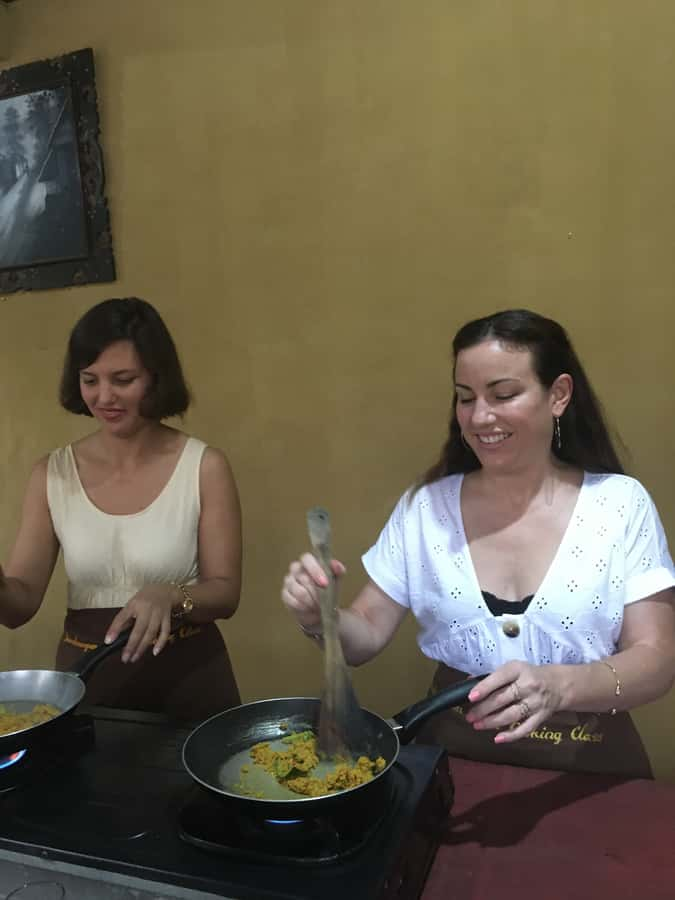
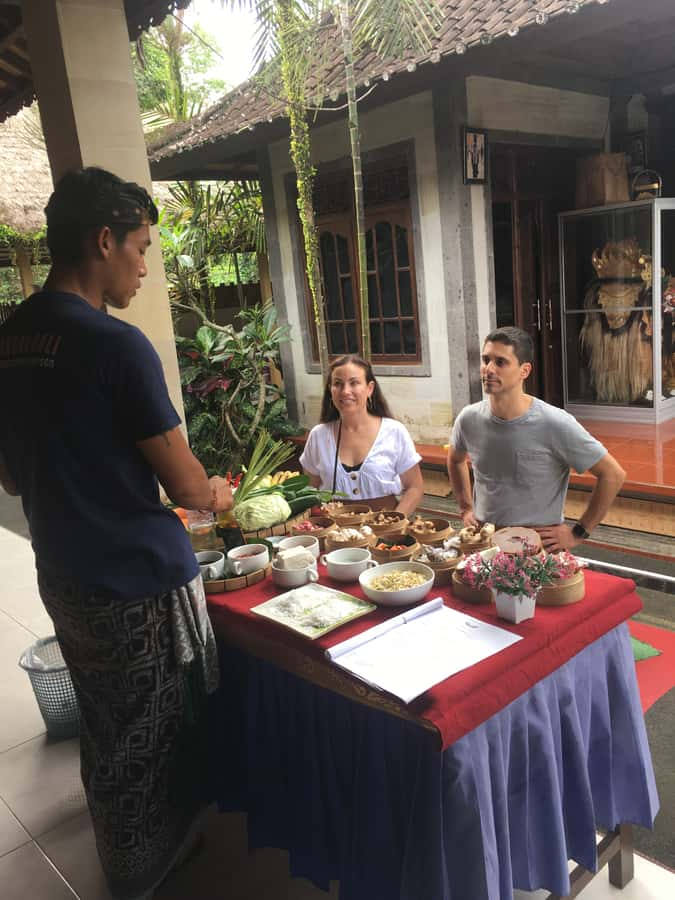
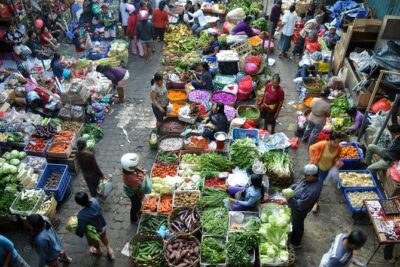
The morning class begins at a local market. This is more useful than simply walking through a market with a guide, because you are choosing the ingredients that will later appear on your plate.
You can select fresh herbs and spices, crisp vegetables, and cuts of meat for the meal. The shopping gives you a practical introduction to Balinese cooking. You see what the ingredients look like before they are chopped, mixed, and cooked, and you can connect each market stall to the dishes you prepare later.
The early timing matters. You need to be ready in the hotel lobby 10 minutes before pickup, and the driver will look for you by name. Pickup and return are free for hotels in the Ubud area. If your hotel is outside Ubud, transport may cost extra depending on its location.
This market visit is also the most active part of the cultural program. You are not simply listening to a talk about Balinese food. You are handling ingredients and making choices. If you enjoy food markets, this gives the class a useful sense of place. If you prefer a late breakfast and a slow start, the morning schedule may feel demanding.
More Market and Cooking Class Tours in Indonesia:
- Ubud: Cooking Class with Transfers and Optional Market Visit
★ 4.9 · 824 reviews - Balinese Ubud cooking school (9 Dish Cooking and Market Tour)
★ 5.0 · 540 reviews - Ubud: Balinese Cooking Class and Market Tour
★ 4.8 · 531 reviews
Seeing rice-field work and village life
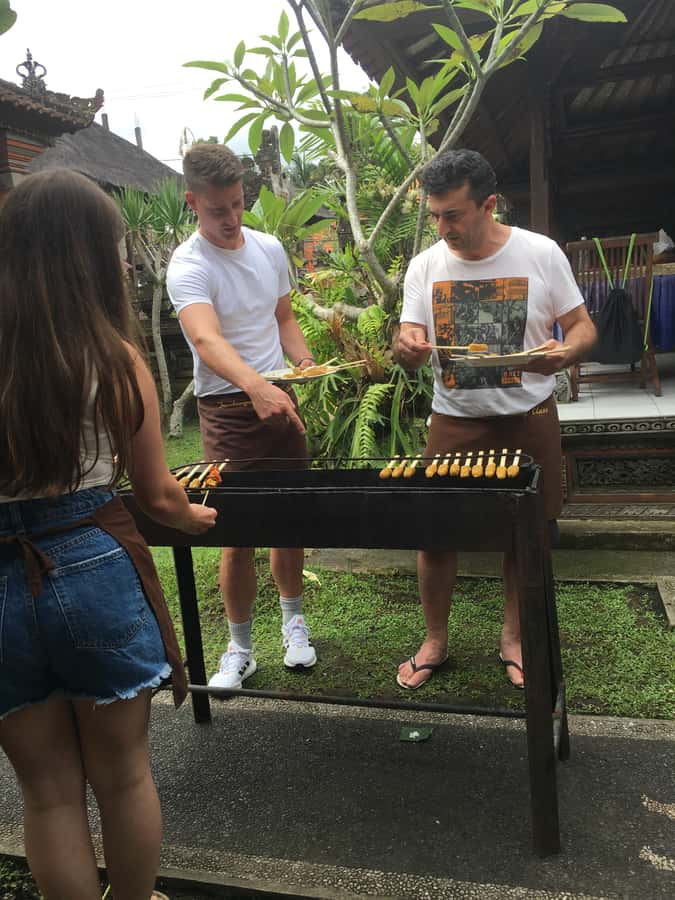
After the market, the outing continues around Kelabang Moding village. You can see rice farmers doing their daily work and speak with local farmers. The experience also includes rice fields, village temples, and a school.
These stops help explain the setting for the meal. Rice is not just a side dish in Bali. The fields, farming routines, and village life form part of the food culture you are learning about. The class connects the ingredients on your cutting board to the people and places that support everyday cooking.
You should keep your expectations realistic. This is not a long countryside walk or a dedicated farming tour. The supplied details do not give a precise walking distance or say how much time is spent at each stop. Think of the rice fields and village sights as part of the route to the cooking class, with short cultural encounters along the way.
The village setting is a strong reason to choose this experience over a cooking school in a commercial kitchen. You get a glimpse of temples, a school, and family life in the same area. That makes the day feel broader than a standard recipe lesson.
Entering a Balinese family home
Back in Kelabang Moding, you are welcomed into a Balinese house. The host family introduces you to the home and explains aspects of Balinese life and culture.
For me, this is where the experience gains its personal character. A purpose-built cooking studio can be efficient, but a family home shows you how the class fits into real daily life. You can see the setting where the food and customs are presented, rather than learning them in an anonymous room.
The class also includes making a daily offering. This gives you a hands-on look at a small but meaningful part of Balinese religious practice. The activity is not only about preparing lunch. It shows how food, family, home, and ceremony connect.
The coconut oil processing is another distinctive feature. You get to see how coconut oil is handled as part of local household knowledge. Details about the exact method are not provided, so you should not expect a long technical workshop. Still, it adds a useful layer to the day and gives you something beyond the usual chopping and frying.
Because the class takes place at a Balinese home, respectful behavior matters. Listen to the hosts, follow their instructions, and treat the home and daily offering with care. The setting is part of the lesson.
Cooking with English-speaking Balinese chefs
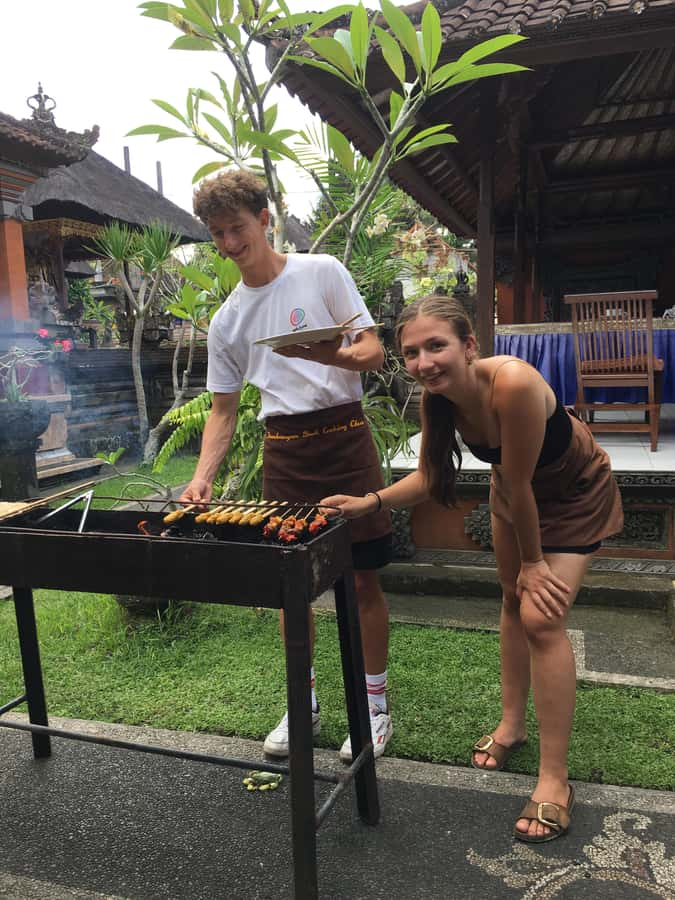
All instruction is in English. The chefs are Balinese and are familiar with both Balinese cuisine and local culture, so you can ask about the food as you cook it.
The format is hands-on. You make the recipes yourself rather than watching a chef do everything. That means you should expect to chop, mix, prepare, and cook under instruction. The information provided does not list the exact menu, so the dishes may vary with the market and the ingredients available that day.
That flexibility is a plus for a food-focused outing. The market determines what is fresh, and the meal reflects local ingredients. It also means you should not book this class expecting a fixed menu unless the provider confirms one before you go.
Putu is the host named in the available information, and his family welcomes participants into their home. The group is described as small in one account, though no fixed maximum is provided. A small class usually makes it easier to follow instructions and ask questions, but group size can change.
The class is a good fit if you want to learn by doing. You will not get much from it if you dislike handling food or prefer to remain an observer. The recipes are the main souvenir, so pay attention to the method as well as the finished dish.
More market tours around Indonesia:
- Active Volcano, Rice Field, Hot Spring, Fruit market, Tea Plantation with Lunch
★ 5.0 · 513 reviews - Seminyak: Balinese Cooking Class & Market Tour
★ 4.9 · 458 reviews - Balinese Cooking class with traditional morning market visit
★ 5.0 · 161 reviews - Denpasar: Museum, Traditional Market and Food Tasting Tour
★ 4.9 · 33 reviews
Eating the food you prepared
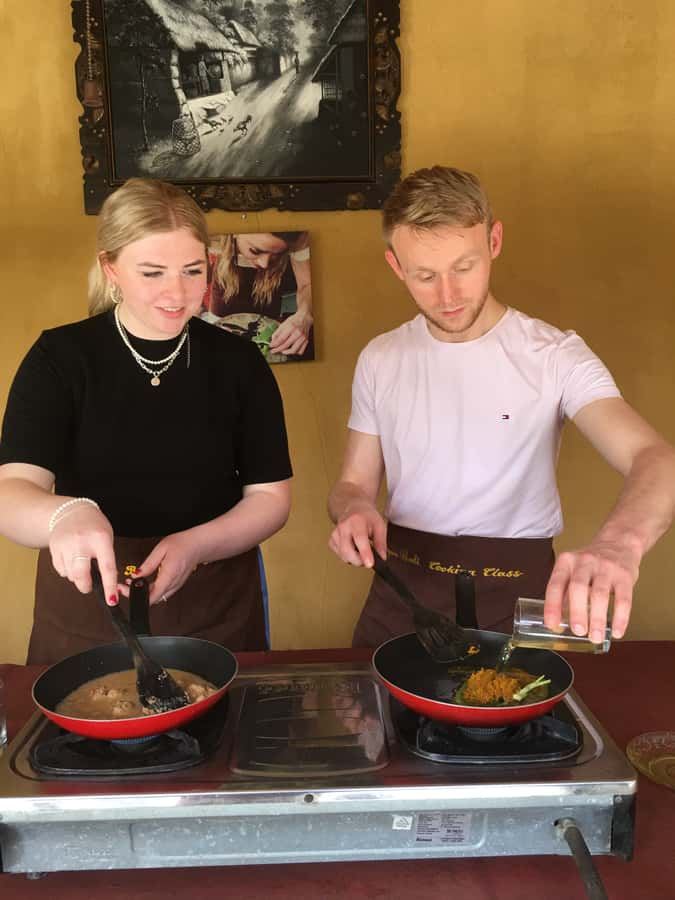
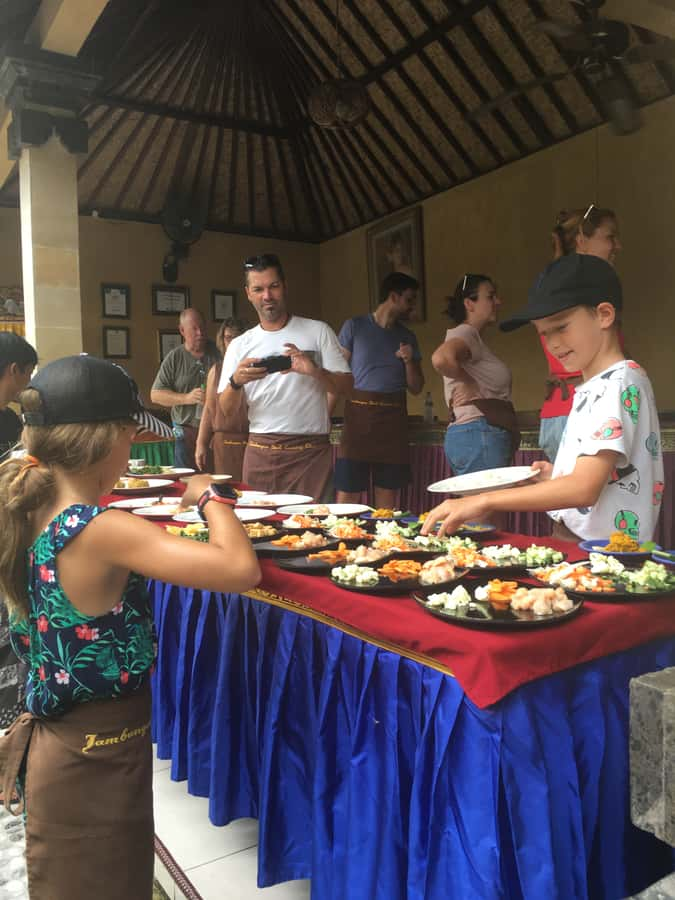
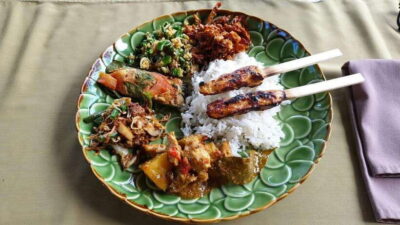
Once the cooking is finished, you eat the meal you made. Lunch and dinner are served in the on-site warung and garden.
This is an important part of the value. You are not paying only for a demonstration and a snack. The meal is the payoff for the market visit and kitchen work, and you can judge the result yourself.
The setting also keeps the meal connected to the home visit. You are not rushed out to a separate restaurant after class. You eat in the same family-run setting where the cooking took place.
Water is provided, which is welcome in Bali’s warm weather. One person specifically appreciated having enough water during the class. Beer is not included, and expensive items are not covered, so bring cash if you want to pay for extras.
The experience does not provide information about vegetarian, vegan, halal, allergy-friendly, or other special menus. If your diet is restricted, ask before booking rather than assuming the market or class can accommodate it.
What the $27 price really covers
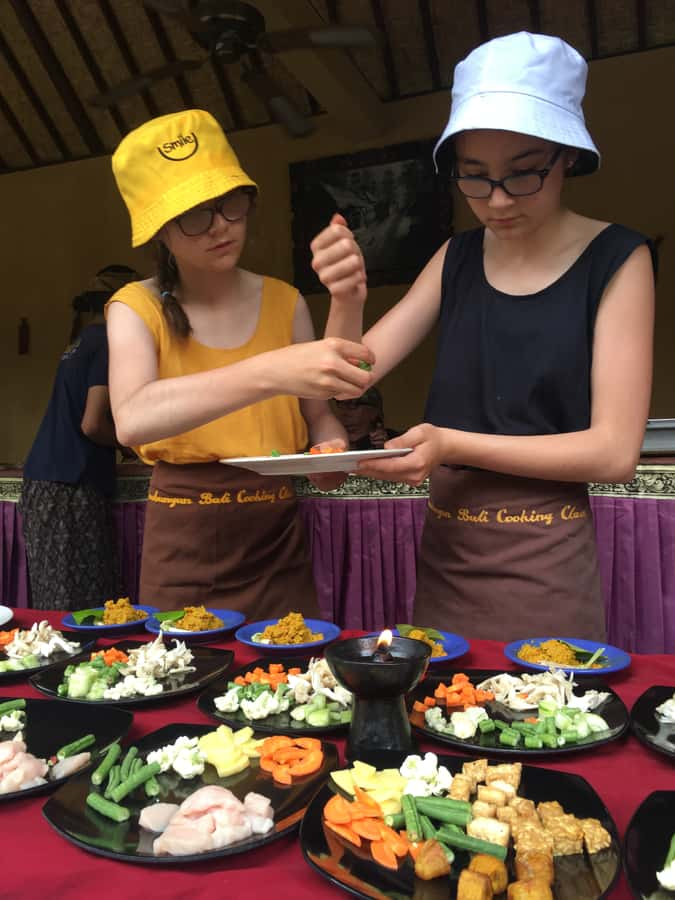
At $27 per person, this is strong value if you want several activities in one morning. The price includes the market tour for the morning class, transport within the Ubud pickup area, the village and rice-field visits, the home visit, coconut oil processing, the daily offering, the cooking lesson, the meal, recipes, and a certificate.
That is a lot of coverage for a half-day experience. A market walk alone would not give you the cooking session or meal. A standard cooking class might not include the rice fields, family home, or offering. Here, the parts support one another.
The price is less attractive if cooking is not a priority. You are spending 270 minutes on the outing, and much of that time is tied to preparing and eating food. You also need to factor in a possible transport charge if your hotel is outside Ubud.
The class has a perfect rating from 35 submitted ratings, and transport received a 95 percent perfect score. Those figures suggest the operation is generally well received, but they should not replace practical questions about your own needs. Confirm pickup coverage, dietary requirements, and the expected menu if those details matter to you.
Timing, comfort, and practical details
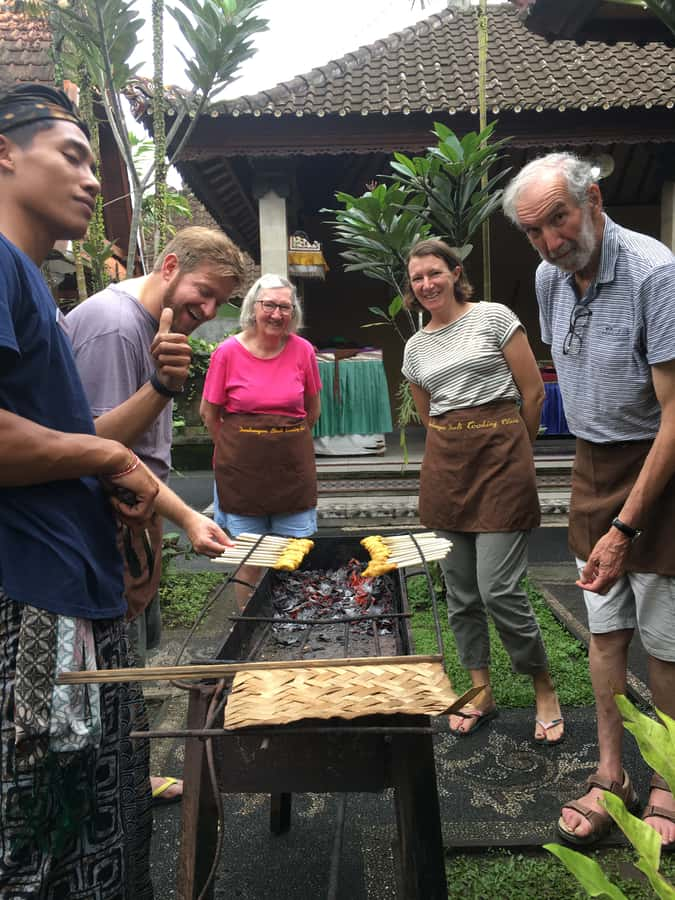
The total duration is 270 minutes, or four and a half hours. With early pickup, market shopping, village activities, cooking, and the meal, the schedule is full but easy to understand.
Wear clothing that is comfortable for cooking and walking around a village. The supplied information specifically recommends bringing a camera and cash. Water is available during the class, but cash is useful for extras and any transport charge outside the included Ubud area.
The activity is listed as wheelchair accessible. Still, the route includes a market, rice fields, a village, and a private home. Accessibility can depend on surfaces and the layout on the day, so ask the provider for current details if you use a wheelchair.
The experience is not suitable for people over 95 or for people with altitude sickness, according to the stated restrictions. Altitude sickness is an unusual concern for a village cooking class, but it is listed as a restriction, so take it seriously when deciding.
Cancellation is free up to 24 hours before the start time, and you can reserve now and pay later. That helps if your Ubud schedule may change.
Who will enjoy this class most
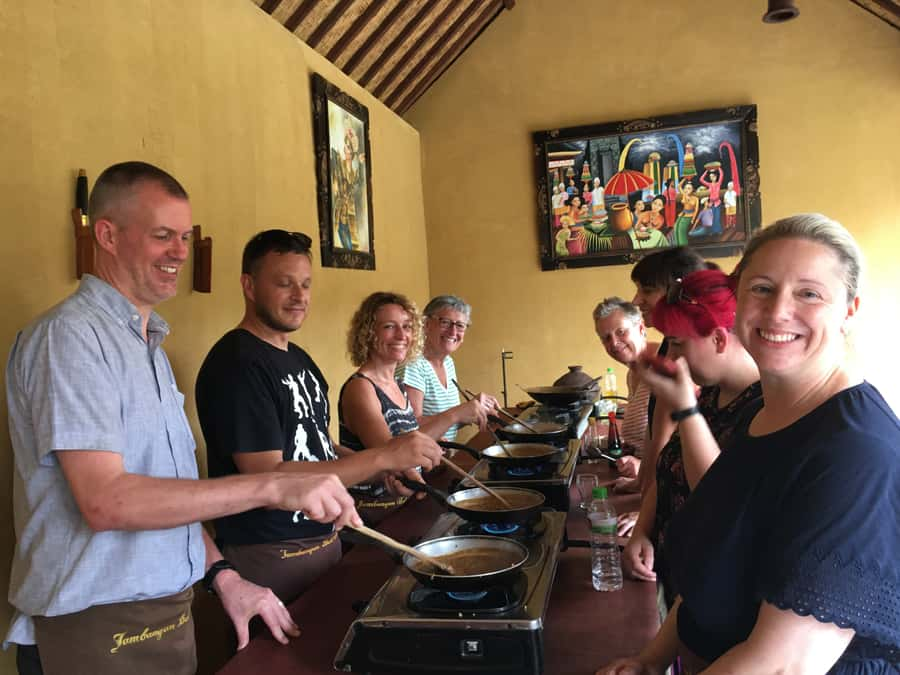
I would choose this for a first visit to Bali if you want food to lead you into local culture. The class gives you several short windows into daily life: the market, farming, the village, the family home, the offering, and the kitchen.
It is also a good choice for couples, families, and small groups who enjoy active experiences. You take part, eat together, and leave with recipes that can bring the memory home. The English instruction makes it practical for international visitors.
Food lovers will get the most from it, especially if they like markets and want to learn techniques rather than just sample dishes. The family setting also suits anyone who prefers a personal encounter over a polished restaurant class.
I would look elsewhere if you want a large professional kitchen, a fixed menu, a late start, or a long, detailed tour of rice farming. The tour offers a little of several things rather than one highly specialized activity.
Should you book Jambangan Bali Cooking Class?
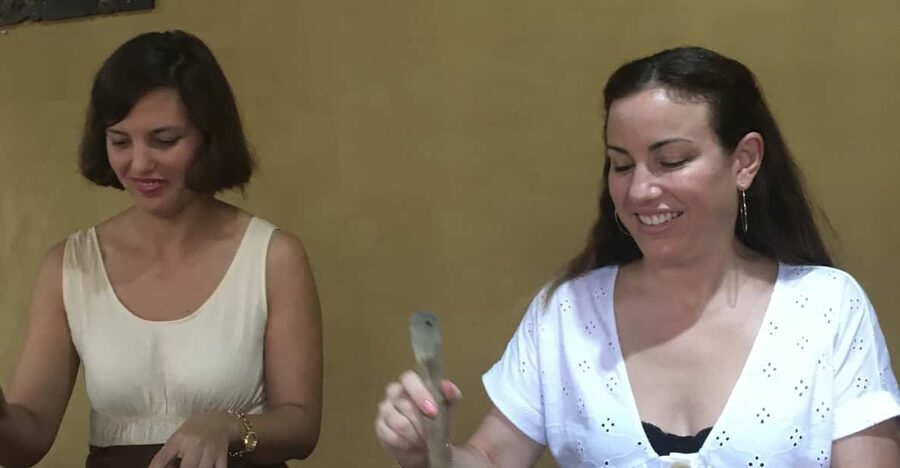
Book it if you want a reasonably priced, hands-on morning that combines cooking with a close look at Balinese home life. The best reasons are the fresh-market start, the family welcome from Putu and his relatives, the daily offering, and the chance to eat food you prepared yourself.
Skip it if you want a short class or need a guaranteed menu for dietary reasons that have not been confirmed. Also check transport if your hotel is outside Ubud.
For $27, the experience offers more than a meal and a recipe card. You get a market visit, village context, home hospitality, cooking practice, and a finished lunch. That combination makes it a smart pick for visitors who want Bali served with a little explanation on the side.
FAQ
How long does the Jambangan Bali cooking class last?
The activity lasts 270 minutes, or four and a half hours.
Is hotel pickup included?
Free pickup and drop-off are included for hotels in the Ubud area. Transport outside Ubud may cost extra depending on the hotel location.
What language is the class taught in?
The class is conducted in English by Balinese chefs familiar with Balinese cuisine and culture.
Does the morning class include a market visit?
Yes. The morning class includes a market tour where you can select herbs, spices, vegetables, and meat.
What should I bring?
Bring a camera and cash. Water is provided during the class, while beer and other extra costs are not included.
Can I cancel the booking?
You can cancel up to 24 hours before the activity for a full refund. You can also reserve now and pay later.
New market tours around Indonesia
- Nusa Dua: Balinese Cooking Class with Market Tour★ 5.0 · 4 reviews
- Bali: Balinese Cooking Class and Market Tour★ 4.8 · 19 reviews
- Denpasar: Museum, Traditional Market and Food Tasting Tour★ 4.9 · 33 reviews
- Balinese cooking class/Go shopping at the market, cook, eat★ 5.0 · 12 reviews
- Bali – Ubud Night Market Food Tour★ 3.8 · 14 reviews
- Bali: Ubud Monkey Forest, Coffee Plantation, and Market Tour★ 5.0 · 5 reviews
- Bali: Safari Zoo and Ubud Palace and Market Day Tour★ 4.7 · 6 reviews
- Bali: Turtle Conservation and Education Tour & Local Market★ 4.8 · 20 reviews
Ubud Market Tours, side by side.
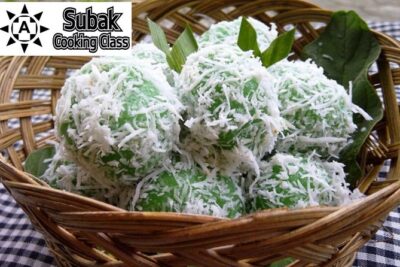
Balinese Ubud cooking school (9 Dish Cooking and Market Tour)
Read our review →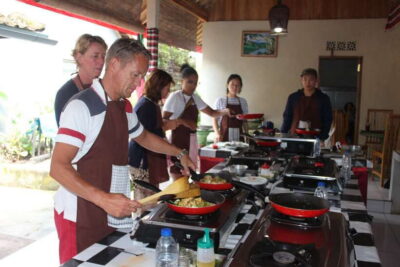
Balinese Cooking class with traditional morning market visit
Read our review →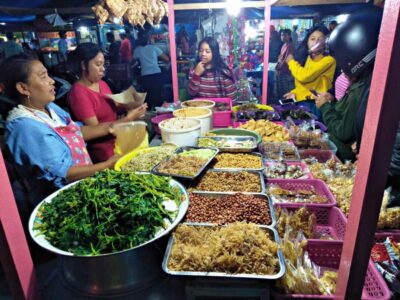
Balinese cooking class/Go shopping at the market, cook, eat
Read our review →
Bali: Safari Zoo and Ubud Palace and Market Day Tour
Read our review →
Bali: Ubud Monkey Forest, Coffee Plantation, and Market Tour
Read our review →This tour also appears in