
Review · ROME
Rome: Trajan Markets Experience with Multimedia Video
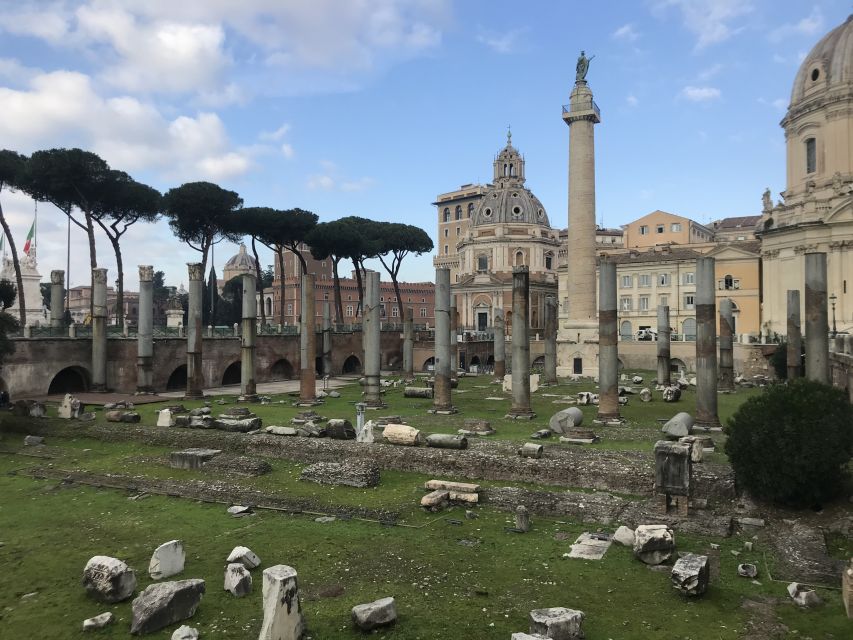
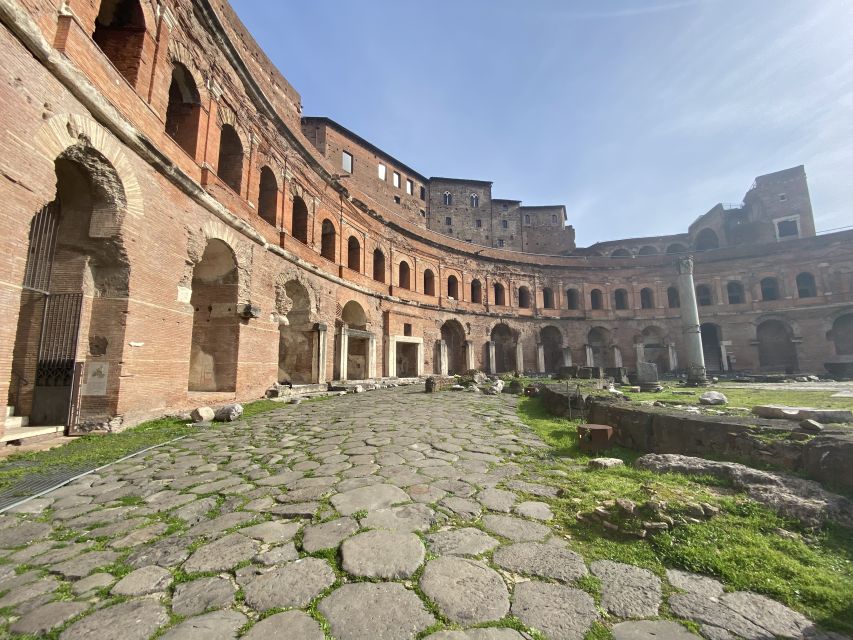
The most striking part of this experience is Trajan Markets’ great curved brick structure, once a busy commercial center and now one of Rome’s most unusual ancient sites. I like the way the visit connects shopping, government, religion, and city planning across several Imperial Forums. I also like that the Fori Imperiali Museum adds artifacts and amphorae, so you are not looking only at broken walls.
The main drawback is the ticket pickup. One booking had a smooth exchange and no queue, while another required at least 15 minutes for staff to print tickets. Much of the complex can also be seen from the street, so the value depends on how much you want to enter the ruins, use the app, and see the museum.
Key points to know before you go
- Trajan Markets’ semicircle is the visual highlight: The multi-level brick complex gives you a close look at Roman commercial architecture.
- The 25-minute video sets the scene: Reconstructions show how Ancient Rome’s main monuments may have looked in the Imperial Age.
- Five major Roman areas are included: You can explore Trajan Markets, Caesar’s Forum, Augustus’ Forum, Nerva’s Forum, and the Templum Pacis.
- The audio app covers more than 170 points: Download it to your phone before exploring, and bring headphones.
- The museum adds objects, not just ruins: The Fori Imperiali Museum includes ancient artifacts and amphorae from different cultures.
- Allow extra time at the meeting point: Ticket printing may be quick, but one recorded visit took about 15 minutes.
Why Trajan Markets is worth your time
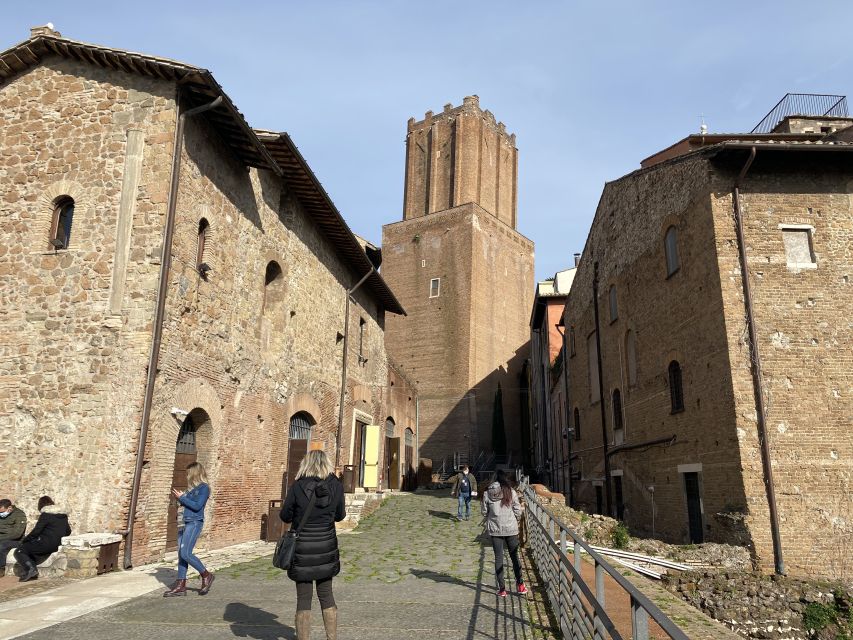
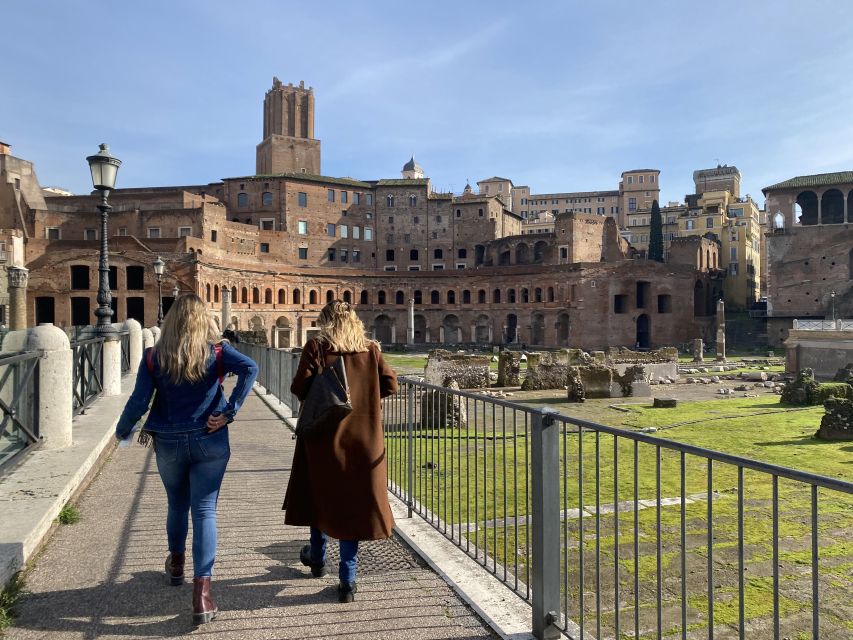
Rome gives you plenty of chances to look at ancient stone from a distance. Trajan Markets is different because you enter a large architectural complex that still shows how people moved through shops, terraces, rooms, and passageways.
Calling it the shopping mall of the Roman Empire is a useful shortcut, though the site was more than a row of shops. It belonged to a larger urban center filled with trade, public business, monuments, and meeting places. As you walk through it, you get a better sense of how commerce fitted into everyday Roman life.
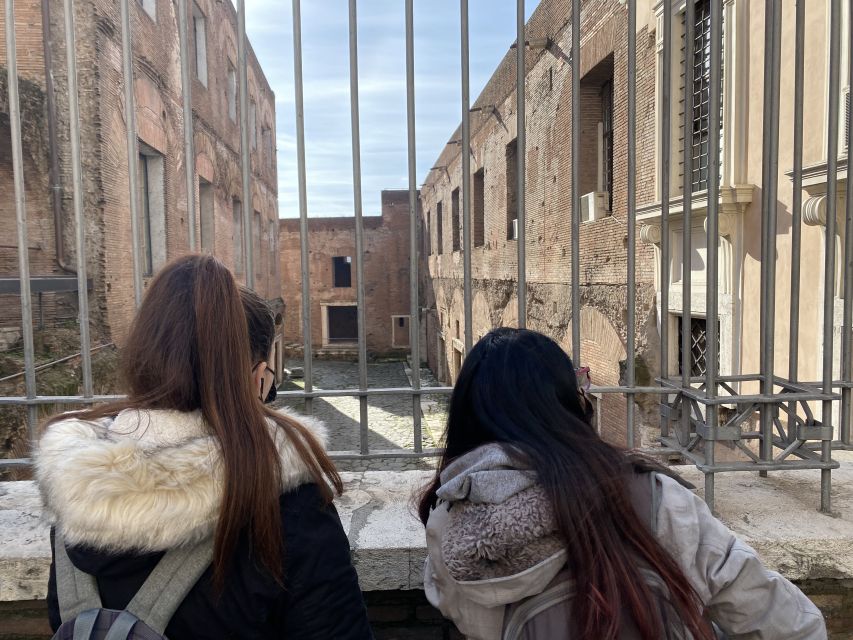
I especially like the curved design. The semicircle is easy to appreciate from outside, but entering the complex gives you a closer view of its brickwork and changing levels. The shape also helps explain how Roman builders worked with the slope beside the Imperial Forums.
This is not a polished reconstruction with busy displays at every turn. You see ruins, open spaces, architectural fragments, and museum objects. That can feel spare if you want a tightly guided story, but the setting rewards anyone who enjoys reading a city through its remains.
More market tours around Rome:
- Rome: Colosseum, Roman Forum & Trajan’s Market Exterior Tour
★ 4.3 · 2,038 reviews - Roman Food Tour with Visit to the Trionfale Food Market
★ 5.0 · 471 reviews - Authentic Roman Cooking Class & Market Experience
★ 5.0 · 363 reviews
Starting with the 25-minute Ancient Rome video
The visit begins with a 25-minute multimedia video about Ancient Rome. It uses reconstructions of major monuments to show the city during the Imperial Age.
This opening is useful because the ruins can be hard to picture on your own. A fragment of wall tells you what survived. A reconstruction gives you an idea of the scale, color, and purpose of the original buildings. I would pay close attention to the layout of the forums, since that will help you make sense of the outdoor visit afterward.
The video does not replace seeing the site. Think of it as a short orientation, not the main event. If you already know Rome’s ancient center well, some of the material may feel familiar. If this is your first close look at the Imperial Forums, the visual setup should make the rest of the visit easier to follow.
You will want to allow enough time for the video before entering the archaeological complex. The supplied details do not give a full timetable for each stage, so check the starting time when you book and avoid arriving at the last minute.
Walking through the Trajan Markets complex
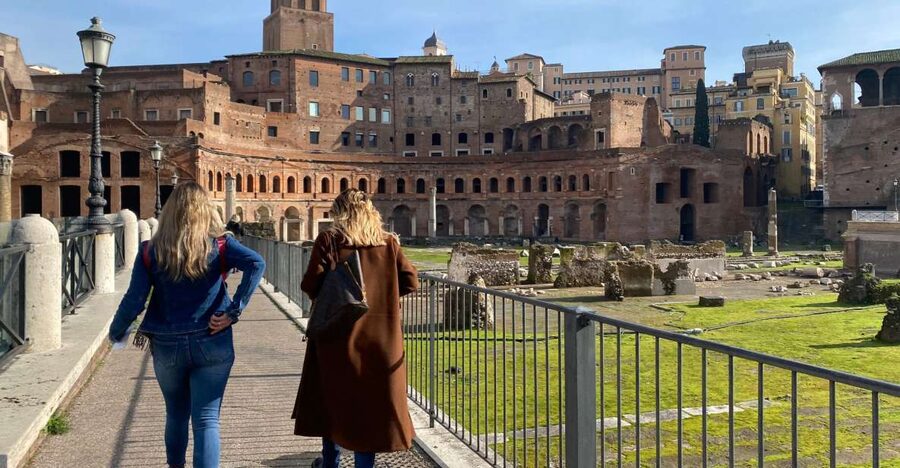
Trajan Markets is the heart of the experience. The complex once served as a commercial center during the Roman Imperial Age, and its structure gives you a rare look at the practical side of ancient Rome.
You can examine the curved walls, stairways, rooms, and different levels while thinking about the people who used this area for business and public life. The site is valuable because it shifts the focus away from emperors and battles. Here, the subject is trade, movement, and the systems that kept a huge city supplied.
The architecture is the star. The great semicircular form is one of the most memorable details, and it is worth pausing to look at how the building follows the slope. The brick surfaces also show how much Roman design depended on strong, functional construction rather than isolated monuments.
Do not expect every space to be fully explained by signs or a guide standing beside you. This is a self-guided experience. The app is meant to provide the extra information, so download it and charge your phone before you arrive. Headphones are required among the recommended items, and they will make the audio easier to hear while you walk.
One practical limit is that the site may feel less revealing from the outside. A large portion is visible from the street, especially the dramatic outer structure. The ticket makes the most sense if you want to enter the archaeological complex, get closer to the remains, and spend time with the digital commentary rather than simply take a quick look from Piazza Venezia.
Following the Imperial Forums beyond Trajan
The visit also covers several forums that worked as trading, political, religious, and meeting areas. They are not all presented as one perfectly preserved square. Instead, you encounter separate remains that help show how Rome expanded and reorganized its center over time.
Caesar’s Forum connects the experience to Julius Caesar’s effort to create a major public space in the heart of Rome. Even when only foundations and fragments remain, the area helps you see how Roman leaders used monumental building to shape the city.
Augustus’ Forum adds another stage in that process. It is part of the wider story of how the Imperial center grew around powerful rulers and public ceremonies. The app can help you keep the names and functions separate, since the forums can blur together when you view them in one walk.
Nerva’s Forum shows the continued development of the central district. It is useful to see these forums as layers rather than isolated attractions. Each one altered the city’s public space and added another part to Rome’s civic story.
The Templum Pacis, or Temple of Peace, extends the visit into a different chapter of Roman public life. Together, these areas show the evolution of the city from the Imperial Age through the changes that followed. You are not simply looking at one building. You are tracing how Rome’s center was built, used, and reshaped.
The scale can be difficult to grasp from ground level. That is another reason the opening video and the audio app matter. Use the reconstructions to imagine the monuments, then use the ruins to understand what time has left behind.
Same city, another market:
- Taste of Testaccio: Special 15 Year Anniversary Edition
★ 5.0 · 1,658 reviews - Trevi Fountain, Pantheon, and Campo Dei Fiori Market Food and Wine Tour
★ 5.0 · 320 reviews - Rome: Pasta Cooking Class with Market Visit and Wine
★ 4.9 · 277 reviews - Rome: Food Tour with Market Visit
★ 4.9 · 200 reviews
What the 170-point audio app adds
The city app contains more than 170 points of interest and is designed for use on your smartphone. It is not limited to one room or one viewpoint, so you can listen as you explore the different parts of the site and the surrounding city.
I like this format for Rome because it gives you control over the pace. You can stop for a closer look, replay information, or move on when a section interests you less. You are not tied to a large group waiting for everyone to catch up.
There is a tradeoff. An app does not watch your face and notice when you look confused. It cannot answer a question in the moment, and it may feel less personal than a live guide. The experience includes assistance at the meeting point, but it is not a guided tour once you begin exploring.
Download the app in advance if possible, and bring a fully charged phone. Headphones are on the required packing list. Without them, the audio portion becomes harder to use in an open archaeological area.
The Fori Imperiali Museum and its ancient objects
After the ruins, you can visit the Fori Imperiali Museum. This is an important part of the ticket because it adds physical objects to the outdoor architecture.
The museum includes artifacts from different ancient cultures and a collection of amphorae. Amphorae may look simple, but they help connect the forums to storage, transport, food, trade, and daily work. They remind you that Roman power depended on goods moving through the city, not just on grand monuments.
The museum is also a welcome change of pace. After walking around exposed ruins, you can focus on smaller details and objects. One of the most praised parts of the experience is the collection of artifacts in this museum, so do not rush through it just because the forums made the biggest first impression.
The supplied information does not give the museum’s exact size or a full list of displays. I would treat it as a focused addition to the archaeological visit, not a substitute for Rome’s larger museums. Its value comes from tying everyday objects to the commercial and civic world outside.
A seventeenth-century cistern adds another layer
One unusual detail is the ruin of a seventeenth-century cistern within the area. It shows that the site did not stop mattering when the Imperial Forums declined.
The cistern points to the many later uses of Rome’s ancient spaces. A place built for one purpose could be altered, reused, or adapted centuries later. That makes the complex more interesting than a single frozen moment in Roman history.
I would look for this feature as you move through the site, but do not expect it to dominate the visit. Its importance is mainly in the story it tells: Rome kept changing, and later communities used old structures in practical ways.
Meeting point and ticket pickup at Piazza d’Aracoeli
You meet at the Touristation Aracoeli Office, Piazza d’Aracoeli 16, near Piazza Venezia. Look for the orange Touristation flags. A fountain is in front of the office entrance, which gives you a useful landmark in a busy part of central Rome.
Arrive with your booking details and identification. A passport or ID card is listed among the things to bring. The ticket process can be straightforward, and one booking allowed a voucher to be exchanged in the morning for an afternoon visit with no queue.
Still, build in a little extra time. Another booking involved at least 15 minutes of ticket printing, with confusion over the process and an unwanted marketing package included with the ticket. That does not mean every pickup will be slow, but it is a good reason not to arrive just before the video begins.
The office is near major sights, so you can pair this experience with other central Rome stops. The activity does not include hotel transfer, food, or drinks. Plan those parts yourself.
Is $37 a fair price?
At $37 per person, the price is reasonable if you want three elements in one booking: the multimedia introduction, entry to Trajan Markets, and the Fori Imperiali Museum. The smartphone app also gives you a way to explore more than one point without paying for a separate live guide.
The value is weaker if you only want to see the main exterior. Much of Trajan Markets can be viewed from the street, and the app will not matter much if you skip the indoor and archaeological sections.
I would compare the cost with your interests. History fans who want context for the Imperial Forums may find the combination useful. People who prefer a personal guide, a small group, or a longer historical explanation may feel that the self-guided format leaves too much work to them.
The booking also allows cancellation up to 24 hours before the activity for a full refund, and you can reserve now and pay later. Those terms help if your Rome schedule is still shifting, but they do not change the basic question: will you enter the site and use the included tools? If yes, the package has practical value.
Who should book this experience?
I would recommend it to visitors who want a flexible introduction to the Imperial Forums and prefer moving at their own speed. It suits independent sightseers, architecture fans, and anyone curious about the working side of ancient Rome.
It is also a good choice if you enjoy combining a short video, outdoor ruins, a museum, and phone audio in one visit. The different formats keep the experience from relying on a single type of explanation.
I would think twice if you want a fully guided tour or dislike using your phone while sightseeing. The experience does not include a live guide, and the app depends on your charged smartphone and headphones.
The site is not suitable for wheelchair users. Large bags, luggage, drones, weapons, sharp objects, glass items, sprays, alcohol, and drugs are not allowed. Pets are also not permitted. Comfortable shoes are a sensible choice because you will be walking through an archaeological complex.
Should you book Trajan Markets?
Book this experience if you want to get inside one of Rome’s most distinctive ancient commercial sites, study its curved architecture, and connect the ruins with the surrounding Imperial Forums. The museum artifacts and amphorae add useful detail, while the video and app help you picture a city that is now mostly reduced to fragments.
Skip it if you only need a street-level view, want a live expert beside you, or have little interest in self-guided audio. Also allow extra time for ticket pickup, since the office process may not always be quick.
For the right visitor, $37 buys more than a photo stop. It gives you a structured way to understand how Roman commerce, public life, and later reuse shaped this corner of the city.
FAQ
How long is the video presentation?
The Ancient Rome multimedia video lasts 25 minutes.
What does the ticket include?
It includes the 25-minute video, entrance to Trajan Markets, entrance to the Fori Imperiali Museum, the downloadable city app audioguide, and assistance at the meeting point.
Where is the meeting point?
Meet at the Touristation Aracoeli Office at Piazza d’Aracoeli 16, near Piazza Venezia. Look for the orange Touristation flags and the fountain in front of the entrance.
Do I need a smartphone and headphones?
Yes. You should bring a charged smartphone and headphones to use the city app audioguide, which has more than 170 points of interest.
Is this a guided tour?
No. A live guided tour is not included. The experience uses a multimedia video and a smartphone audio app for self-guided exploration.
Can wheelchair users join?
No. The activity is not suitable for wheelchair users.
New market tours around Rome
- Rome: Trajan’s Markets & Museum of The Imperial Fora Tour★ 4.8 · 4 reviews
- Rome: The Vatican Market Experience Tasting and Class★ 4.7 · 10 reviews
- Rome: Vatican Street Food and Wine Tour with Farmers Market★ 5.0 · 37 reviews
- Rome: Taste of Testaccio Food & Market Tour★ 4.9 · 38 reviews
- Rome: Testaccio Food & Market Tour with Pasta & Wine★ 5.0 · 38 reviews
- Rome: Temples, Squares & Markets Guided Walking Tour★ 4.8 · 26 reviews
- Farmers Market Shopping and Roman Full Course Class – SHARED★ 5.0 · 12 reviews
- Rome: Prati Food & Wine Market Tour with St. Peter Square★ 5.0 · 7 reviews
Rome Market Tours, side by side.
Rome: Colosseum, Roman Forum & Trajan’s Market Exterior Tour
Read our review →
Taste of Testaccio: Special 15 Year Anniversary Edition
Read our review →
Authentic Roman Cooking Class & Market Experience
Read our review →
Rome: Pasta Cooking Class with Market Visit and Wine
Read our review →
Rome E-Bike Tour: Ultimate Street Food and Market Feast
Read our review →

Rome: Testaccio Food & Market Tour with Pasta & Wine
Read our review →This tour also appears in