

Review · ROME
Rome: Temples, Squares & Markets Guided Walking Tour
Rome reveals itself layer by layer on this three-hour walk. You move from a painted Baroque church to the Pantheon, lively squares, ancient temples, the Jewish Ghetto, and the ruins tied to Julius Caesar. The route gives you a broad first look at central Rome without spending the whole day inside one major monument.
I like the private format, since your guide can adjust the route rather than deliver the same speech to a large group. I also like the mix of famous sights and ordinary Roman tastes, especially the chance to try supplì at Campo de’ Fiori. The main catch is that entrance tickets are not included, and three hours is tight for so many stops.
Guides named in the feedback include Juan and Daniele. Juan is described as warm and willing to personalize the route, while Daniele is praised for careful route planning, punctuality, and useful suggestions for the rest of an Italy trip. Those are valuable traits on a walk where the guide’s judgment matters as much as the monuments.
Key points to know before booking
- Private and adjustable: You receive the guide’s full attention, with the option to shape the route around places you have not yet seen.
- A wide Roman sampler: The walk links Sant’Ignazio, the Pantheon, Piazza Navona, Campo de’ Fiori, the Jewish Ghetto, Circus Maximus, and more.
- One street-food tasting: A Roman snack, including supplì as part of the food discussion, is included.
- Mostly an outdoor history lesson: You see churches, ruins, squares, temples, and ancient sites, but attraction tickets are extra.
- A demanding three-hour route: The number of stops gives you variety, though time at each place is generally brief.
- English, Italian, and Spanish: You can book the private experience with a guide speaking one of these languages.
Why this Rome walk works as an introduction
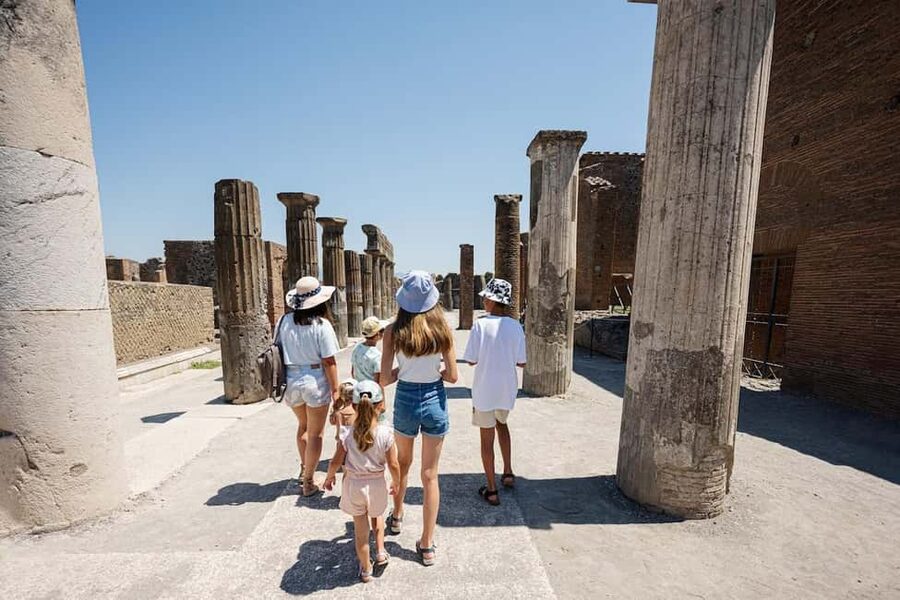
Rome can feel like a history book dropped into a modern city. A café sits beside a temple, a Baroque church hides an optical trick, and a busy road may cover ruins that once shaped an empire. This tour makes that jumble easier to read.
The route is particularly useful if you want orientation before exploring Rome on your own. You pass through several districts and get a sense of how the historic center connects to the river, ancient Forum area, and southern edge of the old city.
You should not expect long interior visits at every stop. The schedule allows roughly 15 minutes at many locations, with about 20 minutes at Portico d’Ottavia and a guided visit to Palatine Hill without a stated duration. Think of this as a guided city walk with focused stops, not a full museum tour.
The private setup changes the feel. You can ask why an obelisk is in a particular square, pause over a confusing ruin, or request a change if you have already visited one of the main sights. That flexibility is one of the clearest reasons to choose this experience over a standard group walk.
More Market Walking Tours in Italy
- Palermo: Walking Tour of Historic Markets and Monuments
★ 4.9 · 478 reviews - Palermo: Markets and Monuments City Center Walking Tour
★ 4.9 · 238 reviews - Markets and monuments: walking tour and street food in Palermo
★ 5.0 · 159 reviews
Sant’Ignazio opens with Rome’s Baroque surprise
The meeting point is the entrance to the Church of Sant’Ignazio of Loyola. This is a smart starting place because the church gives you an immediate lesson in Rome’s love of theatrical architecture.
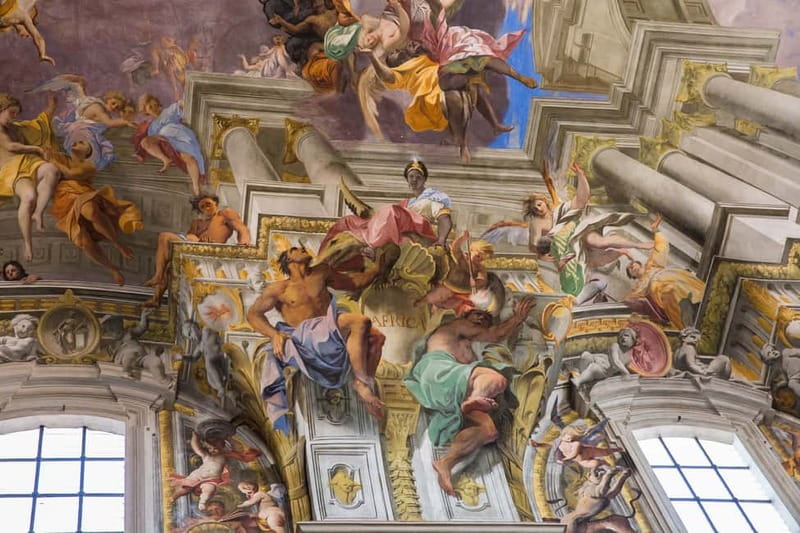
Inside, your guide points out the frescoed ceiling and the church’s Baroque atmosphere. Sant’Ignazio is known for creating a sense of height and grandeur through painted architecture, so it rewards a slow look upward. Even if you are not planning a full church tour, this first stop sets the tone for the day: Rome often hides its best visual tricks in places you could easily walk past.
You receive about 15 minutes here. That is enough for an introduction and a close look, though not a long religious-art lecture. Wear shoes that are comfortable for standing and walking, since the tour keeps moving after this stop.
The Pantheon and Rome’s obelisks

From Sant’Ignazio, the route heads toward the Pantheon. This is one of Rome’s essential sights, and your guide explains its architecture and place in the city rather than leaving you to admire the façade without context.
The Pantheon is also a good point for learning about Rome’s obelisks. Several were brought from Egypt thousands of years ago and later placed in Roman squares and streets. Once you know to look for them, they become part of the city’s visual language.
The Pantheon stop is listed at about 15 minutes. Entrance tickets are not included, so you should not assume that this experience provides a full ticketed visit inside. Ask the guide or provider what is possible on your date if entering the Pantheon is important to you.
That distinction matters. If your priority is detailed time inside the Pantheon, you may want a dedicated Pantheon visit as well. If you want the building as part of a wider route, this short stop gives you a useful introduction without taking over the morning.
Piazza Navona brings fountains, stories, and talking statues
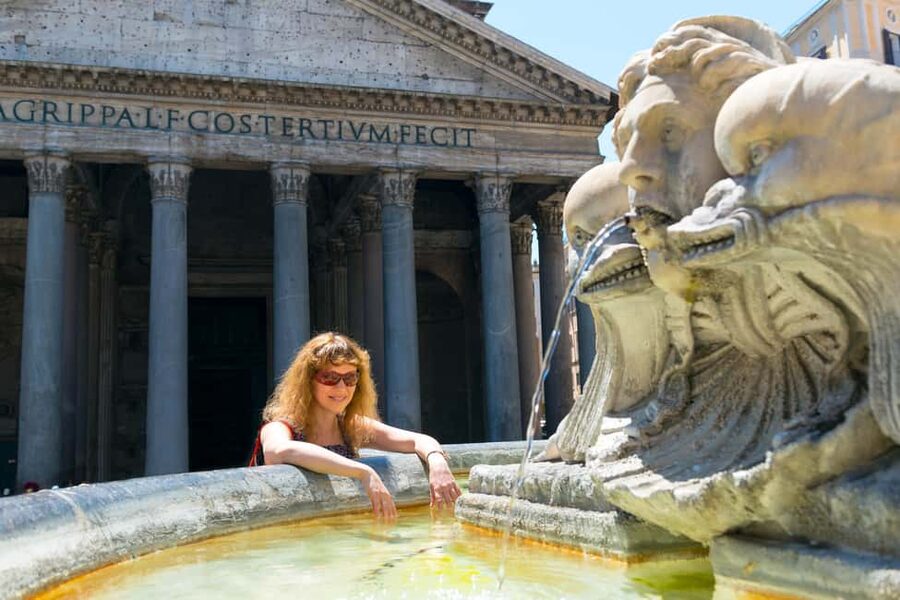
Piazza Navona is one of Rome’s most recognizable public spaces. The tour uses it to explain more than architecture, including the city’s talking statues, an unusual Roman tradition connected with public comments and satire.
This is the kind of detail that helps a square feel less like a postcard and more like a living part of Roman culture. Your guide can connect the space to the habits, arguments, and humor of the city.
Again, allow about 15 minutes. The stop is best for orientation and storytelling. You will have time to see the square and hear why it matters, but not necessarily to sit with a coffee or examine every fountain at length.
More Market Walking Tours in Rome:
- Bangkok: City Highlights Temple and Market Walking Tour
★ 4.5 · 3,990 reviews - Tokyo Tsukiji Fish Market Food and Culture Walking Tour
★ 5.0 · 3,184 reviews - Marrakech: Ben Youssef, Secret Garden, & Souks Walking Tour
★ 4.6 · 2,802 reviews - Marrakech: Colorful Medina Souks Guided Walking Tour
★ 4.7 · 2,470 reviews
Campo de’ Fiori turns the history walk toward food
Campo de’ Fiori is where the tour’s food element becomes most useful. You explore the square and its local food market, then taste one traditional Roman street food.
The listed food example is supplì, a fried rice croquette often associated with Roman cooking. The tasting is only one item, not a full food tour, but it gives you something concrete to connect with the guide’s discussion of Italian ingredients and Roman eating habits.
I like this part because food makes the city easier to remember. You are not just hearing about local cuisine in the abstract. You get to taste a Roman snack while learning how the guide distinguishes authentic Italian products and everyday street food.
The market setting also gives you a break from monuments. You can look at stalls, follow the surrounding lanes, and hear about the peculiar street names in the area. Because the food tasting is limited to one included item, do not book this expecting lunch. It is a small sample within a much larger walking route.
Largo di Torre Argentina and the layers beneath Rome
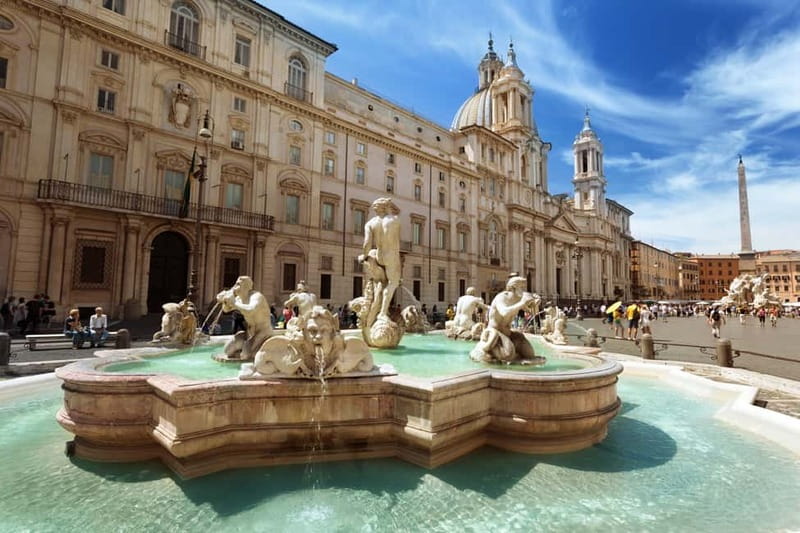
The walk continues to Largo di Torre Argentina, an archaeological area tied to the story of Julius Caesar and the Ides of March. Rome’s ruins often appear in fragments, and this is a good place to understand how the modern city sits above ancient ground.
The guide explains the archaeological remains and the events associated with this site. You get about 15 minutes here, enough to place the ruins in the wider story of the Republic and the transition toward imperial power.
This is also where the city’s layer-by-layer character becomes clear. The walk does not treat ancient history as something confined to a single archaeological park. Instead, you see it among roads, buildings, markets, and working neighborhoods.
The Jewish Ghetto and Portico d’Ottavia
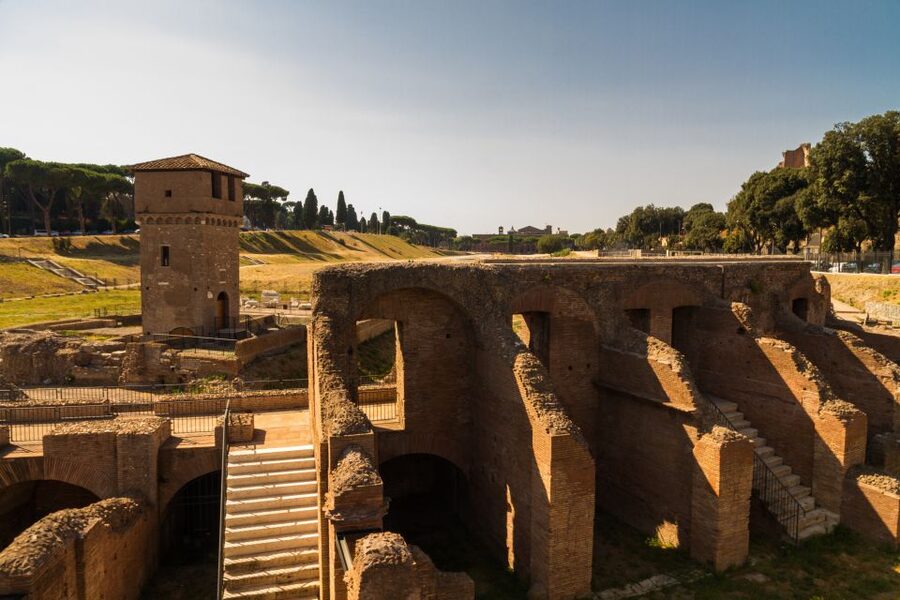
The Jewish Ghetto offers a different mood from the grand squares. The area is described as a neighborhood that has retained an old, distinct character, and your guide introduces its streets, history, and identity.
Portico d’Ottavia is a major stop here, with about 20 minutes set aside for the visit. The ancient remains connect Roman architecture with the later life of the neighborhood around them. It is a strong example of how Rome’s ancient sites were absorbed into the city rather than isolated from it.
You should give this part your attention. The Ghetto is not merely a shortcut between larger monuments. It has its own story, and a private guide can answer questions that a recorded audio guide may not handle well.
The route also includes a so-called fake Colosseum, a ruin that resembles the famous amphitheater. This is a fun visual comparison, especially if you want to understand how Roman forms and monuments can echo one another across the city.
Temples, the Temple of Portunus, and the Mouth of Truth
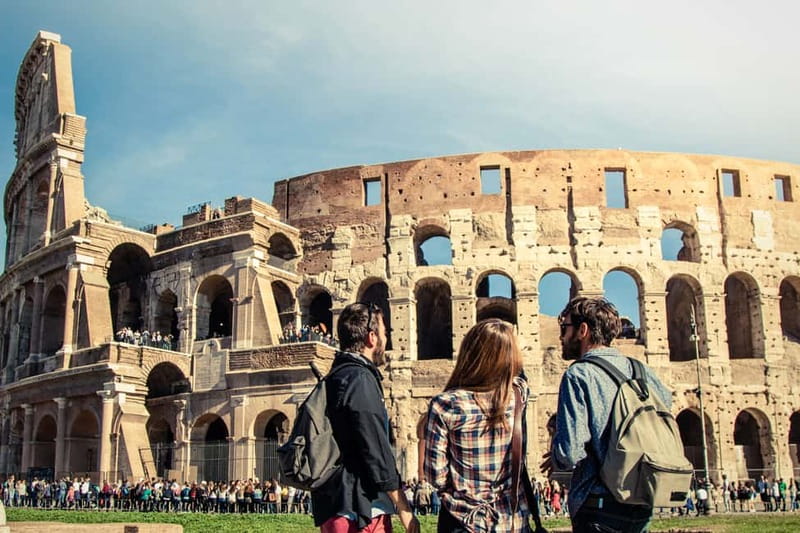
The walk then reaches ancient temples, including the Temple of Portunus. This well-preserved temple gives you a clearer look at Roman religious architecture than many scattered ruins do. The guide explains what you are seeing and why the building matters.
The stop is listed at about 15 minutes. You can expect an outdoor visit rather than a ticketed interior experience. The temple is especially worthwhile for anyone who wants ancient architecture without spending several hours in a museum.
The Mouth of Truth comes next. Its fame was boosted by the film Roman Holiday, where Audrey Hepburn helped turn this carved stone face into a popular Roman photo stop. Your guide explains the story and its place in the city’s legends.
The Mouth of Truth is a lighter moment in the itinerary. After temples, political history, and archaeological ruins, it gives you a bit of movie history and folklore. The stop is listed at about 15 minutes, so the focus is on seeing the site and hearing the story rather than waiting for an extended photo session.
Circus Maximus and Palatine Hill show imperial Rome
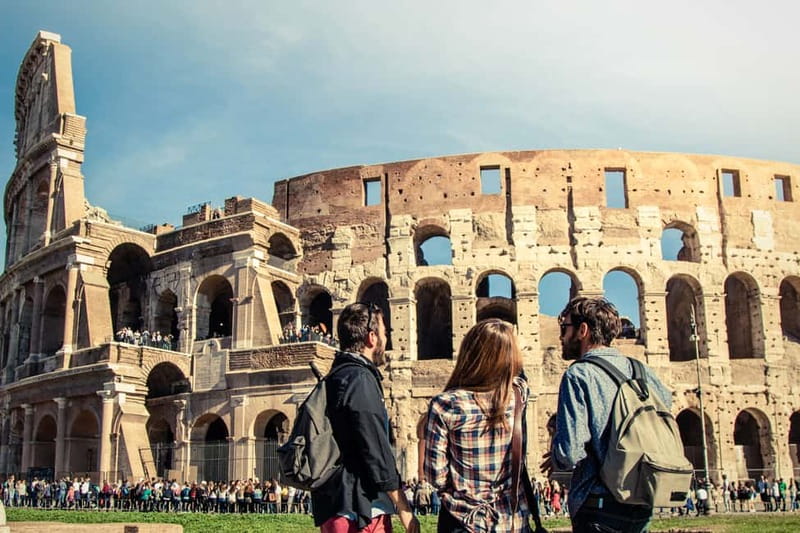
The final stretch turns toward Circus Maximus and Palatine Hill. From the Circus Maximus area, you can picture the scale of Roman public entertainment and the importance of the valley between the hills.
Palatine Hill was home to rulers of the Roman Empire, and the tour includes a view of the remains of the Imperial Palace. The guide helps you connect the surviving walls and foundations to the power once concentrated here.
The Palatine stop does not have a stated duration, unlike most earlier stops. That makes the actual timing worth confirming when you book. Since tickets to attractions are not included, you should also clarify how the route handles any area that requires admission.
This section can be visually rewarding even when you are mainly looking from outside. You see how the Circus Maximus and Palatine Hill relate to each other, and you get a sense of Rome’s imperial center without committing to a full archaeological-site visit.
Crossing to Tiber Island
The walk finishes at Tiber Island, after crossing the bridge and taking in the river setting. Tiber Island is a fitting end because it shifts your attention from ruins and monuments to the geography of Rome itself.
The stated route ends here, while the meeting information also says the activity ends back at the meeting point. Because those details do not perfectly match, confirm the exact finishing point with the provider before you go. This is especially useful if you are booking another activity immediately afterward.
Your guide can also give suggestions for places to eat, shop, and continue exploring. Daniele is specifically praised for offering ideas for the rest of a Rome and Italy trip, while Juan is described as willing to adjust the itinerary around places a guest had not yet visited. Those personal suggestions may be one of the most useful parts of a private walk.
Is $79.30 a fair price?
At $79.30 per person, this is not the cheapest way to see Rome’s center. The value depends on how much you care about a private guide and a flexible route.
You are paying for three hours of one-on-one attention, a local guide, one street-food tasting, and a route that covers a large number of important places. For a couple, family, or small private party, the cost can make sense if you want to ask questions freely and avoid a large group.
The price is less attractive if you want full entry into the Pantheon, Palatine Hill, or other ticketed attractions. Admission is extra, and the tour itself gives you relatively short visits at many sites. Add this walk for context and orientation, not as a substitute for every paid attraction in Rome.
A private experience also lets you avoid spending time on sights you already know. That flexibility is hard to price in a city where a fixed group itinerary can feel repetitive.
Who should choose this walk?
I would recommend it most to first-time Rome visitors who want a fast but thoughtful overview. It suits you if you like history, architecture, food, and neighborhood character in equal measure.
It is also a good choice for families or private groups that need some control over the pace. You can ask for changes, and the named guides are described as friendly, punctual, and attentive to personal interests.
You may want something else if you prefer long museum visits, a full meal, or a single-subject tour focused only on ancient Rome. The route covers a lot, but its breadth means you will not spend an hour at each major site.
The walk is wheelchair accessible, and live guiding is available in English, Italian, and Spanish. Free cancellation is available up to 24 hours before the tour, and you can reserve now and pay later, which helps if your Rome plans are still shifting.
Should you book it?
Book this tour if you want Rome explained as a connected city rather than a checklist of isolated monuments. The combination of Sant’Ignazio, the Pantheon, Campo de’ Fiori, the Jewish Ghetto, ancient temples, Circus Maximus, and Tiber Island gives you a strong sense of how Rome’s past and present overlap.
The best reason to choose it is the private, adjustable format. Juan and Daniele are both named as guides who bring warmth, planning, and useful personal suggestions to the experience. Just remember that the food element is one tasting, the schedule moves quickly, and entrance tickets cost extra.
FAQ
How long does the Rome walking tour last?
The tour lasts three hours. Starting times vary, so you need to check availability for the date you want.
Where does the tour start?
The meeting point is at the entrance of the Church of Sant’Ignatius of Loyola.
Where does the tour finish?
The listed route finishes at Tiber Island. The meeting information also says the activity ends back at the meeting point, so confirm the exact end location with the provider.
Is the tour private?
Yes. It is offered as a private group experience, giving your group the guide’s full attention.
Which languages are available?
Live guiding is available in English, Italian, and Spanish.
Is food included?
One street-food tasting is included. Supplì is identified as a traditional Roman street food associated with the tasting.
Are attraction tickets included?
No. Tickets to attractions are not included in the tour price.
Is the tour wheelchair accessible?
Yes. The activity is listed as wheelchair accessible.
Can the route be customized?
Yes. The tour can be tailored to your preferences, and the private format allows you to discuss places you would like to include.
What is the cancellation policy?
You can cancel up to 24 hours in advance for a full refund. Reserve now and pay later is also available.
New market tours around Rome
- Rome: Trajan’s Markets & Museum of The Imperial Fora Tour★ 4.8 · 4 reviews
- Rome: The Vatican Market Experience Tasting and Class★ 4.7 · 10 reviews
- Rome: Vatican Street Food and Wine Tour with Farmers Market★ 5.0 · 37 reviews
- Rome: Taste of Testaccio Food & Market Tour★ 4.9 · 38 reviews
- Rome: Testaccio Food & Market Tour with Pasta & Wine★ 5.0 · 38 reviews
- Farmers Market Shopping and Roman Full Course Class – SHARED★ 5.0 · 12 reviews
- Rome: Prati Food & Wine Market Tour with St. Peter Square★ 5.0 · 7 reviews
- Rome: Guided Testaccio Market Food Tour with Tastings★ 5.0 · 3 reviews
Rome Market Tours, side by side.
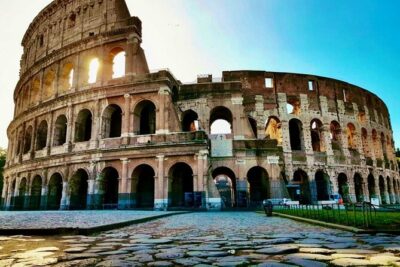
Rome: Colosseum, Roman Forum & Trajan’s Market Exterior Tour
Read our review →
Taste of Testaccio: Special 15 Year Anniversary Edition
Read our review →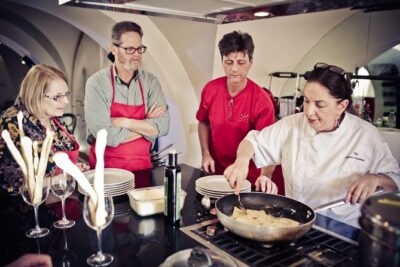
Authentic Roman Cooking Class & Market Experience
Read our review →
Rome: Pasta Cooking Class with Market Visit and Wine
Read our review →
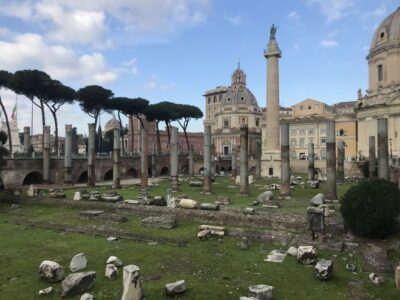
Rome: Trajan Markets Experience with Multimedia Video
Read our review →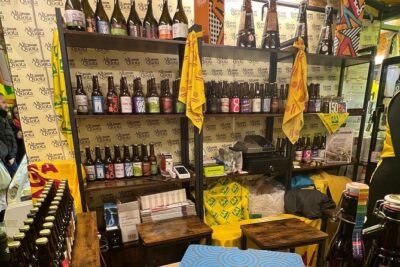
Rome E-Bike Tour: Ultimate Street Food and Market Feast
Read our review →
This tour also appears in