
Review · ROME
Rome: Trajan’s Markets & Museum of The Imperial Fora Tour
Trajan’s Markets gives you one of Rome’s best chances to see how the ancient city worked beyond temples and arenas. Its stacked brick halls, shopfronts, arches, stairs, and working spaces offer a clearer picture of Roman commerce and daily life than many grander ruins do. I like the unusual subject and the way the site lets you walk through ancient architecture rather than simply view it from behind a fence.
I also like the small maximum group of 10, which should make it easier to hear the guide and ask questions. The sweeping views toward the Imperial Forums add plenty of visual reward, and Francesca Massaccesi received especially strong praise for bringing the site and Roman history to life. The main caution is physical: uneven surfaces, steps, and stairs can make the 1.5-hour visit tiring, while the lower two museum levels are not wheelchair accessible.
Key points before you book
- Trajan’s Markets are more than a collection of ruins: You walk through a multi-level complex often called the world’s first shopping mall.
- The tour begins at Trajan’s Column: Meet by the iron gates opposite Santa Maria di Loreto, not at the museum entrance.
- The museum adds objects to the architecture: Sculptures, inscriptions, and artefacts help explain the Imperial Fora and their emperors.
- The group stays small: Choose a private visit or a group capped at 10 people.
- The physical demands are real: Expect uneven ground, stairs, and several levels, with limited wheelchair access below.
- The Imperial Forums are not part of the guided visit: Your ticket covers Trajan’s Markets and the Museum of the Imperial Fora, not a separate guided tour of the wider forums.
Why Trajan’s Markets deserve your time
Rome has no shortage of famous ancient sites. The Colosseum, Pantheon, and Roman Forum usually take the first spots on a visitor’s list. Trajan’s Markets offers something different: a look at the practical side of Roman life.
The complex is often described as the world’s oldest shopping mall, though that phrase is a modern shortcut rather than an ancient Roman label. The useful point is that this was a large, organized commercial and administrative setting with shops and rooms arranged through several levels.
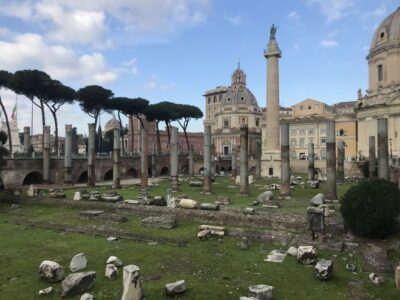
You can expect soaring brick arches, sturdy walls, old shopfronts, and passages that show how Roman builders handled a difficult urban site. The surviving structure is impressive because it still feels like a building, not merely a scattering of stones.
That difference matters. At many archaeological sites, you look down at foundations and try to picture the original city. Here, you can move through rooms and along built spaces that still have shape and height. Your guide can then connect those physical remains to commerce, public life, and the people who used them.
More museum stops around Rome:
- Dubai: Old Town, Creek, Museums, Souks, & Street Food Tour
★ 4.8 · 10,816 reviews - Cairo 8 Hour Private Tour of Pyramids, Egyptian Museum and Bazaar
★ 5.0 · 2,931 reviews - Cairo: Female-Guided Pyramids, Sphinx & Museum City Tour
★ 4.8 · 1,614 reviews
Meeting at Trajan’s Column
The tour starts at Trajan’s Column, near the iron gates opposite the church of Santa Maria di Loreto on Via dei Fori Imperiali. Look for a staff member holding a yellow Touriks sign.
This is a busy part of central Rome, so give yourself enough time to identify the meeting point. The column is a useful landmark, but the important detail is the exact side of the street and the iron gates. You do not want to begin by searching around the museum complex.
Trajan’s Column also gives the tour a fitting opening. It was created to celebrate Emperor Trajan’s victories, and its carved spiral relief tells a long military story in stone. The tour information does not promise a separate guided visit to the column itself, so think of it as your meeting landmark and a bit of Roman context before entering the markets.
Your ticket includes admission to Trajan’s Markets and the Museum of the Imperial Fora. It also includes headsets, which are useful near a busy road and in large rooms where a guide’s voice can otherwise disappear.
Walking through the multi-level markets
The first main stop is Trajan’s Markets. The name can make the place sound like a simple row of ancient stores, but the surviving complex is much more substantial. Its different levels, vaulted spaces, arches, and stairs reveal careful planning and serious construction.
As you move through the site, your guide explains how the complex related to commerce and daily life. This is where the tour’s value rests. Without explanation, you might see attractive brickwork and ruins. With a guide, the rooms become clues about how Roman society organized business and public activity.
The architecture itself is the star. You’ll see Roman engineering that has survived for roughly 2,000 years, including broad arches and strong masonry. The remains help you appreciate the practical skill behind the monuments that usually get all the attention.
The surfaces are not polished for modern comfort. Expect uneven areas, steps, and stairs. A moderate level of fitness is recommended, and you should wear sensible footwear. The 1.5-hour length is manageable for many people, but the site is not a flat museum corridor.
I would be cautious about booking this as a carefree stop for someone who has difficulty with stairs. The museum can provide a wheelchair, and three museum floors are accessible by wheelchair, but the lower two levels cannot be visited in a wheelchair. The market area itself also includes uneven surfaces and stairs, so ask about your specific needs before booking.
Roman commerce without the usual blockbuster crowds
The strongest reason to choose this tour is its focus. Trajan’s Markets is not simply another stop added to a grand Roman itinerary. It offers a more grounded look at the city, with attention to shops, movement through buildings, construction, and ordinary activity.
That makes it a useful choice after you have seen Rome’s major monuments, or for a repeat visit when you want something beyond the standard route. It is also a good complement to the Roman Forum. The Forum shows public spaces and political power, while Trajan’s Markets helps you think about the systems and buildings that supported urban life.
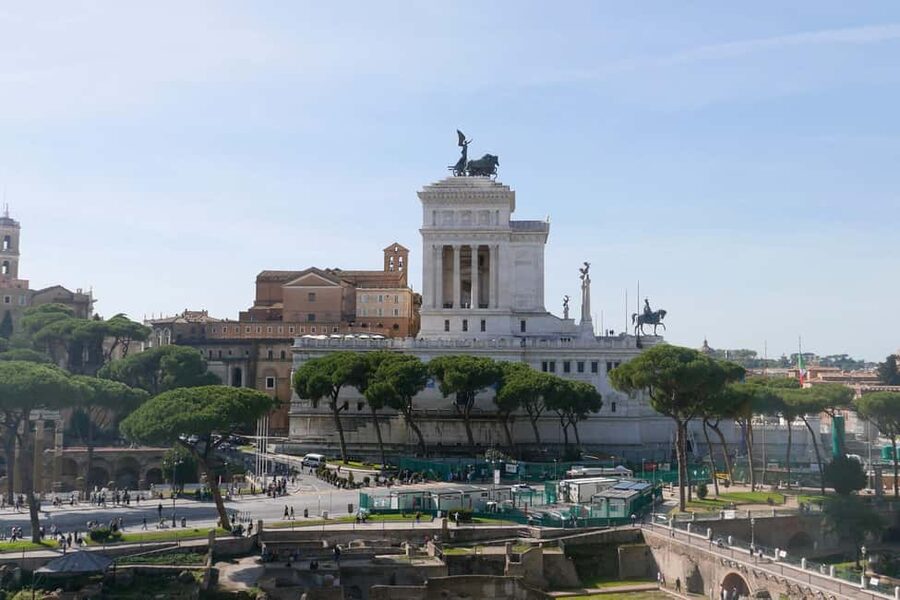
The setting also gives you fine views across the nearby Imperial Forums. Bring a camera if you like wide views of ancient Rome, but remember that this is primarily a guided archaeological visit, not a dedicated photography tour.
The guide’s explanations matter here. One visitor singled out Francesca Massaccesi, describing her as extraordinary and praising the way she made the site come alive. That is the sort of guide you want at Trajan’s Markets: someone who can explain why a wall, stairway, or shop opening mattered instead of simply naming it.
Another visitor enjoyed the visit but found the explanations a little slow for her husband. That is a fair warning. A history-focused tour depends heavily on your interest in detail. If you prefer fast sightseeing with only a few facts, 1.5 hours of guided explanation may feel long. If you enjoy connecting architecture with Roman society, the pace should be more rewarding.
More market tours around Rome:
- Rome: Colosseum, Roman Forum & Trajan’s Market Exterior Tour
★ 4.3 · 2,038 reviews - Roman Food Tour with Visit to the Trionfale Food Market
★ 5.0 · 471 reviews - Authentic Roman Cooking Class & Market Experience
★ 5.0 · 363 reviews - Trevi Fountain, Pantheon, and Campo Dei Fiori Market Food and Wine Tour
★ 5.0 · 320 reviews
What the Museum of the Imperial Fora adds
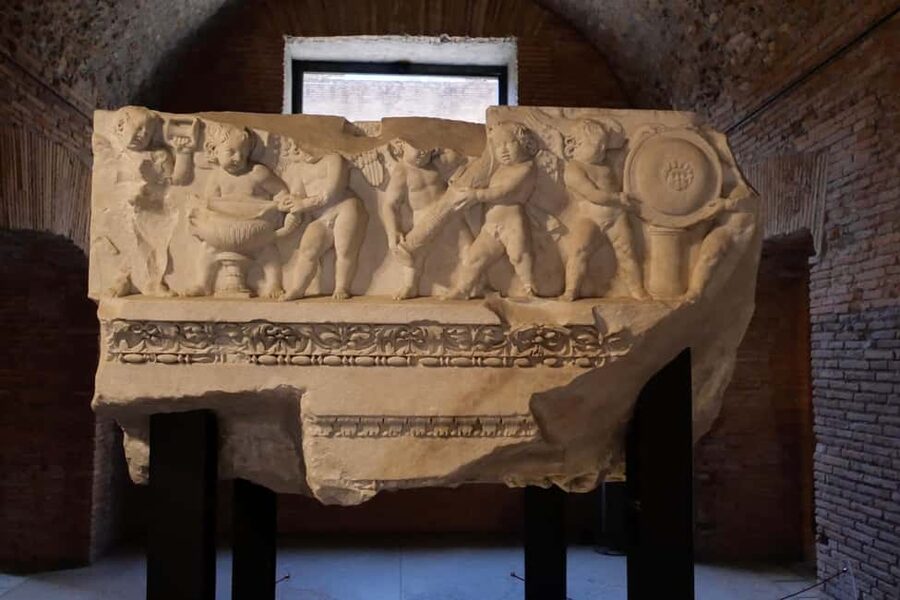
After the markets, the visit continues into the Museum of the Imperial Fora. The museum contains sculptures, inscriptions, and other artefacts tied to the monumental complexes built by Roman emperors.
This second part helps fill in what the standing buildings cannot show. Trajan’s Markets gives you walls, rooms, arches, and views. The museum gives you carved stone and objects that offer evidence about the people, rulers, and public spaces connected to the Imperial Fora.
Your guide tells the story of the emperors who created these enormous civic complexes. The focus is not only on dates and names. You are given a sense of how the Imperial Fora represented power, ambition, and public life in ancient Rome.
The museum is also a useful pause after walking through the uneven market complex. You still move through several levels, but the indoor setting gives the visit a different rhythm. Three floors are wheelchair accessible, although the lowest two are not. Visitors with reduced mobility can ask about the museum wheelchair, but the full route will not be possible by wheelchair.
One detail deserves special attention when planning: admission to the museum and Trajan’s Markets does not include a guided tour of the broader Imperial Forums. You will see views of the forums and learn about them inside the museum, but this experience is not a substitute for a separate guided walk through every forum complex.
Is $77 a fair price?
At $77 per person, this is not the cheapest way to see ancient Rome. The price includes admission, a live guide, headsets, and a 1.5-hour visit. You are paying mainly for interpretation and structure, not just entry to a ruin.
The value is strongest if you want context. A self-guided visit may let you enter the same general area for less, but you would need to supply the background yourself and make sense of the remains as you go. At Trajan’s Markets, that guidance can make the difference between seeing old brick walls and understanding a working Roman complex.
The small group option also helps justify the price. A maximum of 10 people is much easier to manage than a large coach group, particularly in narrow rooms and around stairs. You can choose a private tour if you want a more personal format, though the provided information does not specify an additional private-tour price.
I would consider the tour good value for first-time visitors who want a clear explanation of Roman architecture and commerce. It is less compelling for someone who has already studied the site closely or wants a simple, independent walk. The high overall rating, including especially strong praise for Francesca Massaccesi, suggests that guide quality can shape the experience, but guide assignment cannot be guaranteed from the information provided.
Languages, group size, and practical planning
Live guiding is available in English, French, German, Italian, Spanish, and Portuguese. Select your preferred language when booking and check the available starting time.
The tour lasts 1.5 hours. There is no hotel pick-up or drop-off, and food and drinks are not included. Food, drinks, luggage, large bags, pets, weapons, drones, alcohol, and drugs are not allowed, so arrive with only what you need for the visit.
Each person must provide a full name when booking and present a valid passport or identity document matching that name at entry. This is an easy detail to overlook, especially if you are booking for a family or group. Check names carefully before submitting the reservation.
The tour is wheelchair accessible in part, but not fully. The museum has a wheelchair available, three floors can be reached by wheelchair, and the lower two floors cannot. The uneven market surfaces and stairs remain an important consideration even if the museum route works for you.
You can cancel up to 24 hours in advance for a full refund, and the reserve-now, pay-later option gives you some flexibility while your Rome plans settle. Those policies are useful, but the main booking decision should come down to your interest in Roman architecture and your comfort with stairs.
Who will enjoy this Roman site most?
I would choose this tour if you want a quieter, more focused alternative to Rome’s biggest archaeological stops. It suits visitors who enjoy buildings, engineering, and the practical details of ancient life, not only emperors and battles.
It is also a good pick for a second or third visit to Rome. The subject feels different from the standard Colosseum route, and the views toward the Imperial Forums help connect this site to the wider Roman center.
Families can enjoy the visual remains, especially the large arches and walk-through spaces, but younger children may lose interest if they are not drawn to history. The slower explanatory style may also test anyone who wants to move quickly.
I would not make it your first choice if you need a completely step-free outing, carry large luggage, or want a tour of the entire Imperial Forums. In those cases, the physical limits and narrower scope may frustrate you.
Should you book Trajan’s Markets?
Book it if you want to understand how ancient Rome functioned, not just admire its famous monuments. The combination of multi-level markets, Roman engineering, museum artefacts, and forum views gives you a well-shaped 1.5-hour visit.
The best reason to go is the guide. Francesca Massaccesi was praised for her clear command of Roman sites and for making the place feel alive, though you should expect that the pace and style depend on who leads your group. Choose the small group for a more personal visit, and wear shoes suited to uneven ground.
Skip it if you are looking for a fast photo stop, a full Imperial Forums walking tour, or a fully accessible route through every level. For the right visitor, though, $77 buys more than entry: it gives you a way to read the surviving walls and understand the daily systems behind Rome’s grand public monuments.
FAQ
How long does the tour last?
The tour lasts 1.5 hours.
Where does the tour meet?
Meet in front of the iron gates of Trajan’s Column, opposite the church of Santa Maria di Loreto on Via dei Fori Imperiali, 00187 Rome. Look for a staff member holding a yellow Touriks sign.
Where does the tour finish?
The visit finishes at Mercati di Traiano Museo dei Fori Imperiali, the Museum of the Imperial Fora.
What does the ticket include?
The ticket includes entry to Trajan’s Markets and the Museum of the Imperial Fora, an expert live guide, and headsets to hear the guide clearly.
Is a guided tour of the wider Imperial Forums included?
No. Entry fees to and a guided tour of the broader Imperial Forums are not included.
How many people can join the small group?
The small-group option allows a maximum of 10 people. A private option is also available.
Which languages are offered?
Guiding is available in English, French, German, Italian, Spanish, and Portuguese.
Is the tour wheelchair accessible?
The museum provides a wheelchair for people with reduced mobility, and three museum floors are wheelchair accessible. The lower two museum levels cannot be visited by wheelchair, and Trajan’s Markets has uneven surfaces, steps, and stairs.
What identification do I need?
Each person must present a valid passport or identity document matching the full name provided at booking.
Can I cancel the booking?
You can cancel up to 24 hours in advance for a full refund. A reserve-now, pay-later option is also available.
New market tours around Rome
- Rome: The Vatican Market Experience Tasting and Class★ 4.7 · 10 reviews
- Rome: Vatican Street Food and Wine Tour with Farmers Market★ 5.0 · 37 reviews
- Rome: Taste of Testaccio Food & Market Tour★ 4.9 · 38 reviews
- Rome: Testaccio Food & Market Tour with Pasta & Wine★ 5.0 · 38 reviews
- Rome: Temples, Squares & Markets Guided Walking Tour★ 4.8 · 26 reviews
- Farmers Market Shopping and Roman Full Course Class – SHARED★ 5.0 · 12 reviews
- Rome: Prati Food & Wine Market Tour with St. Peter Square★ 5.0 · 7 reviews
- Rome: Guided Testaccio Market Food Tour with Tastings★ 5.0 · 3 reviews
Rome Market Tours, side by side.
Rome: Colosseum, Roman Forum & Trajan’s Market Exterior Tour
Read our review →
Taste of Testaccio: Special 15 Year Anniversary Edition
Read our review →
Authentic Roman Cooking Class & Market Experience
Read our review →
Rome: Pasta Cooking Class with Market Visit and Wine
Read our review →
Rome: Trajan Markets Experience with Multimedia Video
Read our review →
Rome E-Bike Tour: Ultimate Street Food and Market Feast
Read our review →
This tour also appears in