Review · CHIANG MAI
Chiang Mai: Traditional Thai-Akha Cooking Class& Market Tour
The best part of this Chiang Mai cooking class happens before you reach the stove. At the market, you learn what the herbs, chilies, vegetables, and curry ingredients actually look and smell like, then use them in a meal shaped by Thai-Akha cooking. It is a useful link between shopping and eating, not just a recipe demonstration.
I like the large amount of food included, with a choice of curry, soup, and stir-fried dish. I also like the personal touch: instructors such as An, Xuan, and Evelyn adjust the heat to suit you and explain the Akha background behind the recipes. The main consideration is time. Five to six hours, including a market visit and a long cooking session, is a serious half-day commitment, and the many dishes may feel like a lot if you prefer a short lesson.
Key points to know before booking

- The market comes first: See and select fresh ingredients before cooking with them.
- The menu is broad: You can prepare appetizers, desserts, Akha dishes, curry, soup, and a stir-fried main.
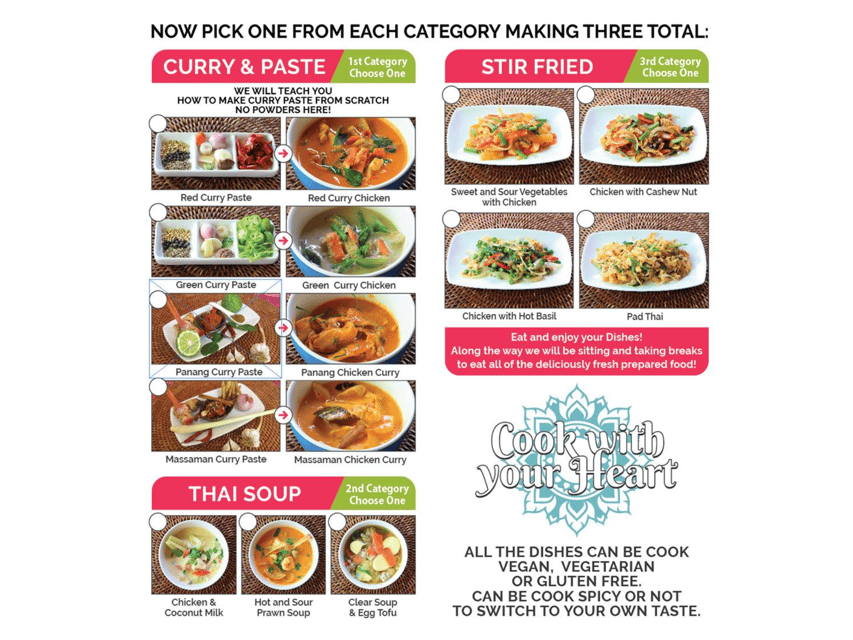
- You choose key dishes: Pick one curry, one Thai soup, and one stir-fried dish from several options.
- Akha food adds something different: Tomato dipping sauce, peanut-topped salad, and Akha soup introduce northern hill-tribe flavors.
- Hotel pickup is included: Pickup from a Chiang Mai hotel keeps the morning or afternoon simple.
- You take home practical help: A recipe book and spices let you repeat the meal after Thailand.
Why this class is more than a standard Thai cooking lesson
Chiang Mai has no shortage of cooking schools. What gives this one a clear identity is the Akha element. The Akha people moved into Thailand in the early 1900s, and their food traditions developed in mountain communities where freshness, simple preparation, and local ingredients mattered.
At Thai Akha Kitchen, those traditions are set alongside familiar Thai dishes. You are not limited to Pad Thai and green curry, though both may be on your menu. You also get foods such as Sapi Thong, a tomato dipping sauce, Akha salad with cucumber, coriander, lime, pepper, salt, and ground peanuts, plus Akha soup.
That mix matters because it gives you a better sense of northern food culture. You get the Thai dishes you may already recognize, then try recipes that are less common on restaurant menus outside the region. I like that balance. It makes the class approachable without reducing Chiang Mai cooking to a short list of international favorites.
The emphasis is on fresh, healthy cooking rather than heavy technique. You learn by handling ingredients, preparing sauces, and cooking the dishes yourself. The recipes are designed to be useful at home, especially if you want to recreate Thai food without specialist equipment.
More Market and Cooking Class Tours in Thailand
- Chiang Mai: Cooking Class, Market & Thai Herbs Garden Tour
★ 4.9 · 4,824 reviews - Chiang Mai: Authentic Cooking Class with Market & Farm Visit
★ 4.9 · 4,546 reviews - Chiang Mai: Cooking Class with Market and Pickup
★ 4.9 · 1,365 reviews
Starting at the market with a shopping basket mindset
The local market visit is the right opening move. Before you chop anything, you can see the raw materials that give Thai cooking its character. The experience includes a chance to learn about ingredients and sample local delicacies and treats, adding taste and context to what might otherwise look like a row of unfamiliar produce.
You should pay attention to the small details here. Thai cooking often depends on the balance between fresh herbs, chili, sour lime, salt, sweetness, and aromatic pastes. A market visit helps you understand that these are not decorative extras. They are the structure of the dish.
The market also makes the class feel connected to Chiang Mai. You are not simply handed a premeasured box of ingredients in a school kitchen. You first see where the cooking begins, then return to use organic ingredients in the class.
The exact market route and time spent there are not specified, so keep your expectations practical. This is a food-focused visit, not a full market-shopping tour or a general city sightseeing stop. If you already know Thai markets, the appeal will be less about novelty and more about learning which ingredients belong in which dishes.
The cooking session: many dishes, plenty of hands-on work
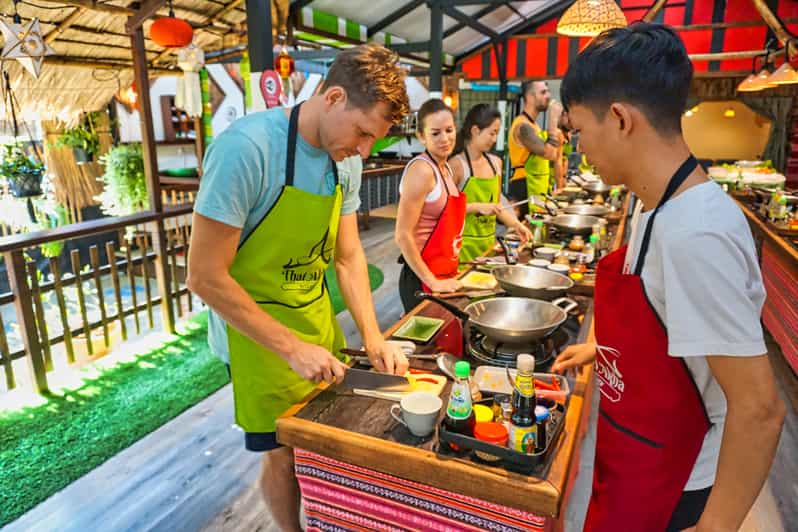
The cooking portion can last about three hours, according to the detailed experience description. That is enough time to cover a surprisingly wide menu, and the class may involve around 11 Thai dishes depending on the selections and format of the day.
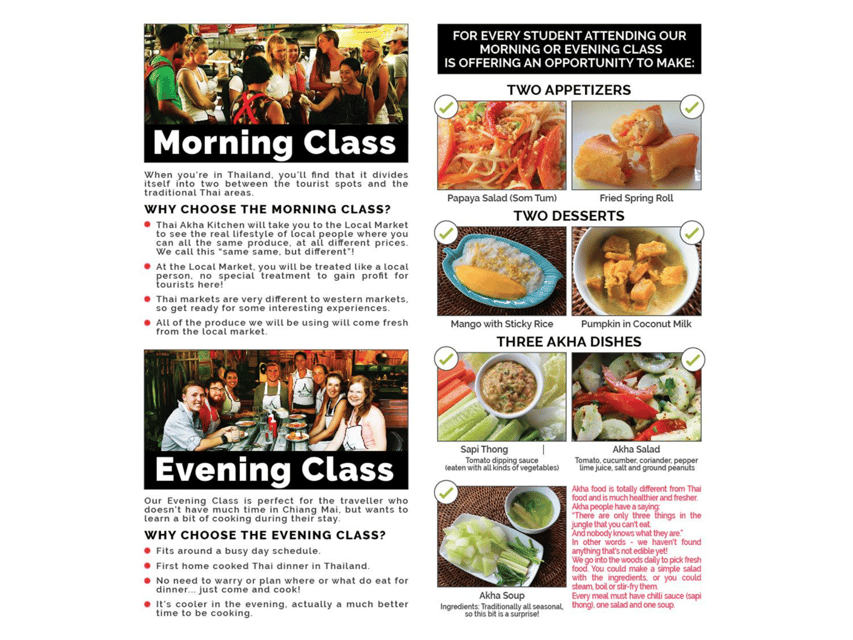
You begin with two appetizers:
- Papaya salad
- Fried spring rolls
Papaya salad gives you practice with the fresh, sharp balance common in Thai food. Spring rolls offer a different task, with filling, wrapping, and frying. Together, they provide a good contrast between a raw salad and a cooked snack.
The dessert choices are mango with sticky rice or pumpkin in coconut milk. Mango sticky rice is the more familiar classic, while pumpkin in coconut milk gives you a softer, less internationally famous finish. Do not expect dessert to be an afterthought. Coconut milk, fruit, sweetness, and texture are important parts of Thai food, and learning them completes the meal.
The three Akha dishes are the heart of the class:
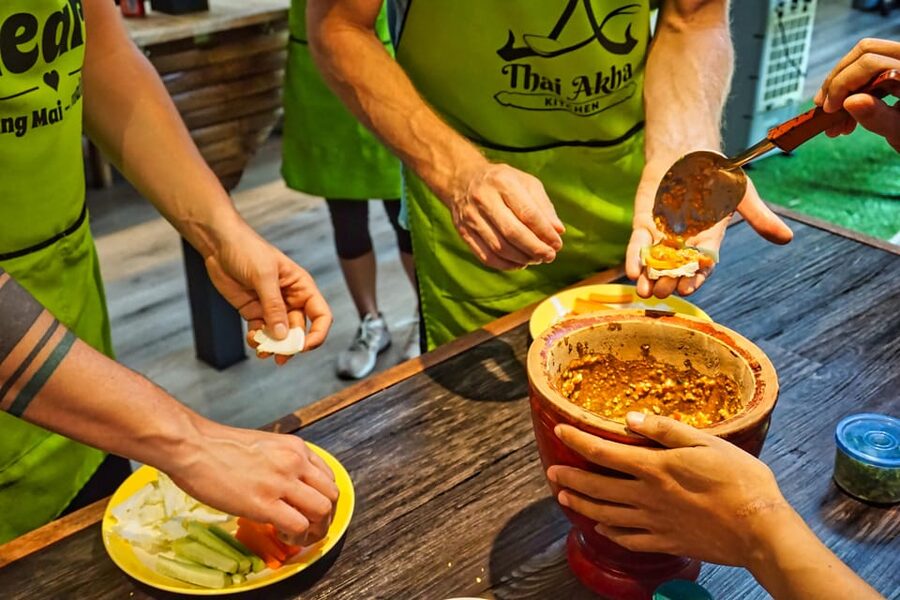
- Sapi Thong, a tomato dipping sauce
- Akha salad
- Akha soup
The salad includes tomato, cucumber, coriander, pepper, lime juice, salt, and ground peanuts. It is a good example of how a short ingredient list can produce a dish with several layers of flavor. The peanuts also add texture, something you will notice when comparing it with the smoother tomato sauce.
The Akha dishes are especially valuable if you want something beyond the usual cooking-school menu. You get a direct introduction to a food tradition connected with northern Thailand’s hill communities, rather than only learning dishes found on tourist menus.
Choosing your curry, soup, and stir-fried main
You choose one of four curries: red curry chicken, green curry chicken, Panang chicken curry, or Massaman chicken curry. This choice lets you match the meal to your taste.
Red curry is a familiar spicy option. Green curry is usually herb-forward and hot. Panang tends to be thicker and more concentrated, while Massaman offers a different spice profile. The class description does not promise a fixed heat level, but the cooking team can adjust spiciness to suit your preference. That is an important practical point if you enjoy Thai flavors but do not want to spend the meal fighting the chili.
For soup, choose one of three dishes:
- Chicken with coconut milk
- Hot and sour prawn soup
- Clear soup with egg tofu
The hot and sour prawn soup is the boldest choice. The coconut milk chicken soup is gentler and creamy, while the clear soup with egg tofu gives you a lighter option. If you are sensitive to heat or seafood, this choice gives you some flexibility, though you should still report allergies in advance.
The stir-fried dish offers four choices: sweet and sour vegetables and chicken, chicken with hot basil, chicken with cashew nuts, or Pad Thai. Pad Thai is the safe choice for first-time cooks who want a familiar Thai staple. Chicken with hot basil gives you a more aromatic and spicy plate, while cashew chicken adds crunch. The sweet and sour option may suit you if you prefer a milder, balanced flavor.
Because you select several dishes, the meal is more than a quick demonstration. You practice different methods and build a full menu. The tradeoff is pace. You will be preparing many items, so this is not the place to linger over one elaborate curry paste for an entire afternoon.
More Market and Cooking Class Tours in Chiang Mai:
- Chiang Mai: Evening Cooking Class and Local Market Visit
★ 4.9 · 648 reviews - Evening Cooking Class in Organic Farm with Local Market Tour
★ 5.0 · 394 reviews - Half-Day Cooking Class with Market Tour
★ 5.0 · 163 reviews - Chiang Mai: Traditional Thai Cooking Class with Market Tour
★ 4.8 · 137 reviews
Meeting the instructors and learning at the stove
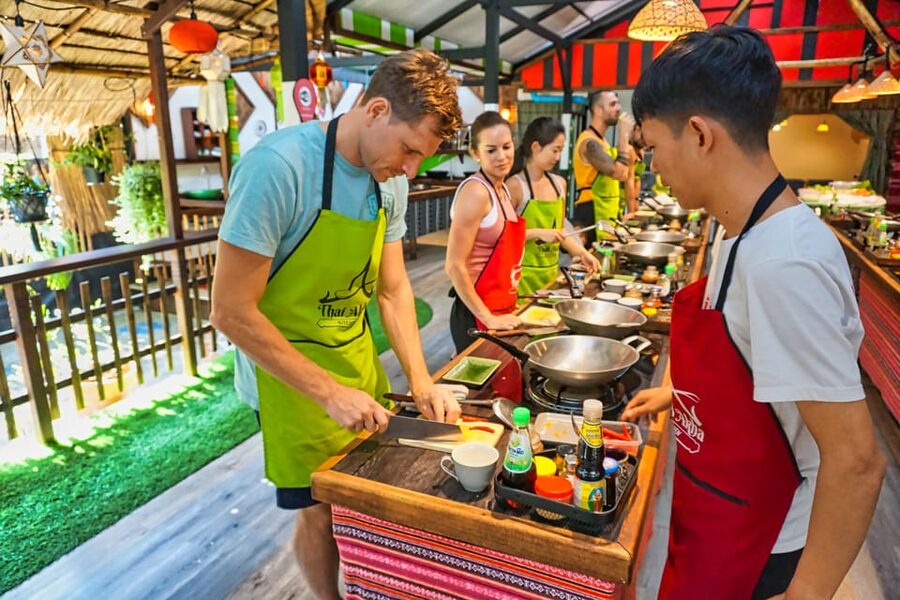
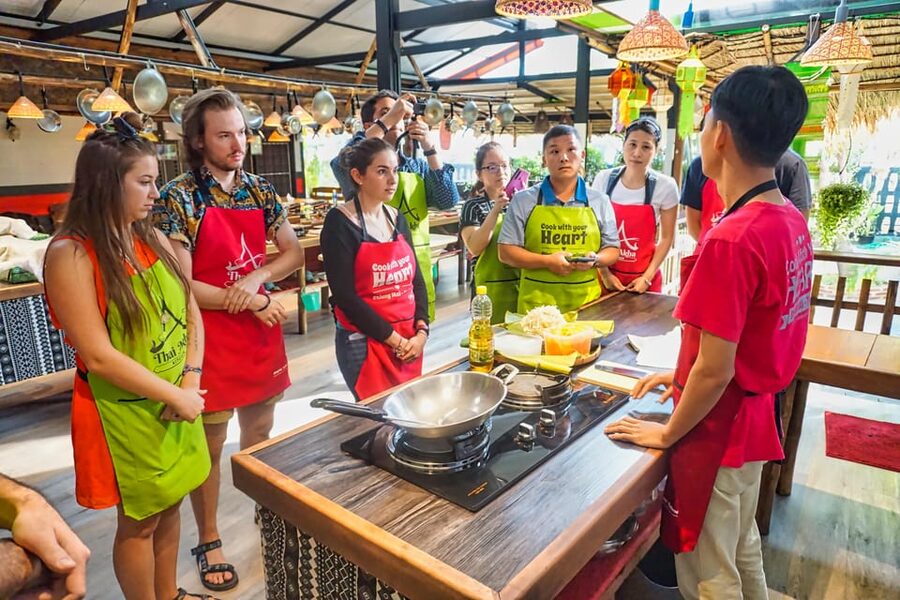
The instructors teach in English and Thai. Names connected with the class include An, Xuan, and Evelyn, and the teaching style is warm, friendly, and playful. That matters in a group cooking class, where clear instructions and a relaxed mood can make the difference between enjoying the process and feeling hurried.
You can expect step-by-step help rather than being left alone with a recipe sheet. The class is designed to teach technique, but also to explain the cultural meaning of the food. You learn how ingredients are combined, how much heat to use, and how to adapt the dish to your own preference.
I especially like the practical spice guidance. Thai food is not one fixed level of hotness, and the ability to adjust the chili makes the recipes more useful when you cook them at home. You can learn the intended flavor without forcing yourself to eat a dish that is too hot.
The recipes and cookbook are included, along with spices. These are small items, but they add real value. A cooking class can be entertaining for one meal and then disappear from memory. Written recipes and spices give you a chance to keep working with the dishes after you leave Chiang Mai.
How the price works out at $41
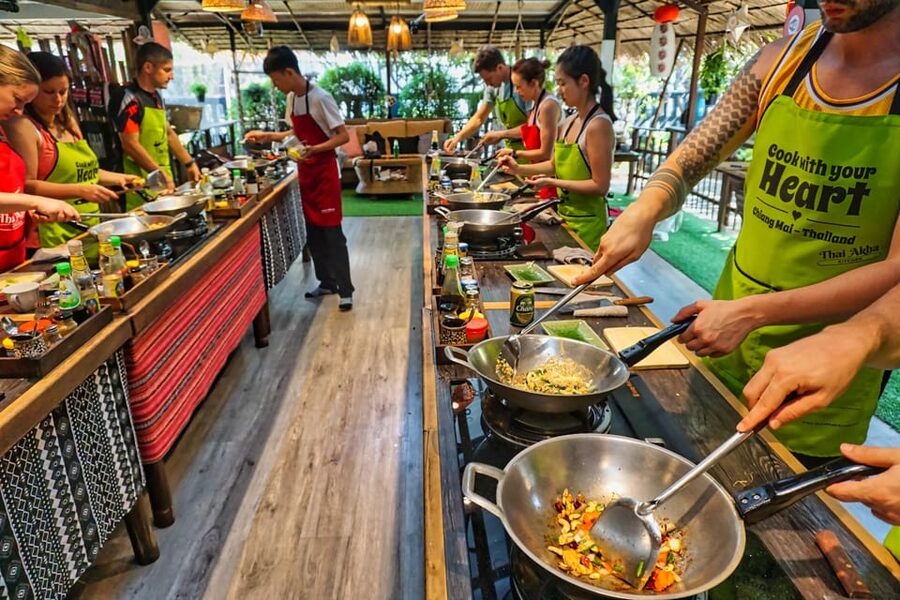
At $41 per person, the price is reasonable for a 5 to 6 hour experience that includes hotel pickup, a market visit, organic ingredients, the cooking session, a substantial meal, recipes, a cookbook, and spices.
The value is strongest if you want both instruction and lunch or dinner. You are not paying only for a short lesson. You are also paying for ingredient shopping, food preparation, several courses, and transportation from your Chiang Mai hotel.
The class is less compelling if you want a quick, low-cost meal or a narrowly focused lesson. You may not need five or six hours to learn one dish. But if you are interested in Thai food and want to understand how a local market connects to the kitchen, the price compares well with a half-day sightseeing activity.
The generous menu also changes the calculation. You can taste many dishes and learn several methods in one session, rather than booking separate lessons for curry, soup, salad, and dessert. Just remember that a full menu means you should arrive ready for a long food-centered activity.
Hotel pickup and the five to six hour schedule

Hotel pickup from Chiang Mai is included, which removes one common source of confusion. You do not need to arrange a separate taxi to reach the school, though you should provide your hotel details when booking and check the available starting time.
The total duration is five to six hours. The schedule includes the market session and cooking class, with the cooking portion taking about three hours in the detailed description. Allow extra time around the food itself, since you will be eating what you prepare.
This works well on a day when you want one substantial activity. It is not a good fit immediately before a fixed appointment, a long bus ride, or a tightly packed sightseeing schedule. Leave room for pickup and return timing, since the exact start time depends on availability.
The class is offered in English and Thai. You should contact the provider by email or WhatsApp before the class if you have food allergies. Do not wait until you are standing at the market or stove. Personal expenses are not included.
Who will enjoy this Chiang Mai cooking class
I would recommend this class to you if you want a practical introduction to Thai food with a northern cultural angle. It suits first-time visitors who want to connect ingredients, markets, and finished dishes in one outing.
It is also a good choice for people who enjoy variety. You may cook appetizers, an Akha salad and soup, a curry, another Thai soup, a stir-fried dish, and dessert. That range keeps the session lively, though cooks who prefer a slow, technical workshop may find the menu ambitious.
Families and mixed groups may appreciate the ability to choose different spice levels and main dishes. The included recipe book makes the class useful for anyone who wants to cook Thai food after returning home.
You should think twice if you dislike long food sessions, have a very restricted diet, or want a class centered on one specialist dish. The menu contains chicken, prawns, coconut milk, peanuts, and other ingredients that may not suit every diet. Tell the provider about allergies in advance so the class can prepare properly.
A few practical tips for making the most of it
Wear comfortable clothing suitable for several hours of cooking. The supplied information does not specify a dress code, but practical clothes are sensible when you will be working with sauces, oil, herbs, and curry ingredients.
Eat lightly beforehand. The class includes a large amount of food, and the menu can reach many dishes. You want enough appetite to taste what you make, especially since comparing the Akha dishes with the Thai selections is part of the appeal.
Bring a phone or small notebook if you like recording cooking tips. You receive recipes and a cookbook, but you may still want to note how much chili you chose or which curry you preferred.
Ask questions about substitutions and spice levels while you cook. The class is more useful when you treat it as a working kitchen lesson rather than a performance. The instructors can help you adapt the dishes to your taste.
The booking terms are flexible: you can cancel up to 24 hours before the activity for a full refund, and you can reserve now and pay later. Check the available starting times before booking, since the activity lasts most of a day.
Should you book the Thai-Akha cooking class?
Book it if you want a full, food-centered Chiang Mai experience with market time, hands-on cooking, and a taste of Akha traditions. The strongest reasons are the unusual Akha dishes, the wide menu, the friendly instruction from cooks such as An, Xuan, and Evelyn, and the practical extras you take home.
Skip it if you want a short lesson, dislike group-style cooking, or need a very controlled diet that includes several possible allergens. For everyone else, $41 buys a useful half-day with plenty to eat and enough instruction to keep the experience going in your own kitchen.
FAQ
How long does the Chiang Mai Thai-Akha cooking class last?
The activity lasts about 5 to 6 hours. This includes the local market visit, hotel pickup service, and cooking session. The cooking portion is described as lasting about three hours.
What dishes can I cook?
The menu includes papaya salad, fried spring rolls, mango with sticky rice, pumpkin in coconut milk, Sapi Thong tomato dipping sauce, Akha salad, Akha soup, curry, Thai soup, and a stir-fried dish. You choose one curry, one Thai soup, and one stir-fried dish from the available options.
Can I choose how spicy my food is?
Yes. The cooking class can adapt the level of spiciness to your taste. You should tell the instructor what heat level you prefer during the preparation.
Is hotel pickup included?
Yes. Pickup service from a Chiang Mai hotel is included in the activity.
Are recipes and ingredients included?
Yes. The cooking session, organic ingredients, recipes, cookbook, and spices are included. Personal expenses are not included.
What languages are available, and how should I report allergies?
Instruction is available in English and Thai. You should report any food allergies in advance by email or WhatsApp.
New market tours around Chiang Mai
- Chiang Mai: Half Day Morning Cooking Class with Market Tour★ 4.9 · 10 reviews
- Half-Day Cooking Class with Market Tour★ 5.0 · 163 reviews
- Chiang Mai: Half Day Cooking Class at Organic Farm★ 4.8 · 96 reviews
- Full Day Thai Cooking Class in Organic Farm and Market★ 5.0 · 3 reviews
- Chiang Mai: Traditional Thai Cooking Class with Market Tour★ 4.8 · 137 reviews
- Chiang Mai: Morning Cooking Class with Market Visit★ 4.9 · 81 reviews
- Chiang Mai Light: Tuk Tuk Night Tour with Temples & Markets★ 5.0 · 7 reviews
- Chiang Mai: Sticky Waterfall by Local Truck with Market Stop★ 4.8 · 26 reviews
Chiang Mai Market Tours, side by side.
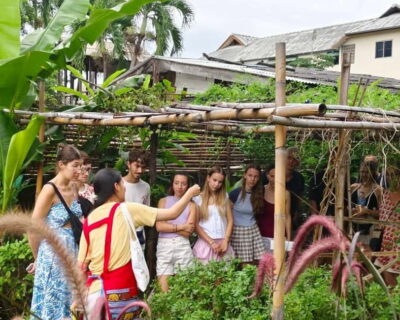
Chiang Mai: Cooking Class, Market & Thai Herbs Garden Tour
Read our review →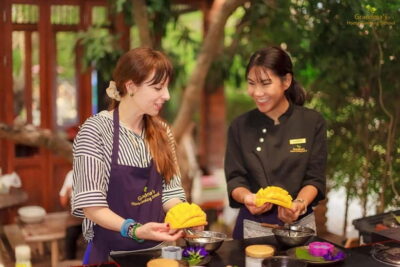
Chiang Mai: Authentic Cooking Class with Market & Farm Visit
Read our review →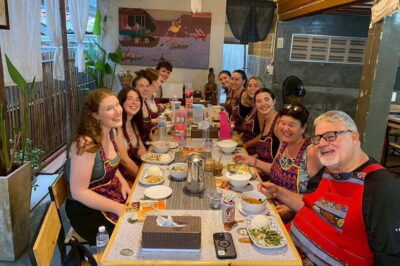
Chiang Mai: Cooking Class with Market and Pickup
Read our review →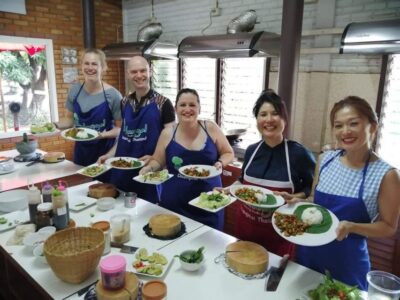
Chiang Mai: Evening Cooking Class and Local Market Visit
Read our review →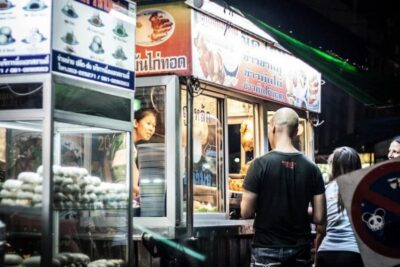
Chiang Mai: Evening Local Street Food Market Tour
Read our review →
Chiang Mai: Kalare Night Bazaar Boxing Stadium Muay Thai
Read our review →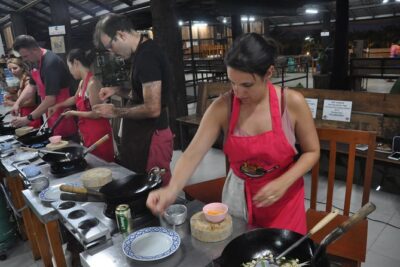
Evening Cooking Class in Organic Farm with Local Market Tour
Read our review →