
Review · UBUD
Balinese Cooking class with traditional morning market visit
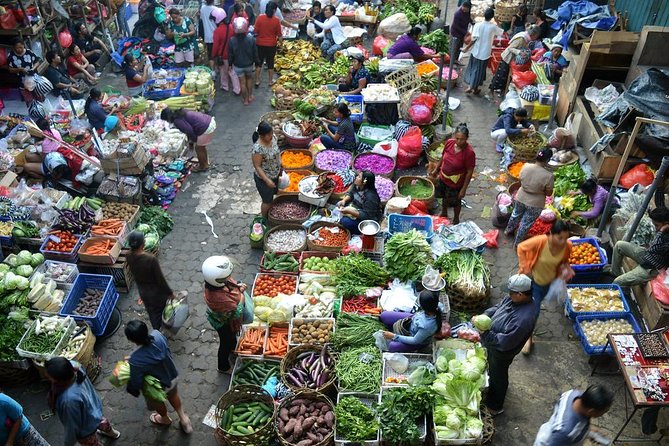
Ubud’s best food lessons begin before the cooking. This six-hour experience takes you to a local morning market, where you see the herbs, fruit, vegetables, meat, and spices that shape Balinese meals, then brings you to Laplapan village for hands-on cooking with a local chef. I like the market visit because it gives the recipes a clear context, and I like that you also learn to make a canang, the small offering basket used in Balinese daily life.
The cooking takes place in a peaceful setting with air-conditioned transport, cooking equipment, and a meal included. Wayan and Dewa are frequently named as warm, funny hosts, while Putu and Puthu have also led classes. The main consideration is timing: an early market visit and roughly six hours of activity may feel long if you only want a quick cooking demonstration.
Key points before you book
- The market comes first: See and taste unfamiliar ingredients before using them in class.
- Canang-making adds cultural context: You learn how Balinese offerings are assembled, not just how food is cooked.
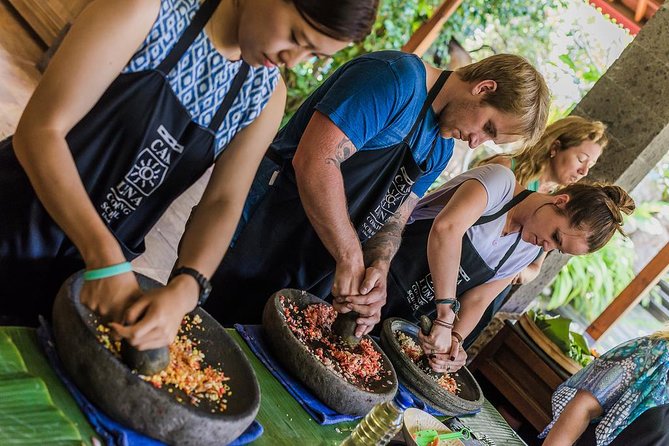
- Small groups keep it hands-on: The class accepts a maximum of eight people, so you should have room to participate.
- You cook several dishes: The menu can include starters, main courses, dessert, and as many as nine preparations.
- Transport is part of the package: Hotel pickup and air-conditioned travel to the market and workshop are included.
- The price is strong for a half-day: At $35 per person, you receive transport, instruction, equipment, taxes, and the meal, with only personal expenses extra.
Why this Ubud cooking class works so well
I like cooking classes that explain the food before putting a knife in your hand. This one begins at a fresh market, where your guide introduces local produce and spices and may invite you to smell or taste unfamiliar items. That small step matters. You are not just following a recipe with ingredients bought in advance. You are seeing the raw materials as local cooks see them.
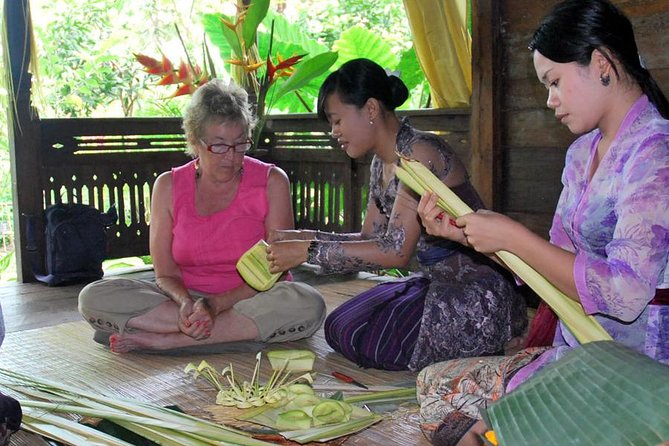
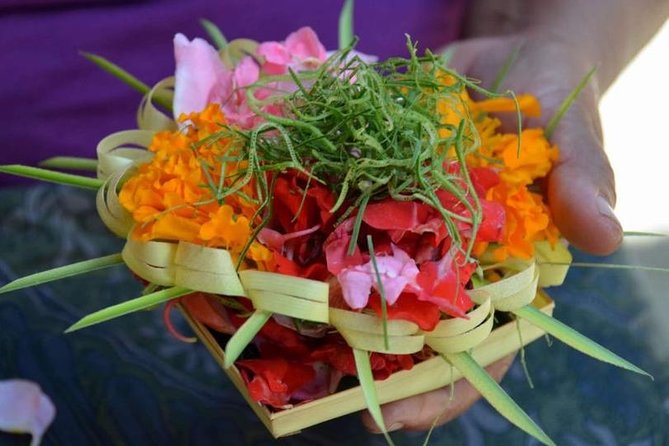
The class also connects food with Balinese family and religious life. Before cooking, you learn about making a canang and other equipment used for offerings. A canang is a small woven palm-leaf tray filled with flowers and other offerings. It is a simple craft, but it gives you a better sense of how daily ritual fits into Balinese homes and villages.
The experience is led by local cooks, including Wayan, Dewa, Putu, and Puthu at different sessions. Wayan is often praised for being patient, funny, and easy to follow. Dewa and Wayan are associated with Cobek Bali, while other sessions may use Putu or Puthu as the guide. The exact instructor can vary, but the format remains personal and practical.
At $35, this is good value for Ubud. You are paying for about six hours, hotel pickup, transport, market guidance, a cultural activity, cooking instruction, equipment, taxes, and the meal you prepare. A restaurant meal alone would cost less, of course, but it would not include the market, the lessons, or the recipes you can take home. Group discounts may also be available.
More Market and Cooking Class Tours in Indonesia:
- Ubud: Cooking Class with Transfers and Optional Market Visit
★ 4.9 · 824 reviews - Balinese Ubud cooking school (9 Dish Cooking and Market Tour)
★ 5.0 · 540 reviews - Ubud: Balinese Cooking Class and Market Tour
★ 4.8 · 531 reviews
The morning market sets the tone
Pickup comes first, with air-conditioned transport from your hotel to the market and later to the cooking location. The exact pickup range is not specified, but the experience has accommodated pickups from outside central Ubud, including Sanur. Confirm your pickup point when booking so you know how much morning time to allow.
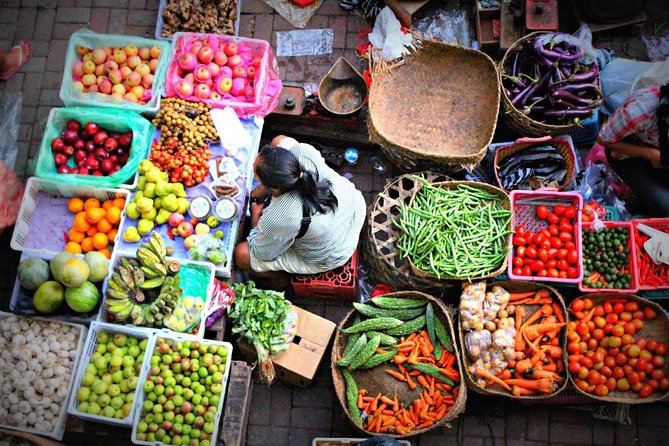
The market visit is not meant to be a long historical tour. It is a practical introduction to the ingredients you will use. You can expect to see fresh vegetables, herbs, fruit, meat, and spices, with the guide explaining what they are and how they appear in Balinese cooking.
This is where the class feels most different from a standard cooking lesson. You may taste local fruit or small sweets, and you have a chance to ask about ingredients that look unfamiliar. The market visit has been described as brief, so you should think of it as a focused food walk rather than a full market study.
That brevity can be useful. Markets are busy, wet, noisy places, and a short visit keeps the morning manageable. Still, if your main reason for booking is market photography or shopping, this class may not provide enough free time for that.
Pay attention to the guide’s comments about what is local and what comes from elsewhere. One useful part of the experience is learning that not every ingredient you see in Bali is traditionally Balinese. That makes the later cooking lesson more meaningful, since you can connect each dish to specific herbs, spices, and techniques.
Laplapan village brings the food closer to daily life
After the market, you continue to the traditional village of Laplapan. The setting is described as a jungle or local-home environment, with a clean cooking area and attractive surroundings. You receive a warm welcome before the class begins.
The move from the market to the village gives the day a natural rhythm. First you see the ingredients in their buying environment. Then you learn how they are handled and combined in a local kitchen. The class is not presented as a polished restaurant kitchen show. It is designed to feel closer to cooking with a Balinese household, while still offering organized instruction and proper equipment.
The setting also helps the class feel relaxed. You are not rushed from one station to another, and the small group format lets you ask questions. Families, solo participants, couples, and mixed groups have all been able to take part. Children as young as six have been included in family sessions, with the guide adapting the activity for them.
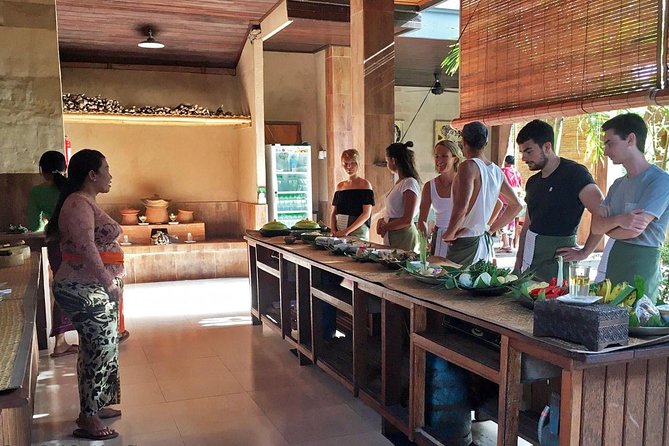
The maximum group size is eight people. That limit is important because the class includes real preparation work. In a very large group, you might only watch someone else chop or stir. Here, you should expect opportunities to handle ingredients and take part in the cooking.
Making a canang before the cooking starts
The offering lesson is one of the most distinctive parts of the morning. You learn how to make a canang and other simple offering equipment before moving into the recipes.
This activity gives you something cultural that a food-only class would miss. Balinese offerings are not simply decorative objects. They are part of everyday religious practice, and making one helps you understand the care involved in preparing a household ritual.
The task is also accessible to beginners. You do not need previous craft or cooking skills. The guide shows the process, then helps you make your own. It is a quiet change of pace after the market and before the kitchen work.
I would not book this experience expecting a detailed religious lecture. The information provided points to a practical introduction rather than an academic lesson. That is probably the right balance for a cooking class, especially if you want culture explained through an activity instead of a long talk.
More market tours around Indonesia:
- Active Volcano, Rice Field, Hot Spring, Fruit market, Tea Plantation with Lunch
★ 5.0 · 513 reviews - Seminyak: Balinese Cooking Class & Market Tour
★ 4.9 · 458 reviews - Jambangan bali cooking class with morning market tour
★ 5.0 · 35 reviews - Denpasar: Museum, Traditional Market and Food Tasting Tour
★ 4.9 · 33 reviews
What you actually cook during the class
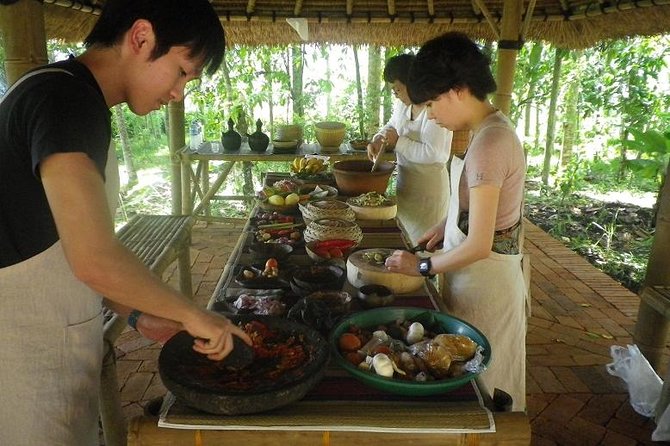
The cooking lesson covers traditional methods for preparing starters, main courses, and dessert. The exact menu can vary, but the class has included several dishes in one session, with some participants preparing as many as nine. Another description refers to a five-course set.
That is a lot of food for a half-day class, but some ingredients may be prepared in advance so the session can move at a comfortable pace. This is not a shortcut that ruins the lesson. It means you can learn the key techniques without spending the entire morning peeling, grinding, or waiting for one dish to finish.
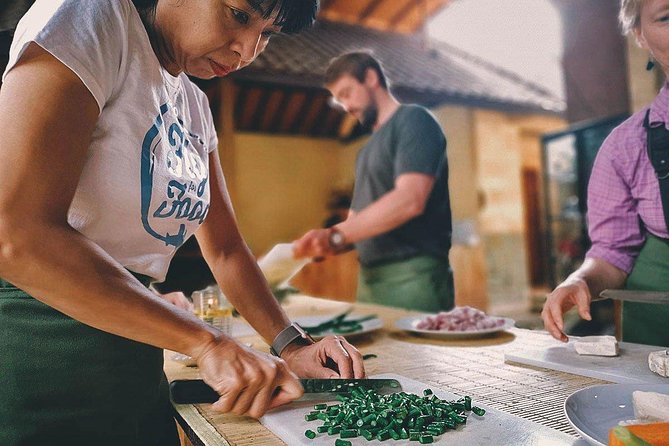
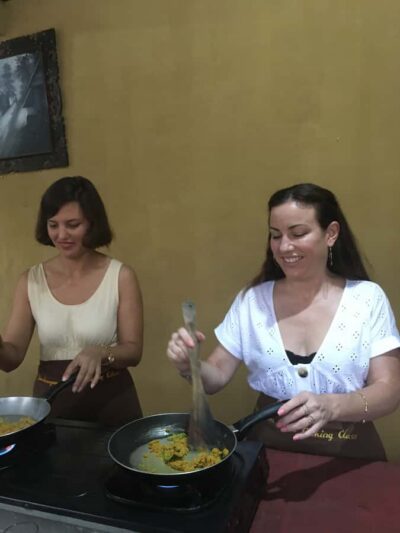
Expect guidance with preparation, seasoning, and cooking rather than a passive demonstration. The local chefs explain what they are doing, answer questions, and help you work through each recipe. The teaching style appears to be informal and friendly, with humor playing a real part in the session.
The class has also adapted to vegetarian requirements. If you have dietary needs, tell the operator ahead of time rather than waiting until you arrive. The provided information confirms vegetarian flexibility through the class experience, but it does not list every possible dietary option.
The food is the main reward. You do not simply receive a tasting plate. You sit down and eat the dishes your group prepared. That makes the meal more satisfying and helps you remember the techniques, since you can taste how the ingredients work together.
A meal that makes the lesson practical
The final meal is served as a sit-down experience. You eat the starters, main dishes, and dessert created during the class, often with the other people in your group.
I like this format because it turns the class into a shared meal rather than a series of disconnected tasks. You can compare the different dishes, ask last questions, and enjoy the results while the methods are still fresh in your mind.
The portions appear to be generous. Several sessions have produced a large amount of food, and the meal is a substantial part of the value. If you have a small appetite, you may not finish everything, but you should not leave wondering where lunch went.
Some participants receive a recipe book or recipes to take home. This is useful, since Balinese cooking can involve unfamiliar ingredients and several steps. A recipe handout gives you a chance to recreate at least some of the dishes after returning home.
Do not expect every ingredient to be easy to find in your local supermarket. You may need to substitute certain herbs or spices. Still, learning the technique is valuable even when the exact produce is not available.
Transport, timing, and group size
The experience lasts about six hours, usually beginning with hotel pickup and a morning market visit. The schedule combines driving, market time, cultural instruction, cooking, and the final meal, so it is best treated as a main half-day activity rather than a quick add-on.
Air-conditioned transport is included, which matters in Bali’s heat and humidity. It also makes the experience easier if you are staying outside central Ubud. The driver may add value of his own. One participant specifically praised Awan for explaining sights along the route and helping beyond the basic transfer.
Pickup is offered, but the exact hotel coverage and meeting time should be confirmed before booking. The listing includes a mobile ticket and confirmation at booking, which makes the arrangement fairly simple. Personal spending is not included, so bring money only if you want to buy something separately at the market or elsewhere.
The group limit is eight. That is small enough for personal instruction, but you may still be sharing tasks with other cooks. Solo visitors can meet people during the meal, while families can work together. Private instruction is not promised, though a solo participant once received what felt like a private lesson because no one else joined.
The strongest value at $35
The $35 price works because several separate costs are bundled together. You receive:
- Hotel pickup and air-conditioned vehicle
- Market visit and ingredient introduction
- Canang-making activity
- Cooking equipment
- Cooking instruction
- The food prepared during class
- A sit-down meal
- Taxes
Personal expenses are not included. Group discounts are offered, but the conditions are not specified, so ask about the discount if you are booking for several people.
Compared with a simple Ubud cooking demonstration, this offers more time and more participation. Compared with a private custom class, the group format keeps the price low. The tradeoff is that the menu and schedule may not be completely tailored to you.
The strong satisfaction score, 5 out of 5 from 161 ratings and 99 percent recommended, supports the value, but the details matter more than the number. The repeated strengths are reliable pickup, friendly local instruction, tasty food, a clean cooking area, and the chance to prepare several dishes. Those are the features I would use to judge the booking.
Who should book this experience
I would recommend it to food-focused visitors who want more than a restaurant meal. It suits you especially well if you like asking questions, handling ingredients, and learning through practical work.
It is also a good fit for first-time cooking-class participants. The teaching is patient, the chefs provide help, and the recipes are explained step by step. You do not need advanced kitchen skills.
Families can consider it too. Children have taken part successfully, and the canang-making activity gives younger participants something creative to do before the cooking begins. Keep in mind that six hours is a long block for a young child.
Solo visitors may enjoy the social side. You share the kitchen and meal with a small group, and the informal teaching style makes it easy to talk with others. Couples and friends can divide tasks or work together.
I would think twice if you dislike early starts, market environments, or group activities. The market visit is fairly brief, but it is still part of the experience, and the class takes most of a morning. If you want a private menu designed around your exact tastes, a different format may suit you better.
Free cancellation is available if you cancel at least 24 hours before the local start time. Cancellations or changes made less than 24 hours ahead are not accepted for a refund.
Should you book the Balinese cooking class?
Yes, if you want a hands-on introduction to Balinese food and everyday culture at a fair price. The combination of market visit, canang-making, village cooking, and a shared meal gives the morning more depth than a standard recipe lesson.
Book it with realistic expectations. You are joining a small group, the market portion is focused rather than lengthy, and the menu may vary. For $35, though, you get transport, cultural context, several dishes, and enough practical instruction to keep cooking at home. That is a strong choice for a food-minded day in Ubud.
FAQ
How long does the Balinese cooking class last?
The experience lasts approximately six hours, including hotel pickup, the morning market visit, the cultural activity, cooking class, and sit-down meal.
How much does the experience cost?
The listed price is $35 per person. Group discounts are offered, though the discount details are not specified.
Is hotel pickup included?
Yes. Pickup is offered, and air-conditioned transport from your hotel to the market and workshop is included.
How many people can join the class?
The activity has a maximum of eight people.
What is included in the price?
The price includes cooking equipment, an air-conditioned vehicle, cooking class fees, and taxes. The prepared food and sit-down meal are part of the cooking experience. Personal expenses are not included.
Will I visit a local market?
Yes. You visit a fresh morning market before the class, where you can see ingredients such as vegetables, herbs, fruit, meat, and spices. The guide explains the local produce and may offer tastes.
Can I cancel for a full refund?
Yes, if you cancel at least 24 hours before the experience start time. Cancellations or changes made less than 24 hours before the start time are not accepted for a refund.
New market tours around Indonesia
- Nusa Dua: Balinese Cooking Class with Market Tour★ 5.0 · 4 reviews
- Bali: Balinese Cooking Class and Market Tour★ 4.8 · 19 reviews
- Jambangan bali cooking class with morning market tour★ 5.0 · 35 reviews
- Denpasar: Museum, Traditional Market and Food Tasting Tour★ 4.9 · 33 reviews
- Balinese cooking class/Go shopping at the market, cook, eat★ 5.0 · 12 reviews
- Bali – Ubud Night Market Food Tour★ 3.8 · 14 reviews
- Bali: Ubud Monkey Forest, Coffee Plantation, and Market Tour★ 5.0 · 5 reviews
- Bali: Safari Zoo and Ubud Palace and Market Day Tour★ 4.7 · 6 reviews
Ubud Market Tours, side by side.
Balinese Ubud cooking school (9 Dish Cooking and Market Tour)
Read our review →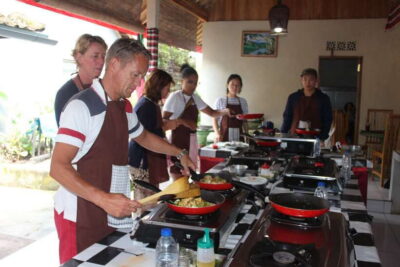
Jambangan bali cooking class with morning market tour
Read our review →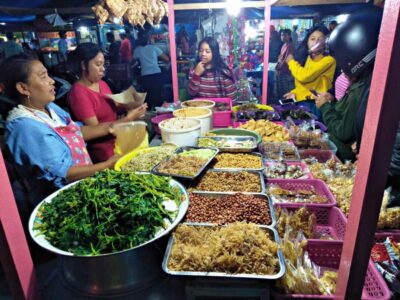
Balinese cooking class/Go shopping at the market, cook, eat
Read our review →
Bali: Safari Zoo and Ubud Palace and Market Day Tour
Read our review →
Bali: Ubud Monkey Forest, Coffee Plantation, and Market Tour
Read our review →This tour also appears in