Review · VALENCIA
Seafood paella cooking class, tapas and visit to Ruzafa market.
Valencia’s best cooking lesson begins before anyone turns on a stove. You meet near San Valero Parish, walk through Ruzafa Market, and help choose the seafood and produce that will become lunch. Then chefs such as Ana, José, Cristina, and Valentín turn a paella pan into a group project, with plenty of sangria along the way.
I like two things right away: you learn how paella fits Valencian culture, not just how to stir rice, and you actually take part in preparing the dish. I also like the generous meal, which includes tapas, salad, wine, dessert, and coffee. The main drawback is that the meeting point can be confusing, and the walk from the market to the kitchen may be tiring for anyone with limited mobility.
Key points to know
- Ruzafa Market comes first: You shop for fresh seafood, vegetables, and other ingredients while hearing about local food customs.
- Seafood paella is hands-on: You help prepare and cook the dish instead of watching a chef do everything.
- Sangria and tapas set the tone: The class includes patatas bravas, ham, Manchego cheese, mussels, olives, and drinks.
- The meal is substantial: Paella comes with Valencian tomato salad, fruit, Valencian cake, sweet wine, and coffee.
- Small groups work best: The maximum is 20, though some sessions are much smaller, with several instructors helping.
- Sunday needs special care: Ruzafa Market is closed on Sunday, so the market visit does not operate that day.
Why this paella class works so well in Valencia
Paella is not simply a dish to check off a menu in Valencia. It is a social meal, a family tradition, and a useful way to understand the region. This experience gives you that context before you eat, which makes it more worthwhile than a standard restaurant lunch.
The food lesson begins in a neighborhood market rather than a cooking studio stocked with anonymous ingredients. That matters. You see the seafood, vegetables, and other products being selected, then learn how those ingredients fit into the finished dish. The market visit also gives you a glimpse of everyday Ruzafa, one of Valencia’s best-known neighborhoods for food and local life.
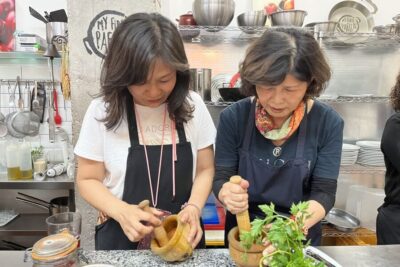
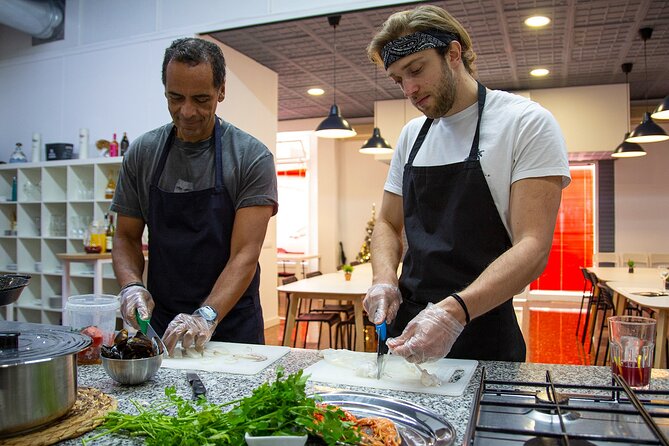
I especially like the balance between explanation and participation. The chefs break the process into manageable steps, so you can help prepare ingredients, follow the cooking stages, and see how the rice and stock come together. You are not expected to arrive with kitchen skills.
The overall rating is 4.9 from 328 reviews, and 99 percent of participants recommend the experience. Those numbers suggest a very consistent product, though one cancellation complaint shows that a small operation can sometimes be vulnerable when an instructor becomes ill. The operator apologized and offered alternatives in that case.
More Market and Cooking Class Tours in Spain
- Barcelona: Paella Cooking Experience & Boqueria Market Tour
★ 4.8 · 3,661 reviews - Barcelona Paella Cooking Class with Market Visit, Tapas & Sangria
★ 5.0 · 2,531 reviews - Paella Cooking Class, Wine Tasting & Central Market in Valencia
★ 5.0 · 1,150 reviews
Meeting at San Valero Parish and entering Ruzafa Market
The meeting point is the door of San Valero Parish at Carrer del Pare Perera, 6, in L’Eixample. The start time is 11:00 a.m., and the activity returns to this same meeting point at the end.
Give yourself extra time to find the church. One person had trouble because the address did not make the exact gathering place clear and had to ask a nearby shopkeeper for help. I would look for the church entrance rather than simply typing the street address into a map and waiting outside a nearby business.
Once the group is together, you head into Mercado de Ruzafa. The market stop is short enough to keep the cooking class moving, but it adds useful context. Your guide explains the origin of paella, Valencian customs, and the local food culture while the group gathers the ingredients needed for the meal.
The market is also a practical lesson in shopping. You can see the fresh seafood and produce before they are cleaned and arranged in the kitchen. Guides have taken time to explain seafood, ham, and vegetables, and they may point out products or vendors as the group moves through the stalls.
The group is asked to avoid blocking walkways and interfering with regular shoppers. That is good practice in a working market. You get a more respectful look at local life, rather than turning the market into a stage set for a large tour.
The market is closed on Sunday. That is the one day when this part of the experience does not take place, so check the date carefully before booking.
The eight-minute walk to the cooking kitchen
After shopping, you walk about eight minutes to the kitchen. That sounds easy, and for most people it probably is, but one participant described the walk as a bit of a hike. The wording may reflect personal comfort, yet it is worth noting if you have trouble standing or walking for extended periods.
This is not a bus-based activity. You should be comfortable moving through the neighborhood, standing in the market, and taking part in a meal that lasts several hours. Children can attend, but they must be accompanied by an adult.
The kitchen is where the social side of the class takes over. The chefs greet the group with sangria and tapas before the main cooking begins. Beer, soft drinks, water, and wine are also included, so you can choose something other than alcohol. Still, the session includes a fair amount of drinking, especially if you accept sangria, wine, and sweet wine along with the meal.
Tapas, sangria, and the first taste of Valencia
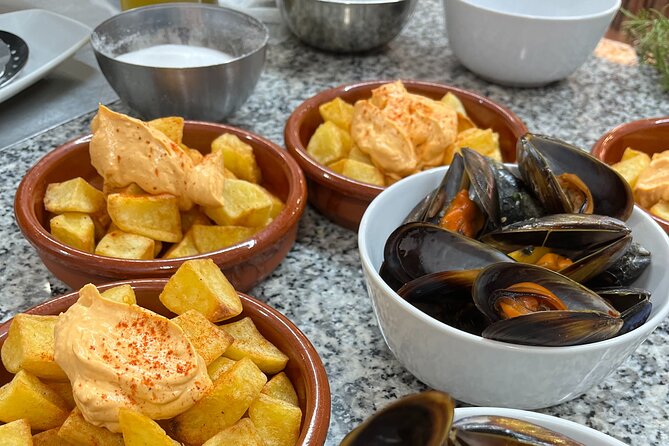
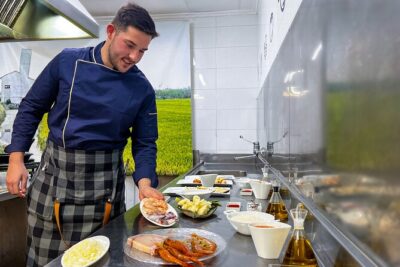
The opening spread is more than a token snack. You may receive patatas bravas with sojanesa, serrano ham, Manchego cheese, steamed mussels, and olives. The food gives you something to eat while the chefs explain what will happen next.
The sangria workshop is one of the fun parts of the experience. Cristina and other instructors have led this portion, showing the group how to put the drink together before the paella work begins. It is a simple recipe, but it helps everyone settle in and start talking.
This is also where the class becomes social. You cook with people from different countries and divide into teams. Some sessions include seafood paella alongside traditional Valencian or vegetable versions, so you may see more than one recipe being prepared at once.
That arrangement has both advantages and limits. Watching different paellas cook side by side can teach you how the ingredients change the process. On the other hand, two chefs may be helping with three paellas, rather than assigning one chef to each pan. The class remains hands-on, but the amount of direct attention depends on group size.
Same city, another market:
- Valencian paella cooking class, tapas and visit to Ruzafa market.
★ 5.0 · 828 reviews - Spanish Cooking Class & Triana Market Tour in Sevilla
★ 5.0 · 760 reviews - Seville: 3.5-Hour Spanish Cooking Class & Triana Market Tour
★ 4.9 · 751 reviews - Valencia: Paella Cooking Class with Central Market Tour
★ 5.0 · 721 reviews
Cooking seafood paella with the chefs
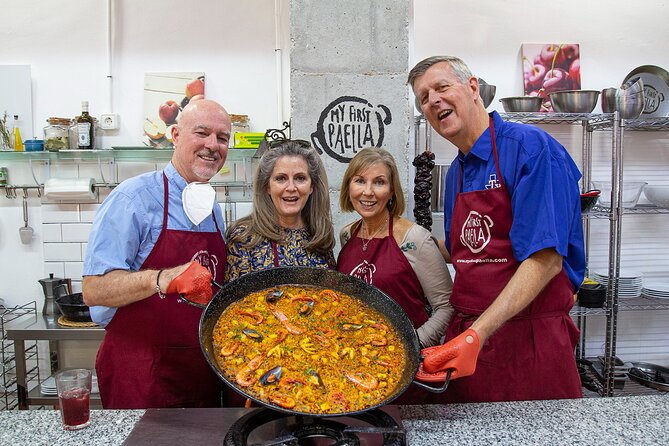
The seafood paella is the heart of the activity. The chef explains the process step by step, from preparing the ingredients to cooking the rice. You help with the work, and the instructors keep the pace easy enough for beginners.
José has been praised for giving clear instructions and useful cooking tips, while Ana has explained both the technical side of paella and its role in bringing families together. Cristina and Valentín have also led sessions, with a style that combines instruction and humor.
The chefs do not treat paella as a mysterious trick. You learn that the dish is made in stages and that each stage has a purpose. The class helps you understand how much work goes into a good paella, which can change the way you judge the dish in a restaurant.
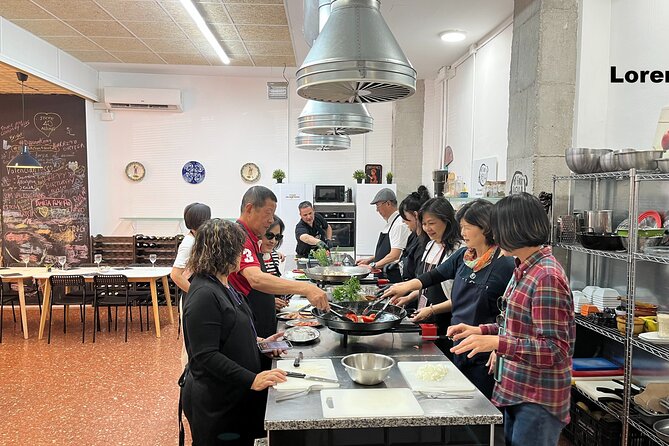
You may work at one of several paella stations. Everyone gets a task, and the group shares responsibility for the final pan. That is a better setup than standing behind a counter while a chef performs the entire lesson for you.
The instructors also explain how you can adjust the recipe at home. The point is not to hand you one rigid formula and call it authentic. It is to show you the basic method and help you understand how to build your own version.
The seafood paella is served after cooking, and it has the added satisfaction of being your group’s work. The lesson is not a contest, but there is a small thrill in sitting down to eat something you helped make.
A full Valencian lunch, not just a cooking demonstration
The meal continues with a Valencian tomato salad. This is a useful side dish because it gives your palate a break from the paella and highlights the value of good local produce.
Dessert includes seasonal fruit and Valencian sponge cake. Coffee and mistela, a local sweet wine, finish the meal. Wine is served with the food, and beer, soft drinks, and water are available as well.
I consider the amount of food a major part of the value. At $78.64 per person, you are paying for a market visit, instruction, ingredients, kitchen equipment, a social activity, and a complete meal with drinks. A cooking class that ends with one small plate would feel expensive at this price. This one is closer to a half-day food experience.
You should still decide if you want that kind of lunch. If you prefer a quick paella tasting, this class will feel long. If you want to learn, eat well, and meet people, the price is easier to justify.
The listed duration is about three hours and 30 minutes. With an 11:00 a.m. start and the market, walk, class, and meal included, it occupies a solid part of your day. I would avoid booking another fixed activity immediately afterward.
Group size, teaching style, and the social side
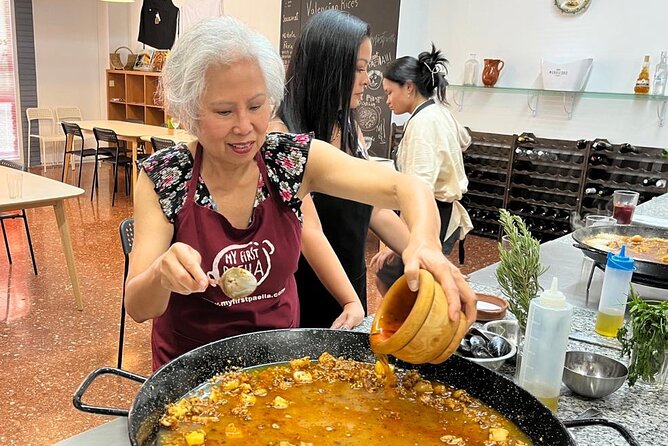
The maximum group size is 20, but sessions can be much smaller. One class had only 12 people, and another had eight participants divided between two paellas. Smaller groups make it easier to ask questions and get a turn at the pan.
Several chefs may lead the session, and the exact team can change. Names associated with the class include Ana, José, Cristina, Valentín, and John. Guides may speak English, Spanish, or Russian, and the activity is offered in English.
The teaching style is lively rather than formal. You can expect jokes, conversation, and plenty of encouragement. That works well for a meal that depends on shared effort. People often feel more at ease once the sangria and tapas arrive, but you should be comfortable with a group setting from the start.
I would choose this class for solo visitors, couples, friends, and families with older children. It is particularly useful if you want a social afternoon without signing up for a nightlife activity. The class also suits anyone who has tried making paella at home and wants to improve the method.
It may be less suitable if you need a quiet, private lesson or strict one-to-one attention. With multiple paella stations, the chefs must divide their time.
What to know before you book
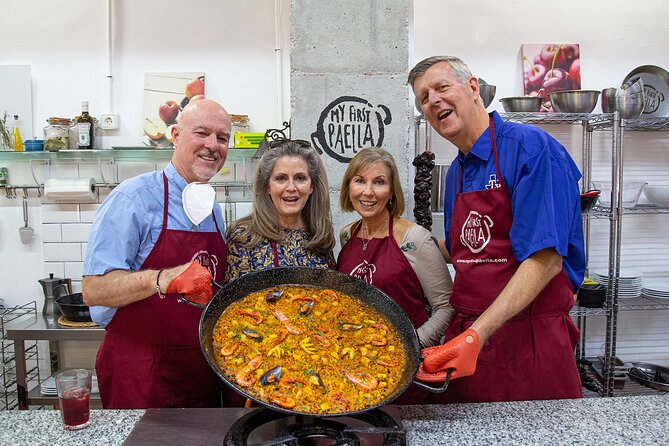
Book ahead if your schedule is fixed. The experience is often reserved about 31 days in advance, which suggests that popular dates can fill early.
Wear comfortable shoes. You will walk through the market and then continue to the kitchen, with standing and cooking during the class. Anyone with limited mobility should consider the market movement and the walk before paying.
Arrive early at San Valero Parish. The meeting point is specific, but the exact door may not be obvious when you reach the address. Being there a few minutes ahead gives you time to confirm the group instead of searching at 11:00.
If you are avoiding alcohol, the activity still includes water and soft drinks, but sangria, wine, beer, and sweet wine are central parts of the meal. If you have food allergies or dietary restrictions, the provided details do not specify how those are handled, so ask before booking.
The maximum group size is 20. The actual size can be lower, but you should not assume a private or tiny class.
Free cancellation is available until 24 hours before the start time for a full refund. Cancellations or changes made less than 24 hours in advance are not accepted for a refund. The operator once had to cancel because the chefs were ill, so keep the contact details handy in case plans change.
Is the seafood paella class worth booking?
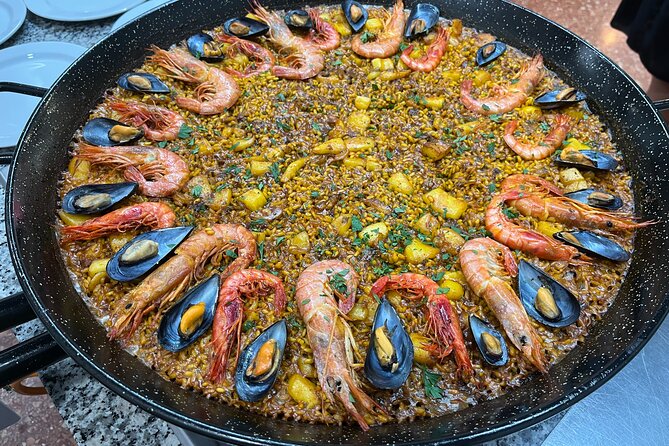
I would book this experience if you want more than a restaurant meal and like the idea of learning through food. The market visit, sangria lesson, cooking work, and long lunch give you several ways to connect with Valencia in one morning and afternoon.
The strongest reasons to choose it are the hands-on format, the generous meal, and the instructors’ warm, funny teaching style. You also leave with practical ideas for making paella at home, rather than just a photograph of one.
Think twice if walking, standing, or a group meal will be difficult. Confirm the meeting point carefully, avoid Sunday if the market visit matters to you, and allow the full three and a half hours. For most people who enjoy food and conversation, this is a well-priced way to spend a day in Valencia.
FAQ
Where does the paella cooking class meet?
The group meets at the door of San Valero Parish, Carrer del Pare Perera, 6, in L’Eixample, Valencia. The activity ends back at the same meeting point.
What time does the experience start?
The class starts at 11:00 a.m. and lasts about three hours and 30 minutes.
Is the Ruzafa Market visit included?
Yes. You visit Mercado de Ruzafa with the guide and help shop for the fresh ingredients used in the cooking class. The market is closed on Sunday, so there is no market visit that day.
What food and drinks are included?
The experience includes tapas, Valencian tomato salad, seafood paella, seasonal fruit, Valencian cake, coffee, and mistela. Drinks include sangria, wine, beer, soft drinks, and water.
Is the class offered in English?
Yes. The activity is offered in English. It may also be operated by a multilingual guide speaking English, Russian, or Spanish.
What is the cancellation policy?
You can cancel at least 24 hours before the start time for a full refund. Cancellations or changes made less than 24 hours before the experience are not accepted for a refund.
New market tours around Spain
- Teguise: Market and César Manrique Foundation Tour★ 4.3 · 39 reviews
- Tapas Cooking Workshop & Market Visit★ 4.8 · 10 reviews
- Sunday Markets: Santa Brígida, San Mateo, and Teror★ 4.6 · 5 reviews
- Seville: Tasting, History, Market visit and Tapas Tour★ 5.0 · 2 reviews
- Seville: Triana Market Tour with Tastings★ 4.9 · 32 reviews
- Seville: Morning Market & Tapas Tour★ 5.0 · 11 reviews
- San Sebastián: Market Tour, Cooking Class, & Meal★ 5.0 · 2 reviews
- Santoña: Anchovy Art Gallery with Fishing Port and Market★ 4.5 · 4 reviews
Valencia Market Tours, side by side.
Paella Cooking Class, Wine Tasting & Central Market in Valencia
Read our review →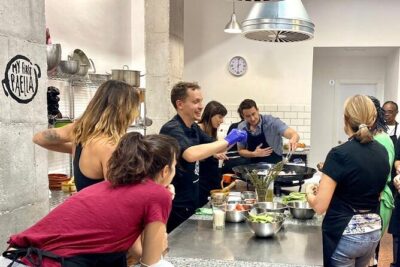
Valencian paella cooking class, tapas and visit to Ruzafa market.
Read our review →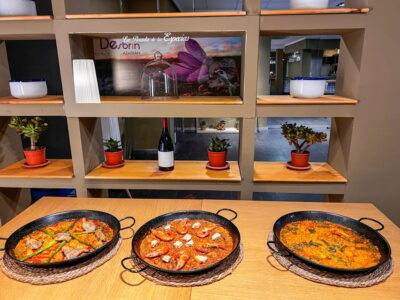
Valencia: Paella Cooking Class with Central Market Tour
Read our review →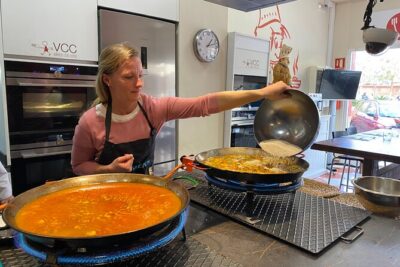
Valencian paella workshop and visit to the Algiros market
Read our review →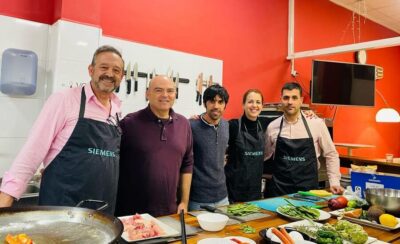
Valencia: Paella Workshop and Algiros Market Visit
Read our review →