Review · VALENCIA
Valencian paella cooking class, tapas and visit to Ruzafa market.
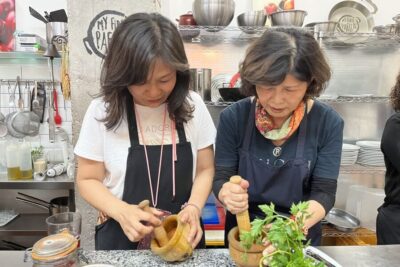
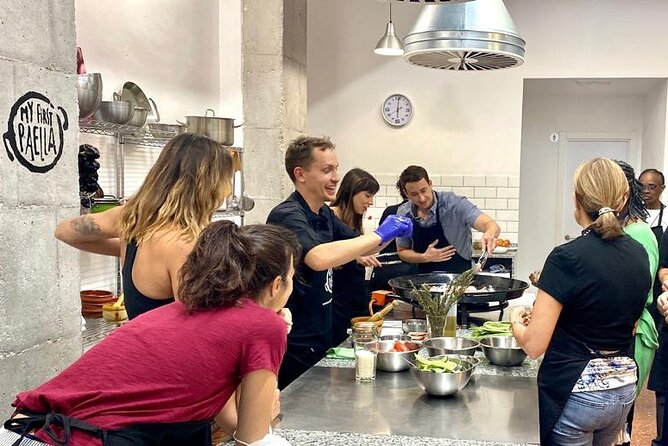
The best part of this Valencia experience is that paella is not treated as a dish you simply watch someone prepare. You help make it, starting with a market visit and ending with a shared meal of paella, salad, dessert, and local drinks. Anna and Jose keep the class friendly, practical, and full of jokes.
I like the market stop because it gives the cooking a sense of place. I also like the hands-on format: you may be grinding saffron, handling salt, or helping with another step instead of standing behind a demonstration counter. The main consideration is the generous amount of food and alcohol, so arrive hungry but pace yourself.
Key points at a glance
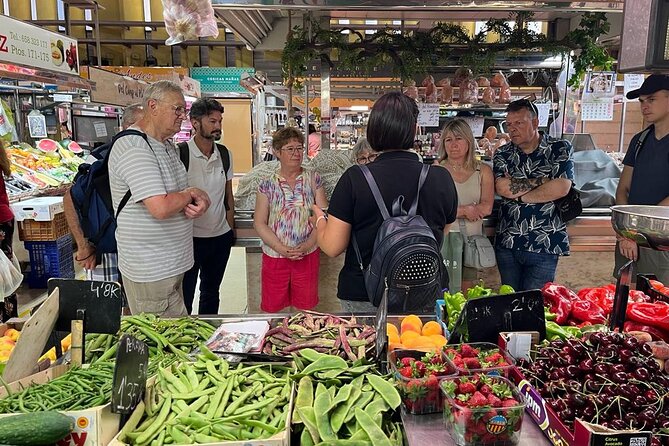
- Ruzafa Market first: Shop for fresh ingredients while learning about Valencian food customs and paella traditions.
- Hands-on cooking: You help prepare chicken-and-rabbit Valencian paella rather than simply watching a chef work.
- Sangria workshop included: Make sangria before the main cooking begins, with tapas served alongside it.
- A social setup: The class has a maximum of 20 people, with smaller groups organized for the cooking portion.
- A full meal afterward: Expect tapas, paella, tomato salad, wine, fruit, Valencian cake, sweet wine, and coffee.
- Useful timing tip: Meet at 11:00 a.m. outside San Valero Parish, not at the cooking kitchen.
Why this paella class works so well
Valencia is the home of paella, but a good paella experience should explain more than the ingredients. It should show how the dish fits into local life, why the pan matters, and why cooking and eating it are often social events. This class makes that connection from the start.
You meet at Parroquia de San Valero, at Carrer del Pare Perera 6, in the L’Eixample district. From there, the group walks into Ruzafa Market to buy the fresh products needed for the meal. During the shopping stop, the guides explain the origins of paella, local customs, and the food culture of Valencia.
That approach gives you useful context before the cooking begins. Instead of arriving at a kitchen with ingredients already measured and arranged, you see the market side of the meal first. I find that especially helpful if you want to understand Valencian cooking rather than just copy a recipe.
The experience lasts about three and a half hours. It is offered in English, although the guide team may be multilingual. The maximum group size is 20, and the cooking portion can be organized into smaller groups, which helps keep the class active rather than turning it into a crowded demonstration.
More Market and Cooking Class Tours in Spain
- Barcelona: Paella Cooking Experience & Boqueria Market Tour
★ 4.8 · 3,661 reviews - Barcelona Paella Cooking Class with Market Visit, Tapas & Sangria
★ 5.0 · 2,531 reviews - Paella Cooking Class, Wine Tasting & Central Market in Valencia
★ 5.0 · 1,150 reviews
Starting at San Valero Parish at 11:00 a.m.
The meeting point is easy to identify: the door of San Valero Parish. Pay close attention to this detail because the church is the starting point, not the kitchen where you cook. The whole group gathers there before heading into the market together.
The morning start matters. You will have enough time for the market visit, the walk to the kitchen, the sangria workshop, cooking, and the meal without rushing through every stage. Since the food is substantial, it is wise not to eat a large breakfast.
One practical warning comes from the structure of the experience: arriving late can mean missing the market portion. The cooking team may still be able to include you in the kitchen session, but you would lose the part that explains the ingredients and local setting. Give yourself extra time to reach the church.
The walk from Ruzafa Market to the kitchen takes about eight minutes. That is short enough for nearly anyone comfortable with an ordinary city walk, and it keeps the market and cooking portions connected without adding transport complications.
Shopping through Ruzafa Market
Ruzafa Market is more than a quick stop for supplies. It is where the class introduces the products behind the paella and the food traditions of the Valencian people. You go through the market with the guides while they explain what is being bought and how the ingredients fit into the dish.
This is one of the most valuable parts for anyone who wants local context. Paella is often reduced to a list of rice, meat, vegetables, and seasoning. Here, the market visit gives you a better sense of how a regional dish begins with ordinary fresh products and a shared trip to buy them.
The stop is also useful if you are interested in Valencia beyond the main sights. Ruzafa is part of the L’Eixample area, and the market gives you a look at daily food shopping rather than a polished attraction built only for sightseeing.
There is a limit, though. The market visit is conducted as part of a group, so this is not a long, free period for browsing every stall at your own pace. The point is to gather ingredients and learn about paella, not to spend the morning shopping independently.
Tapas and the sangria workshop
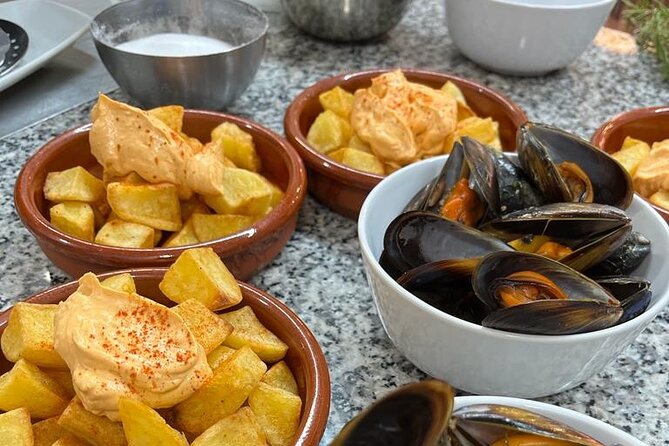
After the market, you walk roughly eight minutes to the cooking kitchen. The chef is waiting there with tapas and drinks before the paella lesson begins. This opening meal gives the group time to settle in and meet one another.
The sample tapas include patatas bravas with sojanesa, jamón serrano, Manchego cheese, steamed mussels, and olives. That is a generous start, particularly when followed by a full paella lunch. Water and beer are also available, along with sangria.
The sangria workshop adds a useful change of pace. You do not simply receive a glass and move on. The class includes making sangria, so you get another small recipe to take home and repeat. The format is social, and the guides use the drinks and tapas to get people talking before the cooking begins.
I would treat the alcohol as part of the meal, not as the main event. Several parts of the experience include wine, sangria, or sweet wine, and the food arrives in several courses. If you plan to drink each time something is offered, pace yourself carefully.
Same city, another market:
- Spanish Cooking Class & Triana Market Tour in Sevilla
★ 5.0 · 760 reviews - Seville: 3.5-Hour Spanish Cooking Class & Triana Market Tour
★ 4.9 · 751 reviews - Valencia: Paella Cooking Class with Central Market Tour
★ 5.0 · 721 reviews - Barcelona: Paella Cooking Class with Market Visit and More
★ 4.9 · 711 reviews
Making Valencian paella by hand
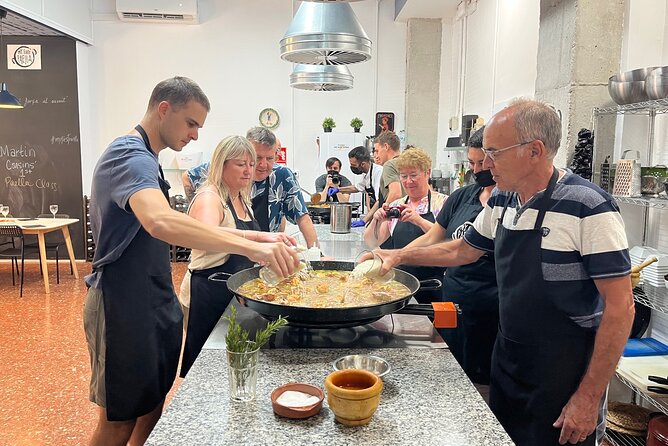
The main lesson is traditional Valencian paella with chicken and rabbit. The chef explains the method step by step, and you take part in the preparation. The class is designed to make you work, not simply watch the instructors cook the meal for you.
That distinction matters. A demonstration may be entertaining, but it does not always leave you confident enough to repeat the dish at home. Here, the practical jobs are part of the lesson. One small task might be managing the salt, while another could involve grinding saffron. A past participant specifically warned that grinding saffron takes more effort than it appears to require.
The guides also explain the customs around paella and the role of the dish as a social meal. The aim is not only to produce a tasty plate. You learn why the process is done in stages and how the cooking becomes something shared by the whole group.
Anna and Jose receive especially strong praise for their energy, patience, and clear instruction. Their role is important because cooking classes can become confusing when several people are working at once. A good instructor needs to keep the steps moving while giving each person a chance to take part.
You should expect a lively class rather than a quiet technical seminar. The humor and conversation are part of the design. If you prefer a very formal cooking school with strict individual stations, this may feel loose. If you like learning through participation and conversation, the format should suit you well.
The meal: paella, salad, wine, and dessert
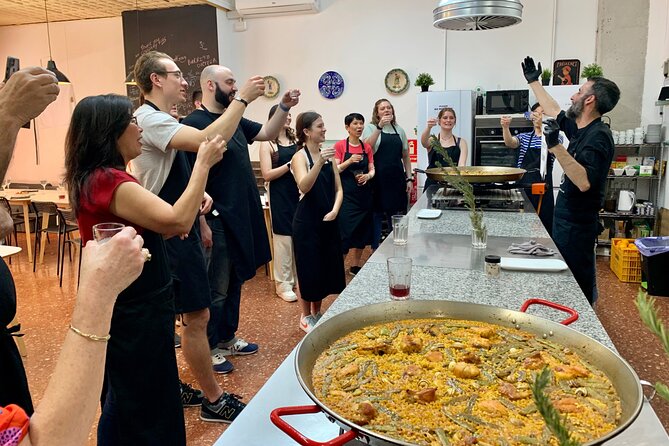
Once the paella is ready, the group sits down to eat. A Valencian tomato salad accompanies the main dish, followed by seasonal fruit, Valencian sponge cake, sweet wine, and coffee.
The menu is substantial even before dessert. You begin with tapas, then prepare and eat paella, then finish with sweets and coffee. The class is best approached as a complete lunch rather than a light activity with a small tasting at the end.
The meal also gives you a chance to see how the shared cooking effort pays off. You get a final look at the finished paella before it is served, and the group can enjoy the result together. This shared table is a central part of the experience, not an afterthought.
The drinks add local flavor. The package includes wine, sangria, mistela or another sweet fortified wine, and coffee, as well as water and beer during the earlier portion. If you do not drink alcohol, the food and cooking still provide the main substance of the class, but you should keep in mind that drinking is closely woven into the social format.
Price and what you receive for $78.60
At $78.60 per person, this is not the cheapest way to eat paella in Valencia. It is also not merely a restaurant lunch. Your price covers roughly three and a half hours of instruction, the market visit, sangria preparation, tapas, the cooking class, a full paella meal, salad, wine, dessert, sweet wine, and coffee.
The value is strongest if you want several activities combined into one morning and early afternoon. You would otherwise need to arrange a market visit, find a cooking class, buy drinks, and pay for lunch separately. The class also gives you a recipe and a practical skill that can be used after your trip.
The value is weaker if you only want to taste paella. A restaurant meal will be simpler and may cost less, although it will not give you the market context or the hands-on instruction. You are paying for participation, not just the plate.
The high rating and 830 reviews indicate very strong satisfaction, with 100 percent of listed respondents recommending the experience. That is an unusually clear signal, though you should still match the style to your own interests. The strongest praise focuses on the hosts, the relaxed humor, the food, the amount of sangria and wine, and the chance to meet people from different countries.
Who should book this experience
I would recommend it most to couples, friends, solo visitors, and families with older children who enjoy food and group activities. It is especially good for solo participants because the shared cooking gives you an easy way to meet people without needing to arrange conversation yourself.
It also suits anyone who wants to learn a recipe they can try at home. The class is practical enough to give you a starting point, and the cooking duties make the lesson easier to remember. You do not leave with only photographs of a paella pan. You leave with a better idea of how the dish is assembled and why each stage matters.
Children must be accompanied by an adult. The material is food-focused, but the class includes several drinks and a long meal, so parents should decide if a three-and-a-half-hour group session fits their child.
This is less suitable for someone seeking a private class, a quiet meal, or a tightly controlled professional kitchen. It is also not the best choice if you are interested only in seafood paella, since the specified dish is traditional Valencian paella with chicken and rabbit.
Practical details before you book
The experience is offered in English, but a multilingual guide may operate the class. The maximum group size is 20, with the cooking organized into smaller groups according to the class setup.
You receive confirmation when you book. Children need an accompanying adult. The activity returns to the original meeting point, and the listed start time is 11:00 a.m.
Free cancellation is available if you cancel at least 24 hours before the start time. Changes or cancellations made inside that window are not accepted for a refund. The class also requires a minimum number of participants, so if the provider cancels for that reason, you can choose another date or experience, or receive a full refund.
Because the class averages booking about 33 days ahead, I would reserve early if your Valencia dates are fixed. That is particularly sensible for a popular weekend or holiday period.
Should you book My First Paella?
Book it if you want a social, food-centered way to spend a morning in Valencia and you would like to learn by doing. The combination of Ruzafa Market, sangria, tapas, hands-on paella, wine, and dessert gives you much more than a standard cooking demonstration.
The strongest reasons to choose it are Anna and Jose’s personable teaching style, the market context, and the chance to take part in nearly every stage of the meal. Just arrive on time, do not eat heavily beforehand, and remember that the class is generous with both food and alcohol.
Skip it if you want a private or highly formal lesson, or if chicken and rabbit paella is not the style you want to learn. For everyone else, this is a well-priced introduction to Valencia through its most famous shared dish.
FAQ
Where does the paella experience begin?
It begins at the door of Parroquia de San Valero, Carrer del Pare Perera 6, in L’Eixample, Valencia.
What time does the experience start?
The start time is 11:00 a.m.
Does the experience include a visit to Ruzafa Market?
Yes. The group visits Ruzafa Market to buy the fresh products needed for the paella and to learn about Valencian food customs and paella traditions.
What type of paella do you make?
The class prepares traditional Valencian paella with chicken and rabbit.
What food and drinks are included?
The experience includes tapas, paella, Valencian tomato salad, seasonal fruit, Valencian cake, wine, sangria, sweet wine, coffee, and other listed drinks such as beer and water.
What is the cancellation policy?
You can cancel at least 24 hours before the start time for a full refund. Cancellations or changes made less than 24 hours before the start time are not accepted for a refund.
New market tours around Spain
- Teguise: Market and César Manrique Foundation Tour★ 4.3 · 39 reviews
- Tapas Cooking Workshop & Market Visit★ 4.8 · 10 reviews
- Sunday Markets: Santa Brígida, San Mateo, and Teror★ 4.6 · 5 reviews
- Seville: Tasting, History, Market visit and Tapas Tour★ 5.0 · 2 reviews
- Seville: Triana Market Tour with Tastings★ 4.9 · 32 reviews
- Seville: Morning Market & Tapas Tour★ 5.0 · 11 reviews
- San Sebastián: Market Tour, Cooking Class, & Meal★ 5.0 · 2 reviews
- Santoña: Anchovy Art Gallery with Fishing Port and Market★ 4.5 · 4 reviews
Valencia Market Tours, side by side.
Paella Cooking Class, Wine Tasting & Central Market in Valencia
Read our review →
Valencia: Paella Cooking Class with Central Market Tour
Read our review →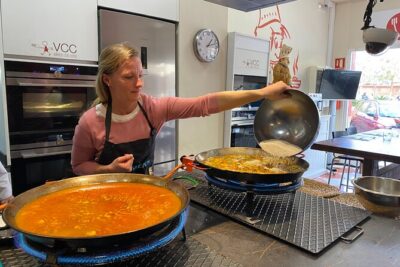
Valencian paella workshop and visit to the Algiros market
Read our review →
Seafood paella cooking class, tapas and visit to Ruzafa market.
Read our review →
Valencia: Paella Workshop and Algiros Market Visit
Read our review →