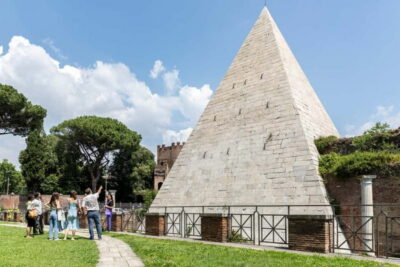
Review · ROME
Eat Like a Roman – Traditional Food, Local Market & History
Rome’s food culture comes alive in the shops and stalls of its Vatican district on this three-hour tasting walk. You’ll visit Italy’s biggest farmers market, sample more than 20 foods and drinks, and step inside Rome’s oldest pasta shop. The route also reaches a 1915 bakery, a family-run coffee bar, and a gelateria favored by the Pope.
I like the personal scale of the stops. You meet people working in businesses kept by the same families for generations, rather than simply passing through a string of restaurants. I also like the range: salty Roman street food, fine cheeses, olive oil, wine, coffee, sweets, and a 360-degree rooftop view all fit into one morning or afternoon.
The main consideration is pace. Three hours is short for this many tastings, and the tour is built around walking and eating rather than sitting down to a full meal. Vegans should skip it, and anyone with serious food allergies should ask for details before booking.
Key things to know before you book
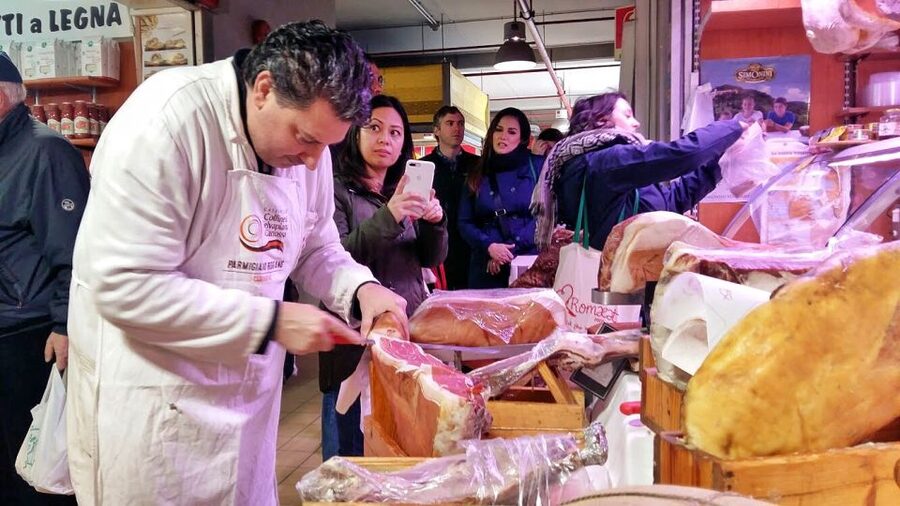
- More than 20 tastings in three hours: You’ll sample coffee, cornetti, mozzarella, prosciutto, aged cheese, supplì, olive oil, pizza, pasta, wine, and gelato.
- A real Roman market stop: The route visits Italy’s biggest farmers market and introduces you to the families behind its stalls.
- Rare pasta-shop access: You’ll enter Rome’s first pasta shop, where pasta has been made for more than a century.
- A Pope-approved gelato address: The final sweet stop is a small gelateria named as the Pope’s favorite.
- Local stories from Greta and the guide team: The food comes with tales about Rome, its traditions, and archaeological secrets.
- Good value for a food-focused half-day: At $79.30 per person, the price includes all tastings, wine, a guide, and a cotton tote bag.
A Roman breakfast with coffee and homemade cornetti
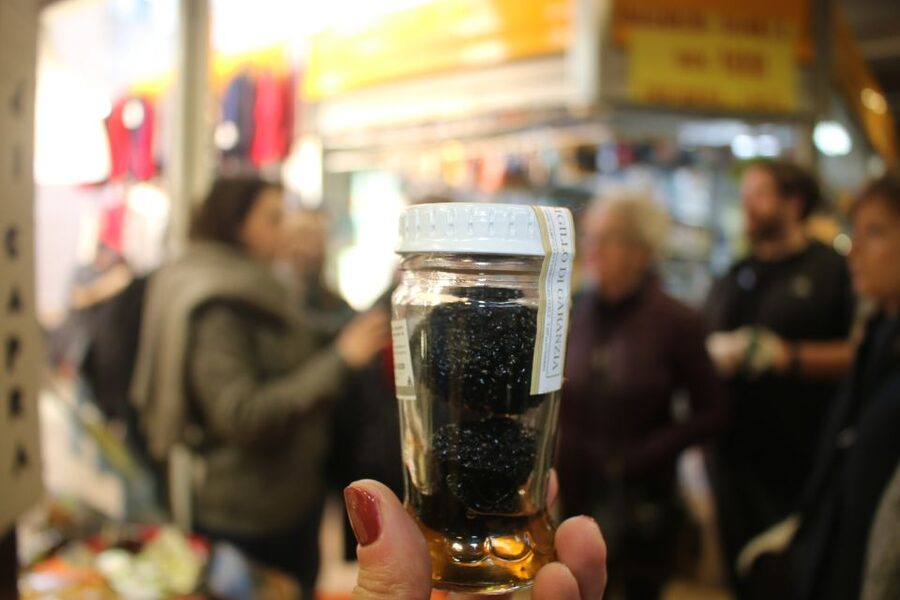
The tour begins in a local bar, where you learn how Romans approach coffee. This is not only a quick caffeine stop. Your guide explains the local coffee routine and introduces you to homemade cornetti prepared with care by a 70-year-old grandmother, or nonna.
That detail gives the opening stop a welcome sense of place. A pastry made in a neighborhood bar tells you more about daily life than a polished hotel breakfast. You can expect a small, informal setting rather than a long table service meal, so arrive ready to taste and move on.
This part suits first-time visitors who want help with ordinary Roman customs. Coffee habits can feel mysterious when you first arrive in Italy, and a guide can explain what to order and how locals take it. Greta, one of the guides, has been praised for making the experience interesting, answering questions, and keeping the group comfortable.
The coffee stop also sets the tone for the day. You are not just collecting samples. You are learning why familiar foods matter in Roman life, then carrying that context into the market.
More Local and Farmers Market Tours in Italy
- Rome: Vatican Street Food and Wine Tour with Farmers Market
★ 5.0 · 37 reviews - Farmers Market Shopping and Roman Full Course Class – SHARED
★ 5.0 · 12 reviews - Cooking Class and Lunch at a Tuscan Farmhouse with Local Market Tour from Florence
★ 5.0 · 4,831 reviews
Italy’s biggest farmers market, one stall at a time
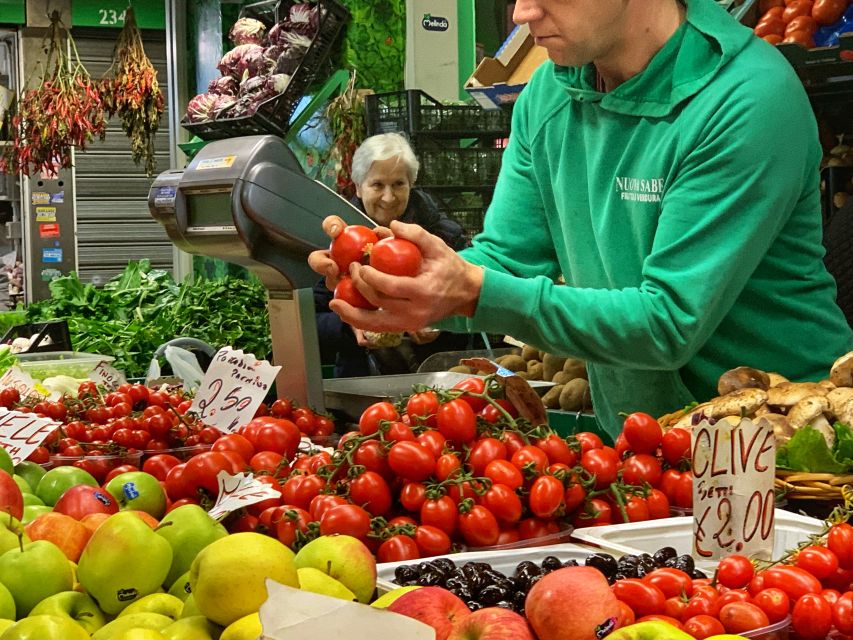
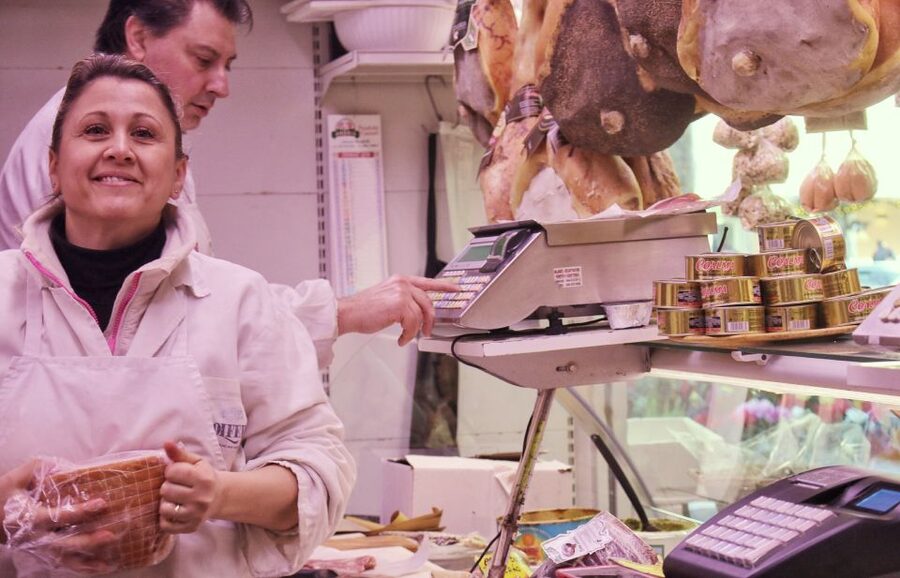
The market is the heart of the tour. It is described as the biggest farmers market in Italy, and the focus is not simply on browsing its aisles. Your guide introduces you to stallholders and family businesses, many of which have been operated by the same families for generations.
That family connection is one of the strongest reasons to book this experience. In Rome, food shopping is part of the city’s social fabric. At the market, ingredients are not presented as abstract products. You get a closer look at the people who sell them and the traditions that shape Roman cooking.
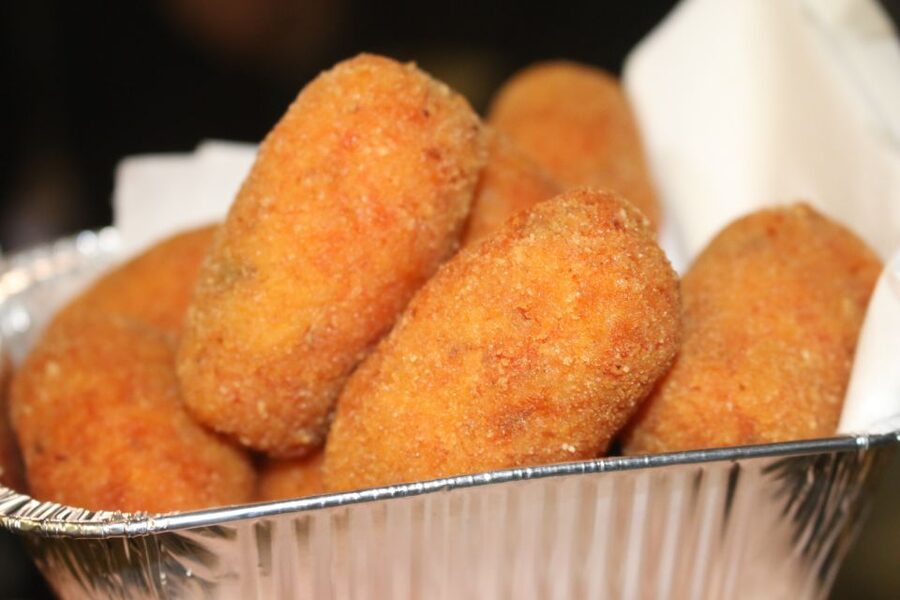
The tastings include fresh mozzarella, prosciutto, aged cheeses, and supplì. Supplì is the famous Roman fried rice croquette, usually shaped into a small oval and crisp on the outside. Here, it is fried fresh for the group, so you can expect a hot, crunchy bite rather than something that has been sitting in a display case.
The market stop is especially useful if you want to understand how Romans build a meal. Cheese, cured meat, fried street food, and bread all show different sides of the local table. Your guide also shares family stories and food customs, adding meaning to each bite.
There is a practical tradeoff. A market can be busy, and tasting several foods while walking requires attention. Wear comfortable shoes and clothing, as recommended, and keep your hands free if possible. The included organic cotton tote bag gives you somewhere to put small purchases, though the tour information does not promise dedicated shopping time.
Organic olive oil with a prizewinning pedigree
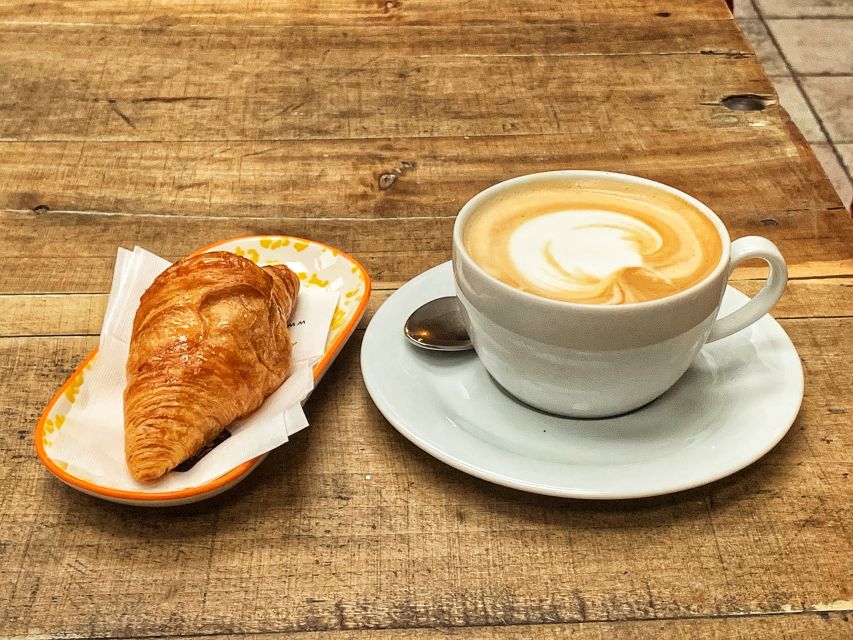
The olive oil tasting adds a quieter, more focused moment to the market portion. You’ll try an organic oil that received a best in the world award in 2018.
Oil tasting can seem simple until you pay attention to its smell, texture, and finish. Your guide can help you notice why one oil tastes fresh and peppery while another seems mild. The value here is not just the sample. It is learning how a basic Roman ingredient can shape bread, vegetables, pasta, and other dishes.
This stop also helps break up the richer foods. After prosciutto, cheese, and fried supplì, a small taste of olive oil gives your palate something cleaner and more direct. If you enjoy bringing food lessons home, this may be one of the most useful stops because good olive oil is easy to use in your own cooking.
Keep in mind that the award is part of the experience’s description, but no specific producer or oil name is provided. If that detail matters to you, ask the guide during the tasting.
Crunchy pizza at a bakery open since 1915
Next comes pizza at the area’s oldest bakery, opened in 1915. The focus is on a crunchy Roman-style slice, a useful contrast to the softer, thicker pizza styles you may know from elsewhere in Italy.
This is a strong stop for anyone curious about the difference between Roman food and the more globally familiar Neapolitan model. Roman pizza can be thin and crisp, making it easy to eat as a quick snack while standing or walking. It feels connected to the city’s everyday rhythm rather than to a long restaurant meal.
A bakery with more than a century of operation also gives the guide a natural opening to talk about continuity in Rome. The point is not that every old shop is automatically better. The point is that a bakery still serving the neighborhood after generations offers a direct link between food and local life.
Because the tour includes many tastings, you will probably receive a modest portion rather than a full pizza. That is helpful for variety, but it means you should not book this expecting one large meal. Think of the route as a moving Roman lunch made up of many small discoveries.
More Local and Farmers Market Tours in Rome:
- Hanoi Cooking Class: Culture, Local Market & Meaning CSR Impact
★ 5.0 · 5,147 reviews - Chef Guided Food Tour of Pike Place Market
★ 5.0 · 3,733 reviews - Cooking Class Hoi An:Local Market, Basket Boat, Fishing & Cooking
★ 5.0 · 3,660 reviews - London Bridge & Borough Market Food Tour with 7 Authentic Dishes
★ 5.0 · 1,972 reviews
Behind the doors of Rome’s first pasta shop
One of the tour’s most distinctive features is exclusive access to the first pasta shop opened in Rome. The shop has made pasta for more than a century, and the guide explains how its methods have continued through the years.
This is more than a retail visit. Pasta is central to Roman cooking, and seeing it in the setting of a long-running pasta business gives you a better feel for the craft behind the plate. The experience may be especially worthwhile for visitors who plan to eat several pasta dishes during their stay and want some context before ordering.
The word exclusive should be read in a practical way. It means the tour provides access inside the shop as part of its arranged route. The available details do not specify a pasta-making demonstration or a hands-on lesson, so do not book it expecting to roll dough yourself.
Still, this stop adds depth to the food walk. You are not only tasting finished dishes. You are seeing how an ingredient central to Roman meals is handled by a business with more than 100 years of experience.
Apulian street food and a local glass of wine
The route then shifts from classic Roman specialties to food from Puglia, the southern Italian region that forms the heel of the country. You’ll stop at an Apulian street food shop and drink a local wine.
That regional change is useful. Rome is not a sealed food box, and its shops reflect the wider Italian tradition. Tasting Apulian food in Rome shows how regional cooking travels and finds a place in the capital.
The wine is part of the included tastings, but the exact type is not specified. If you do not drink alcohol, ask the provider what alternatives are available before booking. The tour is designed around food and wine, and the supplied information does not promise a nonalcoholic substitute.
This stop also adds a pause after the market, pizza, and pasta tasting. You are still eating in a casual shop rather than settling into a formal wine bar, so expect a quick taste that keeps the route moving.
Gelato at the Pope’s favorite gelateria
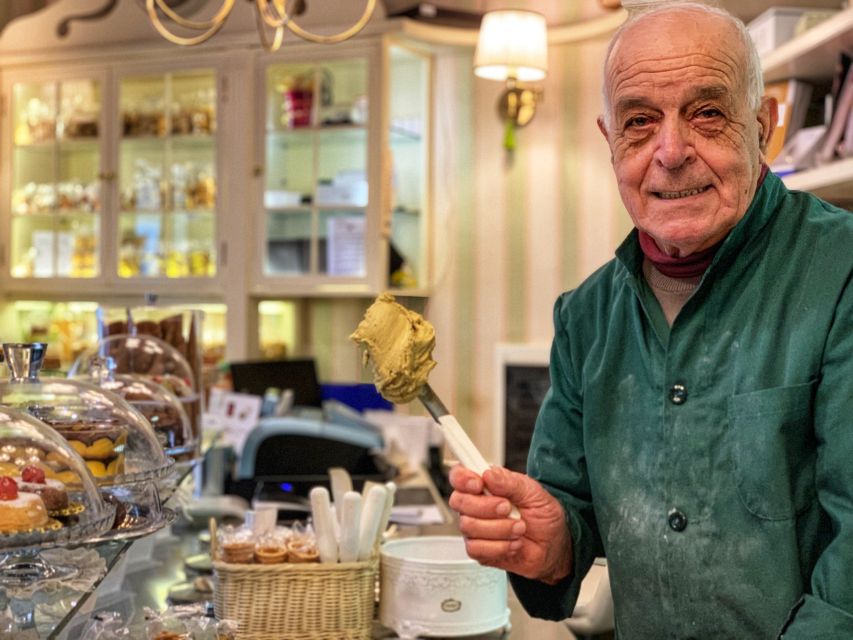
The sweet finish comes at a tiny, tucked-away gelateria that has been elected by the Pope as his favorite gelato place. That is a fun detail, but the more important point is that the shop is presented as a real local address rather than a large tourist stop.
Good gelato is about texture as much as flavor. It should feel dense and smooth, not simply cold and sweet. Your guide can help explain what makes this gelateria different, though the available information does not name specific flavors.
Ending with gelato is smart from a pacing point of view. After savory market food, fried supplì, pizza, pasta, and wine, the final course gives the tour a clear finish. It also makes this experience appealing to families and to anyone who considers dessert a serious part of Roman sightseeing.
The Pope connection may attract attention, but I would not choose the tour on that claim alone. The greater value comes from pairing the gelato with the rest of the neighborhood food route.
A rooftop view over Rome
The day ends, or includes a stop, at a rooftop with a 360-degree view of Rome. The exact position in the route is not specified, but the view offers a visual break from the indoor shops and market stalls.
A rooftop is useful here because the tour is built around close-up food experiences. After looking at cheese, pastries, pasta, and gelato, you get a chance to look outward across the city. The guide can connect what you see with Rome’s streets, landmarks, and archaeological stories.
Do not treat this as a dedicated sightseeing tour. The main purpose is food, with history and city views added along the way. You may get a broad sense of Rome rather than a detailed landmark lecture. That balance works well for visitors who want their sightseeing to feel less formal.
Stories about Rome beyond the usual route
The experience takes place in the Vatican district but follows paths described as off the beaten route. The guide adds stories about the city, its past, and archaeological secrets while you move between food stops.
That combination is a good fit if you prefer history in small portions. You do not need to spend three hours in a museum or stand through a long lecture. Instead, the stories arrive beside coffee, cheese, bread, pasta, and gelato.
Greta has received the strongest personal praise in the available feedback. She was described as patient, welcoming questions, and offering a broad mix of traditional foods, drinks, and historical information. That matters because a tasting tour can easily become rushed or impersonal. A guide who makes time for questions helps you get more from the route.
The provider is Roma Eat, and the tour is offered in English with a live guide. The guide’s personality will shape the experience, so Greta is a name to request if she is available, though the information does not guarantee that she will lead every departure.
Is $79.30 a fair price?
At $79.30 per person, this is not a cheap snack walk. It is a solid value if you would otherwise pay separately for coffee, pastry, cheese, cured meat, fried food, pizza, pasta, wine, gelato, and several small tastings.
The price also covers the guide, the market introductions, the arranged access to the pasta shop, and the rooftop stop. All food and wine tastings are included, along with an organic cotton tote bag. You are paying for organization and local connections as much as for the food itself.
The value is weaker if you prefer to eat one large meal or choose every dish yourself. You may also find the route too full if you like lingering over each tasting. This is a sampler with a clear food focus, not a relaxed three-course lunch.
The tour lasts three hours, so it fits neatly into a morning or afternoon. Starting times vary, and you need to check availability when booking. Transport from your hotel is not included, so plan your way to the meeting point separately.
Who should book this food walk?
I would recommend it to first-time Rome visitors who want a quick introduction to Roman food and neighborhood customs. It also works well for repeat visitors who have seen the main monuments and want a more local view of the Vatican district.
Food lovers will appreciate the range of stops, especially the fresh supplì, the historic bakery, the pasta shop, and the gelateria. Curious eaters who enjoy asking questions should also get more from the experience than people who want to remain on the sidelines.
The tour is wheelchair accessible, but it still involves moving through a market and walking between stops. Since the experience runs rain or shine, comfortable clothing and walking shoes are important. Ask ahead if you need precise information about surfaces, distances, or seating.
Vegans should not book this tour. The tastings center on dairy, cured meat, fried food, bread, pasta, wine, and gelato, and no vegan alternative is promised. Vegetarians may want to ask exactly what substitutions are possible before reserving.
Booking is flexible: you can cancel up to 24 hours before the start for a full refund, and the reserve-now, pay-later option lets you hold a place without paying at once.
Should you book Eat Like a Roman?
Book this tour if you want a wide food sampler with local stories, especially if the chance to enter Rome’s oldest pasta shop and meet family-run market sellers appeals to you. The coffee, fresh market foods, 1915 bakery, Apulian street food, wine, gelato, and rooftop view give the three hours plenty of variety.
Skip it if you want a slow sit-down meal, a vegan menu, or a detailed monument tour. For most other food-minded visitors, $79.30 is reasonable because the price combines many tastings with a guide who can explain the customs behind them. If Greta is leading your departure, her patient style and willingness to answer questions may make the route even more rewarding.
FAQ
How long does the Eat Like a Roman tour last?
The tour lasts three hours. Starting times vary, so you need to check availability for the date you want.
How much does the tour cost?
The listed price is $79.30 per person.
What food and drinks are included?
The tour includes more than 20 food and wine tastings, including coffee, homemade cornetti, mozzarella, prosciutto, aged cheeses, freshly fried supplì, organic olive oil, crunchy pizza, pasta, local wine, and gelato.
Does the tour include hotel transportation?
No. Transport from and to your hotel is not included.
Is the tour offered in English?
Yes. The tour has a live guide who speaks English fluently.
Is the tour wheelchair accessible?
Yes, the activity is listed as wheelchair accessible.
Is the tour suitable for vegans?
No. The tour is listed as unsuitable for vegans.
What should I wear?
Wear comfortable clothing and shoes suitable for walking. The tour takes place rain or shine.
Can I cancel for a refund?
Yes. You can cancel up to 24 hours in advance for a full refund.
More market history around Rome
- Private Excursion to Floating Market and Ayutthaya World Heritage
★ 5.0 · 515 reviews - Palermo: Walking Tour of Historic Markets and Monuments
★ 4.9 · 478 reviews - Discover Palermo in 3 hours. Art, history, markets and street food
★ 5.0 · 352 reviews - Private Heritage Walking Tour in Jaisalmer Fort and Old Bazaar
★ 5.0 · 306 reviews
New market tours around Rome
- Rome: Trajan’s Markets & Museum of The Imperial Fora Tour★ 4.8 · 4 reviews
- Rome: The Vatican Market Experience Tasting and Class★ 4.7 · 10 reviews
- Rome: Vatican Street Food and Wine Tour with Farmers Market★ 5.0 · 37 reviews
- Rome: Taste of Testaccio Food & Market Tour★ 4.9 · 38 reviews
- Rome: Testaccio Food & Market Tour with Pasta & Wine★ 5.0 · 38 reviews
- Rome: Temples, Squares & Markets Guided Walking Tour★ 4.8 · 26 reviews
- Farmers Market Shopping and Roman Full Course Class – SHARED★ 5.0 · 12 reviews
- Rome: Prati Food & Wine Market Tour with St. Peter Square★ 5.0 · 7 reviews
Rome Market Tours, side by side.
Rome: Colosseum, Roman Forum & Trajan’s Market Exterior Tour
Read our review →
Taste of Testaccio: Special 15 Year Anniversary Edition
Read our review →
Authentic Roman Cooking Class & Market Experience
Read our review →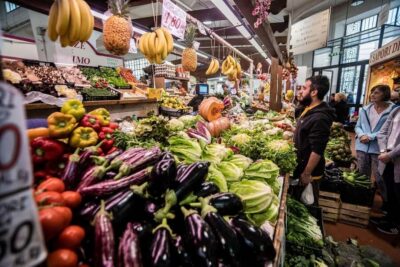
Rome: Pasta Cooking Class with Market Visit and Wine
Read our review →
Rome: Trajan Markets Experience with Multimedia Video
Read our review →
Rome E-Bike Tour: Ultimate Street Food and Market Feast
Read our review →