Review · MALAGA
Málaga: Paella and Sangria Cooking Class with Market Visit
Málaga’s best cooking lesson begins with food in its natural setting: the Atarazanas Market, where you can see the produce, seafood, and local specialties before turning them into lunch. I like the clear link between the market and the kitchen, and I like that you do the cooking yourself rather than watching a chef perform.
The olive oil tasting, homemade gazpacho, wine, churros, and take-home apron add real value to the $94 price. The main consideration is timing: the market visit happens on weekday and Saturday mornings only. Sunday and evening sessions go straight to the kitchen.
Key points at a glance
- Atarazanas Market visit: Weekday and Saturday morning sessions begin with a guided walk through Málaga’s famous food market.
- Anaïs’s local introduction: Anaïs explains Málaga and Spanish food during the market visit, adding useful context beyond the cooking.
- Several dishes, not just paella: You prepare sangria, gazpacho, paella, and churros, then sit down to eat.
- Olive oil tasting: Sample extra virgin olive oils with traditional nibbles before cooking.
- A polished Soho kitchen: The class takes place at Kulinarea, a contemporary kitchen at Av Manuel Agustín Heredia 24.
- Good take-home value: You receive an apron and recipes by the next day, so the class can continue in your own kitchen.
Starting at Atarazanas Market
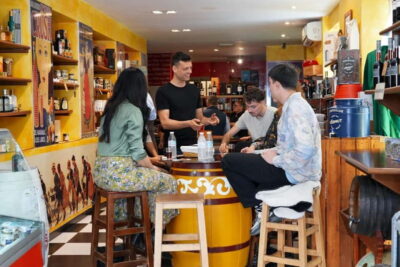
On weekday and Saturday mornings, the class starts with a relaxed walk to Málaga’s Atarazanas Market. This is the right place to begin a Spanish cooking lesson. Instead of meeting a pile of prepared ingredients in a classroom, you first see the kind of food that gives Andalusian cooking its character.
The market visit is led in English. Anaïs brings in facts about Málaga and Spanish food as you move through the stalls. You may sample regional delicacies and look at the seasonal ingredients that later inspire the cooking session.
That market connection matters. Paella is often treated abroad as a single fixed recipe, but the dish changes with location, season, and available seafood or meat. Seeing the ingredients first helps you understand that Spanish cooking is more about handling good products properly than covering them with heavy seasoning.
The schedule does require attention. The market is closed on Sundays and during evening sessions, so those bookings begin directly at the kitchen. You still receive the cooking, tasting, and meal portions, but you lose the market walk and food sampling. If the market is important to you, choose a weekday or Saturday morning.
More Market and Cooking Class Tours in Spain
- Barcelona: Paella Cooking Experience & Boqueria Market Tour
★ 4.8 · 3,661 reviews - Barcelona Paella Cooking Class with Market Visit, Tapas & Sangria
★ 5.0 · 2,531 reviews - Paella Cooking Class, Wine Tasting & Central Market in Valencia
★ 5.0 · 1,150 reviews
The Soho kitchen and olive oil tasting
After the market, you head to the Kulinarea kitchen in Málaga’s Soho District, just a short distance from the market. The meeting address is Av Manuel Agustín Heredia 24. The cooking space is described as spacious, contemporary, clean, and attractive, which makes a difference when several people are chopping, stirring, tasting, and moving around at once.
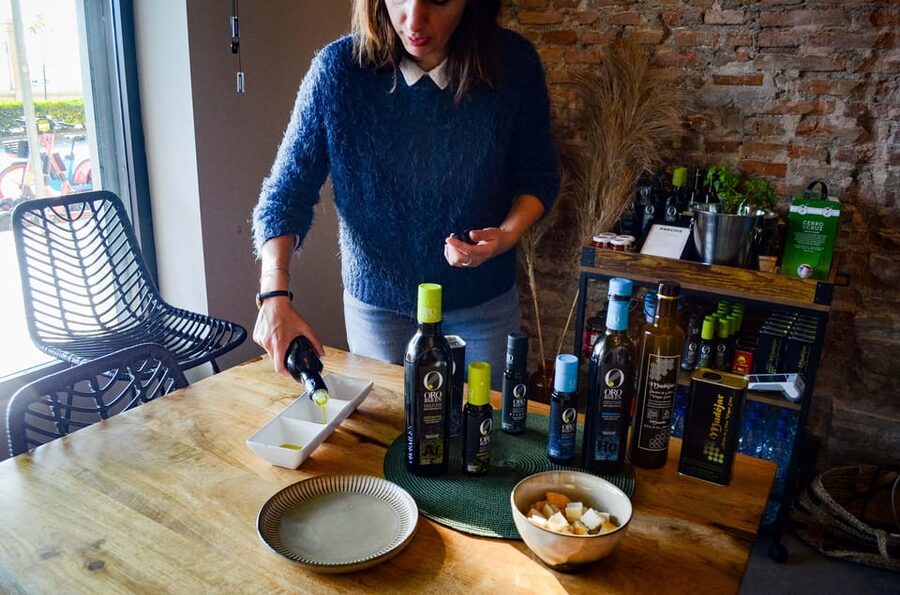
Before the cooking begins, you taste extra virgin olive oil with traditional nibbles. This is more useful than it may sound. Olive oil is a daily ingredient in Spanish food, but oils can have very different aromas, bitterness, fruitiness, and peppery finishes. A short tasting gives you a better sense of what quality oil contributes to gazpacho, bread, salads, and finished dishes.
This also gives the class a pleasant start. You are not rushed straight into knife work. You can settle in, meet the other people in the group, and get a first taste of local food before the main meal begins.
The class is conducted in English. The available information does not give a fixed group size, though the format may be small and social. That suits this kind of activity. Cooking is more enjoyable when you have room to work and enough access to the chef for questions.
Making gazpacho, sangria, and paella
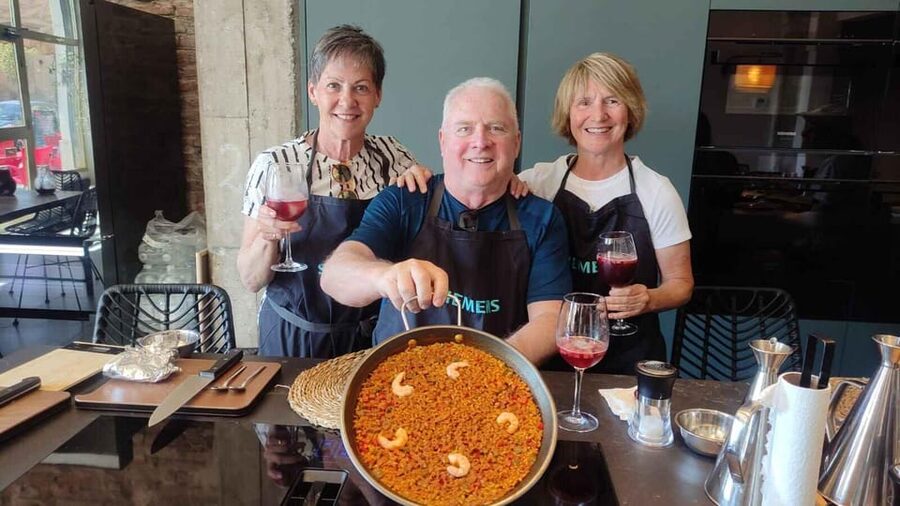
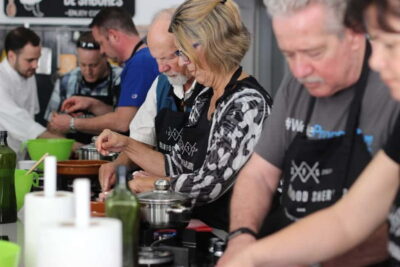
The main lesson is fully hands-on. You are not simply shown how to make paella and then handed a plate. You help prepare the meal, with the chef explaining each stage and stepping in when needed.
You make homemade gazpacho, a cool Andalusian soup that depends on fresh ingredients, balance, and texture. It is a useful dish to learn in Málaga because it shows the lighter side of Spanish cooking. The process also gives you a break from the paella, with one dish being prepared fresh and cool while the other cooks slowly.
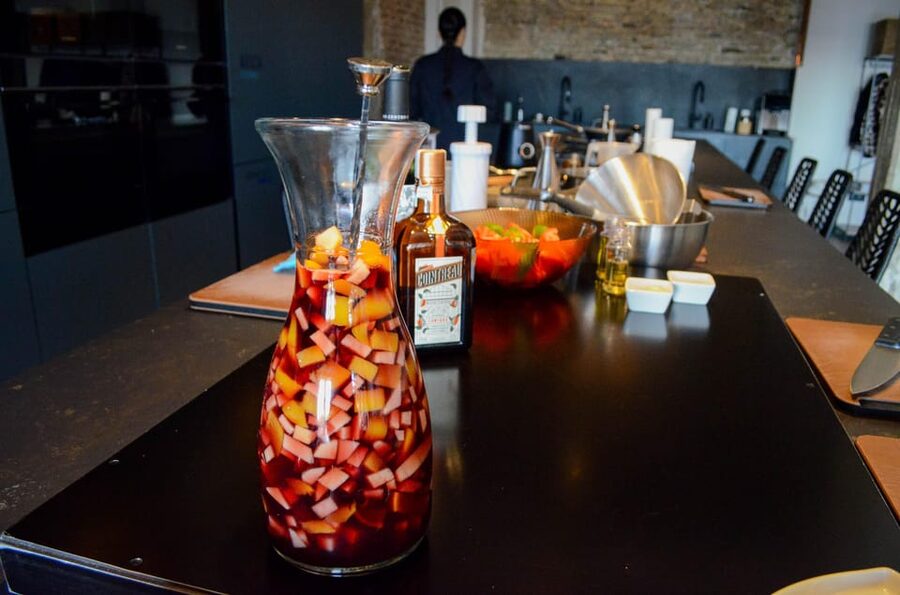
Sangria is part of the session as well. You prepare the drink before lunch, then have it while the food comes together. It is a simple addition, but it helps turn the lesson into a shared meal rather than a technical demonstration.
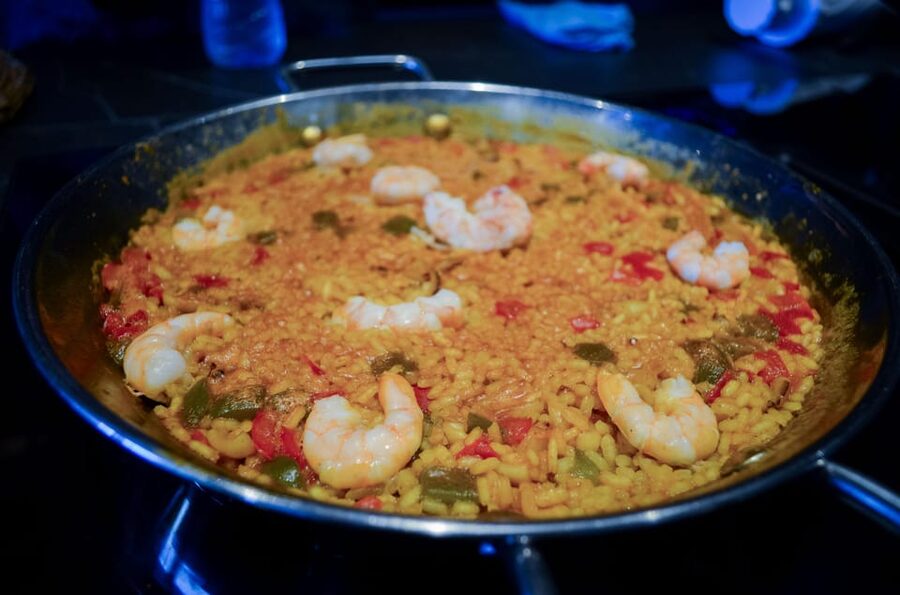
The key lesson is the paella technique. You learn how to blend the ingredients, use traditional spices, and manage the cooking process. This is where the class earns its keep. Paella can look easy, yet the rice, liquid, seafood, and heat all need sensible handling.
One useful tip is to think about the recipe as a base that you can adjust at home. The class may include heavier proteins, but shrimp and cuttlefish make a lighter version that is easy to repeat. The cooking method matters more than copying every ingredient exactly. If you leave with a better feel for the technique, you can adapt it to what you find at home.
The chef’s role is important here. The class includes active help while you cook, and the teaching style is intended to be practical. You should expect to work, but you are not left alone with a recipe and a hot pan. That balance makes the lesson suitable for beginners and for cooks who want a reliable paella method.
Lunch at the table, with churros afterward
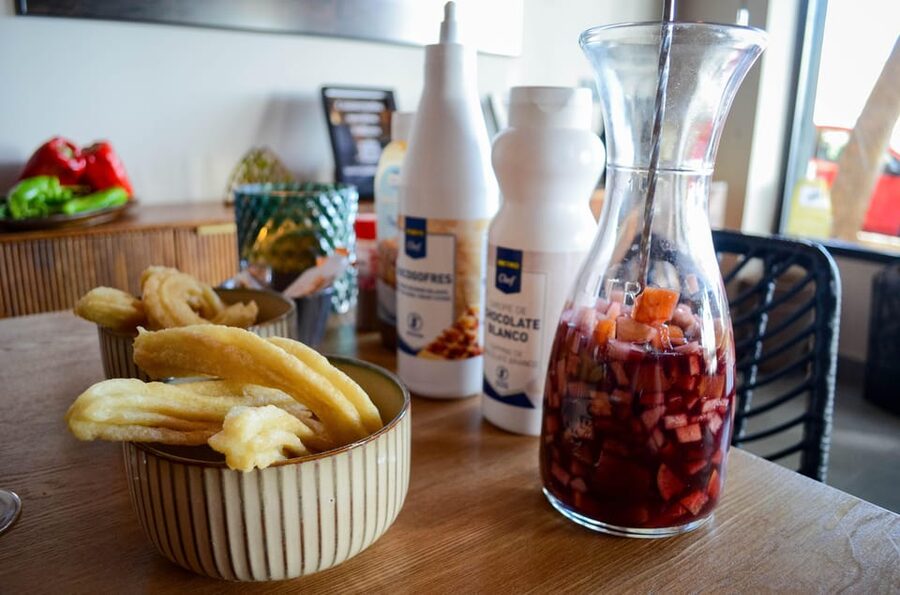
Once the dishes are ready, you sit down and eat what you made. The meal includes paella, gazpacho, sangria, and wine or beer. Churros finish the session.
This meal is one of the best reasons to choose a cooking class over a standard restaurant lunch. You learn where the food comes from, take part in preparing it, and then taste the result with the people you met in the kitchen. There is a natural sense of reward when the paella reaches the table.
The menu also gives you a broad taste of Spanish food in one sitting. Gazpacho is fresh and cool. Paella is the central dish, with its careful rice technique. Sangria adds a relaxed drink, while churros provide a sweet ending. You are not spending three and a half hours on one recipe.
Wine or beer is included with the meal. Sangria is also included, so you do not need to budget separately for the drinks listed as part of the class. If you do not drink alcohol, the supplied information does not state what alternatives are available, so ask before booking if that matters to you.
Food allergies and intolerances are worth raising ahead of time. The class has accommodated dietary needs, but no detailed menu substitutions are provided. Do not assume every ingredient can be changed without notice.
Same city, another market:
- Valencian paella cooking class, tapas and visit to Ruzafa market.
★ 5.0 · 828 reviews - Spanish Cooking Class & Triana Market Tour in Sevilla
★ 5.0 · 760 reviews - Seville: 3.5-Hour Spanish Cooking Class & Triana Market Tour
★ 4.9 · 751 reviews - Valencia: Paella Cooking Class with Central Market Tour
★ 5.0 · 721 reviews
What the $94 price really covers
At $94 per person, this is not the cheapest way to eat lunch in Málaga. It is also more than a basic cooking demonstration. The price includes the market visit when the schedule allows, olive oil tasting, sangria, gazpacho, paella, churros, wine or beer, instruction, an apron, and recipes sent the following day.
That is a substantial bundle for a 3.5-hour activity. You are paying for food, drinks, teaching, a prepared kitchen, and a local introduction to Málaga’s food culture. The apron is a practical souvenir rather than a decorative trinket, and the recipes give the class value after you return home.
I would judge the price favorably if you want an activity that fills half a day and includes lunch. It is less appealing if your main goal is simply to eat an inexpensive paella. A restaurant will be cheaper and more flexible, but it will not teach you the process or take you through the market.
The recipes arriving the next day are another useful touch. You may not remember every measurement or sequence after a social cooking session. Having the instructions at home gives you a fair chance of repeating the dishes, especially the paella.
Timing, meeting point, and practical details
The class lasts three and a half hours. Weekday and Saturday morning sessions include the Atarazanas Market walk. Sunday and evening sessions begin at the kitchen because the market is closed.
Meet at Kulinarea, Av Manuel Agustín Heredia 24. There is an underground car park called Parking de La Marina directly in front of the meeting point, which helps if you are driving into central Málaga.
Do not bring luggage or large bags. This is worth planning around, especially if you are checking out of a hotel or arriving before a train. Keep your belongings small enough that they will not get in the way of kitchen work.
The activity is offered in English with a live guide. Cancellation is free up to 24 hours before the start time, and you can reserve now and pay later. Those terms are useful when your Málaga plans are still shifting, though they do not change the need to choose your session carefully if you want the market visit.
Who will enjoy this class most
This is a strong pick for couples, families with older children, solo visitors, and anyone who likes food with a practical side. You get social time, local ingredients, a meal, and a skill you can use later.
It also suits people who want more than a standard sightseeing route through Málaga. The market and kitchen show two sides of the city: the daily food trade and the shared table. The class is not focused on monuments, so it works best as a complement to your museum and old-town plans.
You should also choose it if you care about technique. The paella lesson is not just about assembling ingredients. It explains how to approach the dish so you can cook it again. That is especially useful if you have tried paella at home and ended up with rice that was too wet, too dry, or unevenly cooked.
This may be less suitable if you dislike group activities or want a quiet, private meal. The format brings together people from different countries, and conversation is part of the appeal. You also need to be comfortable taking part rather than sitting back.
Should you book the Málaga paella class?
Book it if you want a hands-on half-day activity that combines a market, cooking, drinks, and lunch. The strongest reasons are the market-to-kitchen format, the practical paella instruction, the olive oil tasting, and the number of dishes included.
Choose a weekday or Saturday morning if Atarazanas Market is a priority. Choose a Sunday or evening session if the kitchen and cooking are what matter most. At $94, the class is good value for a full food-focused outing, especially with the apron, recipes, and drinks included.
I would skip it only if you want a quick meal, dislike group cooking, or cannot manage the market schedule. For everyone else, this is a useful and enjoyable way to connect Málaga’s food stalls with the dishes on your plate.
FAQ
How long does the Málaga paella class last?
The activity lasts 3.5 hours.
What language is the class offered in?
The live tour guide and cooking class are offered in English.
Does the experience include a market visit?
Weekday and Saturday morning sessions include a walk to Atarazanas Market. Sunday and evening sessions go directly to the kitchen because the market is closed.
Where is the meeting point?
Meet at Kulinarea, Av Manuel Agustín Heredia 24, in Málaga’s Soho District.
What food and drinks are included?
The class includes olive oil tasting, sangria, gazpacho, paella, churros, and wine or beer with the meal.
Do I receive anything to take home?
Yes. You receive a Kulinarea apron, and the recipes are sent the next day.
Can I cancel the booking?
You can cancel up to 24 hours in advance for a full refund. You can also reserve now and pay later.
New market tours around Spain
- Teguise: Market and César Manrique Foundation Tour★ 4.3 · 39 reviews
- Tapas Cooking Workshop & Market Visit★ 4.8 · 10 reviews
- Sunday Markets: Santa Brígida, San Mateo, and Teror★ 4.6 · 5 reviews
- Seville: Tasting, History, Market visit and Tapas Tour★ 5.0 · 2 reviews
- Seville: Triana Market Tour with Tastings★ 4.9 · 32 reviews
- Seville: Morning Market & Tapas Tour★ 5.0 · 11 reviews
- San Sebastián: Market Tour, Cooking Class, & Meal★ 5.0 · 2 reviews
- Santoña: Anchovy Art Gallery with Fishing Port and Market★ 4.5 · 4 reviews
Malaga Market Tours, side by side.
Malaga: The Ultimate Tapas Workshop with Market Visit
Read our review →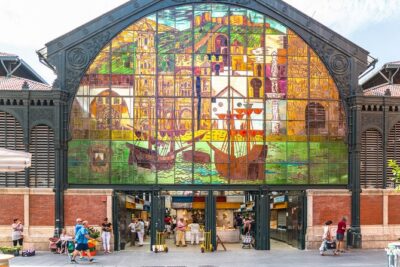
Malaga Market Food Tour: Tapas, Drinks, and Local Flavors
Read our review →
Private Malaga: Alcazaba, Museum, Market, Cathedral & Picasso
Read our review →