
Review · TOKYO
Tsukiji Fish Market Guided Tour and Sushi Making with Pro Chef
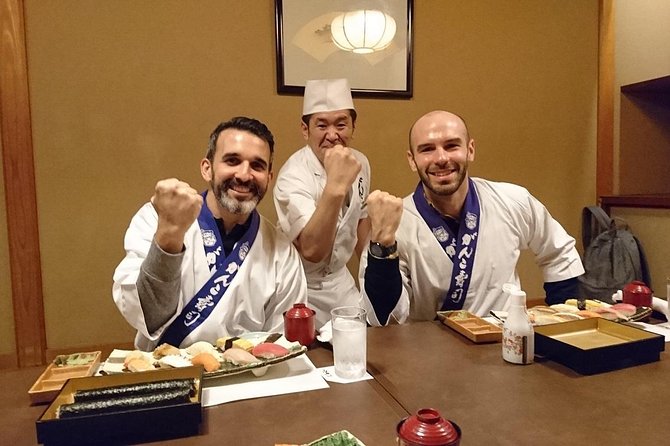
Tsukiji’s outer market is best understood as a food neighborhood, not the old wholesale fish market shown in many Tokyo documentaries. This four-hour experience connects its shops, seafood stalls, temple traditions, and sushi craft, then puts you at a table with a professional chef to make five kinds of nigiri and one roll.
I like the way the market walk gives meaning to what you see, from unfamiliar seafood and Japanese ingredients to knives, utensils, and food customs. I also like the hands-on lunch: you make the sushi, watch a chef prepare fish, then eat your work with dashi soup, green tea, and chef-made sushi. The main catch is value. At $104.13, the tour does not include tastings, so you may want extra cash for snacks, and the market portion can feel basic if you expect a full food crawl.
Key points at a glance
- See Tsukiji beyond the famous name: Visit the outer market, mini wholesale area, nearby temple, and food shops after the inner market moved to Toyosu.
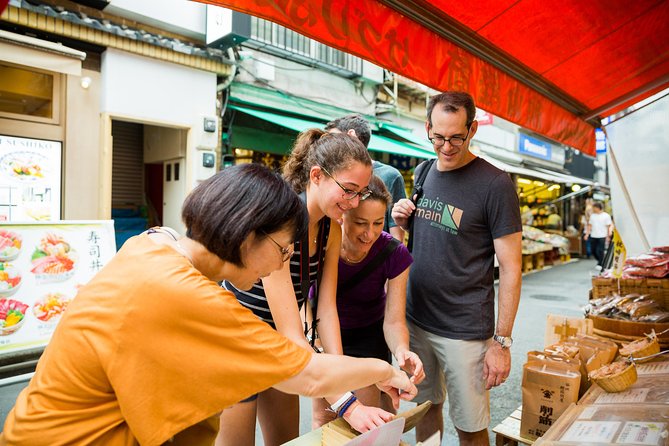
- Make six sushi styles: Learn five nigiri preparations and one rolled sushi with step-by-step help from a professional chef.
- Connect temple customs with food culture: Begin at Tsukiji Honganji Temple and learn how to approach Buddhist worship properly.
- Expect a walking-heavy morning or afternoon: Comfortable shoes matter, and the group can reach up to 22 people.
- Plan for venue changes: The sushi class may take place in Tsukiji, Asakusa, or Yotsuya, with the final location given on the day.
- Buy your own market snacks: Food purchases are extra, and tastings are not part of the stated tour price.
Tsukiji today: what you are really visiting
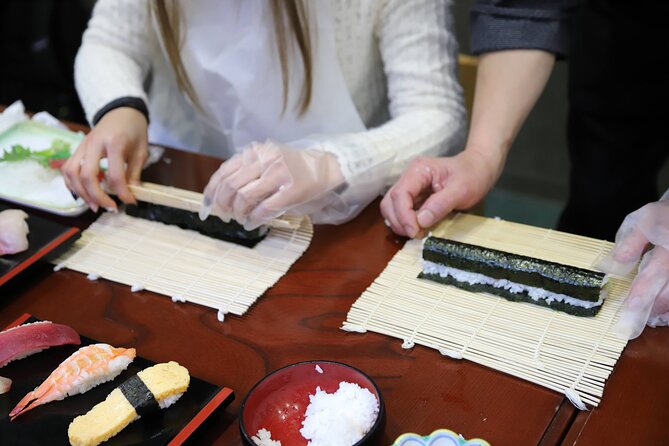
The name Tsukiji still carries the weight of Tokyo’s former wholesale fish market. But the inner business market moved to Toyosu in October 2018. This tour visits the outer Tsukiji market and a smaller wholesale area, where food shops, seafood sellers, restaurants, utensil stores, and snack counters continue to serve local shoppers and curious visitors.
That distinction matters. You will not be walking through the old auction floor or a giant wholesale warehouse. Instead, you will see the public-facing side of Tsukiji, the part where ingredients are sold, explained, prepared, and turned into meals.
I think this makes the guided walk useful for a first visit. The market can look like a maze of narrow lanes and unfamiliar products. A guide can point out items you might pass without understanding, explain how seafood reaches the market, and help you make sense of Japanese ingredients and tools.
Still, keep your expectations in check. This is not a food tasting tour. You can buy snacks and seafood from vendors, but those purchases are yours to arrange and pay for. If sampling your way through the market is your main goal, bring cash and consider the cost of extra food when judging the $104.13 price.
More Fish Market Tours around Tokyo:
- Tokyo Tsukiji Fish Market Food and Culture Walking Tour
★ 5.0 · 3,184 reviews - Tokyo: Tsukiji Fish Market Food and Walking tour
★ 5.0 · 1,724 reviews - Tokyo: Tsukiji Fish Market Guided Walking Tour
★ 4.9 · 1,397 reviews
Starting at Tsukiji Honganji Temple
The meeting point is the main gate of Tsukiji Honganji Temple, at 3-chōme-15-1 Tsukiji. Look for the Japan Wonder Travel sign at the front side of the temple. Google Maps may guide you toward the back, so check the entrance carefully.
The temple is more than a place to gather. It gives the tour a cultural opening before the food stops begin. Guides may explain local customs and show you how to pray properly at a Buddhist temple. Some guides also discuss the area’s history and the role of religious sites in daily Japanese life.
This part will appeal to you if you want more than a quick march to the market. It may feel less relevant if you came only for seafood and sushi. Some of the tour time is devoted to temple and shrine customs, so this experience is partly a cultural walk, not simply a cooking class with a market add-on.
Guides vary by date. Past sessions have included Monami, Sachi, Ko, Mari, Yuki, Tad, and others. The strongest guide-led moments come from explanations of customs, food, and local history, so the tone may differ slightly depending on who leads your group.
Walking through the outer Tsukiji market
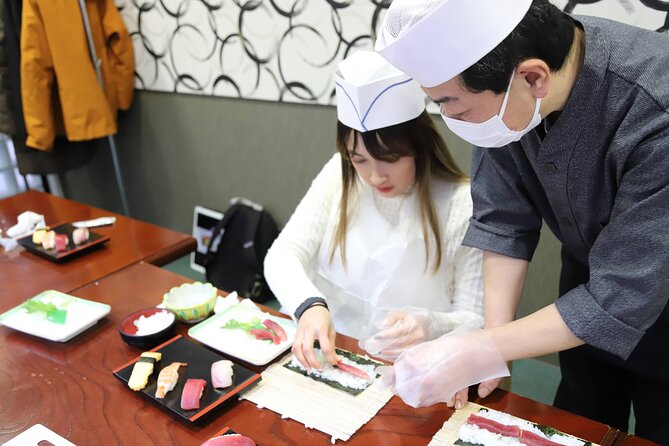
From the temple, the group moves into the outer market. Expect a guided walk through food stalls, shops, and market lanes rather than a formal museum-style tour. Your guide highlights the spots that are easiest to miss, including Japanese foods, seafood, ingredients, cooking tools, and the small wholesale section.
This is where the tour helps most with context. You may see products without knowing their names or purpose. A guide can explain how ingredients are used, how seafood is sold, and why certain tools matter in Japanese cooking. You may also pick up a few Japanese words and customs along the way.
The market walk has a social limit. A group of up to 22 people cannot stop at every stall, and a large group can make spontaneous browsing harder. You are allowed time to look around, but this is still a shared route. If you want to linger over every snack counter, a self-guided visit may give you more freedom.
The upside is efficiency. In a short visit, you can cover the main areas without spending half the morning wondering which lane leads where. Guides such as Ko and Yuki have been praised for explaining food clearly and not rushing the group, while other sessions have included useful recommendations on quality and price.
You should also understand that the market portion may not include food samples. You can purchase items along the way, but the tour price mainly pays for the guide, instruction, and sushi class rather than a series of tastings.
The mini wholesale area and Nippon Fish Port Market
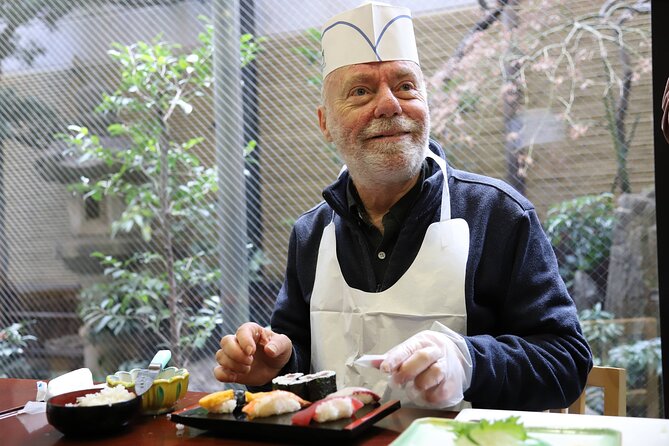
The route includes Tsukiji Nippon Fish Port Market and a mini wholesale area. These stops help show the commercial side of seafood, even though the old inner market is now at Toyosu.
You will learn about the movement of fish from the ocean through distribution and sale. That gives the sushi class a stronger setting: the fish on your plate is not just an abstract ingredient, but part of a wider system of fishing, handling, retail, and preparation.
The level of detail depends on the guide and the day’s market activity. This is a public walking experience, not a behind-the-scenes tour of working wholesale operations. You should expect explanations and viewing, not access to restricted business areas.
Bring comfortable shoes. The tour is mainly on foot, and the market lanes can be tiring after several hours. If you plan to eat or shop before the class, pace yourself. A few market snacks can easily become an extra meal.
More guided market mornings around Tokyo:
- Dubai: Old Town, Souks, Street Food, Guided Tour & Abra Ride
★ 4.9 · 7,170 reviews - Dubai: Frame Tickets, Creek, Souks & Blue Mosque Guided Tour
★ 4.8 · 5,980 reviews - Chef Guided Food Tour of Pike Place Market
★ 5.0 · 3,733 reviews - Marrakech: Colorful Medina Souks Guided Walking Tour
★ 4.7 · 2,470 reviews
Learning sushi in a Japanese-style classroom
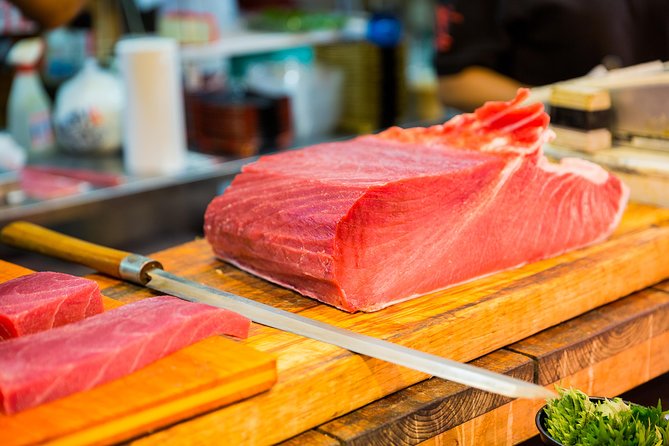
After the market, you move to a Japanese-style classroom in a local building. The room has been described as simple but clean, with tables where you can work comfortably. The classroom is on the third floor and has stairs only, so this activity suits you only if stairs are manageable.
The chef leads a beginner-friendly lesson. You learn to make five kinds of nigiri sushi and one rolled type, with step-by-step help. The point is not to turn you into a sushi professional in one sitting. It is to show you the basic movements, the care involved, and the difference between simply placing fish on rice and preparing sushi with intention.
A presentation and chef demonstrations may be part of the lesson. You may watch the chef handle and debone fish, then work with fresh ingredients at your own station. One useful improvement would be a fuller demonstration of how to slice fish for sushi, since deboning and slicing are separate skills.
The class is conducted in Japanese and English, so you can follow the instruction without needing prior sushi experience. It works well for families and beginners. Children and teenagers have enjoyed the practical side, and the format gives everyone a task rather than asking you to sit through a long lecture.
Do not expect an advanced professional course. The lesson covers basic sushi-making, not restaurant training, knife certification, or detailed fish butchery. You leave with a better feel for the craft and some skills you can try at home, but the chef’s precision will remain far ahead of yours.
Eating your own sushi for lunch
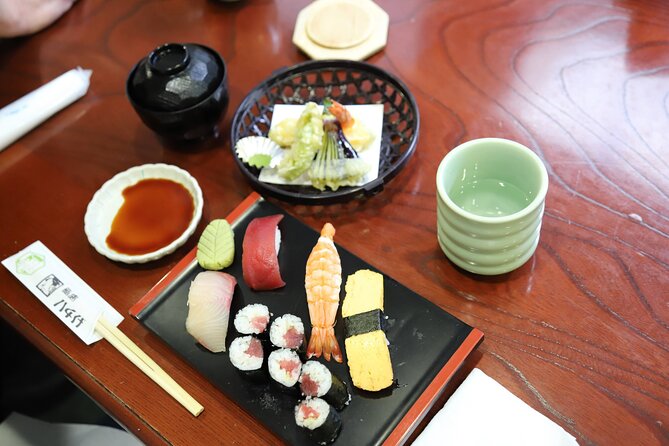
The best part for many people is sitting down to eat what they made. You also receive sushi prepared by the master, which gives you a useful comparison between your beginner attempts and professional work.
The meal includes traditional dashi soup and green tea. Fresh wasabi is also provided, and the chef prepares sushi for you to try. This turns the class into lunch rather than a demonstration followed by an awkward search for food.
The class is generally described as friendly and relaxed. It is interactive without requiring you to perform in front of the whole room. You can ask questions, follow along, and enjoy the result even if your sushi rolls look less tidy than the chef’s.
Drinks are limited in the information provided to green tea, so bring your own water if you prefer it. Also keep in mind that cleanup may happen quickly. If you want to study the ingredients or take notes, do so before the tables are cleared.
What the $104.13 price buys you
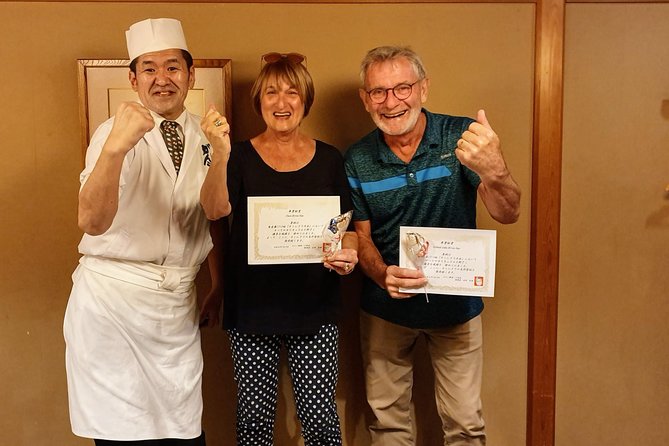
At $104.13 per person, this is not the cheapest way to see Tsukiji or eat sushi. You are paying for a guide, a four-hour schedule, a cultural introduction, a hands-on class, professional instruction, ingredients, and lunch.
The price makes better sense if you would otherwise book a market tour and a separate cooking class. It also has value for first-time visitors who want someone to explain what they are seeing instead of simply walking past stalls. The market visit gives the cooking lesson a useful setting, and the meal provides a clear finish.
The value is weaker if you mainly want tastings or a private guide. Food from the market costs extra, and the group may include up to 22 people. The classroom is designed for instruction, not a luxury dining experience.
I would also compare the class location before planning the rest of your day. The experience may end in Tsukiji, Asakusa, or Yotsuya depending on venue availability. The final location is not announced until the day, so avoid booking a tight appointment immediately afterward.
Who should book this Tsukiji experience
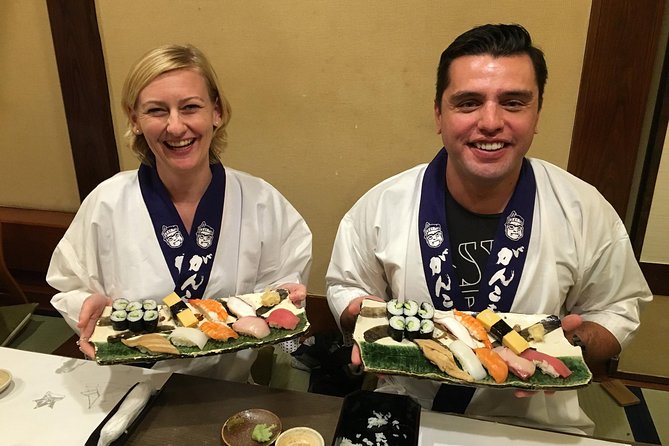
I would recommend it for first-time visitors to Tokyo, families with older children, couples wanting a shared activity, and anyone curious about how Japanese food culture connects to seafood markets.
It is particularly useful if you want a guided introduction but do not need a private or highly specialized tour. The combination of temple customs, market orientation, and sushi preparation gives you several different kinds of experience in one morning or afternoon.
You may want a different option if you are vegetarian, vegan, halal, gluten-free, kosher, or managing serious food allergies. The operator says these requests cannot reliably be accommodated, though you can report requirements when booking and the team may try to help. Do not assume substitutions are available.
You may also pass if you dislike group schedules, have trouble with stairs, or want a serious fish-cutting course. The class is introductory, and the market walk is a shared route.
Timing, meeting details, and cancellation
The guide leaves at the scheduled start time, so arrive early at the main gate of Tsukiji Honganji Temple. Late arrivals cannot extend the tour, and same-day late arrival or cancellation brings no refund.
Free cancellation is available up to 24 hours before the start time. Changes made inside that window are not accepted, so check your plans before booking.
The experience ends back at the meeting point in the standard description, but the practical end point may be Tsukiji, Asakusa, or Yotsuya if the sushi venue changes. Allow extra time afterward, since delays are possible.
Should you book it?
Book this experience if you want context plus participation: a guide to explain Tsukiji, a look at Japanese food culture, and a sushi lunch you prepare yourself.
I would book it for the cooking class first and treat the market walk as a valuable introduction, not a full tasting tour. Bring comfortable shoes, extra money for snacks, water if you prefer it to tea, and patience for a group schedule.
At $104.13, the tour is a fair choice for a four-hour guided food and culture experience, especially for families and first-time visitors. It is less compelling if you only want the old wholesale market, unlimited tastings, or advanced sushi technique.
FAQ
Where does the tour begin?
The meeting point is the main gate of Tsukiji Honganji Temple, at 3-chōme-15-1 Tsukiji, Chuo City, Tokyo. Meet at the front side of the temple, not the back side.
How long does the experience last?
The experience lasts approximately four hours and includes the guided market walk and sushi-making class.
Does the tour visit the old inner Tsukiji market?
No. The inner market moved to Toyosu after October 6, 2018. This experience visits Tsukiji’s outer market and a mini wholesale area.
What sushi will I learn to make?
You will learn to prepare five types of nigiri sushi and one rolled type with help from a professional sushi chef.
Can dietary requirements be accommodated?
You should provide dietary information when booking. The operator says vegetarian, halal, gluten-free, kosher, and allergy-related requests may not be accommodated, though allergy requests may be considered where possible.
What should I wear?
Wear comfortable walking shoes because the experience is mainly a walking tour. The classroom is on the third floor and is reached by stairs only.
New market tours around Tokyo
- Private Toyosu & Tsukiji Market Adventure with Tuna Auction★ 4.8 · 191 reviews
- Tsukiji Fish Market: Street Food & Culture Walking Tour★ 4.8 · 259 reviews
- Tokyo Tsukiji Fish Market Tour and Sushi Making Lesson★ 5.0 · 390 reviews
- Tokyo Food Tour Taste Fresh Delights at Tsukiji Market★ 5.0 · 429 reviews
- Tokyo: Tsukiji Fish Market Sushi Making Class with Pro Chef★ 4.9 · 506 reviews
- Tsukiji Fish Market: Street Food & Culture Walking Tour★ 5.0 · 669 reviews
- Tsukiji Fish Market Small-Group Food Walking Tour★ 5.0 · 621 reviews
- Tokyo: Tsukiji Fish Market Food and Culture Walking Tour★ 4.7 · 757 reviews
Tokyo Market Tours, side by side.
Tokyo Tsukiji Fish Market Food and Culture Walking Tour
Read our review →
Tokyo: Tsukiji Fish Market Guided Walking Tour
Read our review →
Tsukiji Fish Market Small-Group Food Walking Tour
Read our review →
Tokyo Food Tour Taste Fresh Delights at Tsukiji Market
Read our review →
Tokyo Tsukiji Fish Market Tour and Sushi Making Lesson
Read our review →
Private Toyosu & Tsukiji Market Adventure with Tuna Auction
Read our review →This tour also appears in