Review · TOKYO
Tsukiji Fish Market: Street Food & Culture Walking Tour
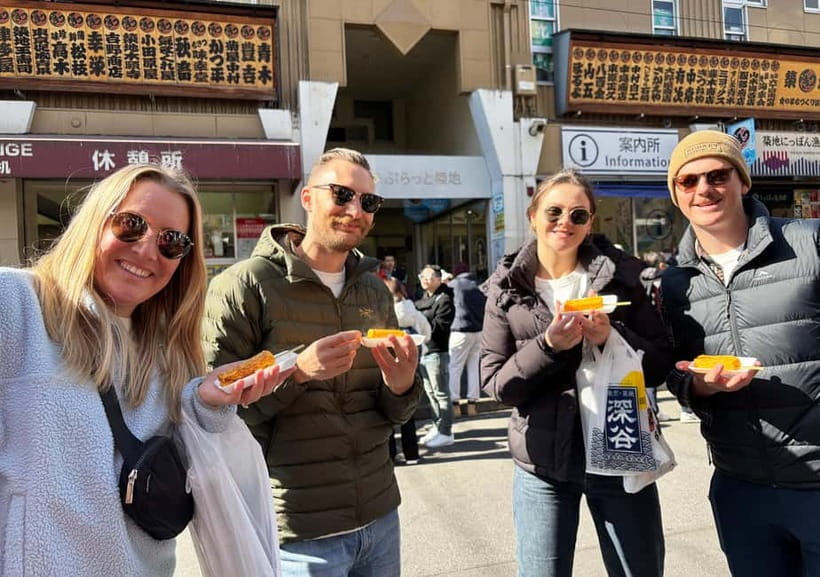
Tsukiji is best understood one bite at a time. In two hours, this walking tour takes you from the grand Tsukiji Hongwanji Temple into the outer market, where you can try tuna, wagyu, grilled seafood, sushi, and traditional snacks with a local guide explaining what you are eating.
I like the fresh wasabi set, a small but memorable touch that sharpens the flavor of fish and other foods. I also like the practical guidance from people such as Kawa, George, Mao, Tomo, and Kenny, who help you find good stalls and explain how ingredients are prepared.
The main drawback is the calendar. On Wednesdays, Sundays, and national holidays, about half of the outer market shops may be closed. The tour still runs, but you will see fewer stalls and may miss some demonstrations, so plan your day carefully.
Key points to know before you book
- Fresh wasabi changes the tasting: The guide may prepare a special wasabi set, showing how a small amount can bring out the taste of seafood.
- The tour begins at a temple: Tsukiji Hongwanji offers a calm cultural start before you enter the food market.
- Food choices are flexible: You can sample foods that appeal to you and spend as much or as little as you wish at market stalls.
- Expect more than seafood: Tuna, wagyu, eel, scallops, fish cakes, omelets, dumplings, octopus, and sushi may all appear.
- Market days matter: Wednesday, Sunday, and national holiday closures can noticeably change the experience.
- Cash is essential: Bring Japanese yen for food and any purchases you make along the way.
Why Tsukiji works best with a local guide
Tsukiji Outer Market is easy to reach, but it is not always easy to read. Small shops sell ingredients you may not recognize, prepared foods can look similar at a glance, and some of the best choices are not obvious from the street.
That is where this tour earns its modest $22 price. You are not paying for a grand sightseeing production. You are paying for two hours of help with orientation, food choices, local customs, and translation. A good guide can point out what is worth trying, explain how it is made, and help you avoid spending money on food that does not suit you.
The strongest part of the experience is the personal approach. Guides such as George have directed people toward good food at reasonable prices. Kawa has been praised for answering questions in detail and adjusting recommendations to personal preferences. Kenny has helped visitors move through the market without waiting in long lines, while Mao and Tomo have been singled out for friendly, easygoing guidance.
The group may be small, and some departures can feel almost private. That matters in a market where narrow lanes, food counters, and busy shop fronts can make a larger group awkward. A small party also gives you a better chance to ask about ingredients, cooking methods, and Japanese eating customs.
More Market Food Tours in Japan
- Tokyo Tsukiji Fish Market Food and Culture Walking Tour
★ 5.0 · 3,184 reviews - Tokyo: Tsukiji Fish Market Food and Walking tour
★ 5.0 · 1,724 reviews - Tokyo: Tsukiji Fish Market Food and Culture Walking Tour
★ 4.7 · 757 reviews
Starting at Tsukiji Hongwanji Temple
The meeting point is at Tsukiji Hongwanji Temple, listed at approximately 35.66661467955698, 139.77199430835137. The exact starting option can vary when you book, so check your confirmation closely.
The temple portion lasts about 20 minutes. Its striking architecture, carved details, and quiet interior provide a useful contrast to the food market. Instead of beginning with a hurried snack, you first get a short introduction to the area and its religious setting.
Guides may explain the proper purification procedure before entering a shrine or temple space, along with details about the building and its place in the neighborhood. This is not a long religious tour, but it gives the market a wider setting. Tsukiji is not only a place to eat. It is also part of a district where food, worship, commerce, and daily life sit close together.
I like this opening because it slows the pace for a moment. You can look at the architecture, listen to the guide, and get oriented before the market crowds and food smells take over. If your main goal is only to eat, the temple may feel like a short detour. For most people, though, it makes the visit feel more connected to Tokyo.
Inside the outer market for 80 minutes
The main portion lasts about 80 minutes in Tsukiji Outer Market. This is where the tour becomes a guided tasting walk rather than a standard sightseeing stroll.
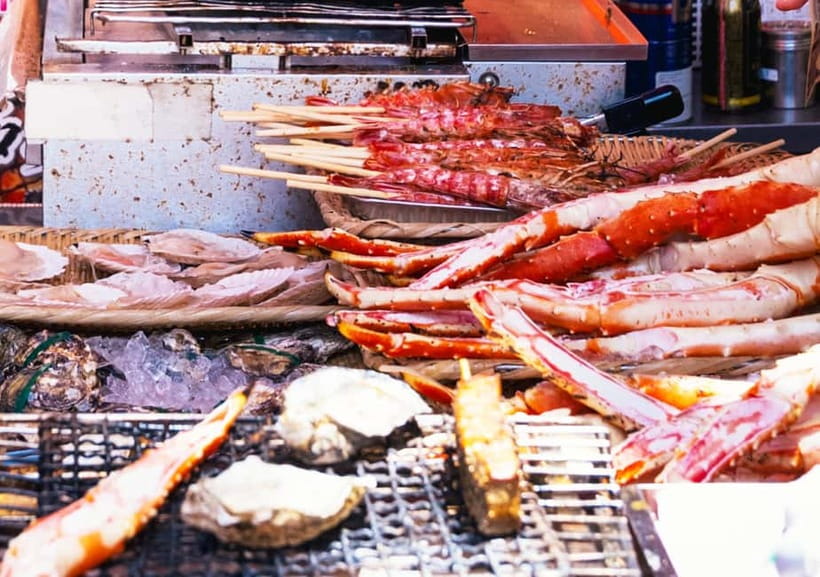
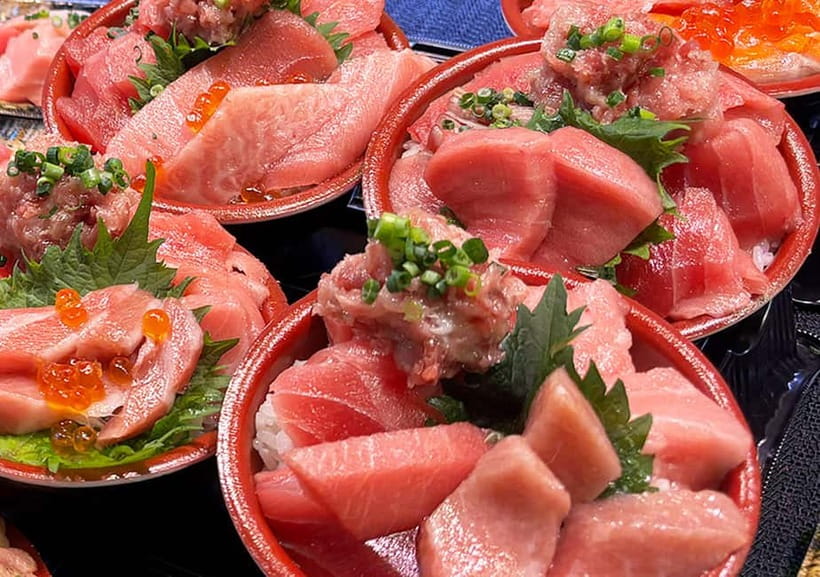
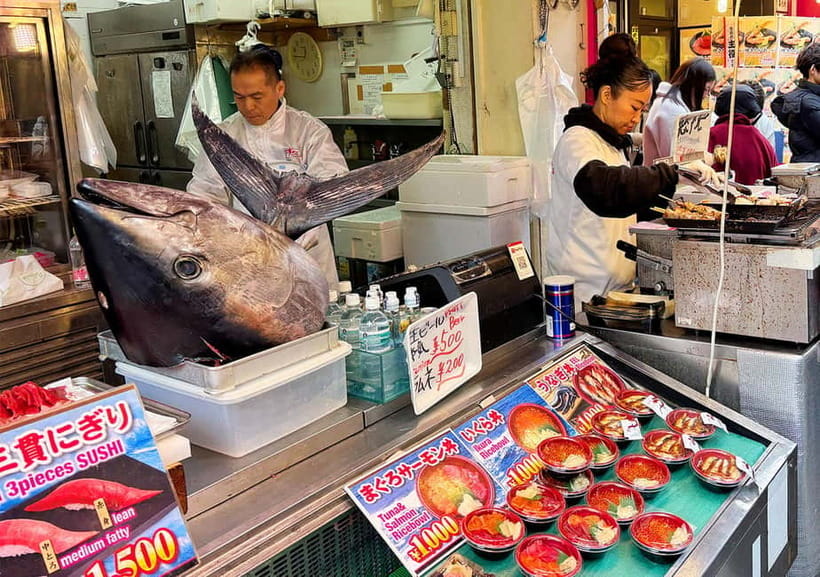
You can expect stalls selling seafood, Japanese ingredients, spices, prepared foods, and specialty items. The exact foods can change with the day, the shop, and what is available. The tasting possibilities described by the tour include fresh tuna, sushi, eel, grilled scallops, wagyu, fish cakes, omelets, dumplings, skewered octopus, and other market foods.
The guide helps you decide what to try instead of simply pointing at every shop. That is useful when you have limited time or dietary preferences. You can ask what an ingredient is, how it is cooked, and how it is normally used at home or in restaurants.
Several food stops may be included in the route, but you should bring cash for purchases. The $22 tour price covers the guided experience and market visit, while individual food purchases are not clearly listed as included. This is actually a good setup for many people. You control the amount you spend, and you are not forced to eat a fixed menu.
A person with a large appetite may want to try several small portions. Someone who has already eaten breakfast can pick one or two special items and save room for later. The market also offers food to take away, including rice snacks and other packaged items.
Tuna, wagyu, seafood, and the role of texture
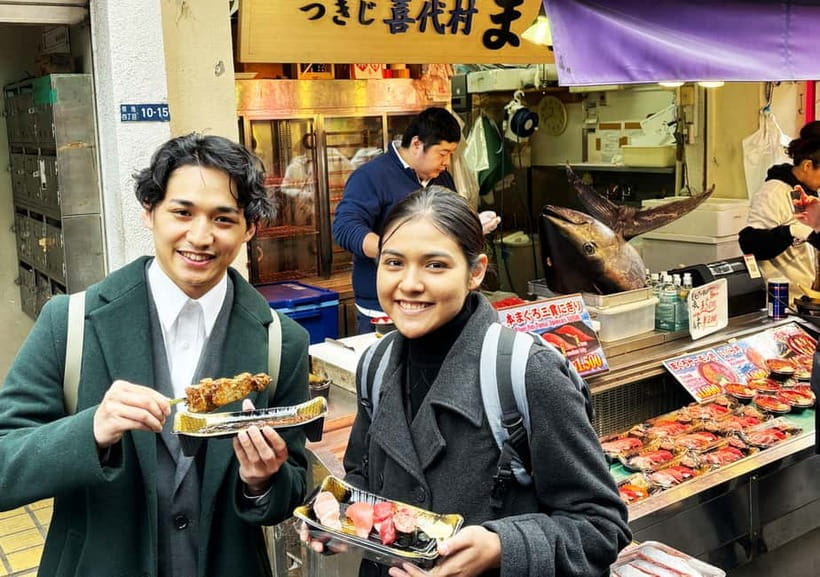
The food is not only about freshness. The guide can explain how preparation, aging, preservation, and cooking affect flavor. Traditional preservation methods are part of the experience because they help develop umami, the savory quality central to many Japanese dishes.
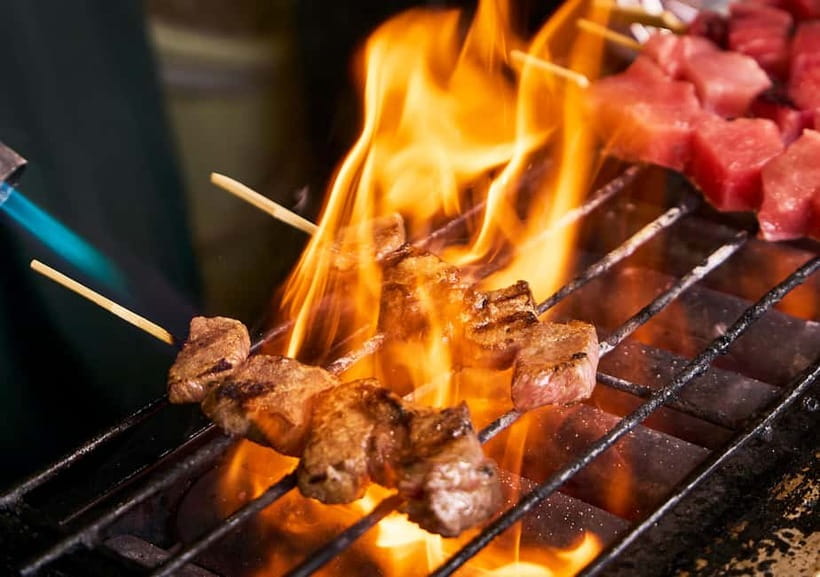
Fresh tuna is an obvious draw, but the variety matters more than any single bite. You may move from raw fish to grilled seafood, then to meat, egg, or a savory snack. Wagyu skewers have been a favorite for some people, while others have preferred sushi, scallops, eel, or octopus.
This variety makes the tour a good choice for first-time visitors who want a broad introduction to Japanese food. You can compare raw and cooked seafood, soft and chewy textures, grilled and preserved flavors, and familiar ingredients prepared in unfamiliar ways.
The guide may also arrange or point out a fish-cutting demonstration. This gives you a practical look at the skill behind Japanese seafood preparation. It helps explain why knife work, portioning, and presentation matter so much in Japanese cuisine.
Do not expect every tour to follow an identical food list. Market stock and shop hours change. That is part of the appeal, but it also means you should book this as a guided market experience rather than a guaranteed tasting menu.
More Market Food Tours in Tokyo
- Tsukiji Fish Market: Street Food & Culture Walking Tour
★ 5.0 · 669 reviews - Tsukiji Fish Market Small-Group Food Walking Tour
★ 5.0 · 621 reviews - Tokyo Food Tour Taste Fresh Delights at Tsukiji Market
★ 5.0 · 429 reviews
The special wasabi set is worth noticing
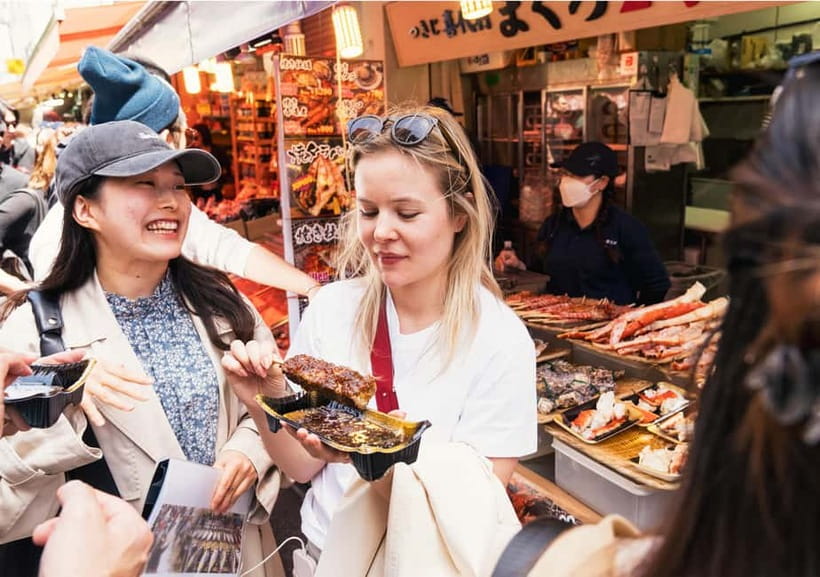
The freshly grated wasabi is one of the tour’s most distinctive extras. Guides have offered a special wasabi set to pair with the food, and several people have found it a memorable part of the morning.
This is different from treating wasabi as a hot green paste added without thought. Fresh wasabi has a sharper, cleaner flavor and can make tuna, sushi, or other seafood taste more defined. The guide can show you how to use it so it supports the food rather than overpowering it.
I would not book the tour only for the wasabi, since the exact presentation can vary. Still, it is a fine example of what a local guide adds. You learn not just what to eat, but how to taste it.
How the final 20 minutes help you keep exploring

The final 20 minutes continue in Tsukiji Outer Market before the group returns to the temple area. This closing section is useful because you have already learned the basic layout and tried a few foods.
At this point, you can ask follow-up questions about shops, ingredients, cooking methods, or what to buy for the rest of your stay. Some guides also point out places selling ceramics and packaged food. That gives you a chance to browse with more confidence after the formal tour ends.
The tour finishes at one of the listed temple meeting points. From there, you can continue exploring independently, eat another meal, or leave the district. The guide’s final advice can be especially useful if you want to return later without a group.
What the $22 price really buys you
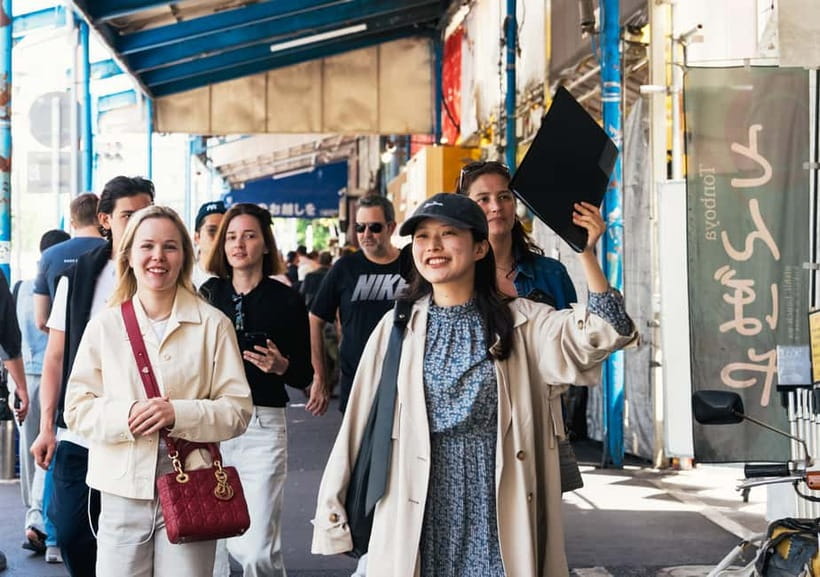
At $22 per person, this is inexpensive for a two-hour guided food walk in central Tokyo. The value depends on how much help you want.
If you are comfortable researching shops, reading signs, choosing unfamiliar food, and navigating market lanes alone, you can visit Tsukiji without a guide. One rating of the experience made exactly that point. The market is open for independent exploration, and you may spend less if you choose only one or two items.
The tour becomes better value if you want someone to filter the choices. You get an English-speaking guide, a visit to the temple, an explanation of market traditions, help choosing food, and a route through the outer market. The guide can also make it easier to try foods you might otherwise skip.
Keep extra cash available. Since food purchases are handled at the stalls, your total cost depends on how much you sample. That flexibility is one of the tour’s strengths, but it also means the advertised price is not your full food budget.
Free cancellation up to 24 hours before the start and the option to reserve now and pay later add useful flexibility. The tour lasts two hours, and starting times depend on availability.
Choosing the right day and preparing well
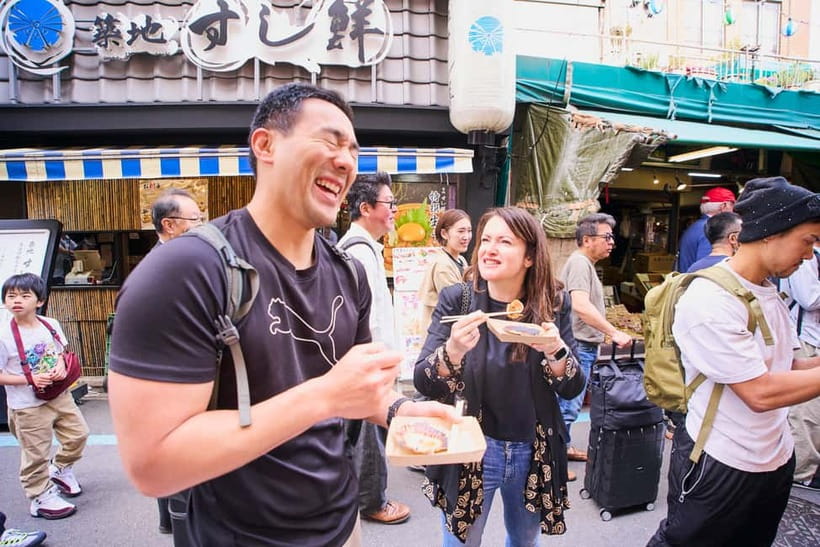
Avoid Wednesday, Sunday, and national holidays if your schedule allows. About half of the shops may be closed on those days, and the experience can be noticeably quieter or less varied. Some tours still operate, but you may see fewer vendors and miss a fish-cutting demonstration or other market activity.
Bring cash. This is the most important practical tip. Also wear comfortable shoes, since the experience is on foot and includes time in crowded market lanes.
Come hungry, but not starved. You may want to taste several small foods rather than eat one large breakfast before arriving. If you have allergies, dislikes, or dietary restrictions, tell the guide at the start so recommendations can be adjusted when possible.
The tour is listed as wheelchair accessible, and small groups are available. Because the market is active and shop access can vary, it is still sensible to confirm your needs when booking.
Who will enjoy this Tsukiji tour most
I would recommend it to first-time visitors who want a friendly introduction to Japanese food without committing to a formal restaurant meal. It also suits people who enjoy trying unusual foods but want help deciding where to begin.
Families and mixed groups can benefit from the flexible spending. One person can try grilled scallops while another chooses wagyu or a sweet snack. You do not all need to order the same thing.
Food-focused visitors may enjoy the explanations of preservation, knife work, ingredients, and umami. Culture-focused visitors will appreciate the temple and the connection between the market and Japanese culinary customs.
Independent explorers should think twice. If you enjoy wandering alone and researching as you go, the tour may repeat work you would happily do yourself. Still, the low price and small-group format make it a reasonable orientation walk even for confident visitors.
Should you book it?
Book this tour if you want a guided first look at Tsukiji, several chances to taste local food, and clear help choosing what to buy. The guides receive especially strong praise for their English, warmth, food recommendations, and ability to adjust the route to personal preferences.
Book on a normal market day if possible, and bring cash for the food. If you are visiting on Wednesday, Sunday, or a national holiday, lower your expectations for the number of open stalls.
For $22, this is a practical way to get your bearings, learn the food culture, and sample more confidently. You can explore Tsukiji alone, but a good guide helps you spend your limited time and appetite wisely.
FAQ
Where does the Tsukiji Fish Market tour begin?
The tour begins at Tsukiji Hongwanji Temple. There are two listed starting location options at the temple, so check the exact meeting details for the option you book.
How long does the tour last?
The experience lasts two hours.
What language is the tour offered in?
The live tour guide speaks English.
Does the tour visit Tsukiji Hongwanji Temple?
Yes. The temple visit includes about 20 minutes of guided time.
How long is spent in Tsukiji Outer Market?
About 80 minutes are scheduled for a guided market visit and food tasting, followed by another 20 minutes of guided time in the outer market.
Is food included in the $22 price?
The tour includes food-market exploration and tasting opportunities, but individual food purchases are not clearly listed as included. Bring cash for food and other purchases.
What foods might I try?
Possible foods include tuna, sushi, eel, grilled scallops, wagyu, fish cakes, omelets, dumplings, skewered octopus, and other traditional market foods. The exact selection can vary.
Is fresh wasabi part of the experience?
The guide may provide a special wasabi set or freshly grated wasabi. It is used to enhance the flavor of seafood and other foods.
Are shops open every day?
About half of the Tsukiji Outer Market shops may be closed on Wednesdays, Sundays, and national holidays. Tours can still operate, but the experience may be different.
Can I cancel the booking?
You can cancel up to 24 hours in advance for a full refund. You can also reserve now and pay later.
More Fish Market Tours around Tokyo
- Tokyo Sushi Making Class in Tsukiji with Professional Chef
★ 5.0 · 1,177 reviews - Tsukiji Fish Market Guided Tour and Sushi Making with Pro Chef
★ 5.0 · 775 reviews - Tokyo: Tsukiji Fish Market Sushi Making Class with Pro Chef
★ 4.9 · 506 reviews - Tokyo Tsukiji Fish Market Tour and Sushi Making Lesson
★ 5.0 · 390 reviews
More Market Walking Tours in Japan
- Tokyo: Tsukiji Fish Market Guided Walking Tour
★ 4.9 · 1,397 reviews - Nishiki Market Brunch Walking Tour (7 Tastings + Brunch)
★ 5.0 · 1,355 reviews - Kuromon Market Food Walking Tour in Osaka (6 stops, 6 tastes)
★ 5.0 · 550 reviews - Kyoto Nishiki Market Food and Culture Walking Tour
★ 5.0 · 412 reviews
New market tours around Tokyo
- Private Toyosu & Tsukiji Market Adventure with Tuna Auction★ 4.8 · 191 reviews
- Tokyo Tsukiji Fish Market Tour and Sushi Making Lesson★ 5.0 · 390 reviews
- Tokyo Food Tour Taste Fresh Delights at Tsukiji Market★ 5.0 · 429 reviews
- Tokyo: Tsukiji Fish Market Sushi Making Class with Pro Chef★ 4.9 · 506 reviews
- Tsukiji Fish Market: Street Food & Culture Walking Tour★ 5.0 · 669 reviews
- Tsukiji Fish Market Small-Group Food Walking Tour★ 5.0 · 621 reviews
- Tsukiji Fish Market Guided Tour and Sushi Making with Pro Chef★ 5.0 · 775 reviews
- Tokyo: Tsukiji Fish Market Food and Culture Walking Tour★ 4.7 · 757 reviews
Tokyo Market Tours, side by side.
Tokyo Tsukiji Fish Market Food and Culture Walking Tour
Read our review →
Tokyo: Tsukiji Fish Market Guided Walking Tour
Read our review →
Tsukiji Fish Market Guided Tour and Sushi Making with Pro Chef
Read our review →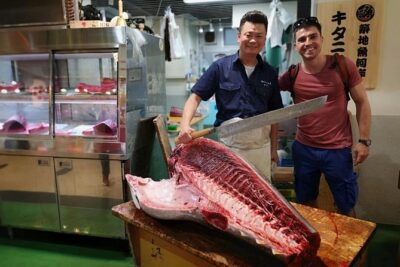
Tsukiji Fish Market Small-Group Food Walking Tour
Read our review →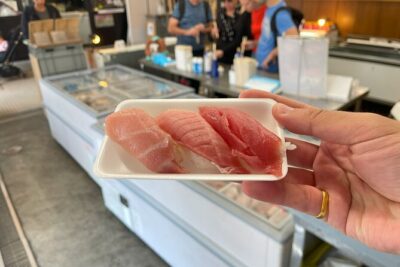
Tokyo Food Tour Taste Fresh Delights at Tsukiji Market
Read our review →
Tokyo Tsukiji Fish Market Tour and Sushi Making Lesson
Read our review →