
Review · TOKYO
Tokyo Sushi Making Class in Tsukiji with Professional Chef
The best part of this Tsukiji sushi class is that you do not simply watch a chef work. You handle the rice, fish, and rolling mat yourself, then sit down to eat five nigiri and one rolled sushi for lunch. The fish-cutting demonstration adds a useful look at the craft behind the counter.
I like the class for two clear reasons: it fits into a busy Tokyo day at about 90 minutes, and it takes place near the Tsukiji Outer Market, where you can continue exploring afterward. I also like the warm English support, with hosts such as Yuko, Yugo, Kate, and Kanon helping explain the chef’s instructions.
The main consideration is the setting. The classroom is on the third floor of a traditional Japanese building with stairs only, and the activity can sometimes run beyond its planned finish. Tell the operator about allergies before booking, and do not schedule a tight connection afterward.
Key points at a glance
- Five nigiri and one roll: You make a full sushi lunch, not just a sample piece.
- Fish preparation demonstration: A professional chef shows how fish is handled and explains Japanese knives.
- English guidance throughout: An English-speaking host helps translate and keeps the lesson easy to follow.
- Tsukiji location: The class sits close to Tsukiji Fish Market, Tsukiji Jogai Market, and the Nippon Fish Port Market.
- Beginner-friendly format: You receive step-by-step help, even if you have never made sushi.
- Good family activity: Children and adults can work together, with several families praising the hands-on format.
Learning sushi in the middle of Tsukiji
Tsukiji is a sensible place for a sushi lesson. The former wholesale market is no longer the main site of Tokyo’s fish auctions, but the Outer Market remains a lively food district with shops and small businesses selling seafood, kitchen tools, and Japanese ingredients.
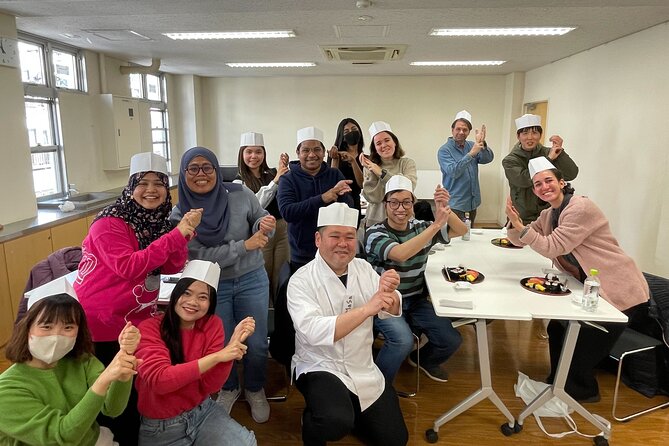
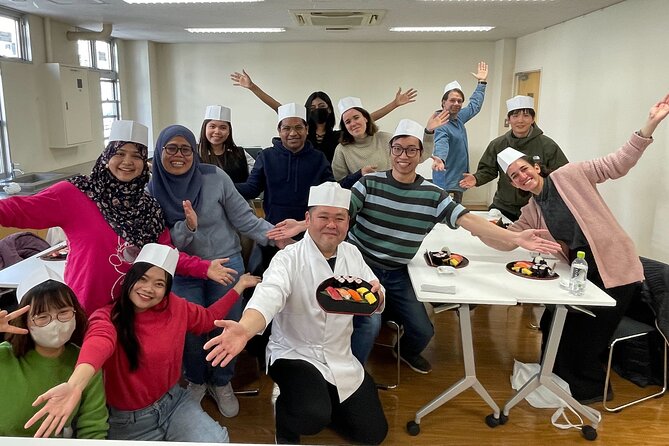
This class uses a more local setting than a polished hotel kitchen. You meet at 千社額棟, 4-chōme-16-2 Tsukiji, then enter a traditional Japanese building and climb to the classroom. The room is described as intimate, which helps the chef and assistants give personal help, though a group can include up to 20 people.
That group limit matters. A class of 20 is not the same as a private lesson, but the format includes a professional chef plus an English-speaking host and other staff. You should expect a shared class rather than one-on-one instruction.
The nearby market also gives you a useful way to build a half-day around the activity. You can arrive early for breakfast or market browsing, attend the class, then return outside for more food shopping and sightseeing. Since the class ends where it starts, you do not need to arrange a separate ride to another part of Tokyo.
More Fish Market Tours around Tokyo:
- Tokyo Tsukiji Fish Market Food and Culture Walking Tour
★ 5.0 · 3,184 reviews - Tokyo: Tsukiji Fish Market Food and Walking tour
★ 5.0 · 1,724 reviews - Tokyo: Tsukiji Fish Market Guided Walking Tour
★ 4.9 · 1,397 reviews
Watching the chef break down fish
The lesson begins with a demonstration of fish preparation. The chef shows the steps used to prepare fish for sushi and explains the knives involved. This is one of the more valuable parts of the class because it gives you a glimpse of work usually hidden behind a restaurant counter.
You are not simply shown a finished slice. The demonstration helps explain why sushi preparation requires control, clean cuts, and the right tools. The chef also discusses Japanese knives, an important part of traditional sushi work.
The exact fish selection is not listed, so do not book expecting a specific species. What is clear is that the ingredients are fresh and sourced through local market channels. The class supplies the utensils and tableware, so you do not need to bring equipment.
The demonstration also gives the class some cultural context. You learn what sushi is, how different styles vary, and how the ingredients are prepared before you begin. If you have eaten plenty of sushi but never considered the work behind it, this turns lunch into a more thoughtful experience.
Making five nigiri and one rolled sushi
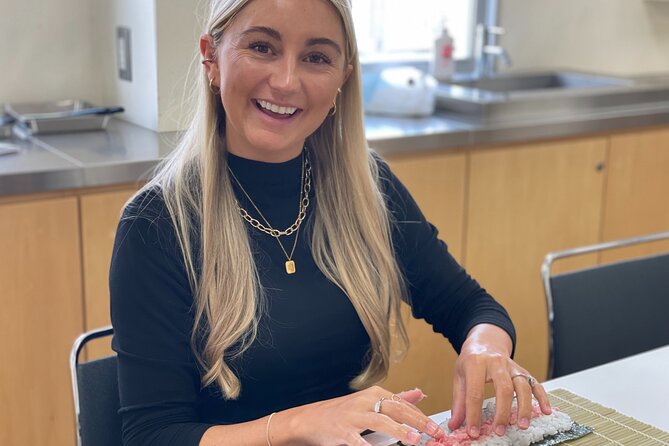
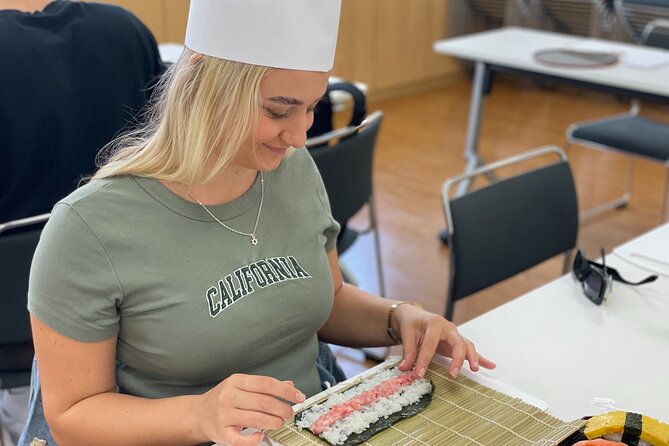
After watching the chef, you get to work. The class teaches two basic forms: nigiri sushi and rolled sushi, often called maki. You make five different nigiri pieces and one roll, following the chef step by step.
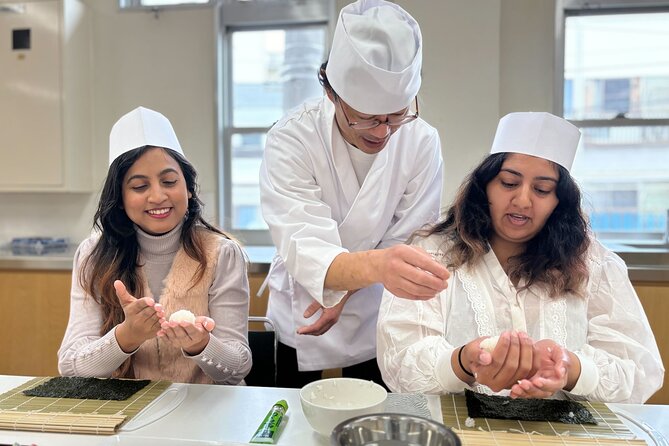
Nigiri looks simple, but it is not just fish placed on rice. The amount of rice, the shape of the piece, and the handling of the topping all matter. Beginners can expect help rather than a test of skill. The chef and assistants guide your hands and correct the process when needed.
The rolled sushi adds a different task. You work with the rolling technique and learn how the ingredients need to sit together before the mat does its work. Several participants found the activity manageable even when making sushi for the first time, and some said they planned to try the basics at home.
You should keep your expectations practical. This is a short introduction, not professional chef training. In 90 minutes, you will learn the foundations and make a meal, but you will not master every sushi style or knife technique.
That limited scope is part of the value. The class gives you enough information to understand the basic process without taking half a day away from Tokyo sightseeing. It is a good choice for a first lesson, especially if you want an activity that feels useful but not demanding.
Eating your own sushi for lunch
Once the sushi is made, you eat it. The included meal consists of your five nigiri and one rolled sushi, so the amount is meaningful for a light lunch. Arrive with some appetite, but do not expect a large restaurant-style feast with extra dishes and drinks.
The chef also prepares another sushi piece while you eat and serves it with freshly prepared wasabi. That small extra touch gives you a chance to compare your work with the chef’s version. It also shows how much appearance and precision change when a professional handles the same ingredients.
Freshness is central to the experience. The ingredients are sourced from the market, and many participants especially appreciated the taste of the fish and the quality of the finished sushi. Still, the exact menu can vary, so anyone with allergies should provide details at the time of reservation.
The provider says it will try to handle allergy-related requests, but cannot promise every request. Halal and kosher requirements cannot be accommodated. If food restrictions are important to you, contact the operator before making plans rather than hoping the class can adjust on the day.
More market tours around Tokyo:
- Tsukiji Fish Market Guided Tour and Sushi Making with Pro Chef
★ 5.0 · 775 reviews - Tokyo: Tsukiji Fish Market Food and Culture Walking Tour
★ 4.7 · 757 reviews - Tsukiji Fish Market: Street Food & Culture Walking Tour
★ 5.0 · 669 reviews - Tsukiji Fish Market Small-Group Food Walking Tour
★ 5.0 · 621 reviews
How the English support works
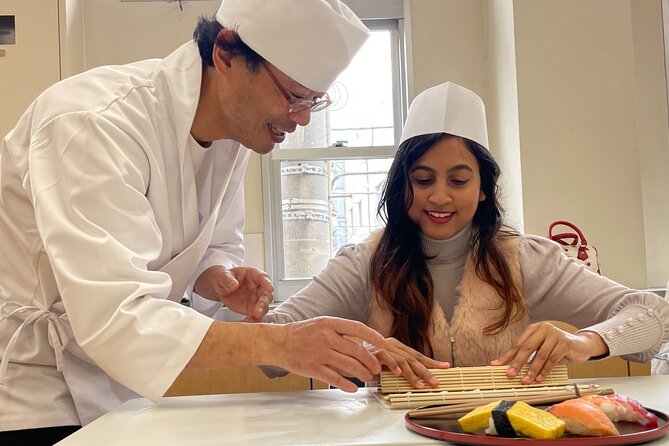
The class uses an English-speaking host alongside the sushi chef. This division works well for a practical lesson: the chef can focus on demonstrating the techniques, while the host explains the instructions and answers questions in English.
Hosts named in participant feedback include Yuko, Yugo, Nao, Kanon, Emma, Miky, AJ, Ishi, and Eri. Chef names include Tanaka and Kate. Staff can vary by session, but the consistent feature is an English-speaking assistant who helps bridge the language gap.
That support is important because sushi instruction often depends on small movements. Clear translation helps you understand not only what to do, but also when to do it. Families with children and first-time sushi makers particularly benefit from having someone nearby to repeat or clarify instructions.
The tone appears friendly and encouraging rather than formal. That matters when your first pieces look uneven. You are there to learn and eat, not to pass a sushi exam.
A family activity with enough to hold children’s attention
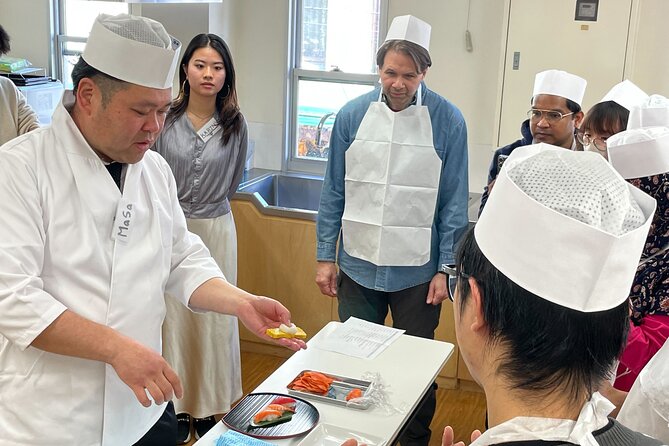
This is one of the stronger food activities for families. Children from about seven to twelve have taken part, and the hands-on format gives them a clear job to do. Making their own rolls can also encourage children who are hesitant about sushi to try it.
The class combines several short activities: watching the fish demonstration, hearing about sushi and knives, shaping nigiri, rolling maki, and eating lunch. That change of pace helps keep the session from feeling like a lecture.
Parents should still consider the stairs and the raw fish element. The classroom is on the third floor with no elevator mentioned, and sushi ingredients may not suit every child. If your family has allergies or strong food restrictions, ask before booking.
For adults, the class works well for couples, friends, and mixed-age groups. It is also a sensible rainy-day activity because most of the lesson takes place indoors. The market surroundings remain useful before or after the class, but the workshop itself does not depend on good weather.
What the Tsukiji stops add to the experience
The activity is associated with three Tsukiji areas: Tsukiji Fish Market, Tsukiji Jogai Market, and Tsukiji Nippon Fish Port Market. These names point to the food district around the classroom rather than a long guided walking tour through each site.
The main value of Tsukiji Fish Market is context. You are learning sushi close to the shops and businesses that supply the neighborhood’s food culture. That does not turn the class into a market tour, but it makes the setting more relevant than a generic cooking studio.
Tsukiji Jogai Market is the most useful place to explore on your own before or after class. You can browse food stalls, shops, and kitchenware stores, though the supplied information does not promise a guided market walk or included tastings.
The Nippon Fish Port Market adds another connection to seafood and distribution. Again, think of these as nearby areas that frame the experience, not guaranteed stops with a detailed tour at each one.
Plan extra time if you want to explore properly. The class itself lasts about 90 minutes, but market browsing can easily become the longer part of your visit.
Is $49.74 a fair price?
At $49.74 per person, the price is reasonable for a Tokyo food activity that includes instruction, fresh ingredients, equipment, and a handmade lunch. You are paying for more than a meal, but less than a full cooking school session.
The value is strongest if you want to understand how sushi is made. You watch fish preparation, learn about knives, practice two sushi styles, and eat six pieces of your own work. The included lunch also means you are not paying for a separate meal during the class.
The value is weaker if you mainly want to eat premium sushi or spend your time at the market. You will make beginner-level sushi rather than receive an omakase meal, and the class takes about 90 minutes that could otherwise go toward shopping or sightseeing.
The price also does not include hotel pickup, drop-off, transportation, extra food, or drinks. You make your own way to Tsukiji, which is straightforward for an independent Tokyo visit but less convenient if you want door-to-door service.
Timing, stairs, and practical planning
Confirmation arrives when you book, and the experience is near public transportation. You should still allow time to find the meeting point in Tsukiji, especially if you are unfamiliar with the market streets.
Do not plan a museum reservation, train departure, or restaurant booking immediately afterward. The operator notes that the class may run beyond the scheduled end time. A little flexibility will make the experience more enjoyable.
The building has stairs only, with the classroom on the third floor. This activity suits you if stairs are not a problem. The information does not state that the room is wheelchair accessible.
The maximum group size is 20. The room is described as intimate, but a full session may feel busy. If you want a quiet, highly private lesson, this may not be the right format. If you enjoy meeting other people and do not mind sharing the table, the group setting should work well.
Cancellation is free up to 24 hours before the start time for a full refund. Cancellations or changes made less than 24 hours before the experience are not accepted for a refund.
Who should book this sushi class?
I would choose this for a first-time sushi maker, a family looking for a practical Tokyo activity, or anyone who wants a meal tied to the place where it is taught. It is especially useful when you have a busy itinerary and want a short experience that includes lunch.
It also suits people who enjoy food traditions but do not want a long formal lecture. The fish-cutting demonstration, knife explanation, and hands-on work give you enough background to make the meal meaningful.
I would think twice if you need halal or kosher food, have serious allergies, cannot use stairs, or want a private class. I would also skip it if your only goal is eating high-end sushi prepared by a master.
Should you book it?
Book this class if you want to make sushi, not merely photograph it. The combination of a professional chef, English support, fresh market ingredients, and six pieces to eat gives you a useful introduction at a fair price.
For the best day, leave room before or after for Tsukiji Outer Market, arrive ready to eat, disclose allergies early, and wear something comfortable for a hands-on lesson. If you can manage the stairs and accept a shared class, this is a friendly and practical way to add Japanese food culture to your Tokyo schedule.
FAQ
How long does the sushi-making class last?
The experience lasts approximately 1 hour and 30 minutes.
Where does the class meet?
It meets at 千社額棟, 4-chōme-16-2 Tsukiji, Chuo City, Tokyo 104-0045, Japan. The activity ends back at the meeting point.
What sushi will I make?
You will make five different nigiri sushi pieces and one rolled sushi.
Is lunch included?
Yes. You eat the sushi you make during the class. The chef also prepares another sushi piece with freshly prepared wasabi.
Is the class taught in English?
An English-speaking host supports the professional sushi chef and explains the lesson in English.
Can children join the activity?
Yes. The class is suitable for families, and children from seven to twelve have taken part. The activity is hands-on and includes making and eating sushi.
Can the class accommodate dietary restrictions?
You should report allergies when booking. The operator will try to accommodate allergy-related requests, but it may not be possible. Halal and kosher requests cannot be accommodated.
New market tours around Tokyo
- Private Toyosu & Tsukiji Market Adventure with Tuna Auction★ 4.8 · 191 reviews
- Tsukiji Fish Market: Street Food & Culture Walking Tour★ 4.8 · 259 reviews
- Tokyo Tsukiji Fish Market Tour and Sushi Making Lesson★ 5.0 · 390 reviews
- Tokyo Food Tour Taste Fresh Delights at Tsukiji Market★ 5.0 · 429 reviews
- Tokyo: Tsukiji Fish Market Sushi Making Class with Pro Chef★ 4.9 · 506 reviews
- Tsukiji Fish Market: Street Food & Culture Walking Tour★ 5.0 · 669 reviews
- Tsukiji Fish Market Small-Group Food Walking Tour★ 5.0 · 621 reviews
- Tokyo: Tsukiji Fish Market Food and Culture Walking Tour★ 4.7 · 757 reviews
Tokyo Market Tours, side by side.
Tokyo Tsukiji Fish Market Food and Culture Walking Tour
Read our review →
Tokyo: Tsukiji Fish Market Guided Walking Tour
Read our review →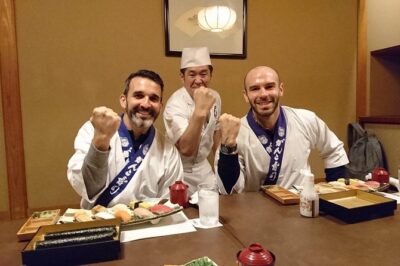
Tsukiji Fish Market Guided Tour and Sushi Making with Pro Chef
Read our review →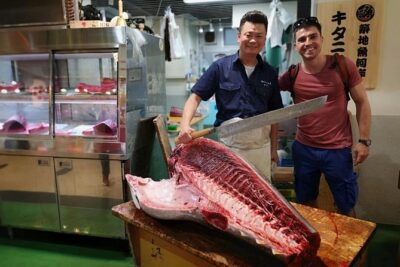
Tsukiji Fish Market Small-Group Food Walking Tour
Read our review →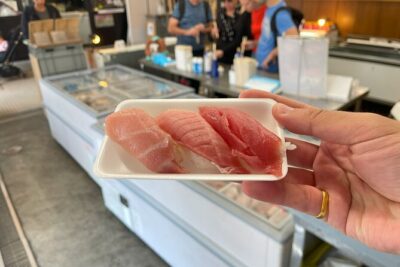
Tokyo Food Tour Taste Fresh Delights at Tsukiji Market
Read our review →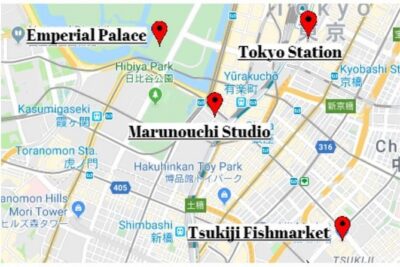
Tokyo Tsukiji Fish Market Tour and Sushi Making Lesson
Read our review →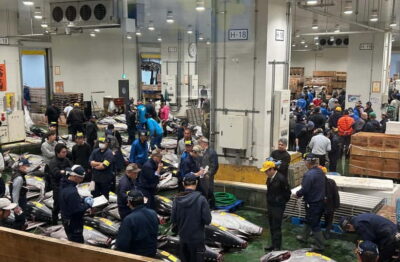
Private Toyosu & Tsukiji Market Adventure with Tuna Auction
Read our review →This tour also appears in