Review · TOKYO
Tokyo: Tsukiji Fish Market Guided Walking Tour
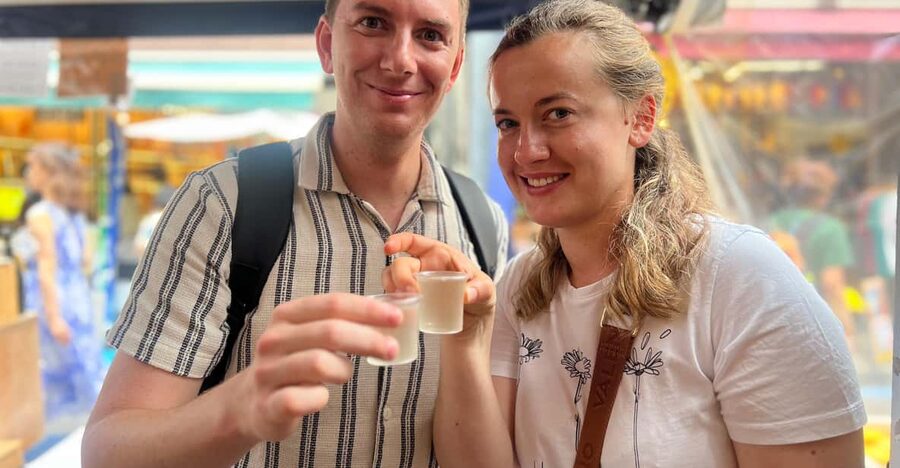
Tsukiji is easiest to enjoy when someone else handles the maze. This tour pairs a short visit to Tsukiji Hongwanji Temple with a guided food walk through the outer market, where you can try tamago, sushi, wagyu beef, eel, oysters, sweets, and other local specialties. I especially like the practical help at each stall and the way guides such as Jim, Rie, Yayoi, and Haydn explain the food instead of simply pointing at it.
I also like that you choose what to buy, rather than being locked into a set tasting menu. The main drawback is simple: food and drinks are not included, and some portions can cost more than you expect, so bring enough cash and decide how adventurous you want to be.
Key points at a glance
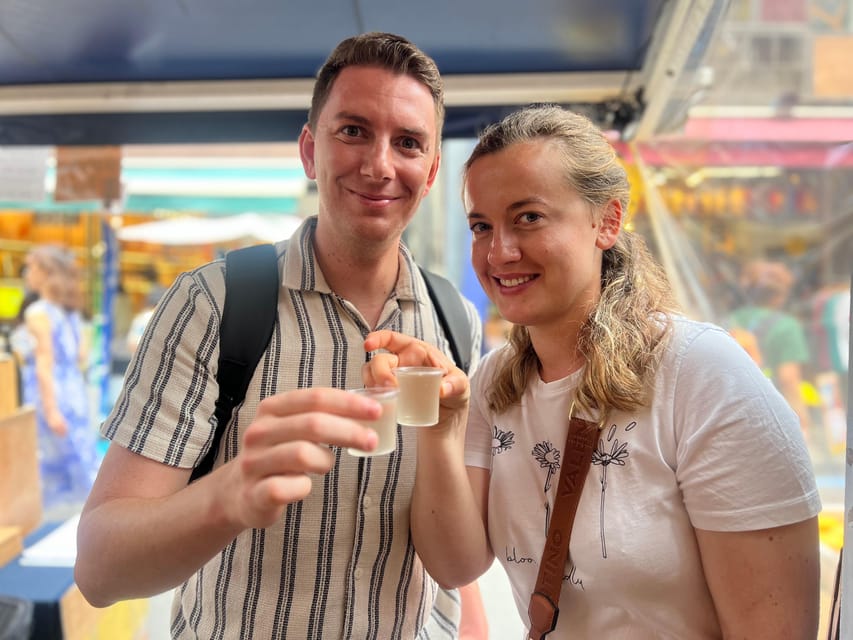
- Start with Tsukiji Hongwanji: A 15-minute temple visit adds useful context about local culture before the food stops begin.
- Spend about 100 minutes in the outer market: Your guide leads you through seafood counters, produce stalls, dried goods, sweets, and cooked specialties.
- Choose your own tastings: Food is optional and paid for separately, which helps with allergies, preferences, and budget.
- Small groups make a real difference: The tour accepts no more than 10 people, making it easier to hear your guide and order at crowded stalls.
- Bring cash: Several visitors specifically found cash essential for buying food and market goods.
- Expect a cultural food lesson: Guides explain ingredients, preparation, customs, and the market’s place in Japanese cooking.
Why a guide helps at Tsukiji
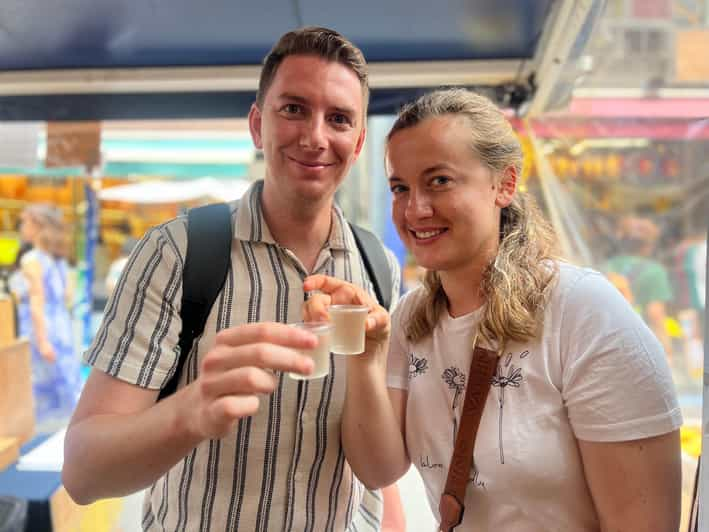
Tsukiji Outer Market is not difficult to reach, but it can be confusing once you are inside. Small lanes lead past seafood, dried fish, vegetables, pickles, sweets, kitchen goods, and ready-to-eat food. You can wander for a long time without knowing which stalls are worth your time or how to order.
That is where this tour earns its fee. Your guide takes you directly to selected stalls and explains what you are seeing. Guides have helped people choose between different foods, understand unfamiliar ingredients, and manage payments at busy counters. For a first visit, that can save both time and money.
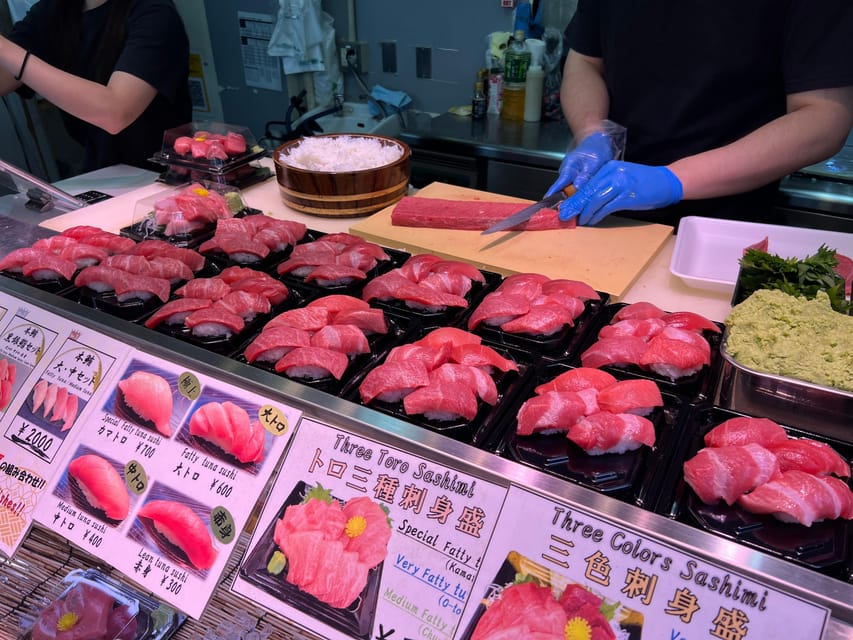
I would not treat the tour as a formal restaurant meal. It is closer to a guided market crawl, with several small purchases made along the way. You might sample something inexpensive, then decide to spend more on wagyu, premium tuna, sea urchin, or another specialty. The choice stays with you.
The small group limit of 10 matters here. Market lanes can be tight, and a large group would make ordering and listening awkward. With fewer people, your guide can answer questions and adjust the pace. Some groups have included eight people, which is small enough to feel personal without becoming a private tour.
More Market Walking Tours in Japan
- Tokyo Tsukiji Fish Market Food and Culture Walking Tour
★ 5.0 · 3,184 reviews - Tokyo: Tsukiji Fish Market Food and Walking tour
★ 5.0 · 1,724 reviews - Tokyo: Tsukiji Fish Market Food and Culture Walking Tour
★ 4.7 · 757 reviews
Meeting at the Tsukiji Station Starbucks
The meeting point is the Starbucks located in front of Tsukiji Station. Your guide waits near the bench in front of the café, so you should look for the person holding the tour details rather than heading straight into the market.
This is a useful starting point because the station gives you a clear landmark. Arrive ready to walk, with comfortable shoes and cash in an easy-to-reach place. You will spend the full two hours on foot, and the market requires attention around other shoppers and food vendors.
The tour is offered in English, and the guide is live throughout the walk. Names assigned to this experience have included Jim, Rie, Yayoi, Haydn, Nicolas, Sayaka, Minori, Shino, Joe, and Kiwa. The exact guide depends on the date, but the format remains the same: temple introduction, market walk, food advice, and time to buy what appeals to you.
Tsukiji Hongwanji sets the cultural tone
The first stop is Tsukiji Hongwanji, reached after about five minutes on foot. The guided visit lasts roughly 15 minutes, so do not expect an extended temple tour. Instead, it gives you a short pause from the market and a useful introduction to Japanese religious and cultural traditions.
The temple is known for its detailed carvings and calm interior. Guides explain the building and its place in the area, helping you understand that Tsukiji is more than a place to eat. Several guides have also included nearby temples or shrines when time allowed, though the listed route specifically names Tsukiji Hongwanji.
I like this opening because it changes the rhythm of the morning. You begin with architecture, belief, and quiet observation, then move into the sounds and smells of the market. Guides such as Haydn and Jim have been praised for explaining the connection between Japanese food, custom, and daily life, not just naming ingredients.
Keep your expectations measured. The temple stop is brief, and the market receives most of the tour time. If you want a detailed study of the temple, you would need a separate visit. Here, it works as a cultural introduction before breakfast-style grazing.
About 100 minutes among Tsukiji’s food stalls

After the temple, you walk another five minutes to the outer market. The main market portion takes about 100 minutes, shown as two consecutive 50-minute sections. In practice, you can expect most of the tour to unfold among the stalls.
Your guide points out ingredients used in Japanese cooking, including seafood, vegetables, dried goods, spices, sweets, and specialty products. The value is in the explanation. You learn how a food is used, why it matters, and what makes one item different from another.
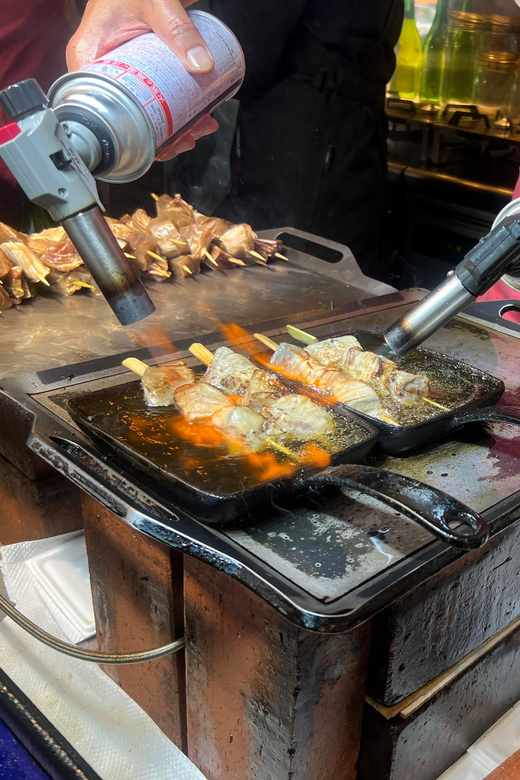
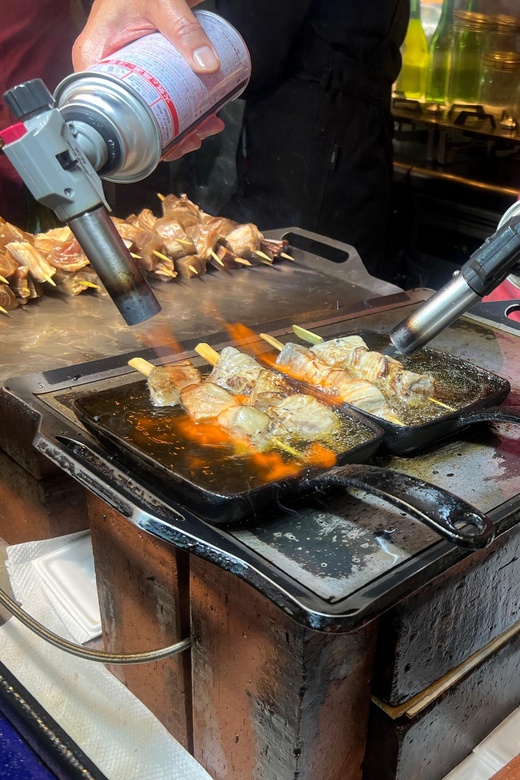
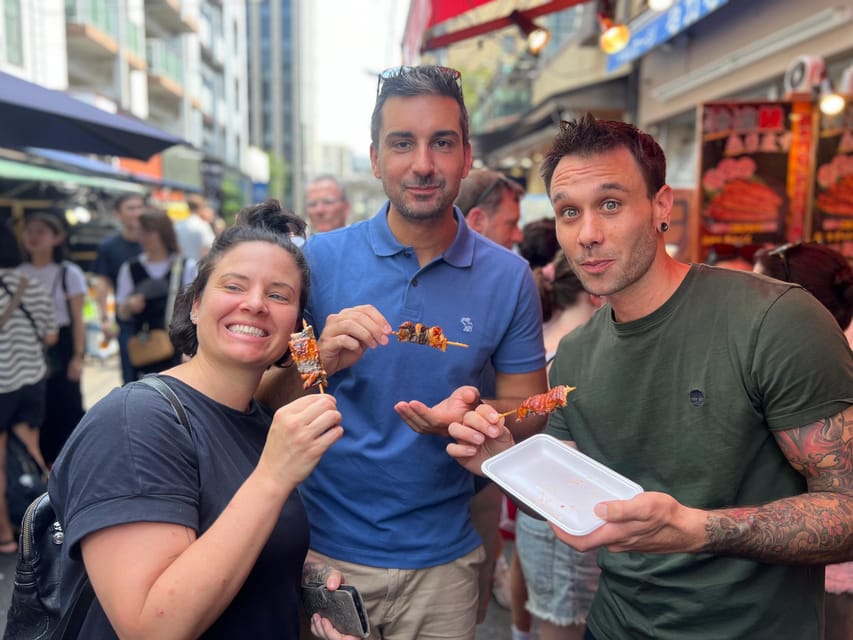
The food itself can cover a surprisingly broad range. Examples from this experience include tamago, oysters, sushi, fatty tuna, wagyu beef, unagi eel, sea urchin, dried fish, dried shrimp, dried scallops, nuts, sweets, and matcha products. Some people have even tried whale sashimi. You should not assume every item will be available on your particular morning, but the range gives you an idea of the choices.
You are not handed a fixed plate at the beginning. Instead, your guide suggests stops and you decide what to order. That arrangement is one of the tour’s best features. You can skip raw seafood, try only cooked foods, share small portions, or save your appetite for a specialty that catches your eye.
Guides also help with the practical side of market eating. At a crowded stall, it may not be obvious where to stand, how to pay, or which item is being recommended. Your guide can explain the options and help the group move along without blocking the counter.
More Market Walking Tours in Tokyo
- Tsukiji Fish Market: Street Food & Culture Walking Tour
★ 5.0 · 669 reviews - Tsukiji Fish Market Small-Group Food Walking Tour
★ 5.0 · 621 reviews - Tsukiji Fish Market: Street Food & Culture Walking Tour
★ 4.8 · 259 reviews
The food is optional, but the cost can add up
At $22 per person, the tour is priced as a guide service rather than a prepaid food package. That is good value if you want help understanding the market and finding several worthwhile stops. You are paying for local direction, cultural explanation, and the time saved by avoiding random choices.
The low tour price does not mean the morning is only $22. Every food or drink purchase is separate. Some tastings may be modestly priced, while wagyu, premium tuna, sea urchin, and other prized items can cost more. I would bring enough cash to sample several things, but set a personal limit before you start.
The pay-as-you-go setup also works well for mixed groups. One person can try oysters, another can choose tamago or sweets, and someone who dislikes seafood can focus on beef, eel, or cooked snacks. This flexibility is better than a set menu for families and groups with different tastes.
Cash is specifically listed as something to bring. Do not rely on a card for every purchase. You may also want to keep small bills handy, though no exact payment requirement is given.
One useful point: food is not merely a bonus here. It is the main way the market becomes understandable. Tasting an ingredient after hearing where it fits in Japanese cooking gives the explanation more meaning. Still, you should book this only if you are comfortable buying food separately.
What the guides add to the experience
The strongest part of this tour is the guide’s role. A good market guide does three jobs at once: explains the setting, filters the choices, and helps you feel comfortable ordering.
Jim has led groups through food, history, and local customs, while Rie has been especially effective at showing people around the market and recommending stops. Yayoi has guided visitors toward a broad mix of local foods, and Haydn has offered detailed explanations of the temple and market traditions. Nicolas, Sayaka, Minori, Shino, Joe, and Kiwa have also led this experience.
You should expect the tone to vary slightly by guide. Some guides focus more on history, while others are especially animated about food. That is normal for a small-group experience with several English-speaking hosts. The common thread is direct help inside the market.
The guides also offer practical recommendations for the rest of your Tokyo visit. Suggestions have included sushi, Kobe beef, matcha, and other nearby food stops. One guide even helped a participant arrange a taxi back to a hotel. These extras are useful, but they are not a formal part of the route, so treat them as helpful advice rather than promised services.
Who will enjoy this two-hour walk?
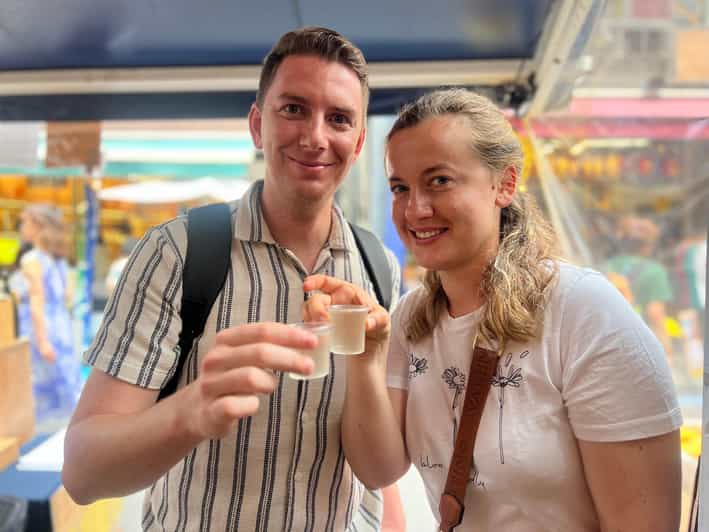
I would recommend this tour most strongly to first-time visitors to Tsukiji, people who want to taste several foods without planning every stop, and anyone who finds Japanese food stalls intimidating. It is also a smart choice if you want cultural context along with breakfast or lunch grazing.
You do not need to be a seafood expert. One participant who disliked seafood still found enough variety to try a few things. The ability to choose your own food means you can be cautious while still sampling something new.
Families and mixed groups can benefit from the flexible ordering. One person may want raw fish, another may prefer beef, and another may want sweets. Since you pay separately, you are not forced to split a fixed menu.
The tour may be less suitable if you want a quiet, slow meal or a private food tour. The market is active, the group may pause at crowded counters, and the two-hour limit keeps things moving. You also need to budget for food on top of the booking price.
Timing, pace, and practical planning
The listed duration is two hours. The walking sections are short, but the market portion can feel full because you move between several stops and spend time listening, choosing, ordering, and eating.
Morning conditions can be busy, including on weekdays. A guide helps you stay together and reach stalls efficiently, but the tour cannot remove the market’s crowds. Wear shoes you can walk in and keep your belongings close without taking up space at the counters.
The tour begins and ends at the Starbucks by Tsukiji Station. That makes it easy to continue sightseeing afterward, though the exact end point should be confirmed with your guide on the day. The route is designed as a walk, not a bus or taxi experience.
Free cancellation is available up to 24 hours before the start time, and you can reserve now and pay later. Those terms are useful if your Tokyo schedule is still shifting. The booking price covers the guided walk, photos taken during the tour, and entry to the market area and Hongwanji Temple. It does not cover your purchases.
My take on the $22 value
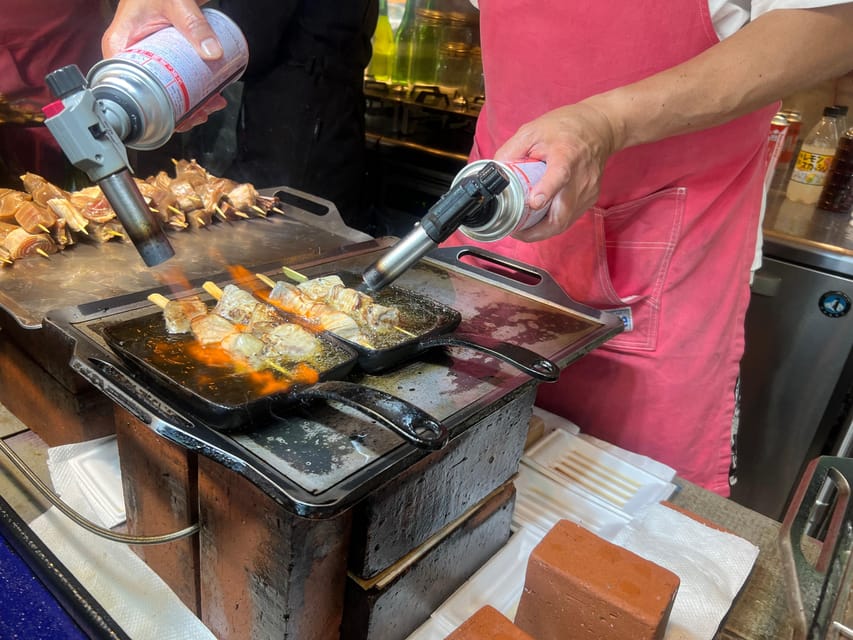
The price is strong if you see this as an orientation and tasting guide rather than a meal. A self-guided visit costs less in guide fees, but you may spend more time deciding where to go, miss the meaning behind unfamiliar foods, or pay for a poor choice.
The tour also gives you a safe way to try foods you might otherwise pass by. A guide can explain what you are buying and suggest a smaller or more suitable option. That is particularly useful with items such as sea urchin, eel, fatty tuna, dried seafood, and specialty sweets.
The value depends on how much you use the guidance. If you simply want to walk through the market and take photographs, you may not need a tour. If you want to taste several foods, understand Japanese ingredients, and leave with a better sense of how the market works, $22 is reasonable.
Should you book the Tsukiji market tour?
Book it if you want a friendly introduction to Tsukiji with food choices under your control. The temple visit adds culture, the market walk gives you direction, and the small group keeps the experience manageable.
Bring cash, keep extra room in your food budget, and do not expect every tasting to be included. I would especially choose this tour early in a Tokyo visit, since the guide’s stall suggestions and broader food recommendations can help shape the rest of your trip.
Skip it if you prefer to explore markets alone, want a private guide, or are looking for one large sit-down meal. For most first-time visitors who want a practical, tasty, and informative start to Tsukiji, it is a worthwhile two hours.
FAQ
How long is the Tsukiji Fish Market tour?
The tour lasts two hours, including the temple visit, walking time, market exploration, food guidance, and shopping stops.
Where does the tour meet?
You meet your guide at the Starbucks located in front of Tsukiji Station. The guide waits near the bench outside the Starbucks.
Where does the tour end?
The listed drop-off location is the Starbucks by Tsukiji Station.
Is food included in the tour price?
No. Food and drinks are not included. You choose and pay for any items you want at the market stalls.
What food might I try?
Possible foods include tamago, oysters, sushi, wagyu beef, tuna, unagi eel, sea urchin, sweets, dried seafood, nuts, and matcha products. Specific availability can vary.
Do I need to bring cash?
Yes. Cash is listed as an important item to bring, and you should budget separately for food and drinks.
Is the tour conducted in English?
Yes. The tour includes a live English-speaking guide.
How large is the group?
The tour is a small-group experience limited to 10 participants.
More Fish Market Tours around Tokyo
- Tokyo Sushi Making Class in Tsukiji with Professional Chef
★ 5.0 · 1,177 reviews - Tsukiji Fish Market Guided Tour and Sushi Making with Pro Chef
★ 5.0 · 775 reviews - Tokyo: Tsukiji Fish Market Sushi Making Class with Pro Chef
★ 4.9 · 506 reviews - Tokyo Food Tour Taste Fresh Delights at Tsukiji Market
★ 5.0 · 429 reviews
New market tours around Tokyo
- Private Toyosu & Tsukiji Market Adventure with Tuna Auction★ 4.8 · 191 reviews
- Tsukiji Fish Market: Street Food & Culture Walking Tour★ 4.8 · 259 reviews
- Tokyo Tsukiji Fish Market Tour and Sushi Making Lesson★ 5.0 · 390 reviews
- Tokyo Food Tour Taste Fresh Delights at Tsukiji Market★ 5.0 · 429 reviews
- Tokyo: Tsukiji Fish Market Sushi Making Class with Pro Chef★ 4.9 · 506 reviews
- Tsukiji Fish Market: Street Food & Culture Walking Tour★ 5.0 · 669 reviews
- Tsukiji Fish Market Small-Group Food Walking Tour★ 5.0 · 621 reviews
- Tokyo: Tsukiji Fish Market Food and Culture Walking Tour★ 4.7 · 757 reviews
Tokyo Market Tours, side by side.
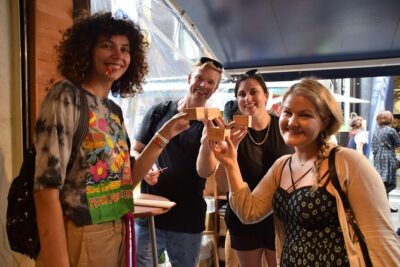
Tokyo Tsukiji Fish Market Food and Culture Walking Tour
Read our review →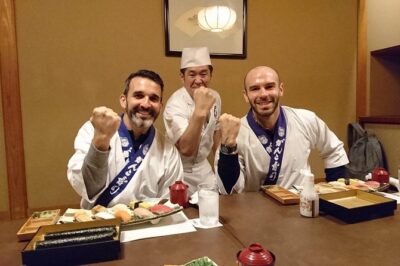
Tsukiji Fish Market Guided Tour and Sushi Making with Pro Chef
Read our review →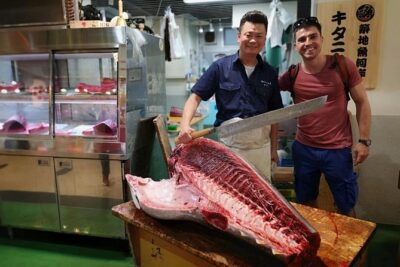
Tsukiji Fish Market Small-Group Food Walking Tour
Read our review →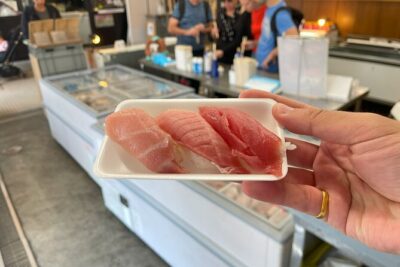
Tokyo Food Tour Taste Fresh Delights at Tsukiji Market
Read our review →
Tokyo Tsukiji Fish Market Tour and Sushi Making Lesson
Read our review →