Review · MUMBAI
Mumbai Heritage, Street Food & Bazaar Walking Tour
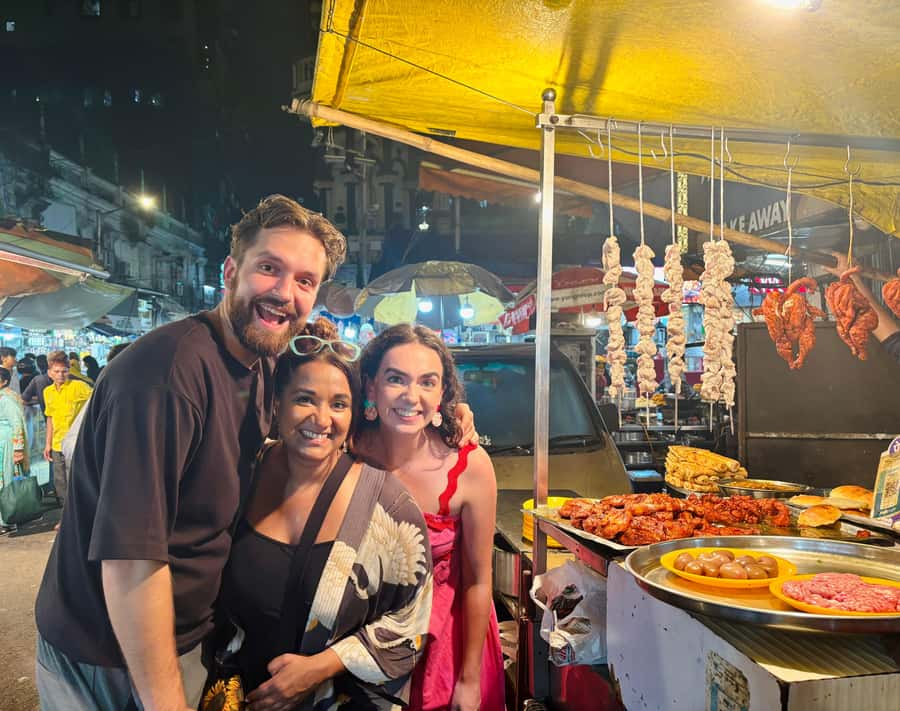
Mumbai reveals itself best through its food stalls, crowded markets, old temples, and short train rides. This tour brings those pieces together, from pani puri and pav bhaji to Chicken 65, malai tikka, and handmade ice cream at Taj Ice Cream. I like that the price includes food, drinks, public transport, and entry fees. I also like the mix of Victorian Gothic and Art Deco sights with ordinary local streets, rather than a tour limited to postcard views.
The main consideration is pace. You will eat often, walk through busy market areas, visit religious sites, and take a local train, all while staying with a guide. That makes the day rewarding but active, and the food focus may not suit you if you prefer a quiet sightseeing tour or have strict dietary limits.
Key things to know before booking
- Twelve or more tastings are included, covering both vegetarian and non-vegetarian Mumbai favorites.
- Javed and Chirag guide the walk, with Chirag especially noted for his explanations of architecture, history, food, and local traditions.
- A short local train ride adds a real Mumbai transport experience, not just a look at the city from a vehicle.
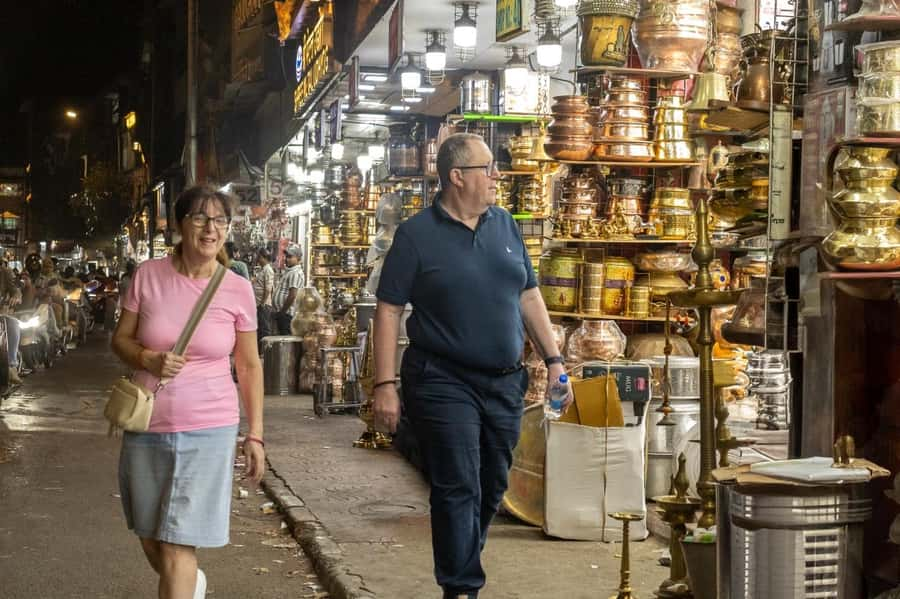
- Bhuleshwar Market, Chira Bazaar, and Mohammed Ali Road show you different sides of the city’s food and shopping culture.
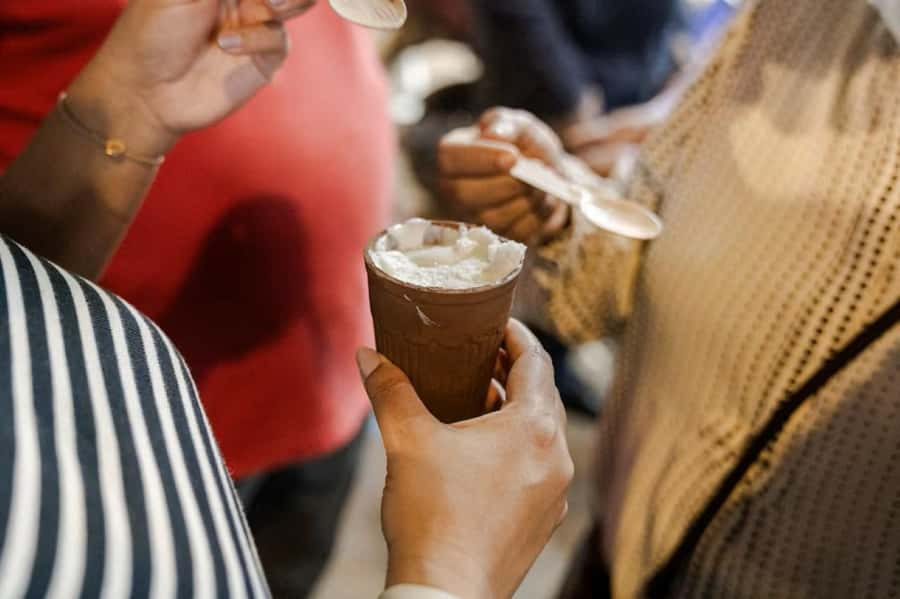
- Taj Ice Cream finishes the route with handmade ice cream from a five-generation-old shop.
- The $17 price includes food and transport, making this one of the easier ways to sample many dishes without paying separately at each stop.
Why this $17 food walk is good value
At $17 per person, this tour gives you more than a meal. You receive a guided city walk, public transport, food and drinks, and all listed fees. That matters in Mumbai, where a first-time visit can involve lots of small decisions: Which stall looks safe? How do you get to the next market? What exactly are you eating? Which historic building deserves your attention?
You still need to pay for personal expenses, and private pickup and drop-off are not included. The meeting point is Pizza Express near the Gateway of India, and the tour ends back there. You should allow time to reach the starting point on your own.
The food alone makes the cost attractive. Twelve or more small tastings can quickly cost more than expected if you order freely at several places. Here, the guide leads you to selected spots described as safe and hygienic, and the food is part of the price. You get variety without having to guess how much to order.
I would not choose this tour simply because it is cheap. I would choose it because the cost covers the parts that make a food walk useful: local guidance, transport, explanation, and enough samples to form a clear picture of Mumbai cuisine.
More Market Food Tours in India
- Mumbai: Street Food and Night Markets Tour
★ 4.9 · 719 reviews - Mumbai Street Food & Night Markets
★ 5.0 · 225 reviews - Mumbai Street Food and Evening Bazaar Tour
★ 5.0 · 172 reviews
Meeting near the Gateway of India
You meet your guide at Pizza Express near the Gateway of India. This gives the tour a practical starting point in South Mumbai, close to some of the city’s best-known colonial-era sights.
The meeting point is easy to identify from the information provided, but private pickup is not offered. If you are staying elsewhere in Mumbai, plan your route before the start time and arrive ready to walk.
Javed and Chirag are the named guides associated with the experience. Javed is described as punctual, and Chirag is noted for answering questions about the city and its traditions. That is useful on a tour with several subjects competing for your attention. You are not only tasting food. You are also moving through religious, commercial, and architectural parts of Mumbai.
The tour is in English. If you enjoy asking questions, this is a strong reason to pay attention to the guide rather than treating the walk as a simple food crawl.
Bhuleshwar Market and Chira Bazaar
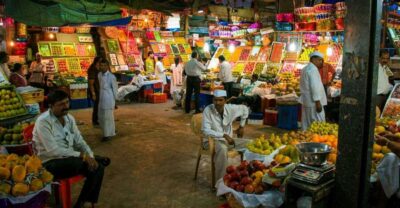
The first market stops give the tour its local character. Bhuleshwar Market and Chira Bazaar are not polished sightseeing zones. They are places to watch daily commerce unfold, with food, shops, people, and religious life close together.
A guide helps here because a market can otherwise feel like a wall of noise and movement. You can learn what you are seeing, where particular foods fit into Mumbai life, and why the area matters. The walk is not only about buying a snack. It is about seeing how food and trade operate in the city.
Chira Bazaar adds another layer to the route. The tour description does not promise a specific shopping list, so you should not expect a fixed retail experience or a long stop at every shop. Think of these markets as part of the city walk, with tastings and cultural context woven through them.
Wear shoes you can walk in and keep your belongings secure. No special equipment is listed, but market streets and food stops call for practical clothing and a willingness to move at the group’s pace.
A serious Mumbai tasting list
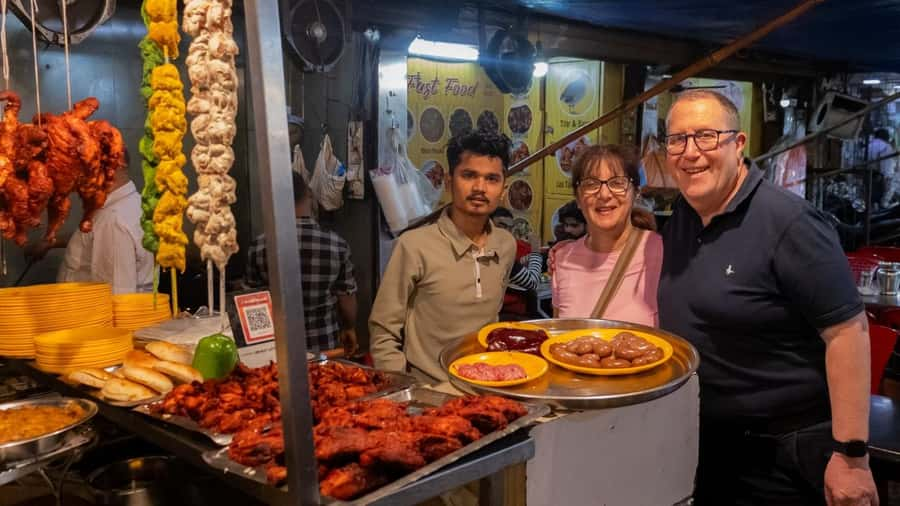
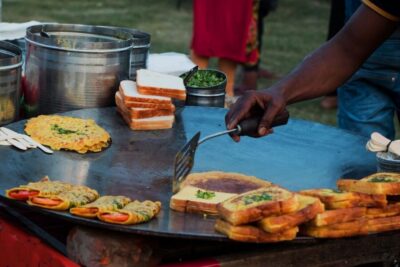
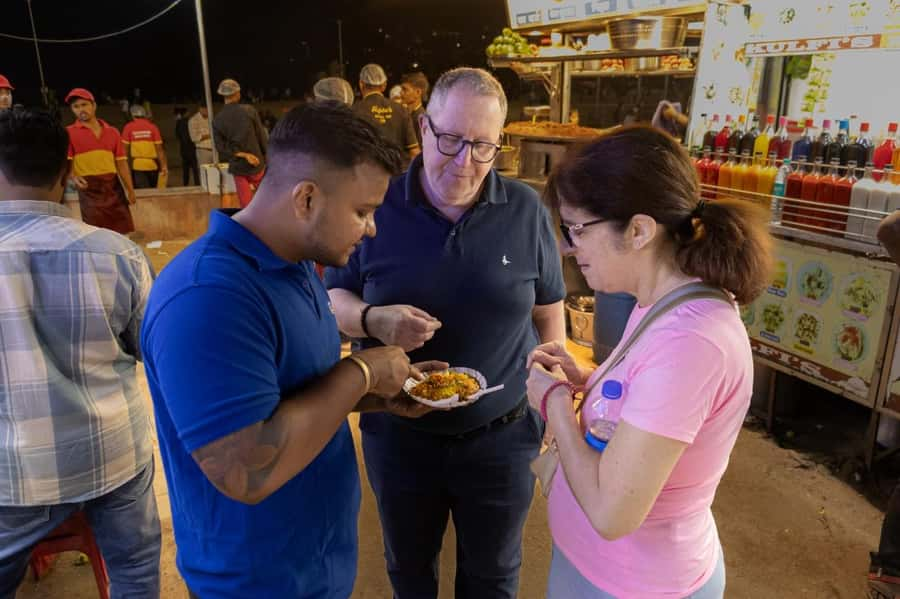
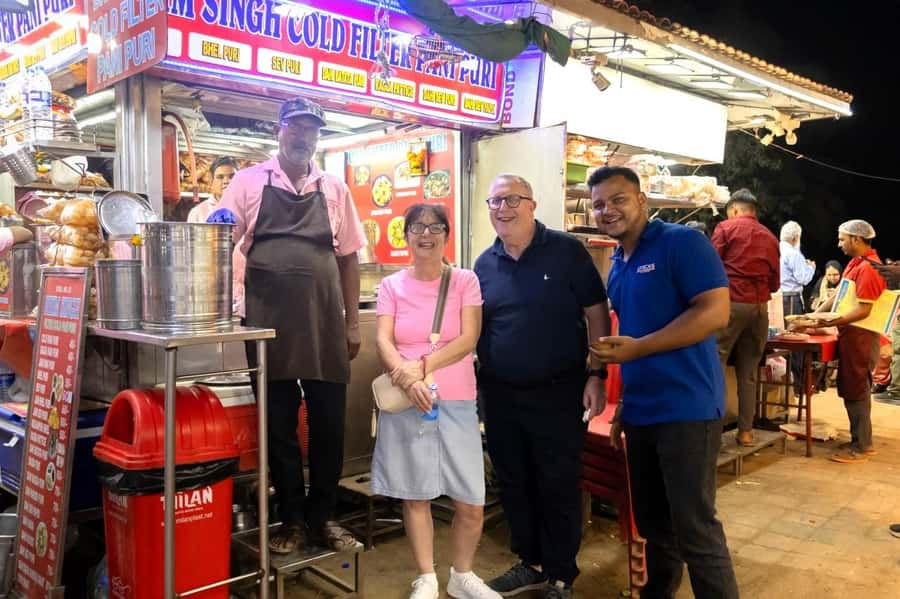
The food is the center of the experience. You can expect more than 12 cuisines or tastings, including vegetarian and non-vegetarian street dishes. The listed examples give you a good sense of the range:
- Pani puri
- Bhel puri
- Pav bhaji
- Chicken 65
- Malai tikka
- Handmade ice cream at Taj Ice Cream
Pani puri and bhel puri offer the lighter, sharper side of Mumbai street food, while pav bhaji is a more filling combination of soft bread and spiced vegetable preparation. Chicken 65 and malai tikka bring non-vegetarian choices into the route.
This variety is one of the tour’s strongest features. You are not ordering one large dish and calling it a food tour. You are tasting several styles, textures, and levels of spice. The portions are not specified, so you should think of the experience as a sequence of samples rather than a formal lunch with a menu you control.
The food is described as authentic, and the selected stops are presented as safe and hygienic. That does not remove the need to tell your guide about allergies or dietary restrictions before eating. The tour includes vegetarian and non-vegetarian foods, but the available information does not promise a special allergy-free, vegan, gluten-free, or halal plan.
You should arrive hungry, but not starving. The food is substantial enough that one person felt very full by the end. If you normally eat small portions, pace yourself early so you can still enjoy the later tastings.
More Market Walking Tours in India
- Markets of Mumbai Walking Tour
★ 5.0 · 2 reviews - Private Heritage Walking Tour in Jaisalmer Fort and Old Bazaar
★ 5.0 · 306 reviews - Jaipur Bazaar & Food Walking Tour
★ 5.0 · 281 reviews - Old Delhi: Spices, Heritage and Bazaars Walking Tour
★ 5.0 · 173 reviews
Mohammed Ali Road and the non-vegetarian side
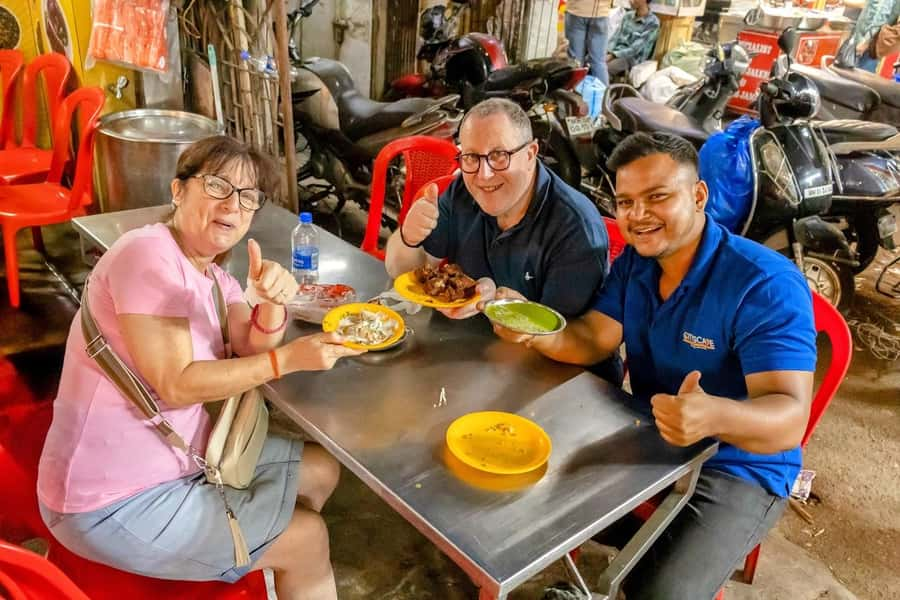
Mohammed Ali Road brings a different food identity to the walk. It is included as one of the key market areas, and this is where the non-vegetarian side of the tasting route becomes especially important.
The listed dishes include Chicken 65 and malai tikka, giving you a chance to compare grilled or spiced meat dishes with the vegetarian snacks served earlier. The route is designed to show that Mumbai food is not one single style. It shifts with neighborhood, tradition, religion, and the people who cook and eat there.
This part of the tour also connects food with the city’s religious diversity. You visit historic temples and mosques during the day, so the route places markets and dishes within a wider cultural setting.
There is a practical tradeoff. Mohammed Ali Road and the other markets are active public areas, not quiet restaurant rooms. If you want an organized tasting menu with a seat at every stop, this will feel informal. If you want to see where local food belongs in everyday city life, the setting is the point.
Victorian Gothic and Art Deco Mumbai
The tour shifts from street food to architecture with a heritage walk through Mumbai’s Victorian Gothic and Art Deco areas. Stops include Oval Maidan, Rajabai Clock Tower, Mumbai University, and Bombay High Court.
These buildings help explain another side of South Mumbai. You get grand civic architecture alongside the street-level markets and food stalls visited elsewhere on the route. The contrast is useful: Mumbai is not only a city of snacks and crowded lanes, and it is not only a collection of colonial facades.
A guide can make this part far more meaningful than a quick photo stop. Architectural details and the origins of the city’s buildings are specifically part of the explanations associated with Chirag. You can ask questions about what you are seeing instead of trying to identify each building later.
The itinerary does not state how long the group spends at each landmark or whether you enter every building. Plan on an exterior-focused heritage walk unless your guide tells you otherwise. Oval Maidan, Rajabai Clock Tower, Mumbai University, and Bombay High Court are useful sights to see together, but this is not presented as a full museum or interior tour.
Temples, mosques, and the city’s shared life
Historic temples and mosques are part of the route, adding a cultural dimension that food alone cannot provide. Mumbai’s streets often bring worship, commerce, and transport into close contact, and this tour lets you see those parts together.
The names of the individual religious sites are not provided, so you should not book expecting a particular famous temple or mosque. Instead, treat these visits as a chance to understand the neighborhoods you are walking through.
Dress and behave respectfully at religious places. The tour information does not specify clothing rules, photography rules, or whether you enter the buildings, so follow your guide’s instructions. If you have questions about customs or traditions, this is a good point to ask them.
This section also helps explain why a food walk can be a cultural tour. Recipes, markets, festivals, and religious communities are connected. The guide’s role is to help you notice those links without turning the experience into a lecture.
Riding Mumbai’s local train
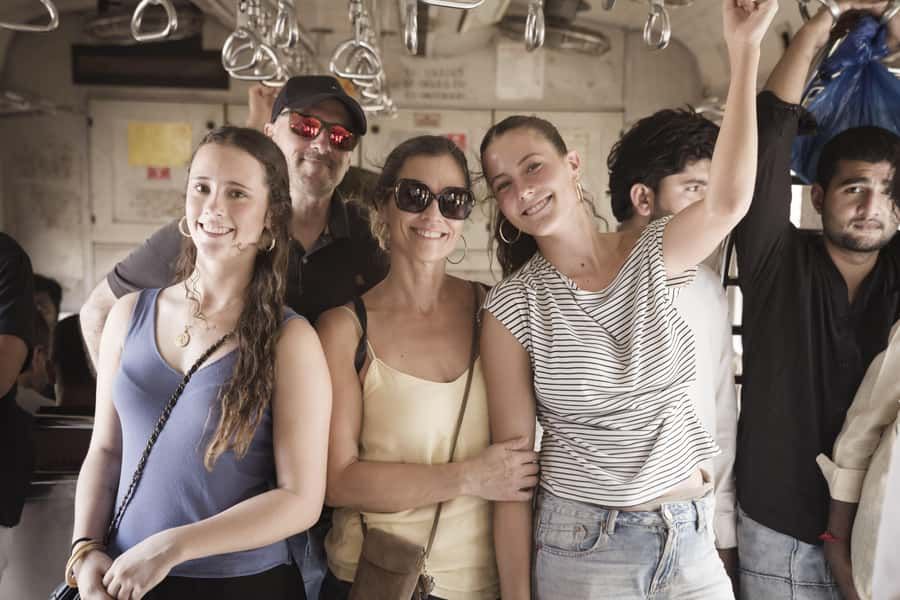
A short local train ride is included, with the guide accompanying you. This is one of the most practical additions to the itinerary because Mumbai’s trains are part of daily city movement, not a special sightseeing attraction created for visitors.
The ride gives you a taste of how the city connects its neighborhoods. It also breaks up the walking and lets you experience a familiar form of local transport with someone who knows the route.
The information does not provide the station names, journey length, train line, or expected crowd levels. For that reason, I would not book this expecting a long rail excursion or a reserved seat. It is a short guided ride within the larger walk.
You should stay close to your guide and keep your belongings secure. The train is a functional part of the day, not a luxury transfer. That is exactly why it adds value, but it may feel less comfortable than private transport.
Ending with five-generation-old Taj Ice Cream
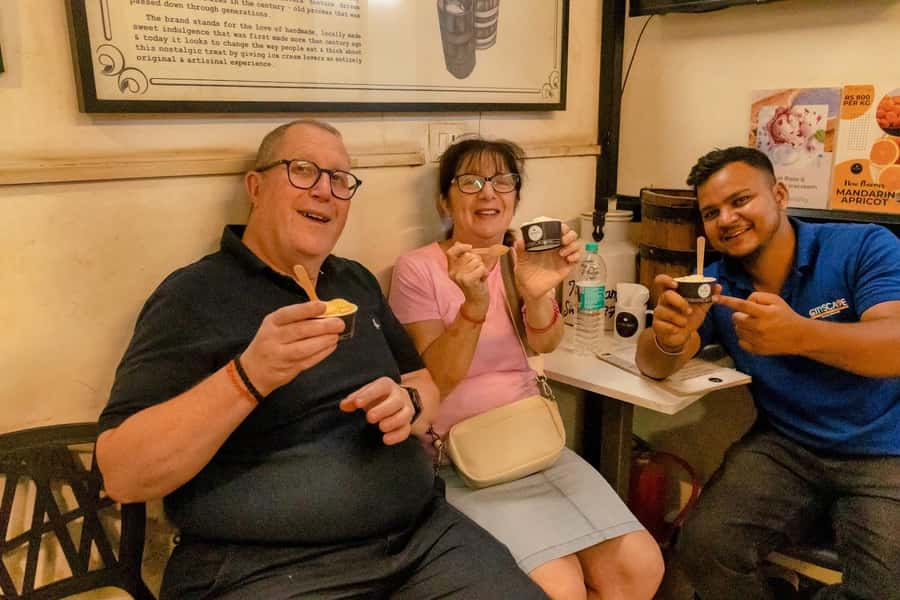
The final food stop is Taj Ice Cream, described as a five-generation-old shop. Ending with handmade ice cream gives the route a gentler finish after the sharper, saltier, and spicier dishes earlier in the day.
This stop also shows the range of the tour. You begin with market snacks, move through vegetarian and non-vegetarian street food, and finish at an old family-run business. The point is not only the dessert. It is the chance to connect a particular food shop with continuity across generations.
The tour ends back at the original meeting point near the Gateway of India. That makes it easier to continue sightseeing in South Mumbai afterward, though the exact ending time is not provided. I would avoid booking a tight appointment immediately after the tour.
Who will enjoy this experience most
I would recommend this tour to you if you want a first taste of Mumbai that combines food, transport, architecture, markets, and religion. It suits curious eaters who like small portions and several stops more than one long restaurant meal.
It also works well if you are unsure how to approach street food safely. The selected food stops and included guide reduce the guesswork. You can focus on tasting and learning instead of comparing stalls on your own.
The tour is a good fit for people who enjoy asking questions. Chirag is noted for detailed explanations of history, architecture, food origins, and traditions, while Javed is described as punctual and helpful. The guide quality matters here because the route covers many subjects in one outing.
I would think twice if you dislike crowded public places, cannot eat a broad range of foods, or want private transport. The tour includes public transportation and a local train, and private pickup and drop-off are not included. The day is also likely to feel full because food, walking, sightseeing, and transport are all packed into one experience.
Booking details and final decision
You can reserve now and pay later, which keeps your plans flexible. Cancellation is allowed up to 24 hours in advance for a full refund. Food, drinks, public transportation, and all fees and taxes are included, while personal expenses and private transfers are not.
The tour has a perfect rating from four published ratings, with repeated praise for the food, variety, guides, and local feel. One particularly useful detail is that the food can leave you very full, so do not schedule another major meal right afterward.
Book this tour if you want a practical introduction to Mumbai through many small experiences rather than a single attraction. The $17 price is especially strong for the combination of tastings and transport. Skip it if your priority is a slow private heritage tour, controlled dining, or a schedule with plenty of unstructured time.
FAQ
How much does the Mumbai Heritage, Street Food & Bazaar Walking Tour cost?
The tour costs $17 per person.
What food is included?
Food and drinks are included, with more than 12 tastings. Examples include pani puri, bhel puri, pav bhaji, Chicken 65, malai tikka, and handmade ice cream at Taj Ice Cream.
Where does the tour start?
You meet your guide at Pizza Express near the Gateway of India.
Where does the tour end?
The activity ends back at the meeting point near the Gateway of India.
Is transportation included?
Yes. Public transportation is included, including a short guided local train ride.
What language is the tour offered in?
The tour is offered in English.
More Market Walking Tours in Mumbai
- Bangkok: City Highlights Temple and Market Walking Tour
★ 4.5 · 3,990 reviews - Tokyo Tsukiji Fish Market Food and Culture Walking Tour
★ 5.0 · 3,184 reviews - Marrakech: Ben Youssef, Secret Garden, & Souks Walking Tour
★ 4.6 · 2,802 reviews - Marrakech: Colorful Medina Souks Guided Walking Tour
★ 4.7 · 2,470 reviews
More Market Food Tours in Mumbai
- Mumbai Street Food Tour with Evening Bazaar Walk
★ 4.9 · 79 reviews - Mumbai: Evening Street Food Tasting & Cultural Market Tour
★ 4.7 · 11 reviews - Dubai: Old Town, Creek, Museums, Souks, & Street Food Tour
★ 4.8 · 10,816 reviews - Dubai: Old Town, Souks, Street Food, Guided Tour & Abra Ride
★ 4.9 · 7,170 reviews
New market tours around Mumbai
- Mumbai: Local Markets & Temples Tour★ 4.6 · 45 reviews
- Night Tour: Mumbai’s Nights & Buzzing Bazaars★ 5.0 · 7 reviews
- Mumbai:Dhobi Ghat Laundry,Dharavi Slum & Flower market Tour★ 5.0 · 12 reviews
- Mumbai Morning Market Tour of Flowers, Fish, and More★ 5.0 · 100 reviews
- Mumbai Street Food Tour with Evening Bazaar Walk★ 4.9 · 79 reviews
- Mumbai Market and Temple Tour With Cow Shelter Visit★ 4.3 · 3 reviews
- Mumbai: Magical Markets Tour★ 4.5 · 23 reviews
- Mumbai Market Tour★ 4.6 · 12 reviews
Mumbai Market Tours, side by side.

Ultimate Mumbai Full Day: Sights, Bollywood Dance, Lunch & Spices
Read our review →
Mumbai Morning Market Tour of Flowers, Fish, and More
Read our review →