
Review · JAPAN
Kanazawa: Sushi Making Experience at Oumicho Market
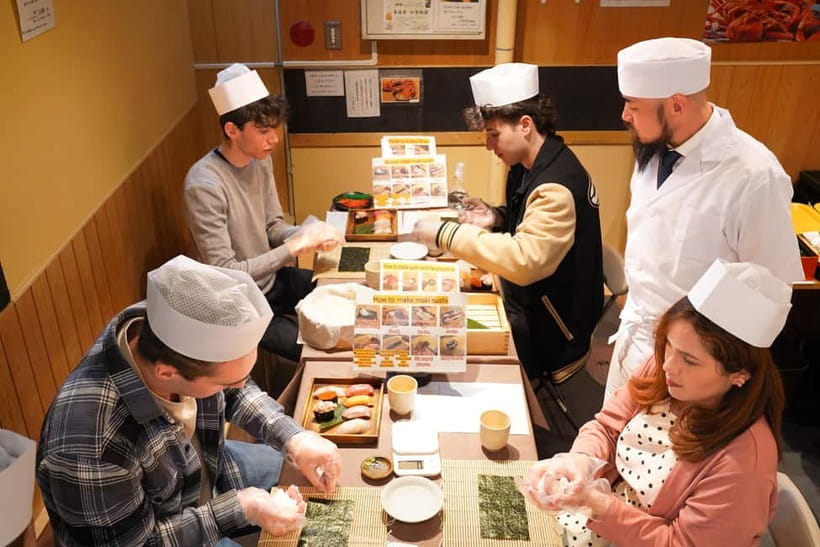
Making sushi inside Kanazawa’s Oumicho Market puts you close to the fish, the vendors, and the everyday rhythm of the city. At Enome Sushi, a professional chef teaches you to prepare 5 nigiri, 2 gunkan-maki, and 1 roll, then you sit down to eat your work.
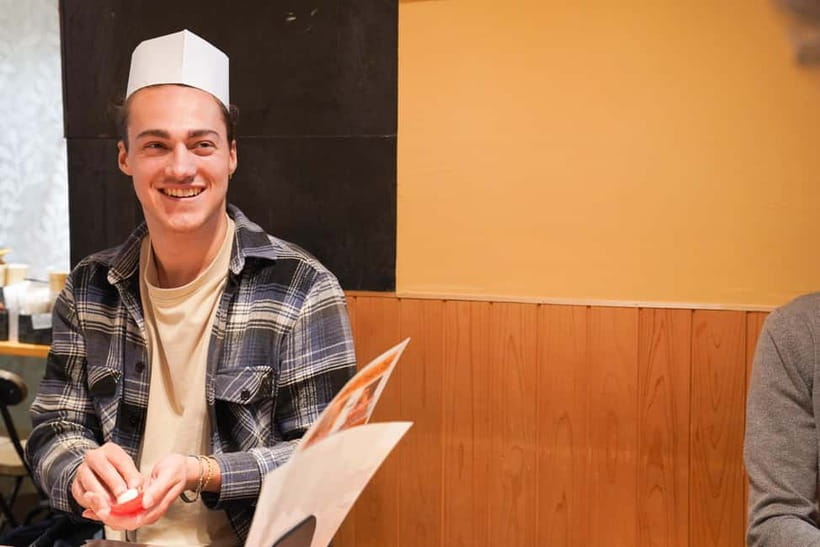
I like the direct setting and the small amount of food you make. You are not simply watching a demonstration, and eight pieces give you enough practice without turning the lesson into a long kitchen shift. I also like the patient teaching style, with a second restaurant staff member available to translate when needed.
The main consideration is finding the meeting point inside the market. Oumicho is lively and can feel confusing at first, so arrive 10 minutes early. Instruction is listed in Japanese, even though translation support may be provided.
Key points at a glance
- A 2-hour lesson at Enome Sushi: Learn in a working sushi restaurant inside Oumicho Market.
- Eight pieces to make and eat: Prepare 5 nigiri, 2 gunkan-maki, and 1 sushi roll.
- Fresh Kanazawa seafood: Use ingredients supplied for the lesson, then taste your own finished sushi.
- A market setting with real atmosphere: Oumicho Market has served Kanazawa for more than 300 years.
- Patient, friendly instruction: The teaching team includes professional chefs, with translation help available when needed.
- Private and wheelchair accessible: The activity is set up for a private group and includes all ingredients and instruction.
Starting inside Kanazawa’s Oumicho Market
Your meeting point is Enome Sushi, inside Oumicho Market. Enter through the Emza, or M’ZA, entrance, turn right at the first intersection, and walk a short distance until you see the Sushi Enome sign on your left.
That route matters. Oumicho is not a single quiet hall with one obvious doorway. It is a market area with several entrances, food stalls, shops, and passing crowds. If you arrive at the last minute, you may spend your first few minutes searching instead of washing your hands and getting settled.
I would reach the market early and use the extra time to get your bearings. You can look at the seafood counters and see the kind of food culture surrounding the lesson, but keep your attention on the meeting instructions. The market itself is part of the experience, not just a backdrop.
Oumicho Market has more than 300 years of history and remains a place where locals and visitors shop and eat. That gives this class a useful sense of place. You are not learning sushi in an isolated cooking studio. You are making it in one of Kanazawa’s central food markets, surrounded by the trade that makes the lesson possible.
More market tours around Japan:
- Tokyo Tsukiji Fish Market Food and Culture Walking Tour
★ 5.0 · 3,184 reviews - Tokyo: Tsukiji Fish Market Food and Walking tour
★ 5.0 · 1,724 reviews - Tokyo: Tsukiji Fish Market Guided Walking Tour
★ 4.9 · 1,397 reviews
Meeting the sushi chefs and setting up
The class is led by a Japanese sushi chef. The activity information lists Japanese as the instruction language, and the teaching team may include another restaurant staff member who translates. This is worth keeping in mind if you do not speak Japanese.
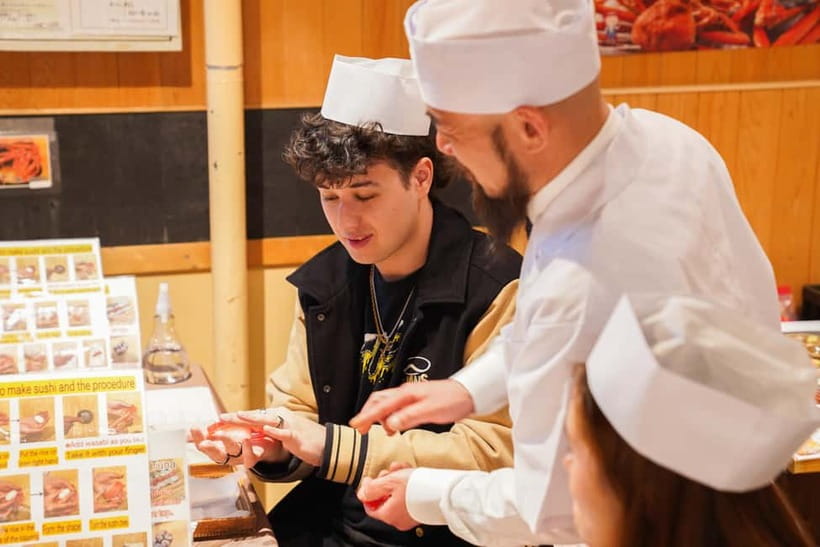
The strongest feature of the teaching style is patience. The chefs explain what they are doing, show you how to handle the knife, and guide you through the shaping and rolling steps. You should expect a practical lesson rather than a lecture packed with technical terms.
The chef also explains the history and culture of sushi. That adds useful context, since sushi is not only about putting fish on rice. The lesson connects the food in front of you with Japanese dining customs and the care involved in preparing each piece.
Wear comfortable clothes suitable for cooking. The activity does not list a special uniform or equipment requirement, and the necessary ingredients are included. Smoking, alcohol, and drugs are not allowed.
Shaping five pieces of nigiri
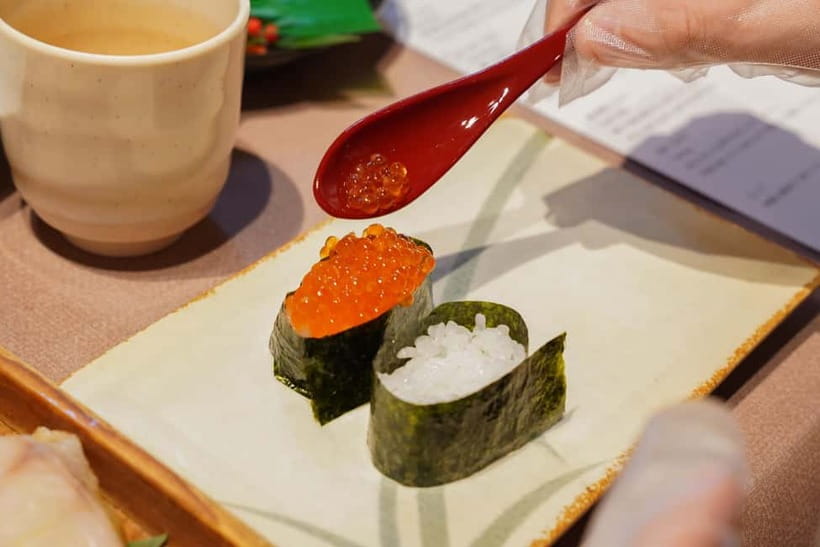
Nigiri is the familiar sushi form made with a small mound of rice and a topping of seafood. During this lesson, you make five pieces.
The basic action sounds simple, but the rice needs the right shape and pressure. Press too hard and it becomes dense. Press too lightly and it falls apart when you lift it. The chef’s role is valuable here because you can copy the hand position and get immediate correction.
You also learn how to use a knife. The supplied information does not specify which seafood is used for each piece, so you should not expect a fixed menu of fish in advance. What is clear is that the ingredients come from fresh Kanazawa seafood, giving the lesson a local food connection rather than treating the fish as an interchangeable topping.
Five pieces is a sensible amount for practice. You have enough chances to improve, but you are not asked to make dozens of pieces while trying to remember every instruction. I like this balance for first-time sushi makers and families with older children, though the activity details do not give a minimum age.
Filling two gunkan-maki
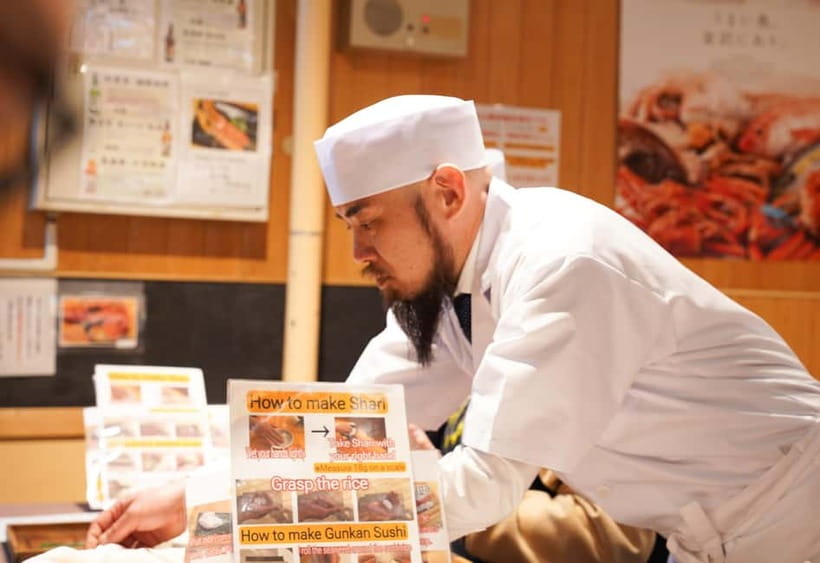
Next comes gunkan-maki, a sushi style with rice wrapped in seaweed and a topping held inside the raised edge. The shape resembles a small boat, which is why it is often called battleship sushi.
You make two pieces. This introduces a different skill from nigiri because the seaweed forms a wall around the rice and filling. It also shows you how sushi can be built for ingredients that do not sit neatly on top of a rice mound.
The smaller number is useful. Gunkan-maki can feel fiddly when you are learning, and two pieces provide a clear introduction without slowing the whole class. Listen closely to the chef’s instructions about rice quantity and placement. The final shape depends on restraint more than force.
Same city, another market:
- Nishiki Market Brunch Walking Tour (7 Tastings + Brunch)
★ 5.0 · 1,355 reviews - Tokyo Sushi Making Class in Tsukiji with Professional Chef
★ 5.0 · 1,177 reviews - Tsukiji Fish Market Guided Tour and Sushi Making with Pro Chef
★ 5.0 · 775 reviews - Tokyo: Tsukiji Fish Market Food and Culture Walking Tour
★ 4.7 · 757 reviews
Rolling one sushi roll
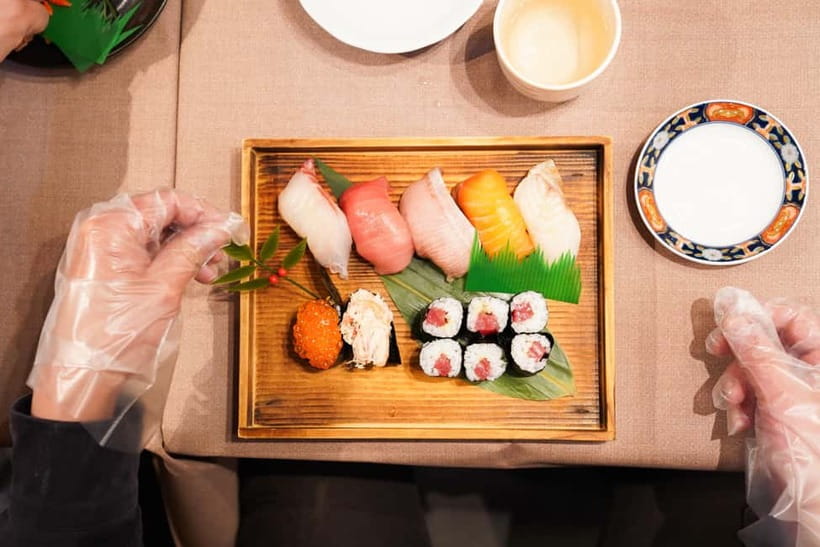
The final preparation is one sushi roll. The chef explains how to roll sushi, and you get a chance to put the lesson’s techniques together in a longer form.
Rolling is often the part people most want to try, but it can also be the part where small mistakes become obvious. Too much filling makes the roll difficult to close. Uneven pressure can produce a loose or lopsided result. Having a chef demonstrate first gives you a practical model to follow.
You make one roll, then taste it along with the nigiri and gunkan-maki. The food you produce may not look perfectly uniform, and that is part of the appeal. The class gives you a useful understanding of how much care goes into a piece that can disappear in a single bite.
Eating your own eight pieces
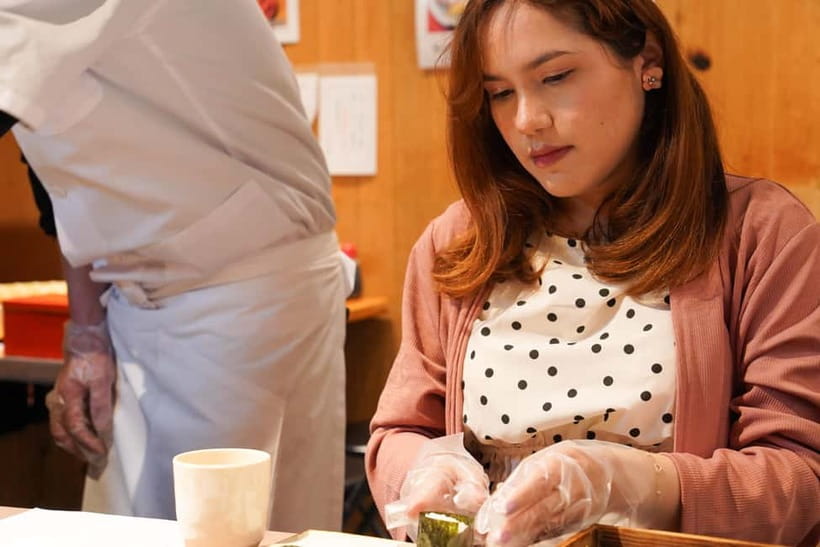
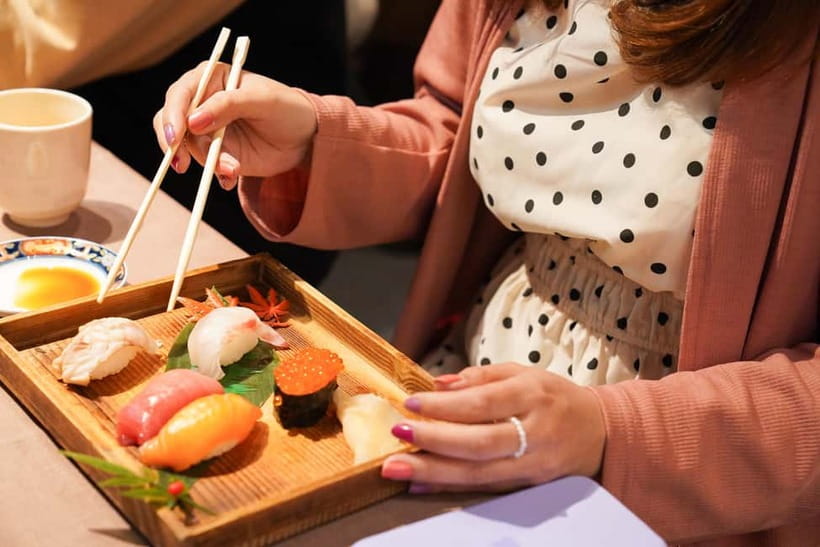
After the preparation, you eat what you have made: five nigiri, two gunkan-maki, and one roll. The value here is immediate. You are not taking a cooking class and then waiting until another meal to find out how it turned out.
The lesson emphasizes the balance between fresh fish and rice. That balance is central to sushi, and making the pieces yourself helps you notice it. Rice is not filler. Its texture, amount, and shape affect how the seafood tastes.
Do not expect a large restaurant meal. The included food totals eight pieces, which is a tasting portion rather than an all-you-can-eat lunch. For most people, that is enough to enjoy the results after a 2-hour class, but you may want to plan another meal if you arrive very hungry.
Drinks are not included. You can buy them separately if available at the restaurant or market, but the activity price covers the ingredients, instruction, and sushi you prepare.
Why the market setting matters
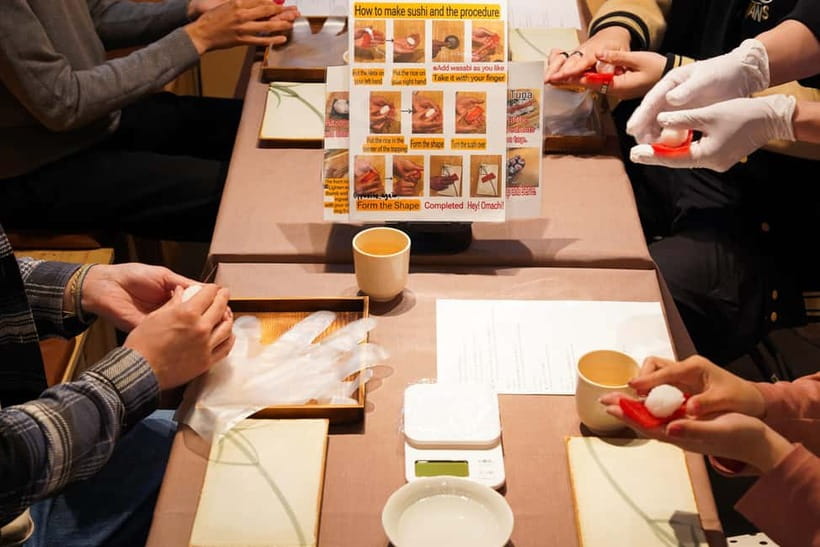
Cooking sushi in Oumicho Market gives you more than a change of scenery. It links the lesson to Kanazawa’s food trade and lets you experience the market while working.
You will hear and see the activity around you rather than cooking in a silent classroom. That can make the session feel more lively, but it may also mean some background noise and movement. If you prefer a quiet, highly controlled cooking school, this setting may feel less polished.
For me, the tradeoff is worthwhile. The market makes the seafood lesson easier to understand. You can see why fresh ingredients matter in Kanazawa, then handle those ingredients under a chef’s direction.
The market is also a useful stop before or after the class. Still, keep the 2-hour activity as the main plan. Do not count on browsing the market during the lesson, since your attention will be on the chef and your sushi.
A private group with a personal teaching feel
This is listed as a private group experience. That is important for anyone who does not enjoy cooking in front of a large class.
A private format gives you more room to ask questions and repeat a technique. It should also make it easier for the chef to watch your knife handling, rice shaping, and rolling. The exact group size is not provided, so you should not assume the class is limited to only one or two people.
The feedback attached to the experience repeatedly highlights the teaching team’s patience, humor, kindness, and clear explanations. One French-speaking booking described a Japanese-speaking chef working with another restaurant staff member who translated. You should therefore expect a friendly lesson, but remember that the listed teaching language remains Japanese.
The activity is wheelchair accessible. Since the meeting point is inside a market, you may still want to confirm any specific mobility needs when booking, as the information does not describe the exact route through the market or the restaurant’s interior.
Is $70 a fair price?
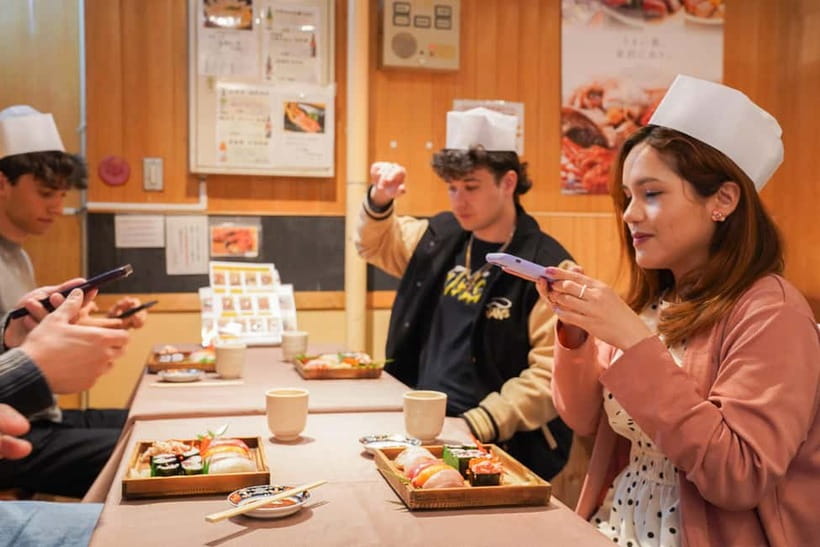
At $70 per person, this is not the cheapest way to eat sushi in Kanazawa. You could spend less on a simple meal, especially if your only goal is to try fish and rice.
The value comes from the combination of food, instruction, and setting. You receive a 2-hour private-group activity, a professional chef’s guidance, all necessary ingredients, eight pieces of sushi, and the chance to make the food yourself. You also get practical skills you can try again at home.
I think the price makes the most sense if you enjoy hands-on food experiences. It is less convincing for someone who only wants a generous lunch. The included portion is fixed, and drinks cost extra.
The price also covers a memory that is specific to Kanazawa. You are not making sushi in an anonymous classroom. You are working inside Oumicho Market, a place with more than three centuries of food-market history.
Who will enjoy this most?
I would recommend this experience to first-time sushi makers, couples, families, and small private groups who want a food activity with clear results. You do not need prior knife or rolling skills. The chef demonstrates the process and guides you through it.
It suits people who like to learn by doing. If you would rather watch a chef prepare an elegant meal, then simply eat it, this may feel too active. You will handle ingredients, shape rice, use a knife, and roll sushi yourself.
It is also a good fit for anyone who wants a more personal encounter with Kanazawa food culture. The market location gives the class a local setting, while the chef’s explanations add background about sushi and Japanese food customs.
I would be more cautious about booking if you have strict dietary requirements, since the available information does not identify the seafood, fillings, or possible substitutions. The same applies if you need instruction in a language other than Japanese and require guaranteed translation. Translation support has been available, but the listed language is Japanese.
Practical tips before you go
Arrive 10 minutes early. This is the single most useful piece of advice because the Oumicho Market entrance and interior can take time to understand.
Use the Emza, or M’ZA, entrance. Turn right at the first intersection, then look for the Sushi Enome sign on the left after a short walk.
Wear clothes that are comfortable for cooking. Choose practical clothing rather than something delicate or restrictive.
Plan your appetite. The activity includes eight pieces of sushi, but it does not include drinks or a larger meal.
Bring your phone or camera if you want photos of the process and the finished sushi. The experience specifically allows you to photograph your sushi-making session and final plate, giving you a record of the work as well as the meal.
The activity offers free cancellation up to 24 hours before the start time, and you can reserve now and pay later. That is helpful if your Kanazawa schedule is still changing.
Should you book the Enome Sushi class?
I would book it if you want to make sushi, not just eat it. The strongest reasons are the market setting, the patient professional chefs, and the well-sized menu of five nigiri, two gunkan-maki, and one roll.
The main cautions are easy to manage: arrive early, expect Japanese-led instruction, and do not treat the included sushi as a full feast. For $70, you are paying for instruction and a local setting as much as for the food itself.
If that combination appeals to you, this is a focused and friendly way to connect with Kanazawa’s seafood culture. If you only want the lowest-cost sushi meal, spend the money at a market counter instead.
FAQ
Where does the sushi-making experience take place?
It takes place at Sushi Enome, also written as Enome Sushi, inside Oumicho Market in Kanazawa.
How do I find the meeting point?
Enter Oumicho Market through the Emza, or M’ZA, entrance. Turn right at the first intersection and walk a short distance until you see the Sushi Enome sign on your left.
How long does the experience last?
The sushi-making activity lasts 2 hours.
How much does it cost?
The listed price is $70 per person.
What sushi will I make?
You will make 5 pieces of nigiri sushi, 2 pieces of gunkan-maki, and 1 sushi roll.
Can I eat the sushi I make?
Yes. Tasting your own sushi is included after you finish preparing it.
Are ingredients included?
Yes. All necessary ingredients are included, including fresh seafood from Kanazawa for the sushi lesson.
What language is the lesson in?
The instructor is Japanese, and Japanese is the listed language. Translation assistance may be provided by another restaurant staff member.
Is the activity wheelchair accessible?
Yes. The activity is listed as wheelchair accessible.
Can I cancel or pay later?
You can cancel up to 24 hours in advance for a full refund. You can also reserve now and pay later.
New market tours around Japan
- Taste of Nishiki Market Walking Food Tour with Local guide★ 5.0 · 17 reviews
- Private Toyosu & Tsukiji Market Adventure with Tuna Auction★ 4.8 · 191 reviews
- Osaka: Wakayama Cat Train, Seafood market, Hot Springs Tour★ 4.6 · 24 reviews
- Osaka: Food Tour Kuromon Market & Dotonbori with Guide★ 4.5 · 15 reviews
- Osaka: Kuromon Market Street Food Tour with Pro Local Guide★ 5.0 · 5 reviews
- Osaka: Cooking Class & Sake Tasting with Local Market Visit★ 4.8 · 31 reviews
- Osaka: Kuromon Market 1.5-Hour Seafood & Street Food Tour★ 5.0 · 8 reviews
- Okinawa Explorer: Shrines, Markets & Vibrant Streets★ 3.0 · 3 reviews
Japan Market Tours, side by side.
Tokyo Tsukiji Fish Market Food and Culture Walking Tour
Read our review →
Tokyo: Tsukiji Fish Market Guided Walking Tour
Read our review →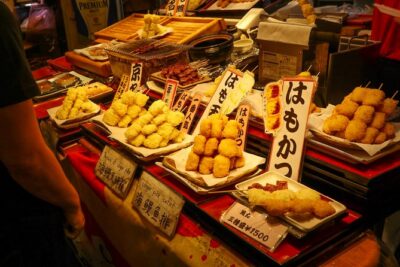
Nishiki Market Brunch Walking Tour (7 Tastings + Brunch)
Read our review →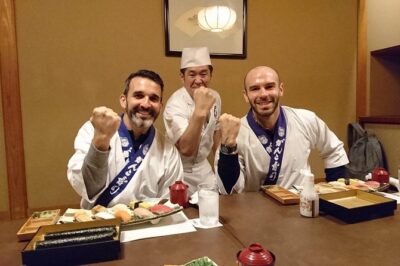
Tsukiji Fish Market Guided Tour and Sushi Making with Pro Chef
Read our review →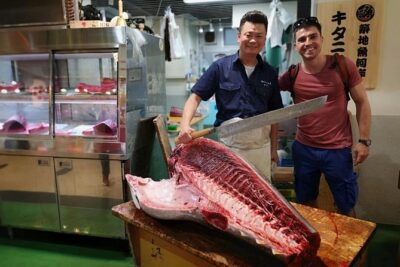
Tsukiji Fish Market Small-Group Food Walking Tour
Read our review →
Kuromon Market Food Walking Tour in Osaka (6 stops, 6 tastes)
Read our review →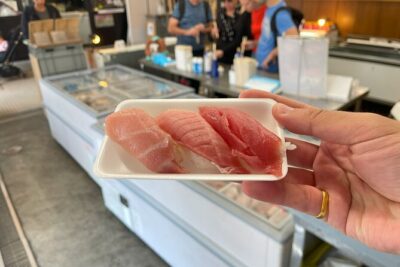
Tokyo Food Tour Taste Fresh Delights at Tsukiji Market
Read our review →
Kyoto Nishiki Market Food and Culture Walking Tour
Read our review →This tour also appears in