Review · TOKYO
Tokyo Tsukiji Fish Market Food and Culture Walking Tour
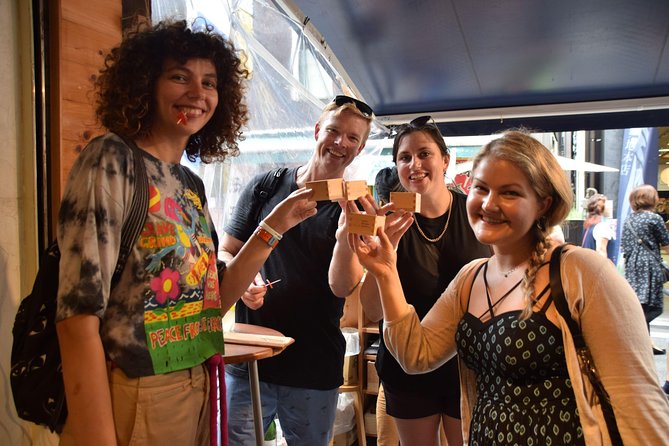
Tsukiji is less a single fish market than a whole food neighborhood, and this tour helps you make sense of it. You’ll wind through stalls selling uni, tuna, fish cakes, dashi, fruit, spices, and kitchen tools, with a guide explaining what you’re seeing. I especially like the generous mix of tastings and the chance to learn how local shoppers use Japanese ingredients at home.
I also like the temple meeting point and the small-group feel when numbers are low. Guides such as Kiyo, Naz, Shoko, Masa, and Yuki have helped visitors understand both the food and the customs behind it. The main caution is simple: this is an outer-market food walk, not a tour of the current wholesale tuna market, and anyone who avoids fish or needs vegetarian, halal, gluten-free, or allergy-friendly food should skip it.
Key points to know before you book
- Meet at Tsukiji Honganji Temple: Find the guide at the main gate, not the back side shown by some map directions.
- Taste more than sushi: The food may include Wagyu beef, tuna, fish cakes, Japanese omelette, seasonal fruit, dashi, green tea, and either sushi or a seafood bowl.
- Expect about three hours on foot: Comfortable walking shoes matter, especially on crowded market streets.
- The tour focuses on Tsukiji’s outer market: The former central wholesale operation is no longer the main subject.
- Market days affect the menu: The Uogashi wholesale area is closed Wednesdays, Sundays, and some holidays.
- Food restrictions are a serious limit: You need to eat fish, and special dietary requests cannot be accommodated.
What this Tsukiji food walk really offers
At $99.49 per person, this is not a bargain breakfast you could easily duplicate by buying one snack from a stall. You are paying for a guide, several tastings, cultural explanations, and a closing lunch of sushi or a seafood bowl.
The value depends on how you travel. If you are comfortable reading Japanese menus, judging unfamiliar stalls, and navigating a crowded market on your own, you can certainly spend less independently. But Tsukiji can feel confusing at first. A good guide saves time, points out foods you might pass by, and explains the difference between everyday ingredients and special market products.
The tour earns its keep best when the guide is active and clear. Several guides have been singled out for their local connections, food suggestions, historical explanations, and ability to adjust the pace. Small groups also make a difference. A group of four is easier to hear and move through the lanes than a full group of 20.
The current rating is 4.9 from more than 3,000 ratings, and 97 percent of bookers recommend the experience. That is a strong signal, but it does not erase the important caveat: the quality depends partly on your individual guide and on how much food is available at the time of day.
More Market Food Tours in Japan
- Tokyo: Tsukiji Fish Market Food and Walking tour
★ 5.0 · 1,724 reviews - Tokyo: Tsukiji Fish Market Food and Culture Walking Tour
★ 4.7 · 757 reviews - Tsukiji Fish Market: Street Food & Culture Walking Tour
★ 5.0 · 669 reviews
Starting at Tsukiji Honganji Temple
The meeting point is the main gate of Tsukiji Honganji Temple, at 3-chome-15-1 Tsukiji. Arrive early. The group leaves at the stated start time, and a late arrival does not extend the tour or qualify for a refund.
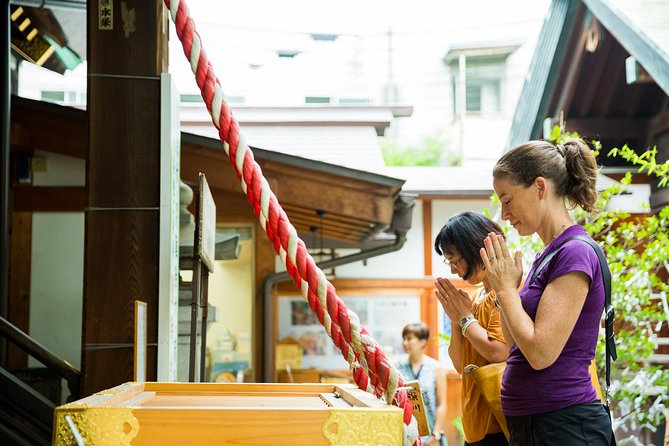
The temple is more than a place to gather. Guides often use it to introduce the neighborhood and explain the building’s unusual design and setting. It gives you a calm starting point before the market streets become crowded with shoppers, vendors, displays, and food smells.
Pay close attention to the meeting instructions. The front gate is required, while some map applications direct people toward the back side. This is a small detail, but it can create a stressful start if you are rushing.
The tour is close to public transportation, but transportation to the meeting point is not included. Plan to arrive ready to walk. The temple and market combination also gives the morning more range than a simple sequence of food stops.
Reading the outer market at Tsukiji Jogai
The main portion takes place in Tsukiji Jogai Market, the outer market area. This is the part of Tsukiji where you will see food shops, seafood stalls, prepared foods, kitchen goods, and retailers serving both local cooks and restaurant professionals.
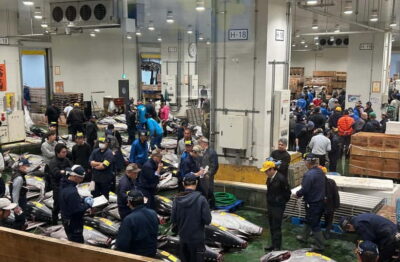
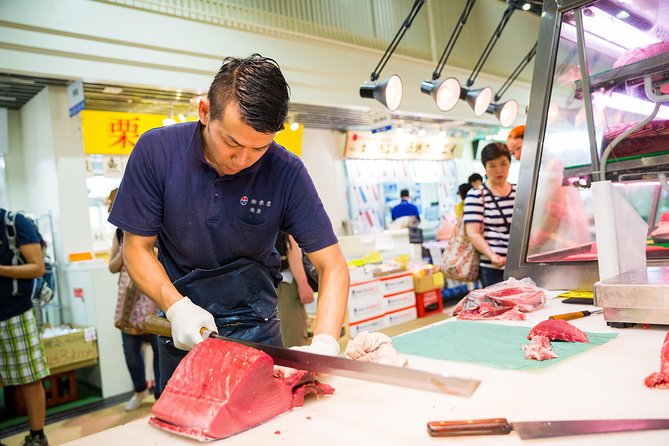
Your guide explains Tsukiji’s roughly 80-year story and why chefs still come here for ingredients. You might see neatly packed uni, tanks holding pufferfish, large tuna being cut, or rows of shellfish and other seafood. The experience is visual as much as edible, so keep your eyes moving.
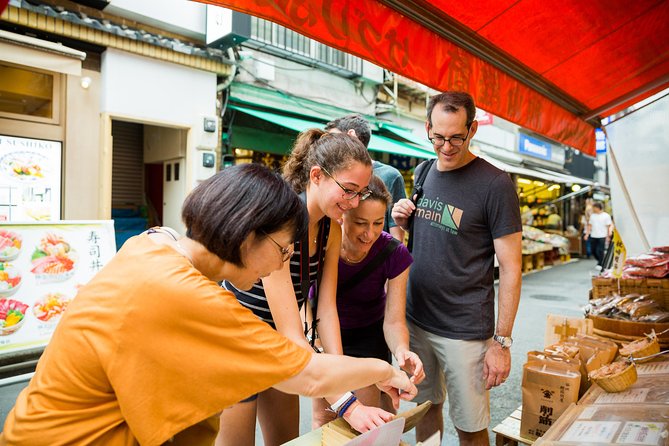
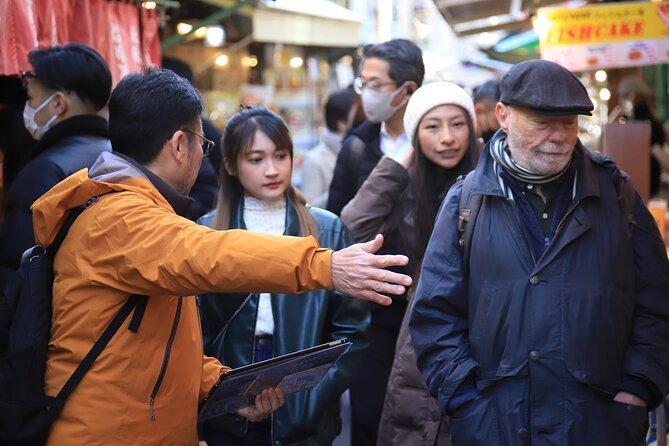
The market is not arranged like a tidy food hall. It is a working commercial district with narrow passages and changing foot traffic. That is where a guide helps. A good guide can point out a stall, explain an unfamiliar ingredient, and keep the group together without turning every stop into a lecture.
Early tastings may include dashi soup and green tea. These are useful introductions because they show how much Japanese cooking depends on basic stock, seaweed, and careful preparation. The guide may also introduce fish cakes, Japanese omelette, fruit, and other samples as you move through the market.
The quality and number of samples can vary with opening days and shop availability. If you arrive expecting a large sit-down meal at every stop, you may be disappointed. If you see the food as a series of small discoveries leading to lunch, the format makes more sense.
The old market area and the food stops
The next part continues through the old Tsukiji market area, with roughly 30 minutes set aside for food exploration. This is where the experience feels most like a guided introduction rather than a formal cooking class.
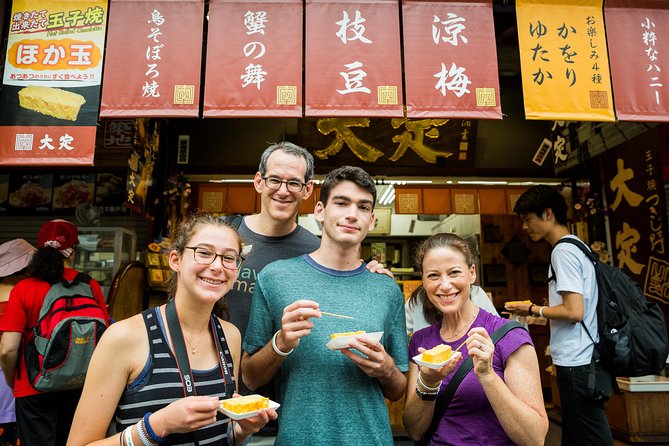
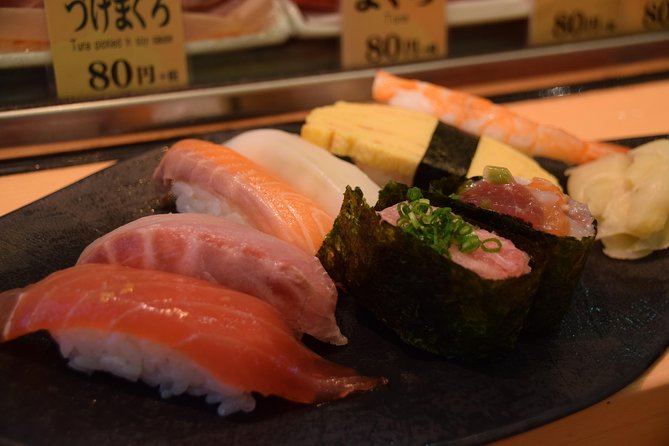
Typical tastings can include tuna, Wagyu beef skewers, fish cakes, seasonal fruit, Japanese omelette, and other market foods. One visit may feature squid or eel sushi, while another may include tempura or a different seasonal item. The stated menu is not completely fixed, and the tour may serve sushi or a seafood bowl depending on the day and time.
That flexibility is useful in a working market, but it also means you should not book with one exact dish in mind. The Wagyu skewer is a welcome change from the seafood-heavy route, but fish remains the center of the experience. If you cannot eat fish, this is not the right food tour.
Guides can also help with shopping. Shoko, for example, has assisted with choosing ingredients and explained how she uses foods and spices in her own cooking. That kind of advice is more useful than simply hearing a list of Japanese food names. You learn what might travel well, what belongs in a home kitchen, and what is best eaten immediately.
Some guides have also responded to spontaneous interests, such as taking a group for a sake tasting or showing an additional shop. Treat those moments as a bonus, not a guaranteed part of the schedule.
More Market Food Tours in Tokyo
- Tsukiji Fish Market Small-Group Food Walking Tour
★ 5.0 · 621 reviews - Tokyo Food Tour Taste Fresh Delights at Tsukiji Market
★ 5.0 · 429 reviews - Tsukiji Fish Market: Street Food & Culture Walking Tour
★ 4.8 · 259 reviews
Kitchen tools and practical market culture
If you need a kitchen tool, the route may include a shop selling cooking equipment. This adds a practical side to the tour. Tsukiji is not only about eating seafood on the spot. It is also a place to see the tools, ingredients, and working habits behind Japanese meals.
This stop can be especially helpful if you want to take something home but are unsure where to begin. A guide may help you understand what an item is used for or point you toward a suitable shop. The amount of time available for shopping depends on the group and the day, so do not count on a long buying session.
I like this part because it connects the market to ordinary kitchens. You are not only looking at food as a visitor. You get a glimpse of the equipment and ingredients that support daily cooking and restaurant work.
Tsukiji Uogashi and the wholesale-market limitation
The itinerary includes a pass through Tsukiji Uogashi, a smaller wholesale area where you may see many kinds of fresh fish. This is one of the most useful parts for people who want a closer look at the market trade.
But check the operating calendar before you book. Uogashi is closed Wednesdays, Sundays, and other market holidays. On those days, the route cannot provide some of the usual items, including Japanese omelette, fish cake, and fruit. The food walk continues, but the exact experience changes.
It is also important to set your expectations about the word fish market. The present tour takes place mainly in the outer Tsukiji area. It does not give you a full visit to the former central wholesale market operation, which moved elsewhere. If you are imagining the old tuna auction or a behind-the-scenes wholesale tour, this experience will not match that picture.
Instead, you get the public-facing market district, where you can browse stalls, watch food being prepared, and see where chefs and home cooks shop. That can still be worthwhile, but the description is best understood as an outer-market food and culture walk.
Finishing with sushi or a seafood bowl
The final 30 minutes are set aside for the main meal. Depending on the day and timing, you receive sushi or a seafood bowl. This is the point when the earlier samples come together as a proper lunch rather than a string of bites.
Some guides have arranged a sushi preparation demonstration, including watching fish being cut and making sushi. Another reported highlight has been a seafood lunch prepared at a local restaurant. These details are not guaranteed on every departure, but they show how the final stop can become more than a basic meal.
The meal is included, along with snacks, but you should not assume unlimited food. One guide’s pace and the number of open stalls can affect how much you taste. I would eat a light breakfast rather than arrive starving, but I would also avoid a large meal beforehand.
The seafood bowl or sushi may be the strongest part of the tour for you, especially if you are trying sushi for the first time. Guides can make unfamiliar choices less intimidating, and the market setting gives the meal a clear connection to the morning’s sights.
Guide quality and group size
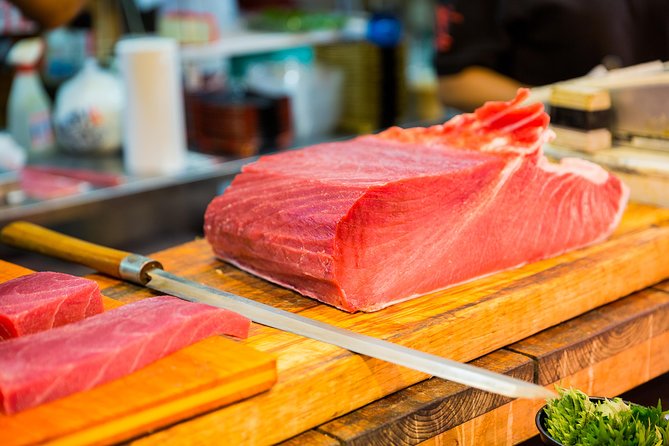
The strongest part of this experience is often the guide. People have praised guides including Kiyo, Naz, Miky, Kayoko, Joy, Mieko, Nick, Yuko, and others for clear explanations, friendly conversation, good pacing, and local food suggestions.
A strong guide does three jobs at once. The guide keeps you moving through a difficult-to-read market, explains food and customs in understandable English, and notices what your group wants to explore. This is why the tour can be useful even if you have already walked through Tsukiji on your own.
The experience is capped at 20 people, but actual group size can be smaller. Smaller groups make it easier to hear, ask questions, shop briefly, and stay together in narrow lanes. One small group even became a private-style outing during a quieter period.
The quality is not perfectly uniform. A few departures have felt slow, with waiting periods or a guide who seemed less engaged. Some people have also found the final restaurant stop too fixed or tourist-oriented. I would treat those accounts as a reminder to keep expectations sensible: the guide matters, and a food walk is not the same as choosing every stop yourself.
Timing, walking, and what to wear
The tour lasts about three hours and requires moderate physical fitness. You will be on your feet, moving through crowded streets and standing at food counters. Wear comfortable walking shoes and leave bulky luggage behind.
The market is near public transportation, but you pay your own way to the temple. The tour ends back at the meeting point, which makes it easy to plan another Tsukiji meal, continue toward Ginza, or return to your hotel.
The starting time matters. The guide cannot wait for late arrivals, and the tour cannot be extended if you miss part of it. I would aim to reach the temple gate 10 to 15 minutes early, especially if you are unfamiliar with the area.
The minimum drinking age is 20. If you are under 20, the operator provides another drink instead. This is a minor point, but it is worth knowing before you arrive.
Who should book this Tsukiji experience?
I would recommend it to first-time Tokyo visitors who want an easy introduction to Japanese market food without having to decode every stall alone. It also suits curious eaters who want cultural context with lunch, rather than a simple list of restaurant stops.
It is a good choice for families with older children, couples, and small groups who enjoy walking and trying several foods. It can also suit repeat visitors. One guide helped someone who had already visited Tsukiji find new shops and food stops.
I would not book it if you need strict dietary control. Vegetarian, halal, gluten-free, and allergy-related requests are not accommodated. Fish is central to the menu, and the experience is not suitable if you cannot eat it.
I would also skip it if your main goal is the former wholesale tuna market. Choose this tour for the outer market, local food culture, tastings, and guidance, not for access to the old central fish auction.
Should you book it?
Book this tour if you want a guided introduction to Tsukiji with a real meal, several tastings, and useful explanations along the way. The $99.49 price is reasonable when you value the food, the local guide, and the time saved finding good stops in a complicated market.
Go independently if you prefer complete control over your food choices, want to spend hours shopping, or are happy to eat only what catches your eye. If you do book, arrive early at the main temple gate, wear good shoes, expect fish-heavy food, and confirm that your date does not fall on a Uogashi closure day.
FAQ
Where does the Tsukiji food tour meet?
Meet your guide at the main gate of Tsukiji Honganji Temple, at 3-chome-15-1 Tsukiji, Chuo City, Tokyo. Do not use the back side of the temple if your map application directs you there.
How long does the tour last?
The experience lasts approximately three hours, including the market walk, tastings, and the final sushi or seafood bowl meal.
What food is included?
Lunch and snacks are included. Possible tastings include sushi, a seafood bowl, Wagyu beef skewers, fish cakes, Japanese omelette, seasonal fruit, dashi soup, green tea, and other market foods.
Is the final meal sushi or a seafood bowl?
It depends on the day and time. The tour serves either sushi or a seafood bowl.
Is the wholesale fish market open every day?
No. The Tsukiji Uogashi wholesale market is closed on Wednesdays, Sundays, and other market holidays. Some tastings, including Japanese omelette, fish cake, and fruit, may not be available on those days.
Can vegetarians join the tour?
No. Vegetarian, halal, gluten-free, and allergy-related requests cannot be accommodated. Fish is a central part of the experience.
What should I wear?
Wear comfortable walking shoes. The tour involves walking through the market for about three hours, with standing and movement through crowded areas.
Can someone under 20 have a drink?
Yes. The minimum drinking age is 20. Anyone under 20 receives another drink instead.
What happens if I arrive late or need to cancel?
The tour leaves at the scheduled start time and cannot be extended for late arrivals. Cancellations made at least 24 hours before the start time receive a full refund. Cancellations or changes made less than 24 hours before the start time are not accepted or refunded.
More Fish Market Tours around Tokyo
- Tokyo Sushi Making Class in Tsukiji with Professional Chef
★ 5.0 · 1,177 reviews - Tsukiji Fish Market Guided Tour and Sushi Making with Pro Chef
★ 5.0 · 775 reviews - Tokyo: Tsukiji Fish Market Sushi Making Class with Pro Chef
★ 4.9 · 506 reviews - Tokyo Tsukiji Fish Market Tour and Sushi Making Lesson
★ 5.0 · 390 reviews
More Market Walking Tours in Japan
- Tokyo: Tsukiji Fish Market Guided Walking Tour
★ 4.9 · 1,397 reviews - Nishiki Market Brunch Walking Tour (7 Tastings + Brunch)
★ 5.0 · 1,355 reviews - Kuromon Market Food Walking Tour in Osaka (6 stops, 6 tastes)
★ 5.0 · 550 reviews - Kyoto Nishiki Market Food and Culture Walking Tour
★ 5.0 · 412 reviews
New market tours around Tokyo
- Private Toyosu & Tsukiji Market Adventure with Tuna Auction★ 4.8 · 191 reviews
- Tsukiji Fish Market: Street Food & Culture Walking Tour★ 4.8 · 259 reviews
- Tokyo Tsukiji Fish Market Tour and Sushi Making Lesson★ 5.0 · 390 reviews
- Tokyo Food Tour Taste Fresh Delights at Tsukiji Market★ 5.0 · 429 reviews
- Tokyo: Tsukiji Fish Market Sushi Making Class with Pro Chef★ 4.9 · 506 reviews
- Tsukiji Fish Market: Street Food & Culture Walking Tour★ 5.0 · 669 reviews
- Tsukiji Fish Market Small-Group Food Walking Tour★ 5.0 · 621 reviews
- Tokyo: Tsukiji Fish Market Food and Culture Walking Tour★ 4.7 · 757 reviews
Tokyo Market Tours, side by side.
Tokyo: Tsukiji Fish Market Food and Walking tour
Read our review →
Tsukiji Fish Market Guided Tour and Sushi Making with Pro Chef
Read our review →
Tsukiji Fish Market: Street Food & Culture Walking Tour
Read our review →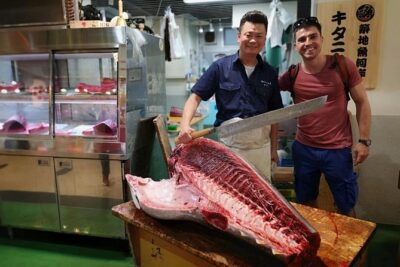
Tsukiji Fish Market Small-Group Food Walking Tour
Read our review →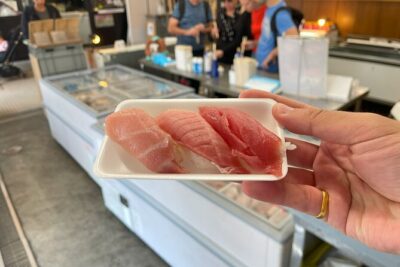
Tokyo Food Tour Taste Fresh Delights at Tsukiji Market
Read our review →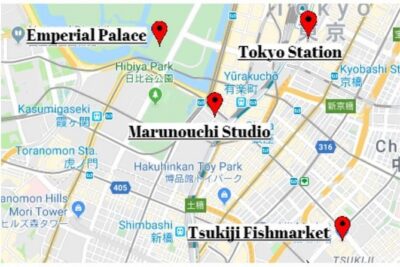
Tokyo Tsukiji Fish Market Tour and Sushi Making Lesson
Read our review →