Review · TOKYO
Tsukiji Fish Market Small-Group Food Walking Tour
Tsukiji is best experienced with an appetite. This three-hour walk takes you through narrow lanes lined with seafood stalls, cooking shops, dried goods, and Japanese snacks, with plenty of tasting along the way. The included seafood lunch gives the outing more substance than a simple market stroll.
I like the small maximum of seven people, which makes it easier to ask questions and stay together in crowded lanes. I also like the mix of food and culture: you’ll visit a Buddhist temple and Shinto shrine, not just move from one snack counter to another. The main caution is that the famous wholesale fish market moved to Toyosu in 2018, so this tour visits Tsukiji’s lively Outer Market rather than the old inner auction market.
Key points to know before you book
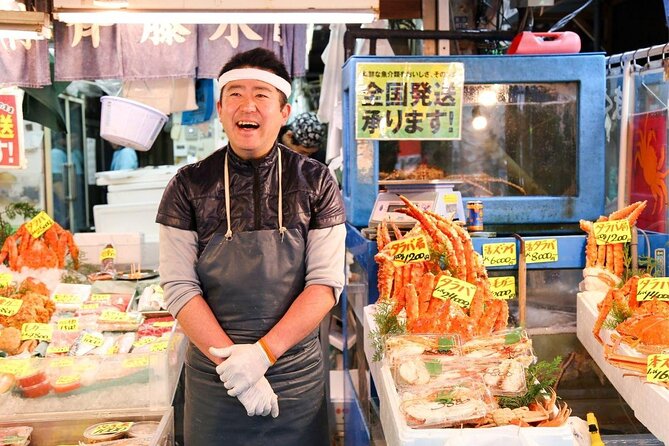
- Fresh seafood is the main event: Expect samples such as sushi, scallops, crab, eel, tamagoyaki, dried seafood, and local snacks, depending on the day and available stalls.
- Lunch is included: The tour finishes with a sit-down seafood meal, and some participants have been able to choose what they wanted from the restaurant menu.
- The group stays small: A maximum of seven people keeps the walk more personal and practical in Tsukiji’s tight lanes.
- The old wholesale market is not here: The inner market moved to Toyosu, but Tsukiji Outer Market remains a working food district with roughly 460 shops.
- Culture comes with the food: The route includes a Japanese Buddhist temple, a Shinto shrine, market history, and a city or Tokyo Bay viewpoint.
- Food restrictions need care: Vegan options are not available, and allergy-free preparation cannot be guaranteed.
What Tsukiji is like today
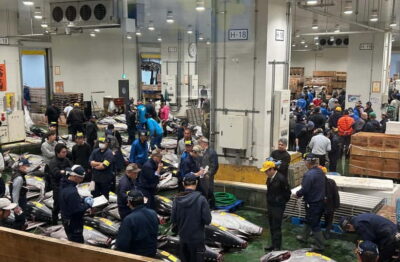
The name Tsukiji still carries the image of huge tuna, shouting fish sellers, and pre-dawn wholesale action. That picture belongs mainly to the former inner market, which moved to Toyosu in 2018.
Today, Tsukiji Outer Market is a different but still worthwhile place. It is a general market with around 460 shops selling fish, seafood, fruit, vegetables, meat, dried goods, seasonings, kitchen tools, and tableware. Some shops serve local residents and restaurant buyers, while others welcome visitors looking for a taste of Japanese food culture.
That distinction matters. If your goal is to watch the large wholesale fish auction, this is the wrong tour. If you want to eat your way through a historic market district and learn how Japanese ingredients are used, Tsukiji makes much more sense.
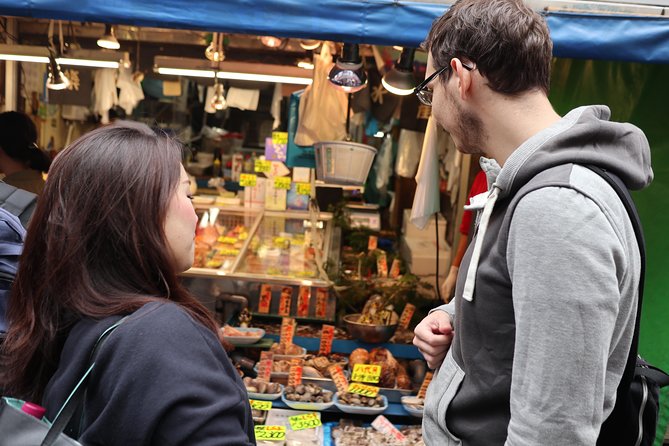
I like having a guide here because the lanes can feel confusing, especially when signs ask people not to stop and eat in certain areas. A guide can point out what is worth trying, explain unfamiliar seafood, and keep the group moving without turning the experience into a rushed checklist.
More Market Food Tours in Japan
- Tokyo Tsukiji Fish Market Food and Culture Walking Tour
★ 5.0 · 3,184 reviews - Tokyo: Tsukiji Fish Market Food and Walking tour
★ 5.0 · 1,724 reviews - Tokyo: Tsukiji Fish Market Food and Culture Walking Tour
★ 4.7 · 757 reviews
Meeting at Tsukiji Station Exit 1
The tour begins at Tsukiji Station, Exit 1, at 3 Chome-9 Tsukiji. Your guide waits there before leading the group into the market.
Arrive early enough to get your bearings. One useful tip is to ask around for other people joining the same tour if you are unsure you are in the right place. The meeting point is near public transportation, and the mobile ticket makes carrying a printed voucher unnecessary.
From the station, the market is close, but the experience quickly changes from city sidewalk to a maze of food shops and small counters. Wear shoes suitable for three hours of walking and standing. The tour is not described as difficult, and most people can take part, but Tsukiji’s lanes are narrow and crowded.
Food tasting through the old Tsukiji market area
The first major part of the walk centers on eating around the market. This is where the tour earns its keep.
The exact stops can change, but the food examples are generous. Past tasting combinations have included tuna nigiri, grilled eel, tamagoyaki, scallops on a stick, giant crab legs, dried seafood, and small Japanese snacks. One unusual sample mentioned in the experience is dried stingray meat. You may also encounter takoyaki or yakitori, though a long line or stall conditions can force the guide to change plans.
That flexibility is normal in a working market. It also means you should not treat every food named in a description as guaranteed. The number and type of samples can vary, and some stops may be brief. The strongest part of the tour is the range: you get to compare raw seafood, grilled items, sweet egg, preserved foods, and prepared snacks in one morning.
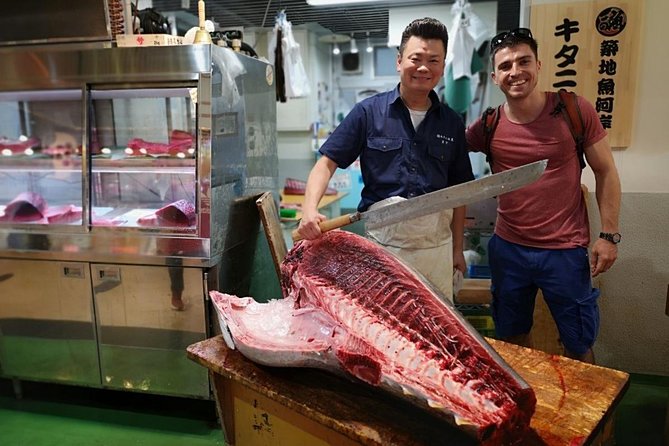
The guide’s role makes a real difference here. A good guide can explain the difference between seafood varieties, show you how a dish is prepared, and tell you why a particular ingredient matters in Japanese cooking. Guides named in past bookings include Kazu, Yuki, Hitomi, Mark, Tiger, and Mia, along with other guides. The quality of the explanations can vary, but the best guides have been praised for knowing what to eat and for making the walk relaxed and fun.
One useful point: this is not a sit-down tasting menu. You will often eat at or near stalls, and the market may not offer much space to pause. Come hungry, but pace yourself. The lunch comes later, and the early samples can add up quickly.
The seafood lunch gives the tour real value
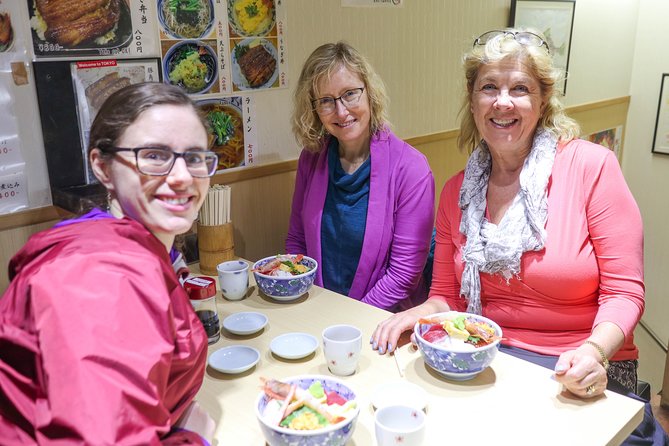
A fresh seafood lunch is included, usually at a local restaurant toward the end of the food-focused portion. This is more than a final snack. It gives you time to sit down, eat a proper meal, and compare the restaurant setting with the open-air market stalls.
Past experiences have included sushi and other seafood dishes, with some people able to choose what they wanted for the one sit-down meal. One especially memorable detail is the small booth-style setting, which can make lunch feel more local and intimate than a large restaurant dining room.
The lunch is a key reason the $87.37 price can make sense. If you paid separately for several market samples and a seafood meal, the food alone could take up a good share of the cost. You are also paying for the guide’s route planning, explanations, and help ordering or identifying unfamiliar food.
Still, value depends on what you want. If you are comfortable reading menus, choosing stalls, and navigating Tsukiji by yourself, you could spend less on a self-guided morning. The tour is most useful if you want a planned food route, several tastings, and a meal without having to make every decision yourself.
More Market Food Tours in Tokyo
- Tsukiji Fish Market: Street Food & Culture Walking Tour
★ 5.0 · 669 reviews - Tokyo Food Tour Taste Fresh Delights at Tsukiji Market
★ 5.0 · 429 reviews - Tsukiji Fish Market: Street Food & Culture Walking Tour
★ 4.8 · 259 reviews
The market’s history and the wholesale-market misunderstanding
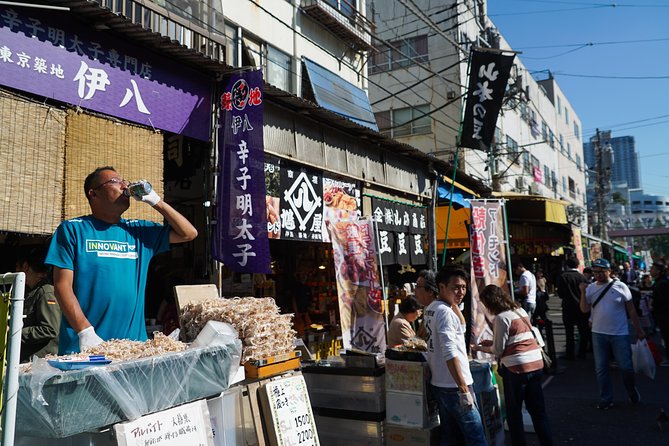
The tour includes an explanation of the market’s past and the religious sites connected with the area. This is worth having because Tsukiji’s identity is easy to misunderstand.
The old inner market was the wholesale center people often picture when they hear Tsukiji Fish Market. That operation moved to Toyosu, while Tsukiji Outer Market remained open with its food shops and seafood sellers. Some nearby wet fish markets still operate, and guides may take you toward places where you can see live seafood activity, but you should not expect the former wholesale floor.
This is the one issue I would clarify before booking. The wording about seeing where tons of fish and seafood are traded every day can sound like access to the old wholesale market. You are really signing up for the Outer Market, local seafood shops, prepared food, and nearby market culture.
That does not make the tour a poor choice. It simply changes the focus. Think of Tsukiji as a food neighborhood and shopping district, not as a working wholesale auction visit.
A Buddhist temple, Shinto shrine, and Tokyo views
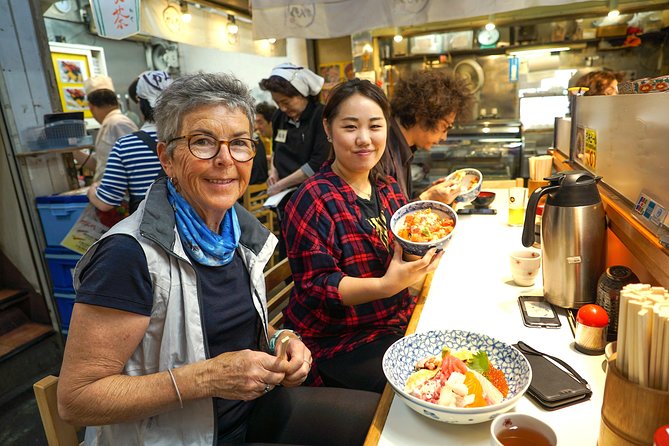
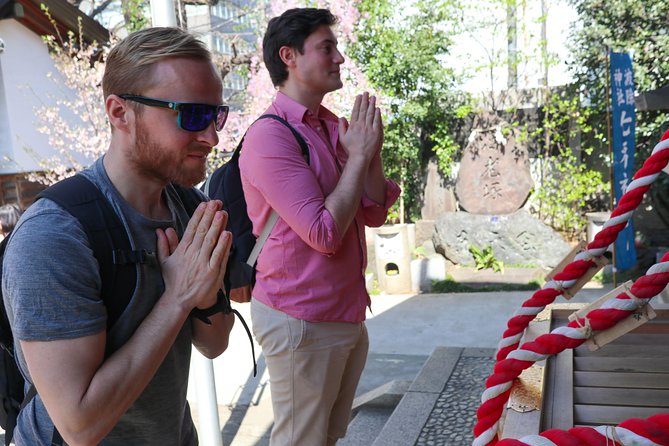
The route adds cultural stops that help break up the eating. You visit a Japanese Buddhist temple and a Shinto shrine, learning about the role of religion in Japan and the history of the market area.
The temple and shrine are not just decorative pauses. They give you a chance to see two traditions that often appear side by side in Japanese life. The guide can explain the basic differences and the customs connected with each site, though the depth of the explanation depends on your guide.
The tour also includes a viewpoint with views toward Tokyo and, according to the route details, Tokyo Bay. This adds a welcome change of scale after the close lanes of Tsukiji. You move from seafood counters and shop signs to a broader look at the city around you.
Do not book this as a major sightseeing tour of Tokyo’s skyline. The food market remains the center of attention. But the temple, shrine, and viewpoint make the morning feel more complete, especially if you want some culture with your lunch.
How the three hours feel
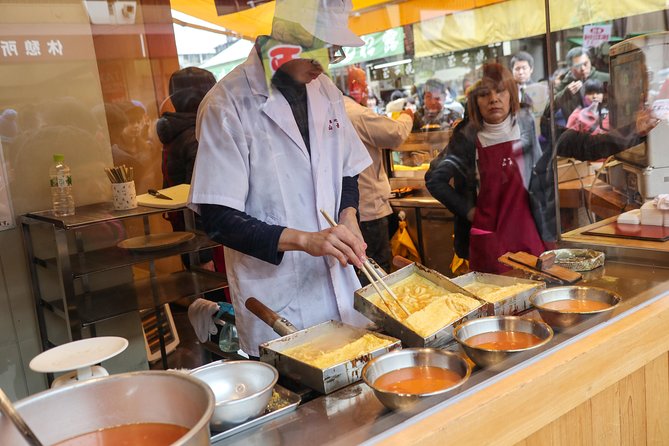
Three hours is a useful length for Tsukiji. It gives you enough time to sample food, hear some history, visit the religious sites, and eat lunch without taking the whole day.
The pace can feel full. You may spend much of the morning standing, walking, tasting, and waiting briefly at stalls. The narrow market lanes can be tight, and signs may discourage people from stopping in the middle of busy areas. Keep your belongings close and follow the guide’s lead when the group needs to move.
The maximum group size is seven. That is small enough for questions and personal attention, yet you should not assume the tour will be private. Some bookings have had only a few people, while others have included several couples or small groups.
The endpoint is Shiodome Tower at 1-6-3 Higashishimbashi. This is useful because the tour does not simply return you to the station. You can continue exploring Tokyo from the Shiodome and nearby Ginza area after lunch, though the tour does not include further sightseeing there.
Food restrictions and seasonal comfort
This experience is built around seafood and Japanese market foods, so it suits people who eat fish and are open to trying unfamiliar ingredients. Vegan options are not available.
Allergy-free preparation cannot be guaranteed. The food comes from kitchens and stalls that are not operated by MagicalTrip, and substitutions may not always be possible. The guide may try to arrange alternatives at other stops, but you should not book this expecting a fully controlled allergy-safe meal.
One past booking worked hard to accommodate a person with celiac disease, including substitutions and small changes. That is encouraging, but it is not a guarantee. Contact the operator before booking if you have a serious allergy or strict dietary requirement.
Summer is another practical concern. Tokyo can be very hot and humid, and this tour involves outdoor walking and standing among market lanes. Bring water, wear a hat, and dress for heat. A cooler season will likely make the three-hour walk more comfortable, though the tour details do not promise any particular weather or seasonal menu.
How the guides affect the experience
The most praised part of this tour is the guide. The strongest guide experiences combine food knowledge, market history, and a sense of humor.
Kazu has been singled out for helpful recommendations, kindness, and care with substitutions. Yuki has been praised for knowing the best places to stop. Hitomi, Mark, Tiger, Mia, and other guides have also been described as friendly, informative, and good at explaining seafood.
That said, the experience is not identical with every guide. One disappointing outing included little explanation of the food or market, and a planned takoyaki stop was skipped because of a long line. That is a useful warning: the tour’s quality depends partly on the person leading it and on conditions at the market that day.
I would ask questions as you walk. If you want to know how a seafood item is prepared, how to recognize it, or why it is served in a certain way, speak up. A small group makes that easier.
Is $87.37 a fair price?
For $87.37 per person, you receive about three hours of guiding, multiple food samples, and a seafood lunch. You also get a route that includes a temple, shrine, market history, and a viewpoint.
That is fair value if you plan to eat several items and want help navigating Tsukiji. The included lunch matters most. A few premium seafood samples, sushi, and a restaurant meal can quickly become expensive when ordered separately.
The price is less compelling if you mainly want to wander the market, shop for cooking tools, or photograph the lanes. You can do those things independently. The tour earns its cost through the food selection and the explanations, not through exclusive access or entry tickets.
Since bookings average around 40 days in advance, plan early if your Tokyo dates are fixed. The tour has a high 4.9 rating from 621 ratings and a 97 percent recommendation rate, but those numbers should not hide the market-location issue or the food restriction limits.
Who should book this Tsukiji tour?
I would choose this tour if you want a guided introduction to Japanese seafood and prefer tasting several things instead of committing to one restaurant. It is especially useful during a first Tokyo visit, when the market’s layout and food choices can feel overwhelming.
It also suits couples, small families, and solo visitors who like a social outing but do not want a large bus group. The seven-person limit is a good middle ground.
I would skip it if your main goal is the old wholesale tuna market, a vegan food tour, or a fully allergy-controlled meal. I would also skip it if you dislike seafood, cannot comfortably eat while walking and standing, or prefer to set your own pace.
FAQ
Where does the Tsukiji food tour begin?
The tour begins at Tsukiji Station Exit 1, at 3 Chome-9 Tsukiji, Chuo City, Tokyo.
Where does the tour end?
The tour ends at Shiodome Tower, 1-6-3 Higashishimbashi, Minato City, Tokyo.
How long does the experience last?
The tour lasts approximately three hours.
Is lunch included?
Yes. A fresh seafood lunch at the market is included, along with food samples at several shops and stalls.
Does the tour visit the old wholesale fish market?
No. The former inner wholesale market moved to Toyosu in 2018. This experience focuses on Tsukiji Outer Market and nearby food and seafood shops.
Are vegan options available?
No. Vegan options are not available on this tour.
How large is the group?
The tour has a maximum of seven participants.
Should you book it?
Book this tour if you want Tsukiji to make sense through food, conversation, and a few cultural stops. The best version of the experience gives you a broad taste of the market, from tuna nigiri and scallops to tamagoyaki, eel, dried seafood, and a proper lunch.
Just set your expectations correctly. This is not the old wholesale market tour pictured in many travel memories. It is a small-group walk through Tsukiji Outer Market, led by a guide who can turn unfamiliar food and crowded lanes into a manageable morning. For seafood lovers who are happy to eat what the market offers that day, $87.37 is a reasonable price for the food, lunch, and local guidance.
More Fish Market Tours around Tokyo
- Tokyo Sushi Making Class in Tsukiji with Professional Chef
★ 5.0 · 1,177 reviews - Tsukiji Fish Market Guided Tour and Sushi Making with Pro Chef
★ 5.0 · 775 reviews - Tokyo: Tsukiji Fish Market Sushi Making Class with Pro Chef
★ 4.9 · 506 reviews - Tokyo Tsukiji Fish Market Tour and Sushi Making Lesson
★ 5.0 · 390 reviews
More Market Walking Tours in Japan
- Tokyo: Tsukiji Fish Market Guided Walking Tour
★ 4.9 · 1,397 reviews - Nishiki Market Brunch Walking Tour (7 Tastings + Brunch)
★ 5.0 · 1,355 reviews - Kuromon Market Food Walking Tour in Osaka (6 stops, 6 tastes)
★ 5.0 · 550 reviews - Kyoto Nishiki Market Food and Culture Walking Tour
★ 5.0 · 412 reviews
New market tours around Tokyo
- Private Toyosu & Tsukiji Market Adventure with Tuna Auction★ 4.8 · 191 reviews
- Tsukiji Fish Market: Street Food & Culture Walking Tour★ 4.8 · 259 reviews
- Tokyo Tsukiji Fish Market Tour and Sushi Making Lesson★ 5.0 · 390 reviews
- Tokyo Food Tour Taste Fresh Delights at Tsukiji Market★ 5.0 · 429 reviews
- Tokyo: Tsukiji Fish Market Sushi Making Class with Pro Chef★ 4.9 · 506 reviews
- Tsukiji Fish Market: Street Food & Culture Walking Tour★ 5.0 · 669 reviews
- Tokyo: Tsukiji Fish Market Food and Culture Walking Tour★ 4.7 · 757 reviews
- Tsukiji Fish Market Guided Tour and Sushi Making with Pro Chef★ 5.0 · 775 reviews
Tokyo Market Tours, side by side.
Tokyo Tsukiji Fish Market Food and Culture Walking Tour
Read our review →
Tokyo: Tsukiji Fish Market Guided Walking Tour
Read our review →
Tsukiji Fish Market Guided Tour and Sushi Making with Pro Chef
Read our review →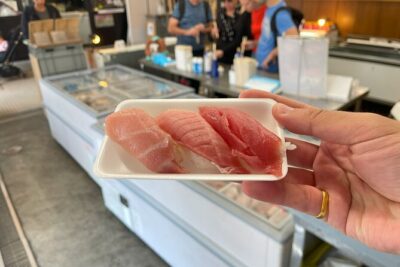
Tokyo Food Tour Taste Fresh Delights at Tsukiji Market
Read our review →
Tokyo Tsukiji Fish Market Tour and Sushi Making Lesson
Read our review →