
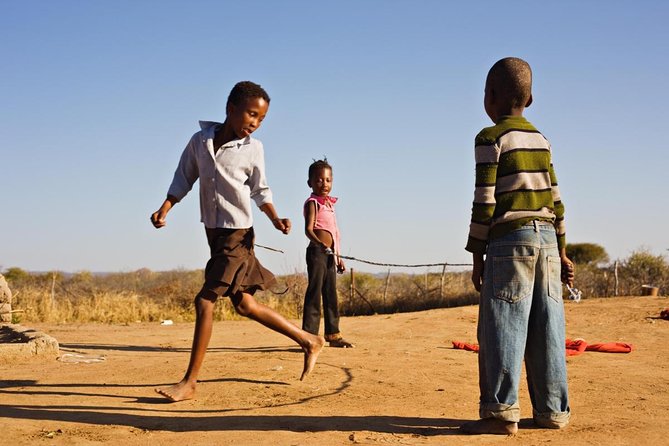
Review · NAIROBI
Memorable Daily KIBERA Slums/Toi Market Tour with Locals (2 hours)
Kibera is not a sightseeing set piece. It is home to roughly one million people, and this walking tour gives you a direct introduction through a guide who has personal ties to the community. Guides such as Bramwel and Frederick explain daily life, local work, housing, schools, and health projects in plain terms. I like the personal connection and the chance to visit Olympic Primary School, a key institution in Kibera.
I also like that the tour supports local youth employment and contributes to the operator’s rural girl-child education charity. The main consideration is ethical: this is a residential community, not a photo backdrop. You need to listen, ask before taking pictures, dress for muddy or wet ground, and accept that the experience can be confronting.
Key points to know before you go
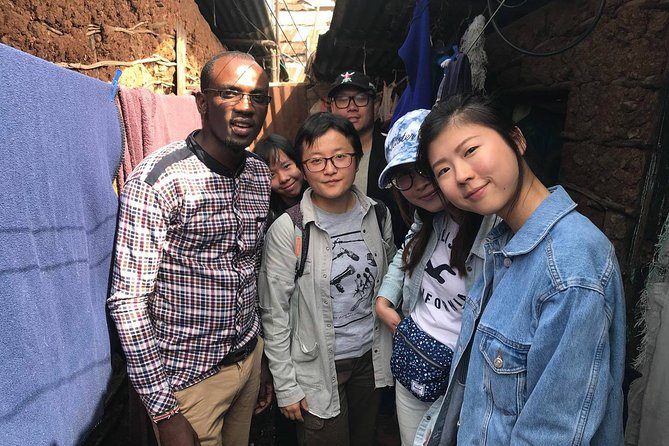
- Local guides with strong community ties: Bramwel grew up in Kibera and Frederick is praised for his friendly, personal approach.
- Olympic Primary School is the closing point: The school is described as Kenya’s largest public primary school and has helped families move beyond poverty.
- The tour looks at real systems: You learn about informal work, housing, education, health, and NGO projects rather than simply walking past homes.
- A small price with a social purpose: The $25 fee helps employ local youth, while part of the proceeds supports rural girl-child education.
- Prepare for rough walking conditions: Sturdy shoes that can get wet or muddy are a smart choice.
- This is best for curious, respectful visitors: You should be ready for an honest look at hardship as well as community warmth.
Walking into Kibera with a local guide
Kibera occupies about 2.5 square kilometers and is home to an estimated one million people from across East Africa. Numbers vary, as they often do in informal settlements, but the central point is clear: a very large community lives in a compact area with limited space and resources.
A local youth guide changes the way you see it. Instead of receiving a distant explanation from a vehicle or a guide with no connection to the area, you walk with someone who can explain what buildings, streets, and projects mean to residents. Erick, the company founder, once lived in Kibera and still has relatives there. Guides such as Bramwel also have close ties. Bramwel grew up in Kibera, still lives nearby, and plays for the Kibera football team.
That background matters. It can help you understand the difference between an outside description of poverty and the daily choices made by people who live there. You may hear about finding work, sending children to school, improving a home, or earning money through small informal businesses. The point is not to reduce Kibera to hardship. It is to see the ingenuity and effort that keep a large community going.
The walking route lasts about two hours, though the total activity is listed as two to three hours. Allow extra time for meeting up, introductions, and the pace of the group. A maximum of 50 people is listed, so the group may be larger than the intimate outing suggested by some guide-led visits. If a personal conversation matters to you, ask the operator about the expected group size when you book.
More two-hour market walks around the world:
- 2 Hour Historic Market Food Tour and Hands-On Biscuit Class
★ 5.0 · 251 reviews - Palermo in 2 hours Main monuments and historic markets
★ 5.0 · 136 reviews - Taipei: 2-Hour Raohe Night Market Walking Tour
★ 4.6 · 69 reviews
What you learn about Kibera’s informal economy
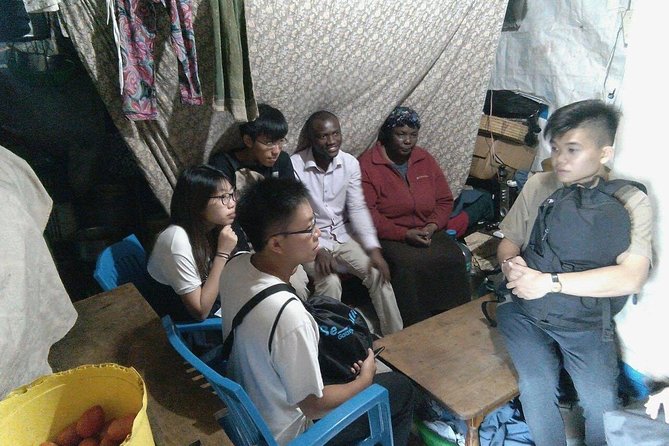
One of the useful parts of this experience is its attention to the informal economy. Kibera is not simply a collection of homes. People work, trade, repair, build, educate, and provide services within the community.
A guide can help you read the area as a working neighborhood rather than a place defined only by its housing conditions. You may pass businesses and projects that make more sense once someone explains how they operate and why they matter. The tour also looks at the practical problems faced by residents, including housing, education, and health.
The strongest guides seem to keep the tone direct and human. Frederick is described as friendly and good at answering questions, while Bramwel is praised for knowing many people in the community. That local familiarity may allow you to meet residents or, when appropriate, enter a home with permission. Do not expect this at every visit, and do not treat it as an entitlement. A home visit should happen only when the resident freely invites you.
This is also where the tour asks you to examine your own role. You are entering someone else’s neighborhood for a short time. Keep your camera down unless you have permission. A person’s home, work, or children should not become an uninvited souvenir.
Olympic Primary School and the education story
The tour begins and ends at Olympic Primary School, listed at MQQH+3FJ in Nairobi. The school is described as Kenya’s largest public primary school and as a place with a record of helping families move out of poverty.
That makes the school more than a meeting point. It provides a useful way to understand why education matters so much in Kibera. A school can offer children a daily structure, but it can also affect an entire household’s future. The tour connects this local institution with wider efforts to improve education in the settlement.
Part of the operator’s proceeds supports MAKLWETA, a charity founded to assist rural girl-child education. The tour also promotes employment for local young people in a country where youth unemployment is described as more than 50 percent. You should not book the experience solely as a donation, since the activity is still a paid walking tour, but the social purpose gives the fee more weight than a standard sightseeing walk.
The school is also a practical end point. You do not need to arrange a separate return location, and the tour finishes where it starts. Round-trip transfers from the designated meeting point are provided, although the supplied details identify Olympic Primary School as both the start and end point. Confirm the exact transfer arrangement before setting out.
NGO projects, housing, and health

The tour includes discussion of NGO projects working on housing, education, and health. These projects are important because they show that improvement in Kibera is not a single grand fix. It is a collection of small and large efforts, some effective and some less so.
A good guide should help you understand both sides. Community projects can provide services or opportunities that public systems do not fully cover. At the same time, projects can struggle with funding, management, and corruption. This tour does not appear to present charity work as a simple success story, which is a strength.
You may hear about projects intended to improve homes or public services, and about efforts that have failed to deliver as hoped. That mix of progress and frustration is more useful than a polished presentation. It helps you see why poverty is not solved by one school, one clinic, or one outside organization.
I would treat this part as a conversation rather than a formal lecture. Bring questions, but keep them respectful. Ask what has changed, what remains difficult, and how residents view the work being done. The best value here comes from connecting the facts to the people and places you see around you.
More market tours around the world:
- Bangkok: Damnoen Saduak Market and Maeklong Railway Market
★ 4.5 · 26,723 reviews - The Old Siam: Damnoen Saduak and Maeklong Railway Market
★ 4.5 · 10,992 reviews - Dubai: Old Town, Creek, Museums, Souks, & Street Food Tour
★ 4.8 · 10,816 reviews - Bangkok: Train Market & Floating Market with Boat Ride
★ 4.7 · 9,547 reviews
What the walking conditions are like
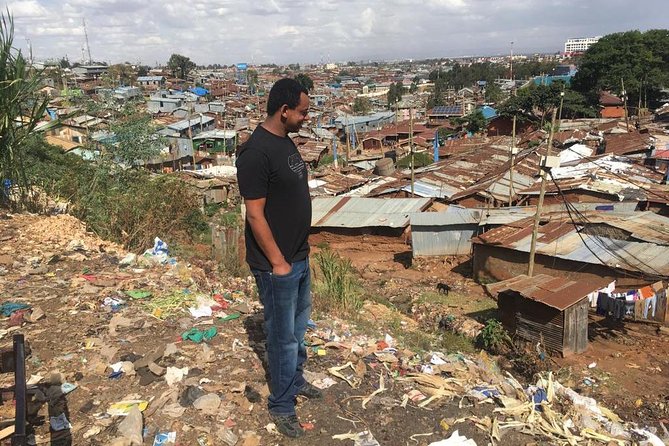
This is a walking tour through an informal settlement, not a paved attraction with tidy paths. One practical warning comes through clearly: wear sturdy shoes that can handle wet or muddy ground.
Choose closed, comfortable footwear and clothing you do not mind getting dirty. You should also be prepared for crowded paths and uneven surfaces, although the exact route can vary. Since the tour takes place in a living neighborhood, conditions may depend on weather, local activity, and community events.
The meeting point is near public transportation, and service animals are allowed. Most people can participate, but the activity is still a walking visit with potentially difficult ground. If you have concerns about mobility, ask the operator before booking rather than assuming that the route will be easy.
The tour is described as suitable for most participants, but that does not mean it will feel easy for everyone. You should be comfortable walking for around two hours and managing an environment that may be noisy, crowded, or physically rough.
The human side of the experience
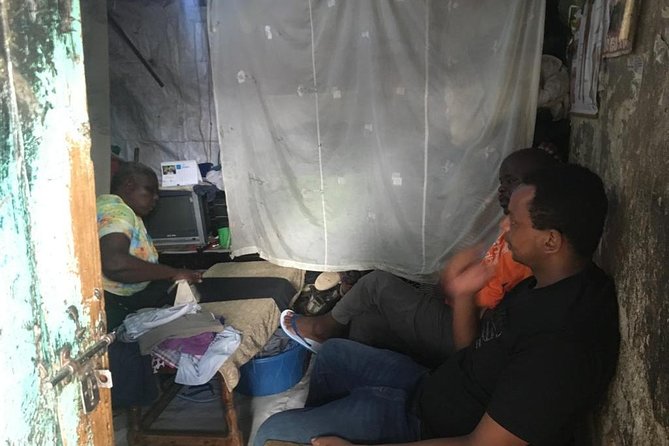
The most praised feature is the guide. Bramwel is repeatedly singled out for being warm, relaxed, safe, and well connected in the area. Frederick is also described as friendly, helpful, and good at explaining the reality of Kibera.
That personal approach can make a major difference. A guide who knows the neighborhood may introduce you to people in a natural way, explain local customs, and help you avoid careless behavior. One account describes meeting a resident who invited the group into his home and spoke about the difficulty of providing for his family. That kind of encounter can be powerful, but it should remain voluntary and respectful.
You may leave feeling humbled. That reaction is understandable, but try not to make the visit only about your own emotions. Pay attention to what residents say about their work, ambitions, families, and community. Kibera is not frozen in a single story of poverty.
The tour also carries a safety message. Several descriptions emphasize feeling comfortable with the guide and walking safely. Still, no walking tour can remove every risk, and you should follow the guide’s instructions, stay with the group, and avoid displaying valuables.
Is $25 a fair price?
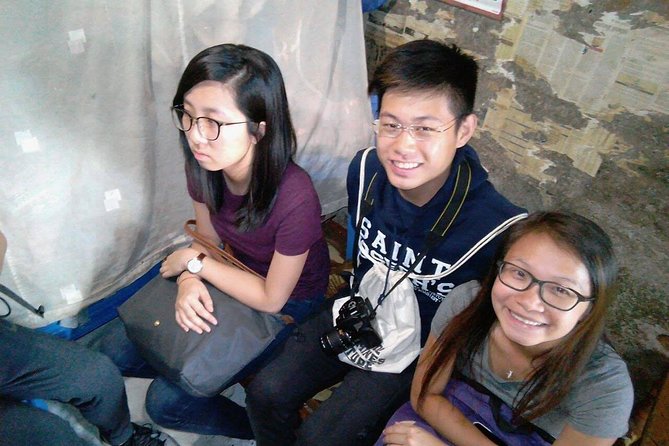
At $25 per person, this is reasonably priced for a two-hour local walking experience that includes the guide, fees, and designated transfers. Lunch and drinks are not included, but the operator can take you to local restaurants at your request.
The price is particularly fair if you value direct local employment and community connections. Your booking helps employ local youth, and part of the proceeds supports MAKLWETA’s rural education work. That does not make the tour automatically ethical or perfect, but it gives you a clear idea of where some of the money is intended to go.
The main value is access and interpretation. You could walk near Kibera on your own, but you would miss much of the context and might not know how to behave respectfully. A local guide can explain what you are seeing and introduce you to the area in a more thoughtful way.
The possible weakness is group size. With a maximum of 50 people, the experience could feel less personal if the group is full. The guides’ local connections are a major asset, but a larger group may limit quiet conversations and make home visits or small community encounters less practical.
Who should book this Kibera tour?
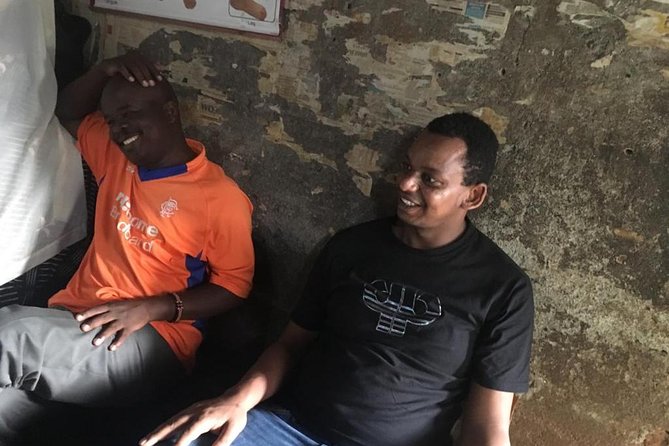
You should consider booking if you want to understand Nairobi beyond its major sights and are willing to approach Kibera with humility. It suits visitors interested in social issues, education, community work, informal business, and local history.
It is also a good match if you prefer walking and conversation to a quick drive-by view. The visit gives you time to ask questions and see how a neighborhood functions from the inside.
This is not the right choice if you want a light, polished outing or a guaranteed photography session. The tour deals with poverty and difficult living conditions. Some parts may be uncomfortable, and that discomfort is part of the subject, not a flaw to be hidden.
Book with the right attitude: listen first, ask before photographing, and remember that people live and work here. If you can do that, the experience can provide a more honest understanding of Nairobi than many standard city tours.
Practical details before booking
The tour costs $25 and is generally booked about 11 days ahead, though same-day arrangements have also been possible when communication works. You receive confirmation at booking, and mobile tickets are accepted.
You meet and finish at Olympic Primary School, with the location listed as MQQH+3FJ, Nairobi. Round-trip transfers from the designated meeting point are included, so confirm the precise pickup details before the day of the tour.
Free cancellation is available up to 24 hours before the start time for a full refund. Cancellations or changes made within 24 hours are not refundable. One past booking problem was linked to a pandemic lockdown and resulted in a full refund, but you should still keep your phone available and confirm the meeting details in advance.
Should you book it?
Book this tour if you want a frank, locally guided look at Kibera, especially if meeting a guide such as Bramwel or Frederick and learning about schools, work, housing, and community projects appeals to you.
I would choose it for the local connection, the support for youth employment, and the chance to visit Olympic Primary School. I would skip it only if you are uncomfortable with walking through a residential community or cannot manage muddy, uneven conditions. Go respectfully, keep your camera away unless invited, and allow the people you meet to define their own lives.
FAQ
How long does the Kibera tour last?
The main walking tour lasts about two hours. The total activity is listed as approximately two to three hours.
What is the price?
The tour costs $25 per person.
Where does the tour start?
The tour starts at Olympic Primary School, located at MQQH+3FJ, Nairobi, Kenya.
Where does the tour finish?
The tour finishes at Olympic Primary School, the same location where it begins.
Is transportation included?
Round-trip transfers from the designated meeting point are provided. The supplied meeting details identify Olympic Primary School as the start and end point, so confirm the exact pickup arrangement before the tour.
Who guides the tour?
Local youth guides lead the tour. Guides named in the available information include Bramwel, also spelled Bramwell, and Frederick.
What will I learn about Kibera?
You will learn about daily life, the informal economy, housing, education, health, and NGO projects working in the community.
Does the tour visit a school?
Yes. The tour ends with a visit to Olympic Primary School, described as Kenya’s largest public primary school.
Are food and drinks included?
No. Lunch and drinks are not included, but local restaurants can be visited at your request.
Can I cancel for a full refund?
Yes, if you cancel at least 24 hours before the experience starts. Cancellations or changes made less than 24 hours before the start time are not refunded.
New market tours around the world
- Tel Aviv: 2-Hour Carmel Market Tour in English with Lunch★ 4.8 · 23 reviews
- Tel Aviv: Carmel Market & Neighborhood Guided Walking Tour★ 4.7 · 3 reviews
- Tel Aviv: 2-Hour Jaffa Flea Market Tour with Tastings★ 4.9 · 8 reviews
- Tel Aviv: Carmel Market Food Tasting Tour “Shuk Hacarmel”★ 4.0 · 8 reviews
- Tel Aviv: 2-Hour Levinsky Market Tour with Full Lunch★ 4.7 · 10 reviews
- Tbilisi 2 Parks: Turtle Lake & Dedaena Park with Flea Market★ 5.0 · 3 reviews
- Tbilisi: Street Food & Sightseeing Tour with Local Markets★ 5.0 · 8 reviews
- Teguise: Market and César Manrique Foundation Tour★ 4.3 · 39 reviews
Nairobi Market Tours, side by side.

Traditional Kenyan Cooking Class & Local Market Tour
Read our review →
Authentic Kenyan Cooking Class & Market Tour in Nairobi
Read our review →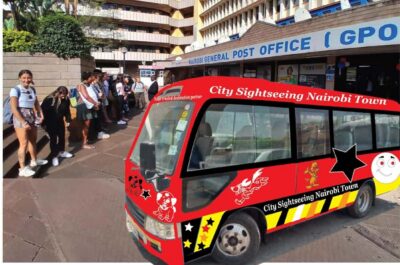
Nairobi: Hop on Hop off and Maasai market Collections Visit
Read our review →
Nairobi: Explore Maasai Market for Unique Souvenirs
Read our review →

Nairobi Traditional Cooking Classes and Local Market Visit
Read our review →This tour also appears in